A King Vanishes
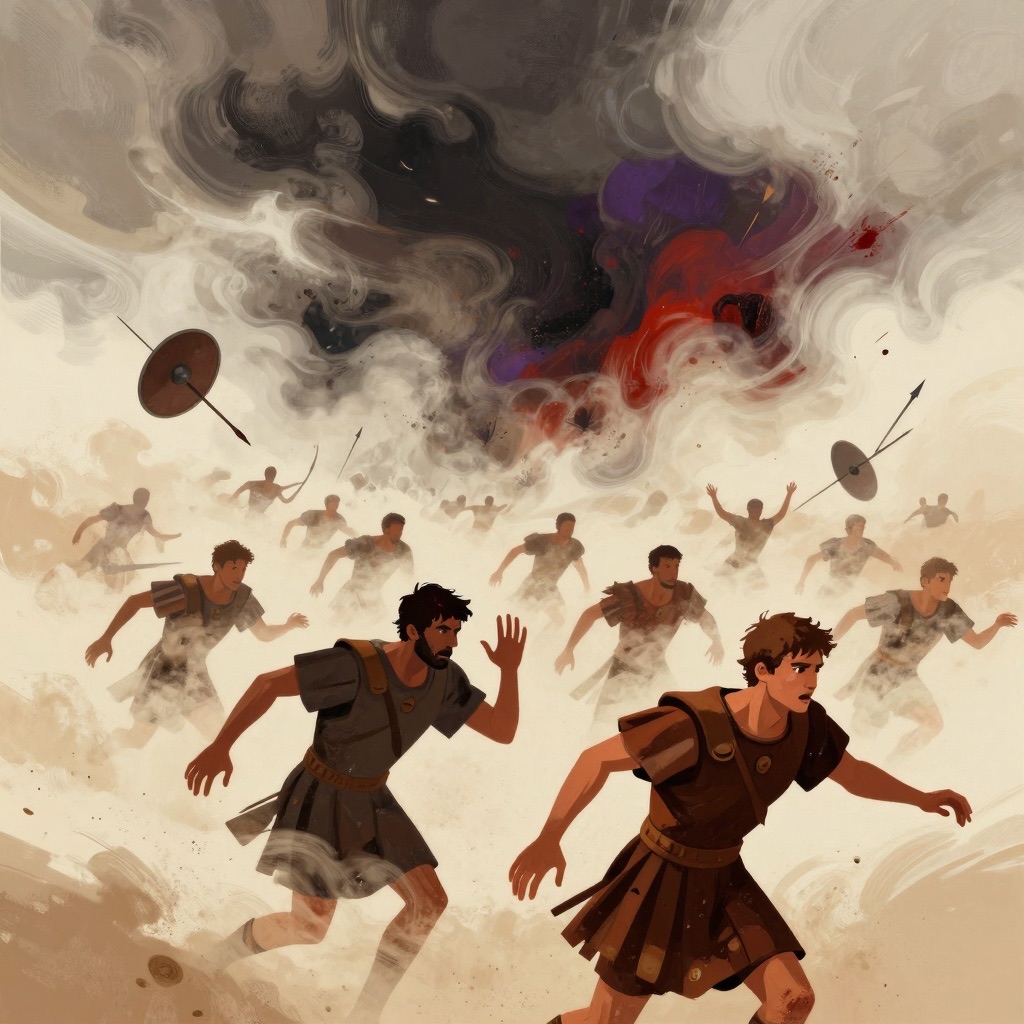
On July 7th, 717 BCE, Romulus walked onto the Campus Martius to review his army. Thousands of soldiers stood in formation. The founder of Rome, now ruling for thirty-seven years, commanded everything he saw.
He never walked off that field.
A storm struck without warning. Not a summer squall. Witnesses described supernatural darkness, wind that knocked men off their feet, dust so thick you couldn't see your own hands. When the chaos cleared, Romulus was gone. No body. No blood. No trace.
The official explanation came quickly: the gods had taken him. Romulus had ascended to heaven and been transformed into the deity Quirinus. Rome's founder had become Rome's god.
But whispers told a different story. And they pointed at the very men who claimed to have witnessed a miracle.
The Tyrant in Purple
To understand what happened on the Campus Martius, you need to understand what Romulus had become.
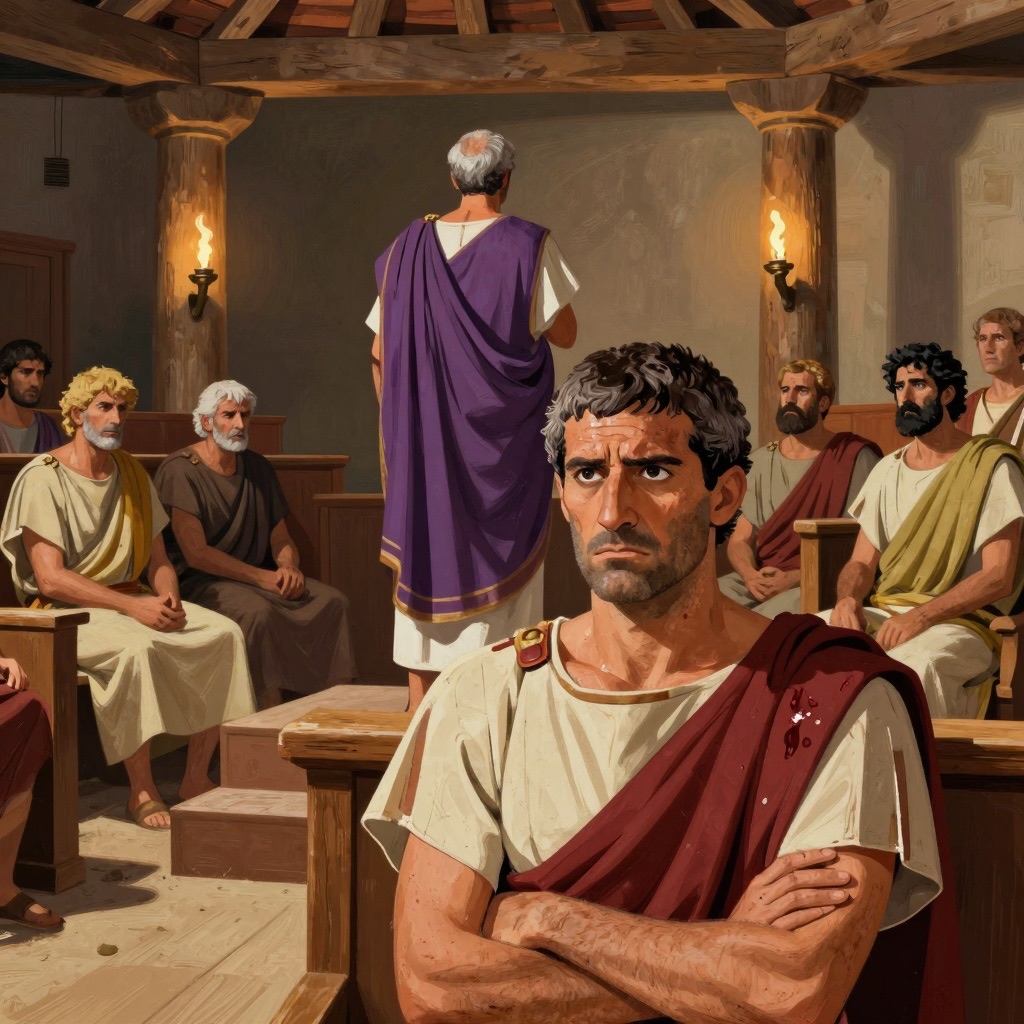
The young warrior who had built Rome with his bare hands had grown into something else. Livy describes Romulus's later reign as increasingly autocratic. The king adopted the trappings of absolute monarchy: purple robes, armed guards called lictors, a throne elevated above everyone else.
The symbols were bad. The attitude was worse. Romulus had stopped consulting the Senate. Decisions that once required debate now came as decrees. Men who had fought beside him during Rome's founding wars found themselves dismissed without a hearing. The aristocratic families who had helped build the city watched their influence evaporate.
The Roman Senate was not yet the powerful body it would become during the Republic. But even in this early form, it represented Rome's leading families. Romulus had created the Senate himself, appointing one hundred citizens as advisors. Now he treated them as servants.
Plutarch records specific grievances. Land conquered from Rome's neighbors was being distributed directly to soldiers rather than channeled through the aristocracy. Military commands went to favorites. The king made decisions alone, then announced them as accomplished facts.
For men accustomed to power and respect, Romulus had become intolerable.
The Storm That Came Too Fast
The assembly on the Campus Martius was meant to be a military review. Routine business for a warrior king. Romulus stood on a raised platform, visible to thousands.
Then the sky went dark.
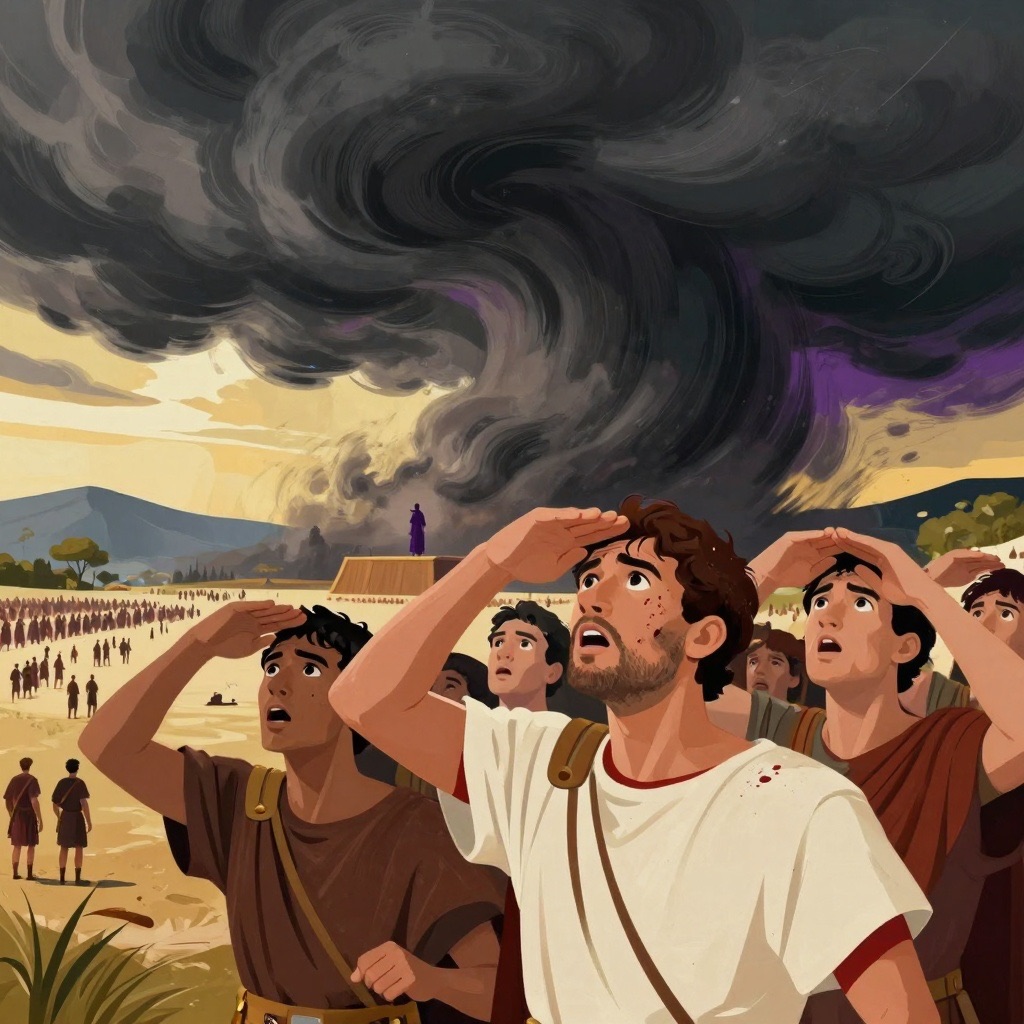
Ancient accounts agree on certain details. The storm was sudden, violent, and strangely localized. Lightning flashed. Wind tore through the assembled ranks. Soldiers scattered. Visibility dropped to nothing.
When the storm passed, as suddenly as it had arrived, Romulus had vanished.
Chaos followed. Soldiers who had been standing formation moments before now milled about in confusion. Their king was gone. No body on the platform. No obvious signs of violence.
Into this confusion stepped the senators.
They had been standing near the king when the storm struck. Now they announced what had happened: Romulus had been carried into the heavens. The gods had reclaimed their own.
The soldiers weren't convinced. And the whispers started almost immediately.
Murder in the Dark
Roman historians, writing centuries after the event, preserved an alternative account that Romans of the time apparently believed.
The senators had killed Romulus.
Livy records this tradition directly. Under cover of the storm, the senators surrounding Romulus attacked him. They tore him apart with their bare hands, each man taking a piece of the body beneath his robe.
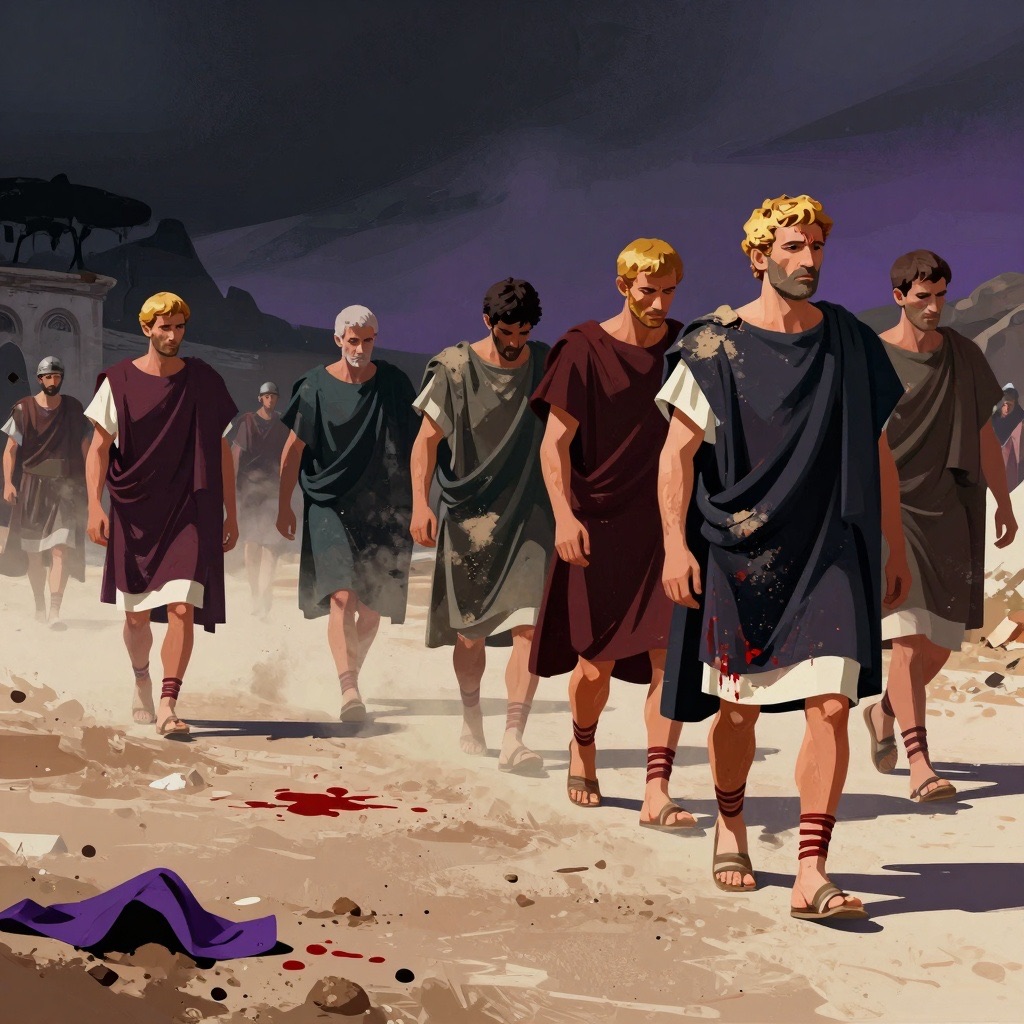
This grim detail explains why no corpse was ever found. With the body distributed among dozens of conspirators, no complete remains existed. Each senator disposed of his portion separately. The evidence literally walked away from the crime scene.
The timing of the storm was either incredible luck or careful planning. Festivals gathered crowds in known locations. A storm during such an event would create maximum confusion with minimal witnesses to the actual deed.
Whether the senators planned around a predicted storm or simply seized an unexpected opportunity, the result was the same: they had a few minutes of absolute darkness in which to commit regicide with thousands of potential witnesses seeing nothing.
Modern historians debate whether such a coordinated killing was physically possible. Ancient authors had no such doubts. The murder story was credible precisely because Romulus had given the Senate every reason to want him dead.
The Convenient Vision of Proculus Julius
The problem with the murder story was simple. It threatened civil war.
Rome's common citizens revered Romulus. He had founded their city. He had given refuge to slaves and outlaws, creating a population of freedmen loyal to him personally. He had distributed conquered land to soldiers rather than hoarding it for aristocrats.
If the people believed the patrician senators had murdered their king, blood would flow.
The solution came from a man named Proculus Julius. A respected Roman of the Julian clan (the same family that would produce Julius Caesar centuries later), Proculus claimed to have received a divine vision.
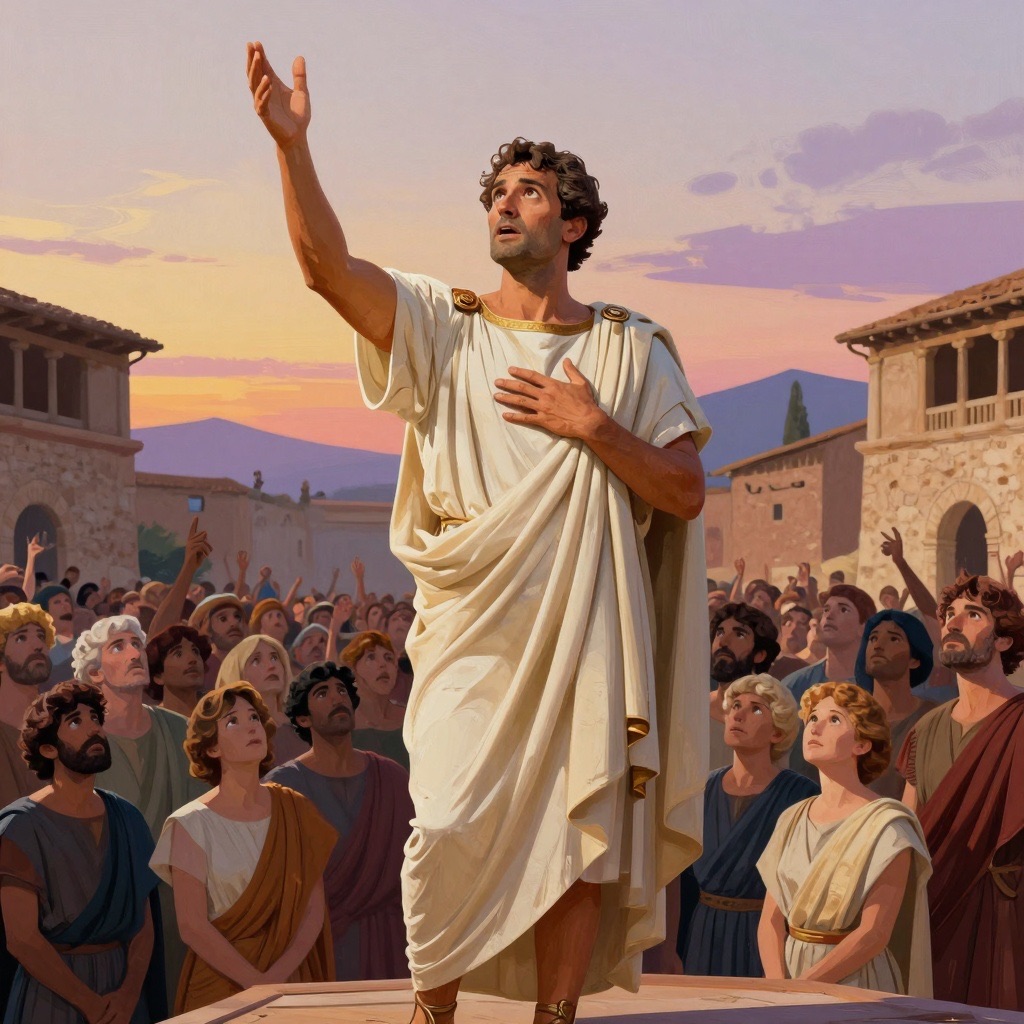
According to his account, Romulus appeared to him at dawn in divine form. Taller than any mortal. Clad in radiant armor. More beautiful than he had been in life. The transformed king delivered a message: "I am Quirinus now. Tell my people to practice the arts of war, and no power on earth shall resist them."
The declaration was perfect political theater. It gave Rome's founder a glorious fate that elevated the entire city. It promised divine favor for Roman military ambitions. And it made questioning Romulus's death an act of impiety rather than reasonable skepticism.
Plutarch records that the people accepted this story, whether from genuine belief or calculated prudence. Challenging Proculus meant calling a respected citizen a liar while implying that senators were murderers. The social cost was enormous.
So Rome got its miracle. Romulus became Quirinus. The senators who may have torn him apart walked free. And the Roman talent for transforming inconvenient truths into useful myths received its first demonstration.
Quirinus: The God Romulus Became
The transformation of Romulus into Quirinus was not simply a cover story. It became a foundational element of Roman religion.
Quirinus was worshipped as one of Rome's three principal deities, alongside Jupiter and Mars. He had his own priest (the Flamen Quirinalis), his own temple on the Quirinal Hill, and his own festival (the Quirinalia, celebrated on February 17th). This was not a minor cult but a central feature of Roman state religion.
The name Quirinus likely predates Romulus entirely. Scholars believe Quirinus was originally a Sabine deity, possibly connected to the town of Cures. The Quirinal Hill was named for this god long before anyone connected him to Rome's missing king.
By identifying Romulus with this pre-existing deity, the Romans achieved something sophisticated. They incorporated Sabine religious traditions into Roman identity while claiming divine status for their founder. The union made sense given that Romulus had merged Roman and Sabine populations after the famous abduction of the Sabine women.
The Quirinus identification also carried a political message. Unlike Mars (war itself) or Jupiter (divine authority), Quirinus represented the Roman citizen at peace. The quirites were armed men who had laid down their weapons for civic life. By becoming Quirinus, Romulus transformed from conquering warrior to patron of Roman civic identity.
Whether anyone genuinely believed Romulus had become a god is impossible to know. What's clear is that Romans maintained the cult of Quirinus for over seven hundred years, from the early kingdom through the fall of the Republic. Whatever skepticism individuals may have harbored, the state religion treated Romulus's deification as established fact.
What the Two Stories Tell Us
The coexistence of these narratives, divine ascension and senatorial murder, tells us something about how ancient Romans understood their own history.
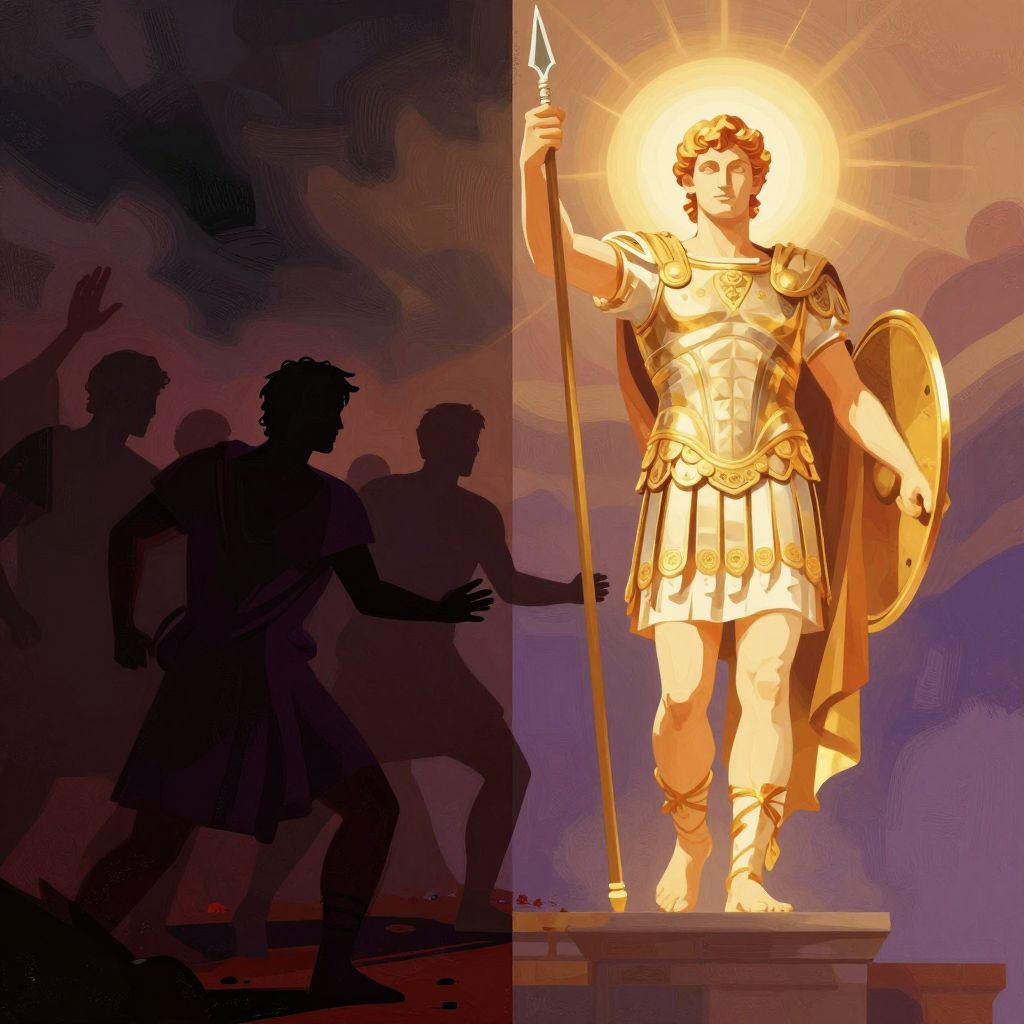
Both stories were recorded. Both were transmitted through centuries of Roman literature. Authors like Livy presented them side by side, often in the same paragraph, without trying to reconcile the contradiction. This wasn't sloppy scholarship. It was a deliberate acknowledgment that history contains multiple truths.
The divine version served the state. It provided a glorious origin for Roman religion, a model of mortal-to-divine transformation that later emperors would imitate, and a convenient erasure of political violence.
The murder version served as warning. It reminded ambitious leaders that even founders could be killed if they abused their power. It validated the Senate's role as a check on tyranny. And it provided a darker but perhaps more honest foundation for Roman political culture, one that acknowledged the violence inherent in power.
Romans could believe both stories simultaneously because they understood that myth and history served different purposes. You worshipped at Quirinus's temple while knowing that senators had probably murdered the man inside. The contradiction was not a problem to be solved but a complexity to be lived with.
Patterns That Would Repeat
Romulus's death, whether divine removal or aristocratic assassination, established patterns that would recur throughout Roman history.
First: the tension between autocratic leaders and senatorial power. Romulus ruled too long and too absolutely, and (perhaps) died for it. Every subsequent Roman strongman, from Sulla to Caesar to the emperors themselves, faced the same calculation. How much power could they accumulate before the aristocracy struck back?
Second: the use of religion to resolve political crises. The Quirinus story transformed potential civil war into public celebration. When Augustus later became "divus" (divine) after his death, he followed a template that Romulus had established, or that had been established on Romulus's behalf by men who needed his memory to be useful rather than inflammatory.
Third: the Roman comfort with official truths that everyone knew were false. The fiction of Quirinus served the state, so the state maintained it. This pragmatic relationship with truth, maintaining useful lies while privately acknowledging them as lies, would characterize Roman public religion for centuries.
The Historical Debate
Modern historians approach Romulus's death with appropriate skepticism. The traditional date of 717 BCE places his death in Rome's early pre-literate period. Everything we know comes from writers working centuries later, reconstructing events from oral traditions of uncertain reliability.
The storm itself is the most consistently attested element. Something happened during a gathering on the Campus Martius that caused mass confusion and left Rome without its king. Whether this was a natural phenomenon exploited by conspirators, a supernatural event, or simply a literary device added to make the story more dramatic is impossible to determine.
The murder theory gains credibility from its persistence. If the story were merely malicious rumor, one would expect later Roman authors, many of whom wrote to celebrate Rome's glorious past, to suppress it. Instead, major historians recorded it matter-of-factly, suggesting it represented established tradition rather than speculation.
Archaeological evidence is silent on the question. Romulus's Rome, if it existed at all, was a small settlement of wooden huts on the Palatine Hill. No palace, no Senate building, no inscriptions survive from this period. We cannot even prove that a king named Romulus ruled, let alone determine how he died.
What survives is the meaning Romans attached to his death. Whether historical or mythical, the story encoded values and warnings that shaped Roman culture for a millennium. Rulers can become gods, but rulers can also be killed. Power shared is power preserved. Power hoarded is power at risk. And the truth that serves the state may not be the truth that actually happened.
The Campus Martius where Romulus vanished later became central to Roman public life. Armies assembled there. Elections were held there. For centuries Romans gathered on the same ground where their founder had disappeared into storm and legend. Every Roman who walked those fields walked on the site of either a miracle or a murder, and perhaps, in the Roman understanding of such things, on the site of both.
Frequently Asked Questions
1Did the Roman senators really murder Romulus?
Ancient Roman historians recorded this tradition alongside the divine ascension story. Livy, Plutarch, and others presented it as a credible alternative. Whether senators actually tore Romulus apart during a convenient storm or the story reflects later political anxieties projected onto the past cannot be determined with certainty.
2Who was Quirinus before Romulus was identified with him?
Quirinus was originally a Sabine deity, possibly the patron god of the town of Cures. The Quirinal Hill was named for him before Rome's founding. By identifying Romulus with Quirinus, Romans merged their founder's legend with pre-existing Sabine religious traditions.
3Why did Romans believe Proculus Julius's vision?
Proculus Julius was a respected member of the Julian clan and an old associate of Romulus. His testimony carried weight. More importantly, the alternative, accusing the Senate of murder, threatened civil war. Accepting the divine story was politically safer than pursuing the darker truth.
4When did Romans celebrate Quirinus?
The main festival for Quirinus was the Quirinalia, held on February 17th. The anniversary of Romulus's disappearance, the Nones of Quintilis (July 7th), was also commemorated. Quirinus had his own priest, the Flamen Quirinalis, and a temple on the Quirinal Hill.
5How long did Romulus rule before he died?
According to Roman tradition, Romulus ruled for 37 years, from Rome's founding in 753 BCE until his disappearance in 717 BCE. He would have been in his mid-fifties at death, assuming the legends of his twin birth are approximately dated.
6Did later Roman emperors claim to become gods like Romulus?
Yes. Beginning with Julius Caesar and Augustus, deceased emperors were often officially deified by senatorial decree, receiving the title 'divus' (divine) and state-sponsored cult worship. Romulus's transformation into Quirinus provided the foundational model for this practice.
Hear the Full Story
Experience Romulus's final day narrated by Lumo, the wolf who watched Rome's founder vanish into storm and legend.


Listen to Related Stories
What Happened to Romulus?
4 minThirty-seven years Romulus ruled Rome. He'd killed his brother, stolen women, fought off every enemy. Then he vanished in a storm.

Key Figures
Listen to the Full Story
Experience history through immersive audio lessons narrated by Lumo, your immortal wolf guide.