The Massacre at Galba's Peace Table
A Roman praetor named Servius Sulpicius Galba invited the Lusitanian warriors to negotiate. He promised them land. They surrendered their weapons. Then his soldiers cut them down.
Thirty thousand men, according to some sources. Others say nine thousand dead and twenty thousand enslaved. The numbers don't matter as much as what happened next: Galba divided his victims into three groups, marched them to separate locations, disarmed them, surrounded them with trenches, and sent in soldiers with swords. By the time the third group realized what was happening, the first two were already dead.
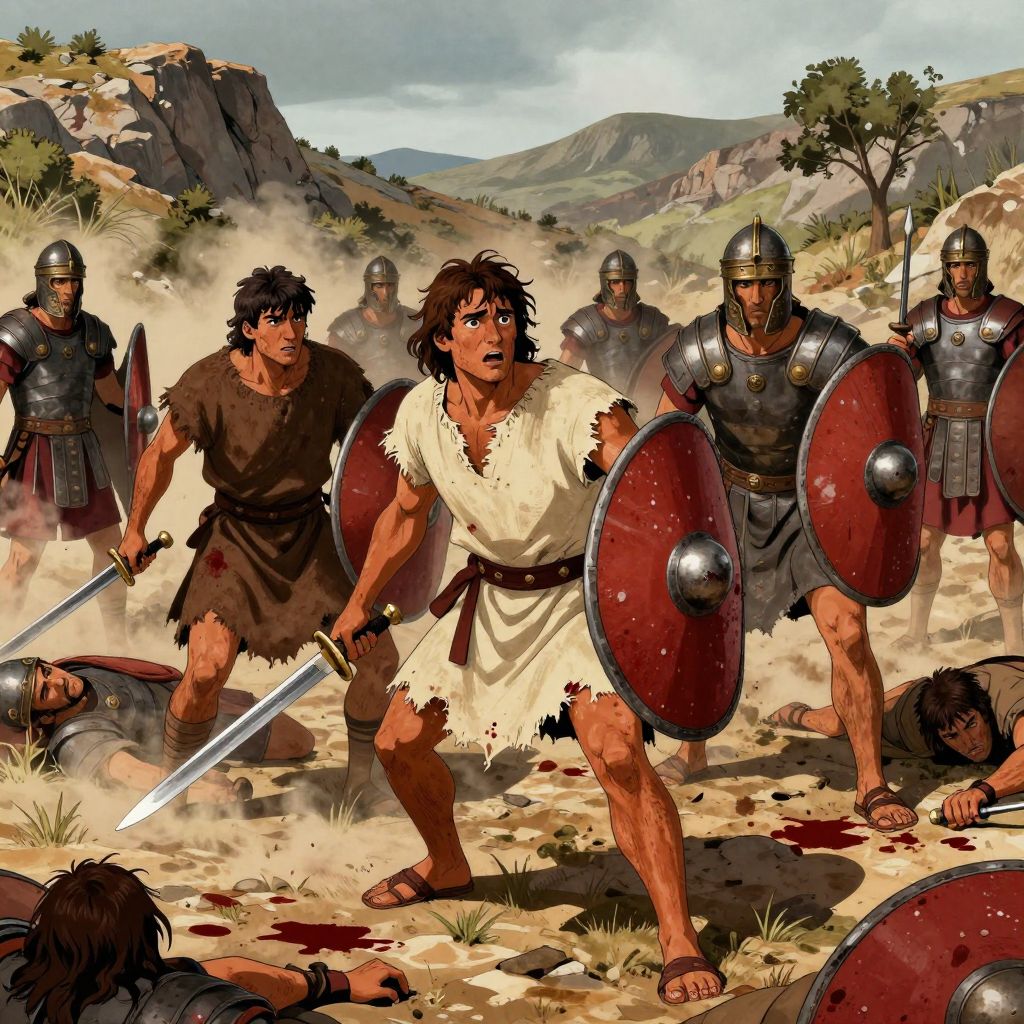
About a thousand escaped. Among them was a shepherd named Viriathus. He ran into the Iberian hills with nothing but a knife and a memory of Roman promises.
For the next eight years, he would teach Rome what that memory was worth.
The Lusitanians Before Rome
The Lusitanians occupied the western Iberian Peninsula, in the territory that would become modern Portugal and parts of western Spain. They were fierce, independent, and they did not build cities. They lived in fortified hilltop settlements called castros, raised cattle and sheep in the rugged highlands, and supplemented their herding with seasonal raids against wealthier neighbors.
Rome had been in Hispania since the Second Punic War, when they drove out Carthage and stayed. By 150 BCE, they controlled most of the eastern and southern peninsula. The Lusitanians occupied the western highlands, and they had no intention of submitting.
The conflict began as a border war. Lusitanian raiding parties struck Roman territory. Roman armies pursued them into the mountains and got ambushed. Commanders came and went. The war dragged on. Eventually, Galba decided that negotiation was cheaper than endless campaigning.
His negotiation was a massacre. And his massacre created Viriathus.
From Shepherd to General
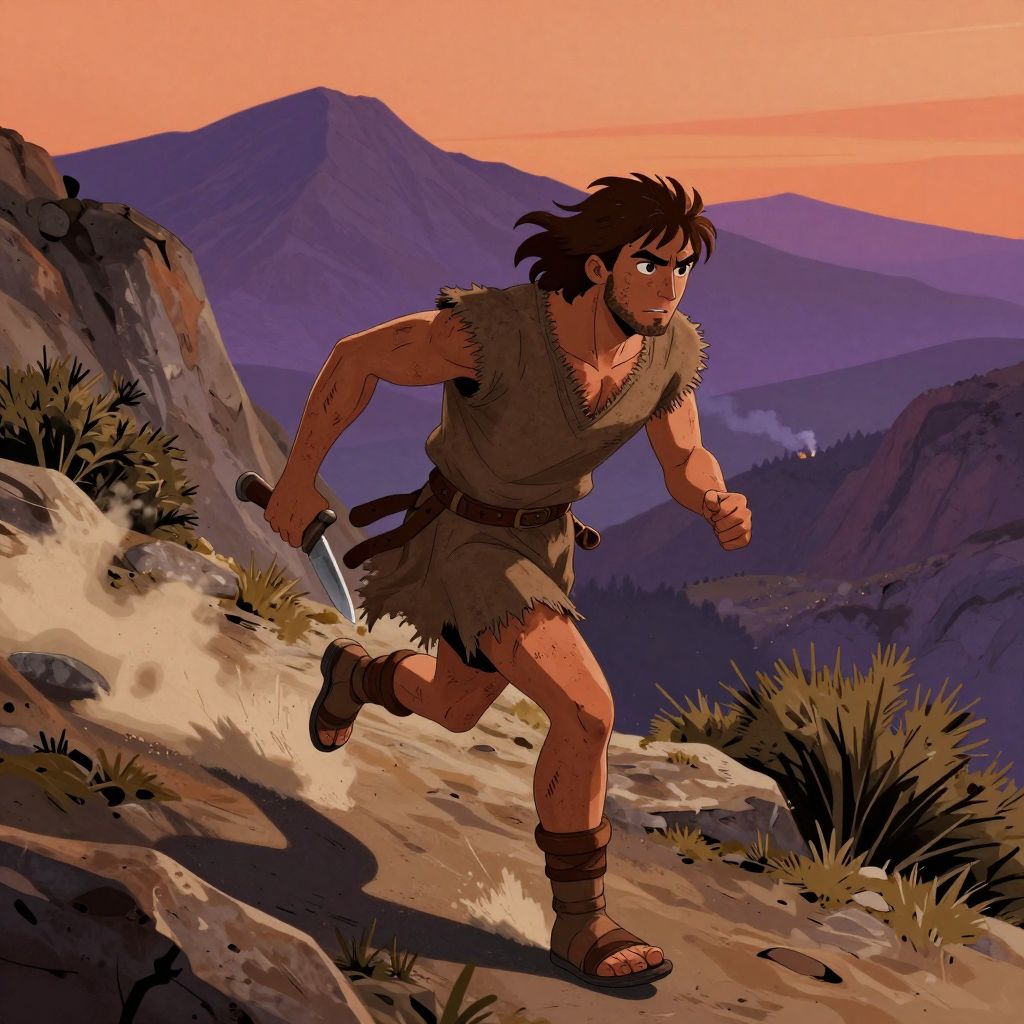
Two years after Galba's massacre, in 147 BCE, Roman praetor Gaius Vetilius cornered a large Lusitanian raiding party against a river. Standard tactics: surround them, demand surrender, promise lenient terms.
Viriathus had heard Roman promises before.
He reminded the warriors of what happened to those who disarmed. He reminded them of the trenches, the swords, the broken oaths. Then he proposed something different: break out fighting, or die here like the men who trusted Galba.
They chose him as their leader on the spot.
Viriathus led a diversionary attack that allowed most of the warriors to escape, then vanished into the mountains with his cavalry. Vetilius pursued. That was his last mistake. Viriathus knew the terrain. The Romans didn't. He led them up the Barbesula River valley until the column stretched thin along a narrow pass, then wheeled his cavalry and attacked from the front while warriors hidden in the thickets stormed down the slopes.
Four thousand Romans died, including Vetilius himself. The Lusitanian War had a new phase, and Viriathus had a reputation.
The Art of the Ambush
Greek historian Polybius called what followed the "War of Fire." Viriathus invented a form of warfare that the Romans had never encountered and couldn't counter.
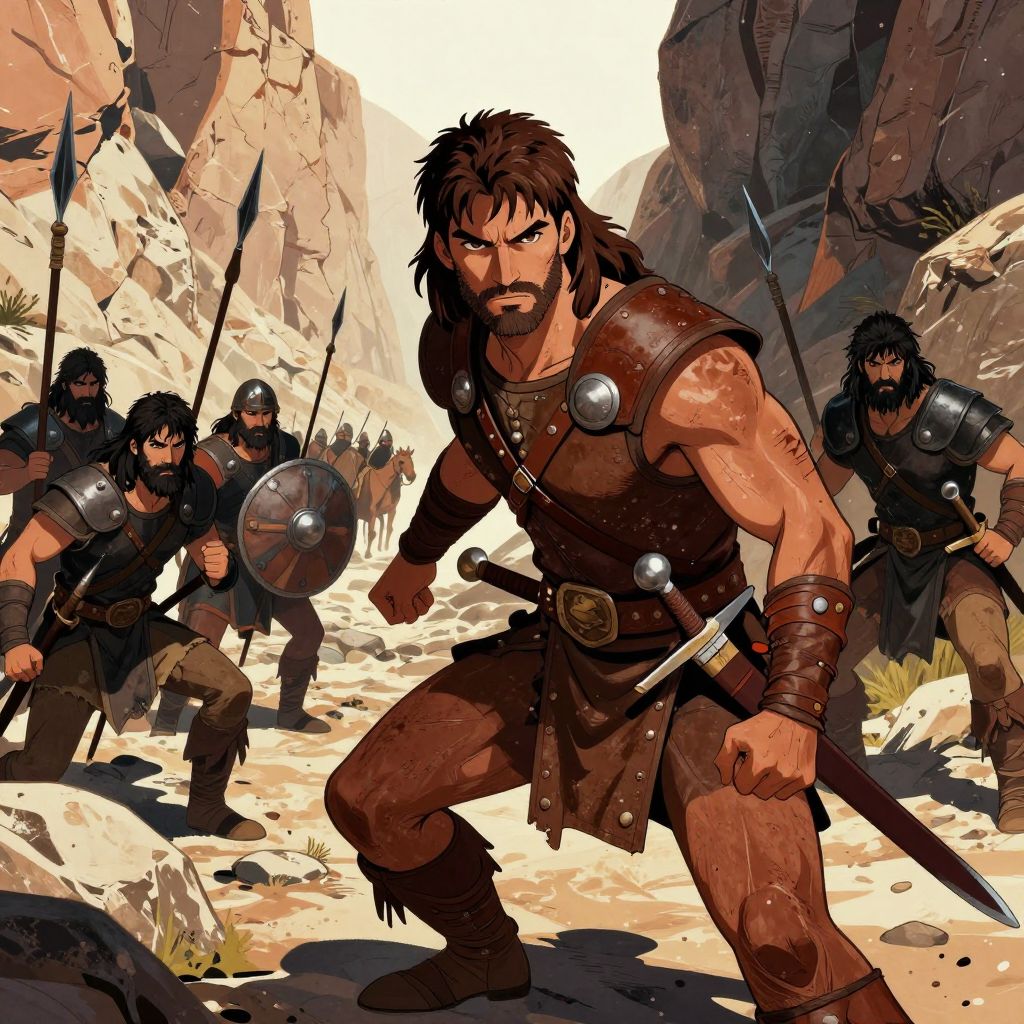
The Romans called his method the concursare, the feint-and-strike. Viriathus would attack, retreat, appear to flee, then turn and counterattack when the pursuing Romans had broken formation. His men knew every path, every hiding place, every spot where the terrain favored ambush. The Romans had roads and discipline. Viriathus had mountains and patience.
In 146 BCE, Gaius Plautius arrived with ten thousand infantry and thirteen hundred cavalry to end the rebellion. Viriathus defeated him so thoroughly that Plautius withdrew into winter quarters in midsummer. The campaign was over before autumn.
Rome sent Claudius Unimanus. Viriathus destroyed him too. Unimanus left an account of the fighting that survived in fragments: in one narrow pass, three hundred Lusitanians faced a thousand Romans. Seventy Lusitanians died. Three hundred and twenty Romans fell. Those were the mathematics of guerrilla war.
After defeating Unimanus, Viriathus displayed the captured Roman standards and military equipment throughout the mountain countryside. The message was clear: Rome could be beaten. Rome could be humiliated.
Gaius Negidius came next. Same result. Commander after commander arrived in Hispania expecting to crush the rebellion. Commander after commander went home in disgrace or didn't go home at all.
Why They Followed Him
Roman generals ate separately from their soldiers. Better food. Private tents. The privileges of command. Viriathus ate what his men ate. Same bowl, same portion of thin stew that had been thin for weeks. He slept where they slept, on the same ground, in the same conditions.
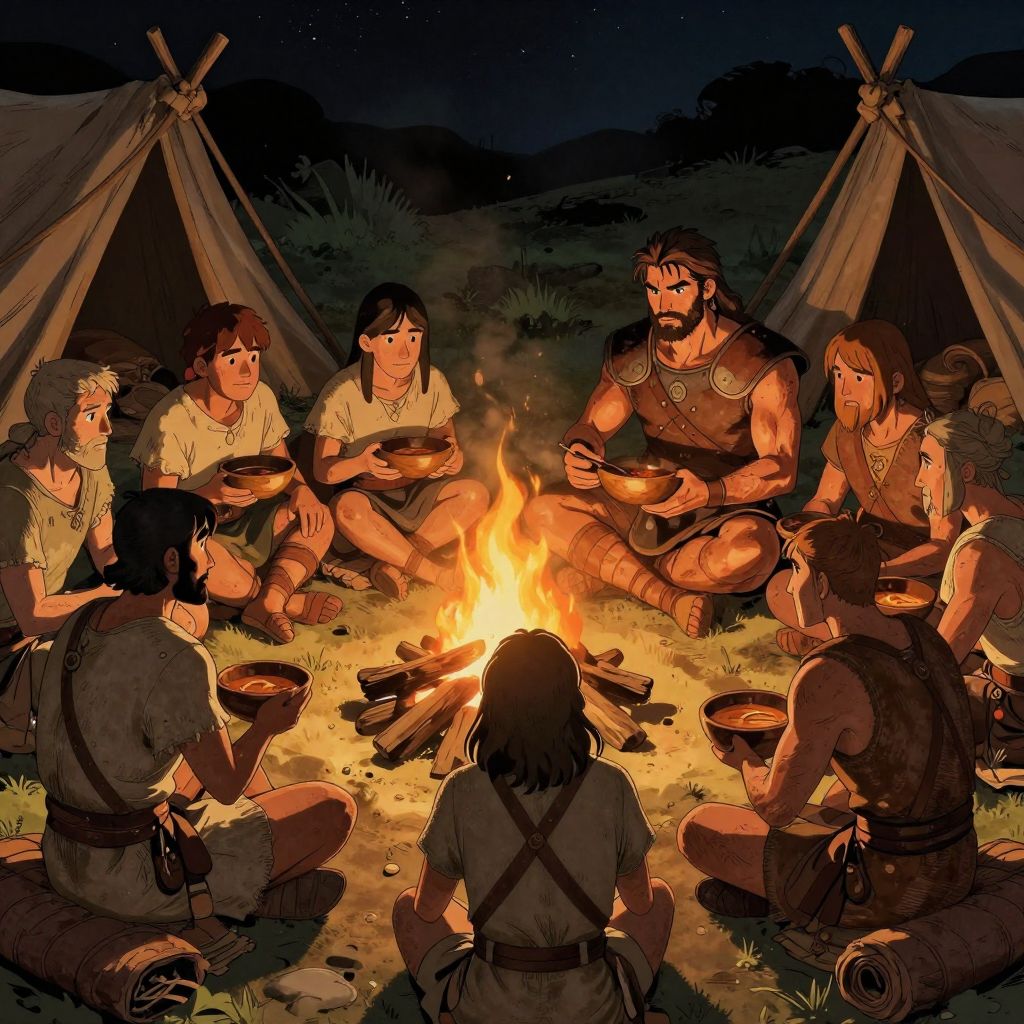
When a wounded soldier fell behind on a march, Viriathus carried his pack.
This wasn't theatrical humility. It was how he built an army that could survive eight years of running, fighting, and dying in the mountains. His men weren't mercenaries fighting for pay. They weren't conscripts serving their term. They were warriors who had chosen to follow a man who had chosen to be one of them.
By 143 BCE, Viriathus had done something remarkable: he had united not just the Lusitanians but the neighboring Celtic tribes as well. The Vettones joined him. The Gallaecians sent warriors. Most significantly, he convinced the Arevaci, Titii, and Belli tribes to revolt against Rome, sparking what would become the Numantine War.
For a shepherd who had escaped a massacre with nothing but a knife, this was an extraordinary achievement. He had transformed a local insurgency into a coordinated Iberian resistance.
The Betrayal
Rome couldn't beat him with legions. So they tried something else.
In 140 BCE, Quintus Servilius Caepio took command of the Roman forces in Hispania. He was a pragmatist. Eight years of failed campaigns had proven that Viriathus could not be defeated in battle. But every man has weaknesses, and Viriathus's weakness was trust.
Viriathus sent three of his closest allies to negotiate peace terms with Caepio. Their names were Audax, Ditalcus, and Minurus. They weren't Lusitanians. They came from other tribes, warriors who had joined his cause and earned his confidence. Men he trusted enough to speak for him.
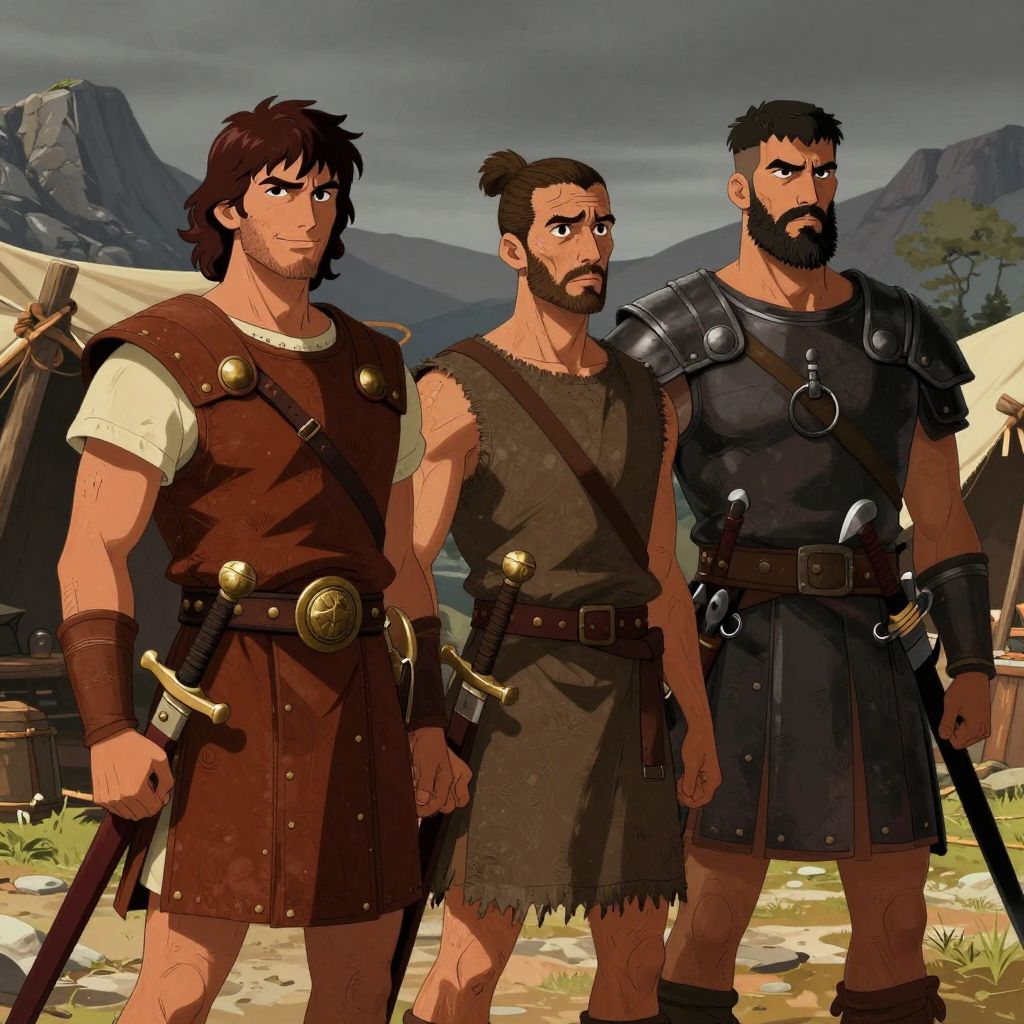
They came back with Roman gold in their pockets and Roman promises in their ears.
Viriathus always slept in his armor. Eight years of running had made that a habit. But he allowed his closest companions to enter his tent at any time, so he could be summoned to battle immediately if needed. That access was both his strength and his death.
One night in 139 BCE, the three assassins entered his tent. They cut his throat while he slept. Three men he had trusted with his life ended it without a sound, while he dreamed of mountains he would never see again.
His men found him the next morning, long after the killers had fled. They knew he had been murdered, but not by whom. They couldn't avenge him because they didn't know who to kill.
Rome Does Not Pay Traitors
The assassins made their way to Rome for their reward. They had done what eight years of Roman legions couldn't do. Surely Caepio would honor his promise.
Caepio turned them away.
The exact words vary by source. The historian Eutropius recorded that Caepio said it was never pleasing to the Romans that a general should be killed by his own soldiers. In Portugal and Spain, the phrase survived differently: Roma traditoribus non praemiat. Rome does not pay traitors.
The Senate deemed the entire affair improper and denied Caepio his military triumph. Whatever private satisfaction they felt about Viriathus's death, publicly they refused to celebrate it. A commander who couldn't beat his enemy with armies had resorted to assassination. That wasn't Roman. That wasn't honorable.
The assassins had sold their leader for gold they would never spend. Rome used them and discarded them. The historical sources don't record what happened to Audax, Ditalcus, and Minurus after their rejection, but the popular tradition holds that they were executed. Either way, they vanished from history with nothing but infamy attached to their names.
The Funeral and the Aftermath
The Lusitanians gave Viriathus a funeral befitting a king he had never claimed to be. They dressed him in ceremonial garments, burned him on a pyre, and held processions around the flames. Gladiatorial combats honored his memory. Warriors sang songs that would echo through centuries.
A new leader named Tautalus tried to continue the fight, but the coalition was already fracturing. Within a year, the Lusitanian resistance collapsed. They attempted one last raid against Saguntum, failed, and were defeated by Caepio as they retreated across the Baetis River. The survivors submitted to Rome.
The Lusitanian War was over. But the lesson lingered.
What Rome Learned in Hispania
The conquest of Hispania took Rome two centuries of nearly continuous warfare. From the Second Punic War to the final subjugation of the Cantabrians under Augustus, the Iberian Peninsula proved more difficult to conquer than any other territory Rome claimed.
Viriathus taught them the hardest lessons.
He demonstrated that guerrilla warfare could neutralize Rome's advantages in organization and discipline. He proved that a leader who shared his soldiers' hardships could build loyalty that money couldn't buy. He showed that Rome's appetite for negotiated settlements could be exploited by those who remembered Roman treachery.
And he revealed the limits of Roman honor. When they couldn't beat him fairly, they bought his murder. When the murderers came for payment, Rome refused to pay. Both actions were cynical, both were effective, and both were remembered.
The Numantine War continued for another decade after Viriathus's death. The city of Numantia, with a garrison of only eight thousand, would hold out against Roman armies of sixty thousand until 133 BCE, when Scipio Aemilianus finally starved them into submission. The Numantines chose mass suicide over surrender. They too had learned what Roman promises were worth.
Legacy of the Shepherd
Viriathus became the national hero of Portugal, the earliest figure around whom Portuguese identity would coalesce. Statues of him stand in Lisbon and Viseu. The story of the shepherd who defied an empire for eight years and was only defeated by treachery became foundational mythology.
But his legacy extends beyond nationalism.
He pioneered guerrilla tactics that would be replicated for millennia. His combination of tactical flexibility, intimate knowledge of terrain, and personal leadership created a template for asymmetric warfare. His refusal to fight on Roman terms, his hit-and-run attacks on supply lines, his ability to appear and vanish, all anticipated the methods of later insurgencies.
More fundamentally, he embodied a principle that Rome's later enemies would have done well to remember: you cannot negotiate with an empire that breaks its treaties. Galba taught the Lusitanians that Roman peace meant death. Viriathus remembered that lesson and used it to build an army of men who would rather die fighting than trust Roman words again.
Eight years of war. Dozens of Roman commanders. Countless legionaries dead in mountain passes and ambushed convoys. And in the end, Rome needed three traitors and a dark tent to stop a shepherd who had escaped a massacre with nothing but a knife.
That's what Rome learned in Hispania. Everyone has a price. Even the people who love you. Especially them. Because they're the ones who can get close enough.
Frequently Asked Questions
1Who was Viriathus?
Viriathus was a Lusitanian shepherd who survived the massacre of his people by Roman praetor Servius Sulpicius Galba in 150 BCE. He led successful guerrilla warfare against Rome from 147 to 139 BCE, defeating multiple Roman commanders before being assassinated by his own lieutenants at Roman instigation.
2How did Rome finally defeat Viriathus?
Rome could not defeat Viriathus in battle after eight years of trying. Instead, consul Quintus Servilius Caepio bribed three of Viriathus's trusted allies, Audax, Ditalcus, and Minurus, to assassinate him in his sleep. When they sought their promised reward, Rome reportedly replied 'Rome does not pay traitors.'
3What happened at the Galba massacre?
In 150 BCE, Roman praetor Servius Sulpicius Galba promised land to Lusitanian warriors if they surrendered their weapons. After they disarmed, he divided them into three groups and had them slaughtered. Thousands were killed and enslaved. About a thousand escaped, including Viriathus.
4Why is Viriathus important in Portuguese history?
Viriathus is considered the first Portuguese national hero. His eight-year resistance against Rome and his status as a leader who shared his soldiers' hardships made him a symbol of independence and national identity. Statues of him stand in Lisbon and Viseu.
5What was Viriathus's guerrilla strategy?
Viriathus used a tactic the Romans called concursare: attack, feign retreat, then counterattack when pursuers broke formation. His intimate knowledge of Iberian mountain terrain allowed him to ambush Roman forces repeatedly, negating their advantages in discipline and numbers.
Experience the Lusitanian War
From the massacre to the betrayal, hear how one shepherd made Rome pay for eight years.


Listen to Related Stories
The Shepherd's Revenge
4 minOne of the few who escaped was a shepherd named Viriathus.

Listen to the Full Story
Experience history through immersive audio lessons narrated by Lumo, your immortal wolf guide.