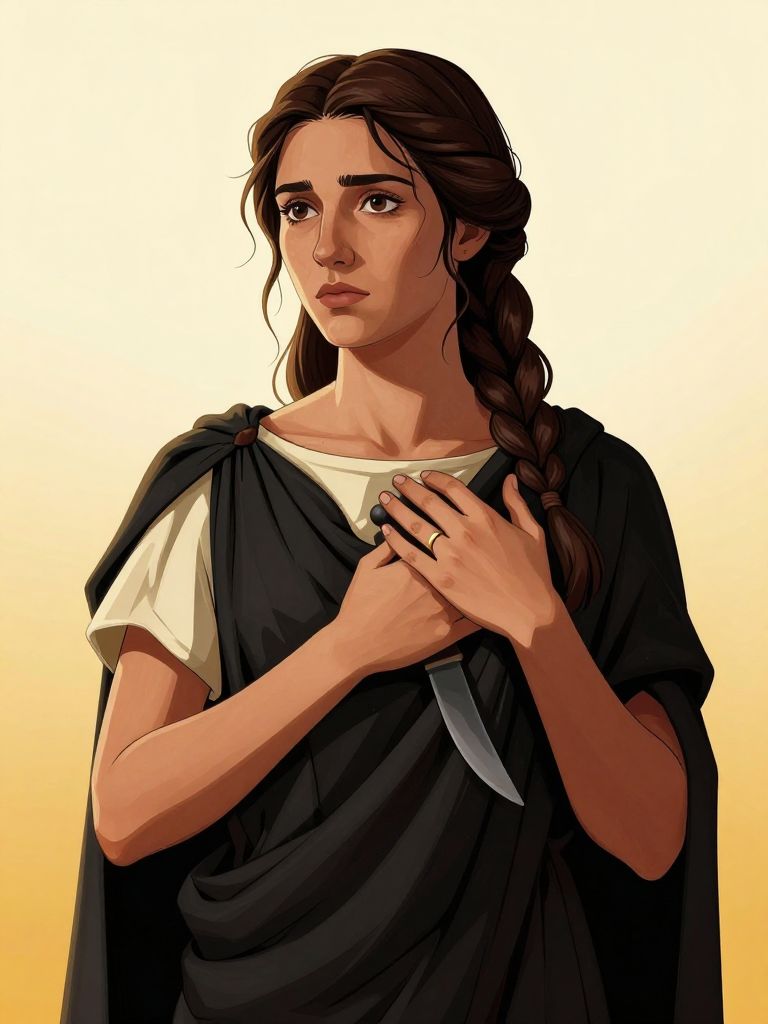
The Woman Who Ended the Monarchy
Lucretia was a Roman noblewoman, wife of Collatinus. That's who she was. What she did is what made her immortal.
In 509 BCE, Sextus Tarquinius — son of King Tarquinius Superbus — forced himself on her at knifepoint in her own home. He threatened that if she resisted, he'd kill her and place a naked slave's body beside her, then tell everyone he'd caught them in adultery together.
She didn't resist. She let him leave alive.
Then she did something no one expected.
The Plan

The next morning, Lucretia sent messengers to her father and husband with an urgent summons: "Come home immediately. Bring witnesses."
Not "come quickly." Not "I need you." Bring witnesses.
When they arrived — along with a man everyone dismissed as a harmless fool named Brutus — she told them exactly what happened. Every detail. The threat. The assault. The name of her attacker.
Then she said:
"My body is defiled. But my mind is innocent. I absolve myself of sin. But not of punishment. No woman will ever use Lucretia as an excuse to live in shame."
She said it like she'd rehearsed it. Like she'd been awake all night choosing exactly those words.
The Weapon
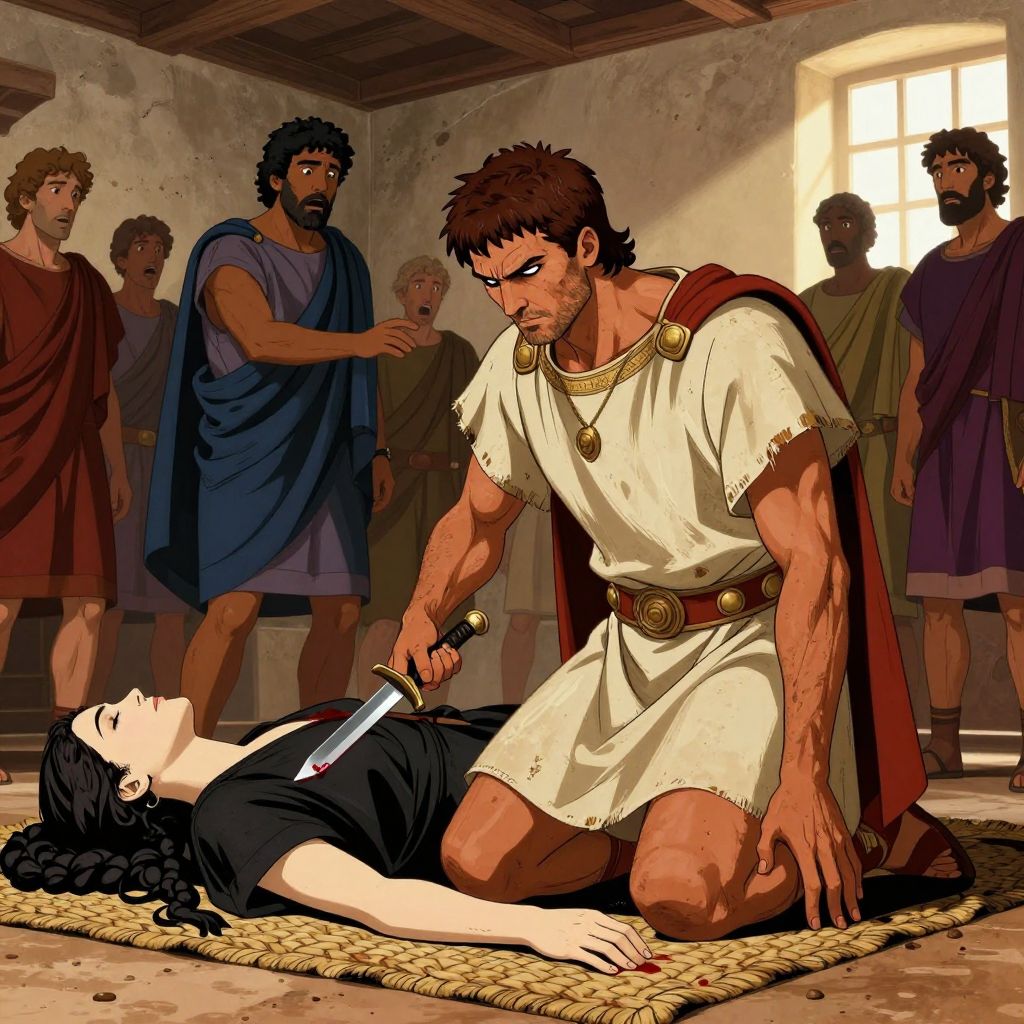
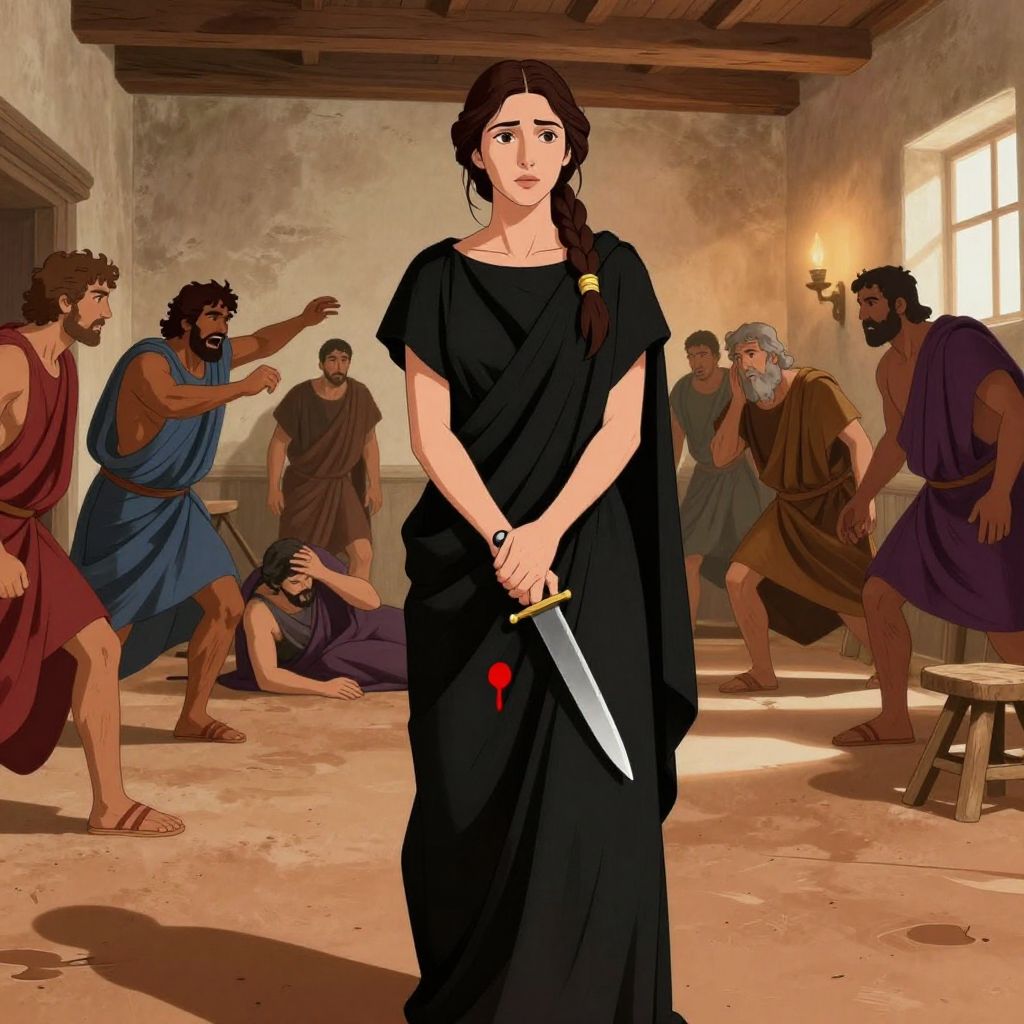
She pulled a knife from under her dress and drove it into her own heart.
The room erupted. Collatinus screamed. Her father collapsed in grief.
This wasn't despair. It was calculation.
Lucretia had summoned witnesses specifically so her testimony couldn't be denied or dismissed as rumor. She named her attacker publicly. She left no room for doubt or cover-up. And then she made herself a martyr — someone whose death demanded a response.
You can't ignore a dead noblewoman with witnesses who heard her name her royal attacker.
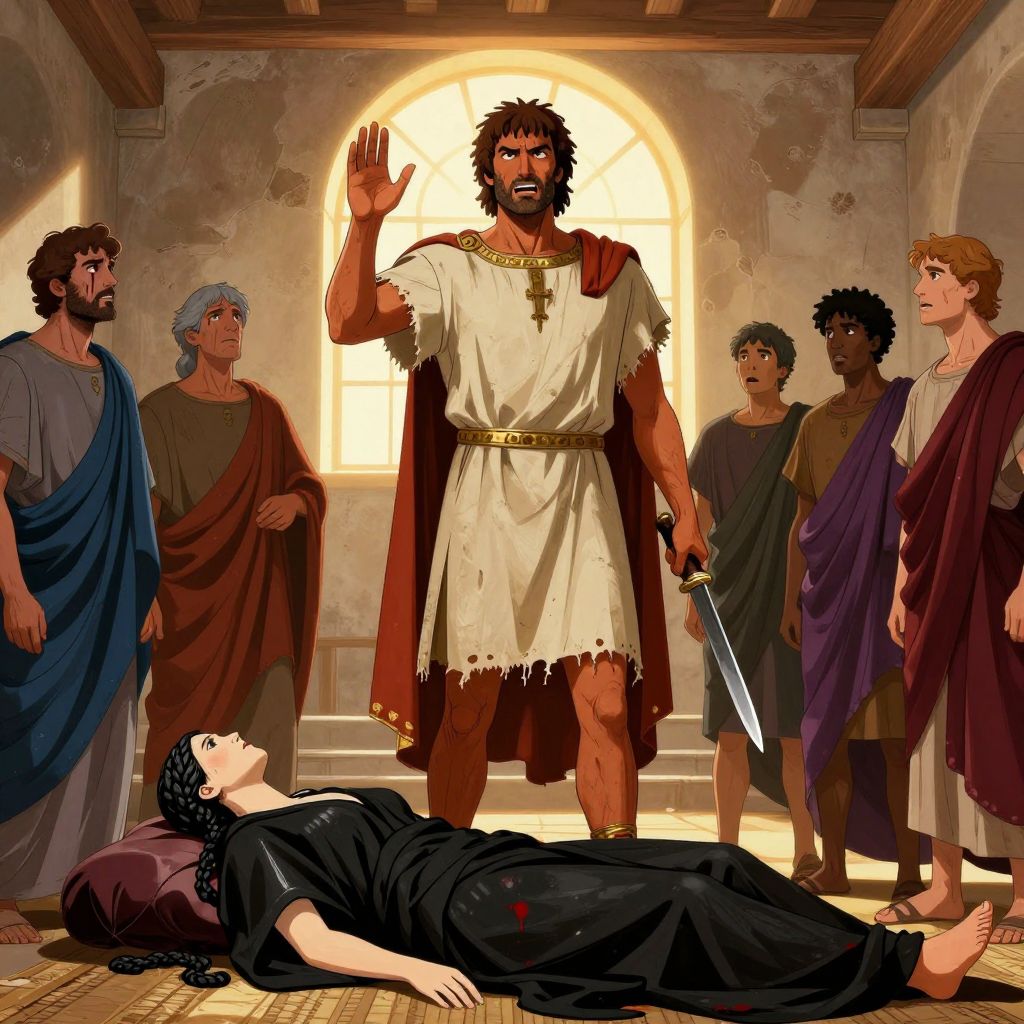
While everyone else collapsed in grief, Brutus — the man who'd spent years pretending to be mentally impaired after the king murdered his father and brother — walked through the chaos untouched. He knelt beside her body, pulled the knife from her chest, and spoke with a voice no one had heard before.
"By this blood — most pure before the outrage of a prince — I swear that I will drive out Lucius Tarquinius Superbus and all his cursed house. Rome will never have another king."
The Revolution
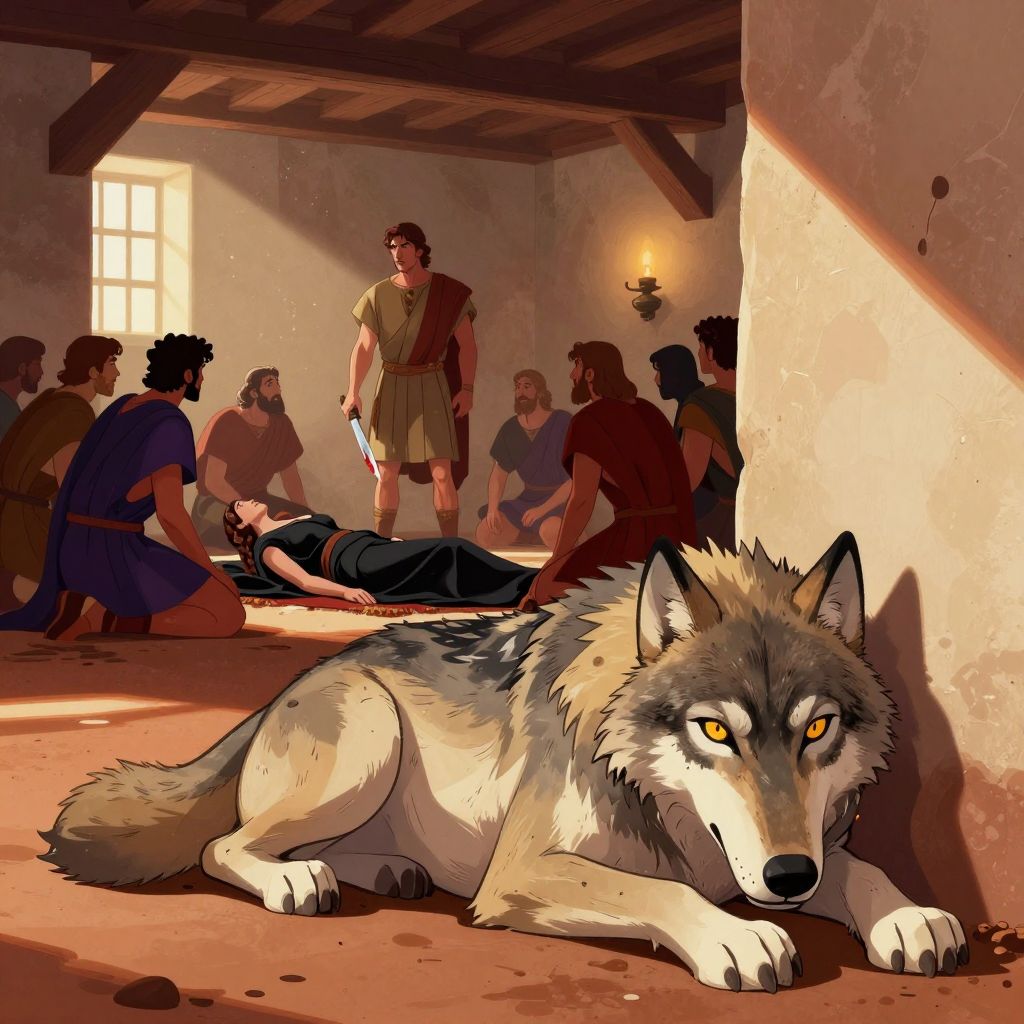
The knife was still wet when they started organizing.
Within days, Rome was in open revolt. The army defected. The people rioted. Tarquinius Superbus — the last king of Rome — fled the city he'd ruled as a tyrant.
In his place, Rome created something new: the Republic. Two elected consuls instead of a king. A Senate with real power. Term limits. Checks and balances.
The first two consuls? Brutus himself, and Lucretia's widowed husband Collatinus.
Rome wouldn't have another king for nearly 500 years. When Julius Caesar got too close to that kind of power, the conspirators who murdered him included a man named Brutus — who claimed descent from this one, the founder of Roman liberty.
All of it started because a woman refused to let her assault be swept away.
How Romans Read the Story
To the Romans, Lucretia was the ideal woman — she chose death over shame. Her virtue was intact because her mind remained pure, even if her body was violated. The story was told and retold as proof of Roman moral superiority.
Livy wrote about her 500 years later. Her story became foundational myth — the moment when Romans proved they valued honor more than life itself.
But read it again.
She didn't die in despair. She summoned witnesses. She gave testimony. She made her death impossible to ignore. She turned her body into a weapon against the royal family.
A Modern Reading
Modern readers see something darker. A victim of sexual violence who was given only one choice: death. A society that valued her "purity" more than her life. A story where the woman's agency exists only in how she chooses to die.
Both readings miss something.
Look at what she actually did. The morning after the assault, she could have:
- Kept silent (standard for Roman women in that era)
- Told her husband privately
- Blamed herself
- Accepted the shame and lived with it
Instead, she:
- Sent for witnesses before speaking
- Gave detailed testimony naming her attacker
- Made her death a public political act
- Forced Rome's hand
Was suicide her only option? Maybe not. But she saw a chance to destroy something rotten, and she took it.
The Complexity
Here's what makes Lucretia's story uncomfortable: she probably did see death as the only honorable choice. Roman culture valued female virtue above female life. She likely believed what she said — that living would dishonor her.
But she also weaponized that belief. She turned the very culture that said she had to die into a tool to destroy the monarchy.
She was trapped by her culture's values. And she used those same values to change history.
You can be a victim and a revolutionary. You can be constrained by impossible choices and still make those choices count.
Why the Story Survived
Romans told Lucretia's story for 500 years as proof of their virtue. The founding myth of the Republic. The moment when honor mattered more than power.
But it survived because it's complicated. Because you can't quite pin down what it means.
Is it a story about:
- A woman's courage?
- A society's brutality toward women?
- A calculated political act disguised as suicide?
- All three?
The answer is yes.
Lucretia died in 509 BCE. Her name outlasted the Republic she helped create, outlasted the Empire that followed it, outlasted Rome itself.
Whether you see her as a tragic victim or a cold-eyed revolutionary probably says more about you than it does about her. Maybe she was both.
What We Know For Sure
The Roman monarchy ended around 509 BCE. That's historical fact.
Whether Lucretia was a real person or a symbolic figure created to explain that political shift — historians debate that.
What's certain: Romans believed her story. They told it for centuries. They made it the foundation of their Republic. The reason they'd never bow to kings again.
Real or legend, Lucretia's death changed Rome. Her refusal to stay silent — even if that refusal took the form of suicide — ended a dynasty.
The Tarquin kings fled. The Republic was born. And for nearly 500 years, any Roman who got too ambitious heard the same warning: "Remember what happened to the last king's family."
All because one woman refused to let her assault be quietly forgotten.
Frequently Asked Questions
1Is the story of Lucretia historically accurate?
The story was recorded by Roman historians like Livy, but it's probably more legend than literal history. The Roman monarchy definitely ended around 509 BCE, and the Romans themselves traced the Republic's founding to this story. Whether Lucretia was a real person or a symbolic figure remains debated among historians.
2Why did Lucretia kill herself?
According to the Roman account, Lucretia killed herself to prevent other women from using her survival as an excuse to 'live in shame.' But the story also frames her death as a deliberate political act — she gathered witnesses, gave testimony, and died in front of them, creating a martyr whose death demanded action.
3What happened to Sextus Tarquinius?
Sextus fled Rome with his family when the revolution began. According to Roman tradition, he was later killed — some sources say in battle, others suggest assassination. The entire Tarquin family was expelled from Rome and permanently banned from returning.
4Who was Brutus in this story?
Lucius Junius Brutus was a nobleman — nephew of King Tarquinius Superbus — who spent years pretending to be mentally impaired after the king killed his brother and seized power from his father-in-law. The name 'Brutus' actually means 'dull' or 'stupid.' He used Lucretia's death as the catalyst for revolution and became one of the first two consuls of the Roman Republic.
Hear the Full Story
Experience Lucretia's story as told by an ancient witness, including the moment Brutus dropped his mask of madness.


Hear Their Story
What Lucretia Did
4 minShe refused to live with shame. Her death sparked a revolution that would topple the Roman monarchy.

Related Articles
The Story of Lucretia: The Rape That Ended Rome's Monarchy
How Lucretia's death in 509 BCE triggered a revolution that abolished the Roman kings. The calculated martyrdom that launched the Roman Republic.
Tarquinius Superbus: Rome's Last King and the Birth of the Republic
How Lucius Tarquinius Superbus seized power through murder, ruled as a tyrant for 25 years, and lost everything when his son assaulted a noblewoman. The fall of Rome's monarchy.
Experience Lucretia's Story
Go beyond the biography. Hear Lucretia's story told by Lumo, your immortal wolf guide who witnessed these events firsthand.