The Street They Named for Crime
The Romans named a street Vicus Sceleratus. The Street of Crime. That name stuck for centuries, a permanent reminder of what happened there in 535 BCE. A daughter drove her chariot over her father's corpse. She didn't stop. She didn't look back. The blood from King Servius Tullius's body stained the cobblestones and the memory of everyone who witnessed it.
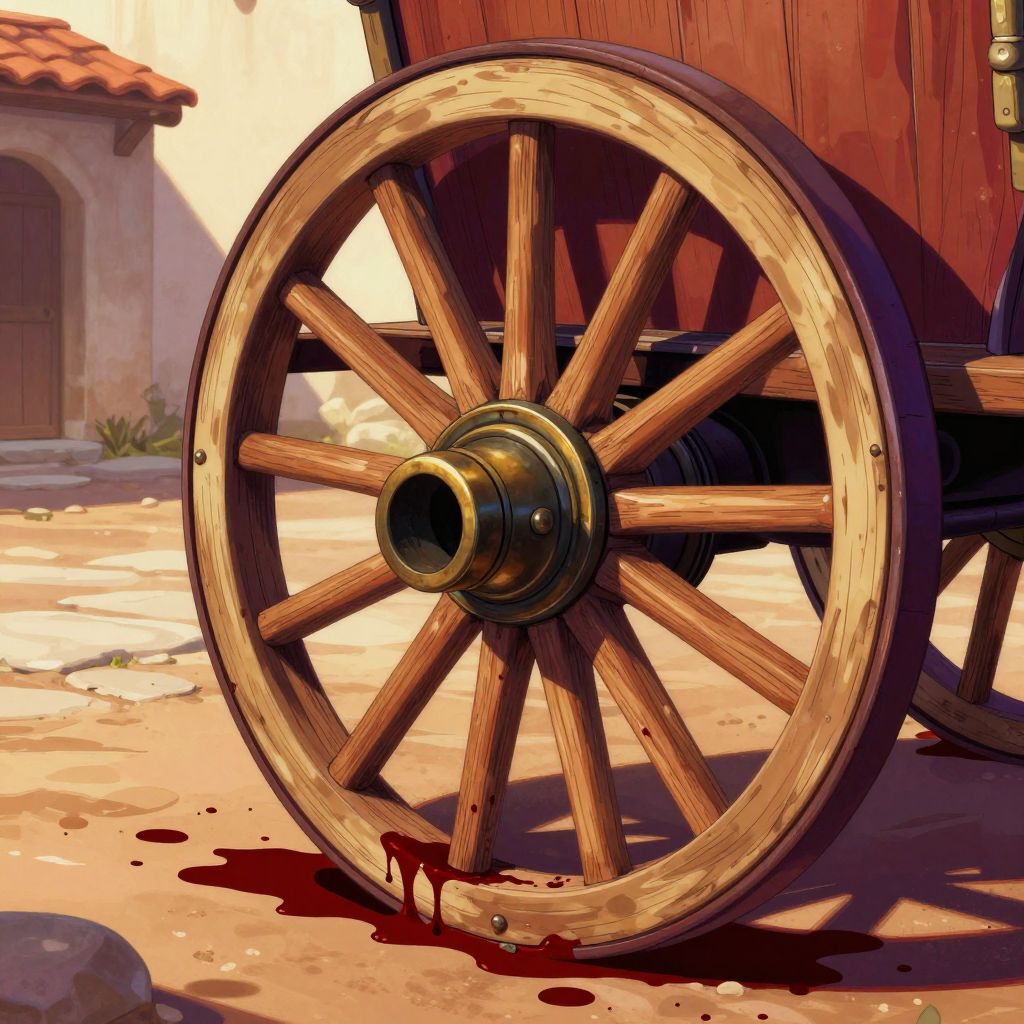
This is how Rome's last king took power. Not through election. Not through inheritance. Through parricide and murder. The reign of Lucius Tarquinius Superbus began in blood, continued in terror, and ended in exile. His 25 years on the throne would become the final argument Rome needed to abolish kingship forever.
The Tarquin Dynasty
To understand how Tarquinius Superbus came to power, you need to understand the dynasty he belonged to. The Tarquins were Etruscans, members of the civilization that dominated central Italy before Rome rose to prominence. The Etruscans built cities, developed sophisticated art and engineering, and maintained a culture distinct from the Latin peoples who founded Rome.
Lucius Tarquinius Priscus, the first Tarquin king, came to Rome as an immigrant around 616 BCE. According to tradition, he was born Lucumo in the Etruscan city of Tarquinii. His father was Greek, his mother Etruscan. Unable to advance politically in Tarquinii due to his mixed heritage, he moved to Rome with his wife Tanaquil, a noblewoman with reputed powers of prophecy.
The story goes that as their wagon approached Rome, an eagle swooped down and snatched Lucumo's cap, then replaced it on his head. Tanaquil interpreted this as a sign that her husband would become king. She was right. Lucumo changed his name to Lucius Tarquinius Priscus and worked his way into Roman society, eventually becoming the trusted advisor of King Ancus Marcius. When Ancus died, Tarquinius Priscus maneuvered himself into the kingship.
He ruled for 38 years and transformed Rome. He built the Circus Maximus for chariot racing. He began construction on the great Temple of Jupiter on the Capitoline Hill. He drained the marshy valley between Rome's hills and created the Forum, the political and commercial heart of the city. He also conquered neighboring territories and expanded Roman influence throughout Latium.
But Tarquinius Priscus was assassinated in 578 BCE by the sons of Ancus Marcius, who believed they'd been cheated of their inheritance. His widow Tanaquil managed the succession, placing her son-in-law Servius Tullius on the throne while keeping the death secret until power had been transferred.
Servius Tullius: The Beloved King
Servius Tullius ruled Rome for approximately 44 years, making him one of the longest-reigning kings in Roman tradition. His origins were unusual. According to some sources, his mother was a slave or captive in the royal household. A miracle supposedly occurred during his infancy: flames appeared around his head as he slept, then vanished without harming him. Tanaquil interpreted this as a sign of divine favor.
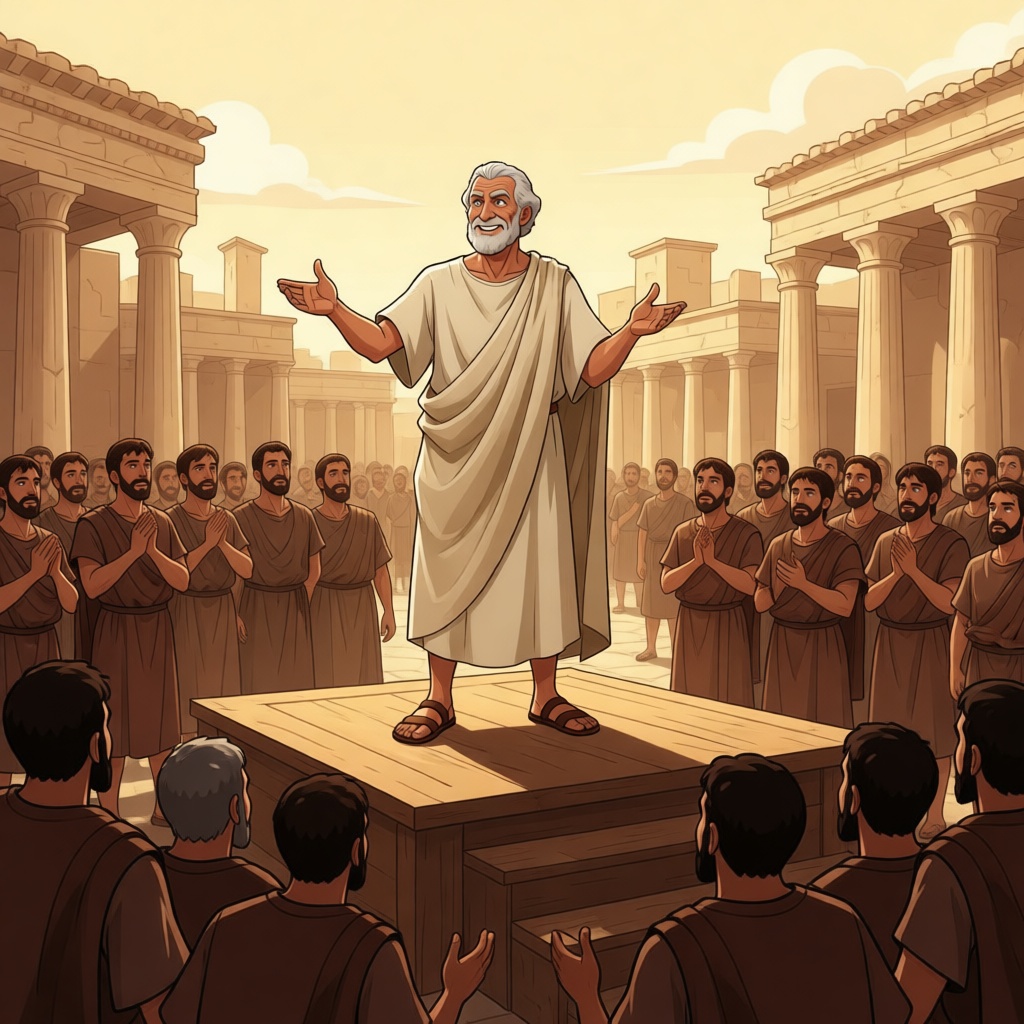
Whatever his origins, Servius became a reformer who genuinely improved the lives of ordinary Romans. He reorganized Roman society into classes based on wealth rather than birth, allowing more citizens to participate in military service and political life. He created the comitia centuriata, an assembly that gave citizens voting power based on their economic contribution to the state. For the first time, Romans who weren't patricians had a meaningful role in governance.
He also built the Servian Wall, a massive fortification that enclosed all seven hills of Rome. Archaeological evidence confirms that such walls existed, though the surviving remains date to later reconstruction. The walls stood for centuries as protection against invasion.
Most importantly for what followed, Servius arranged the marriages of his two daughters, both named Tullia, to the two sons of the late King Tarquinius Priscus. The younger son, Lucius Tarquinius, was married to the elder Tullia, a gentle woman content with her position. His brother Arruns was married to the younger Tullia, an ambitious woman who resented that her husband showed no interest in seizing power.
The matches were poorly suited. The younger Tullia and Lucius Tarquinius were both driven by ambition and contempt for Servius. According to Livy, they began an affair. Then, in a crime that shocked even ancient commentators, they allegedly murdered their own spouses and married each other.
The Conspiracy
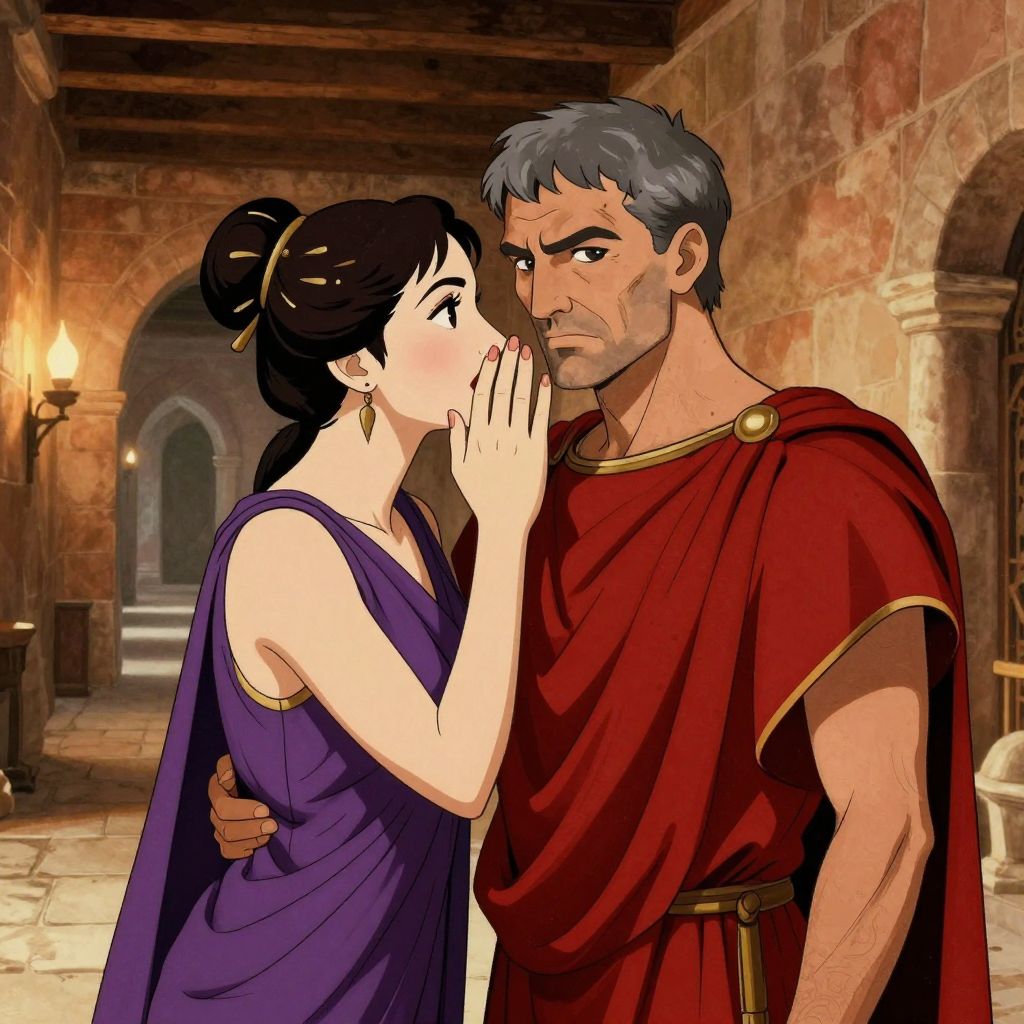
Lucius Tarquinius now had a partner who matched his ambition. Tullia repeatedly reminded him that he was the son of a king, that Servius had no royal blood, that the throne belonged to the Tarquin family by right. She compared him unfavorably to his father, suggesting that Tarquinius Priscus would never have tolerated a slave's son sitting on the throne.
The pressure worked. Around 535 BCE, Lucius Tarquinius made his move. He dressed himself in royal regalia and walked into the Senate house while it was in session. He sat down on the throne and began issuing orders as if he were already king.
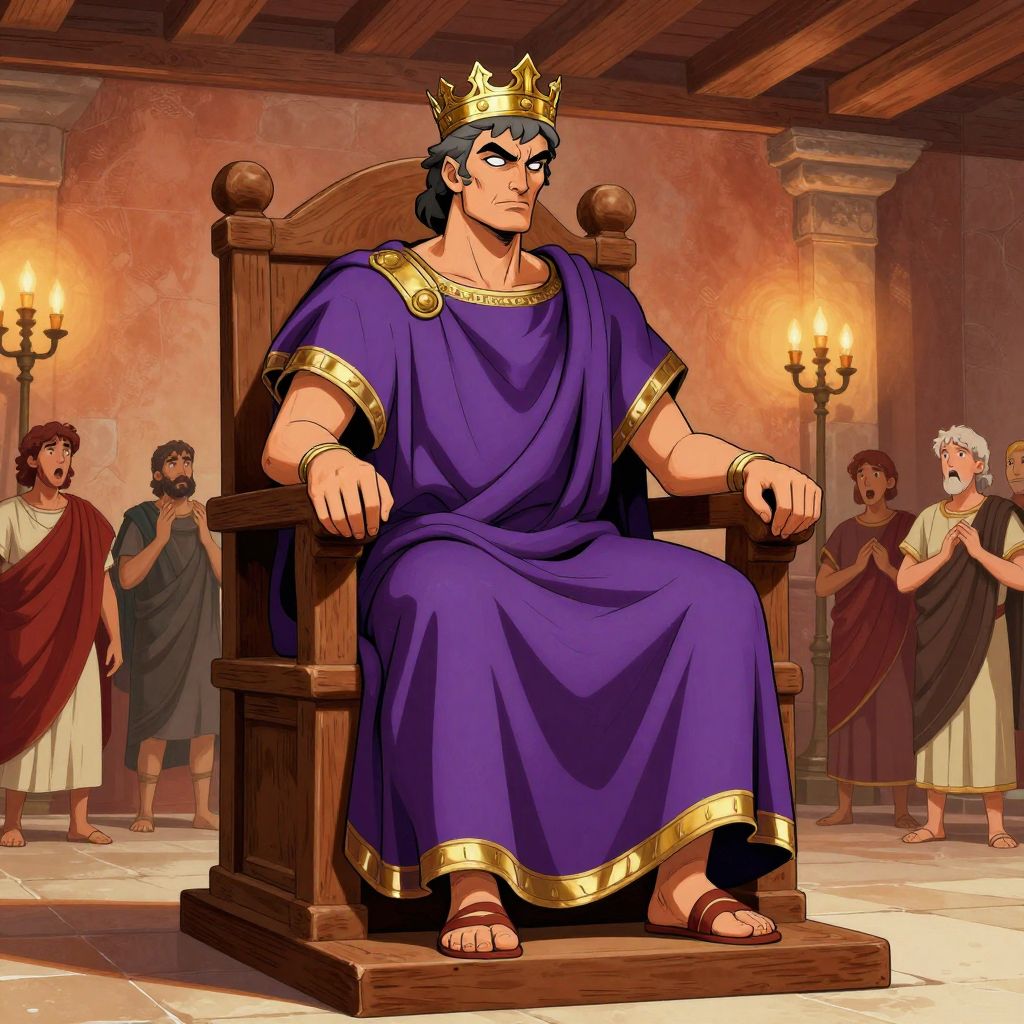
The senators were stunned. Someone ran to inform Servius Tullius. The elderly king (in his late seventies or eighties by this point) rushed to the Senate house to confront the usurper.
Servius demanded to know by what right Tarquinius had summoned the Senate, by what right he sat on the throne. Tarquinius replied that he occupied his father's seat, that a king's son had better claim than a slave's son. The two men argued, their supporters shouting.
Then Tarquinius grabbed the old king by the waist and threw him down the stone steps of the Senate house.
The Murder of a King
Servius landed on the stairs, bleeding and barely conscious. His attendants tried to carry him home. They didn't make it. Tarquinius had sent men ahead with orders to intercept them.
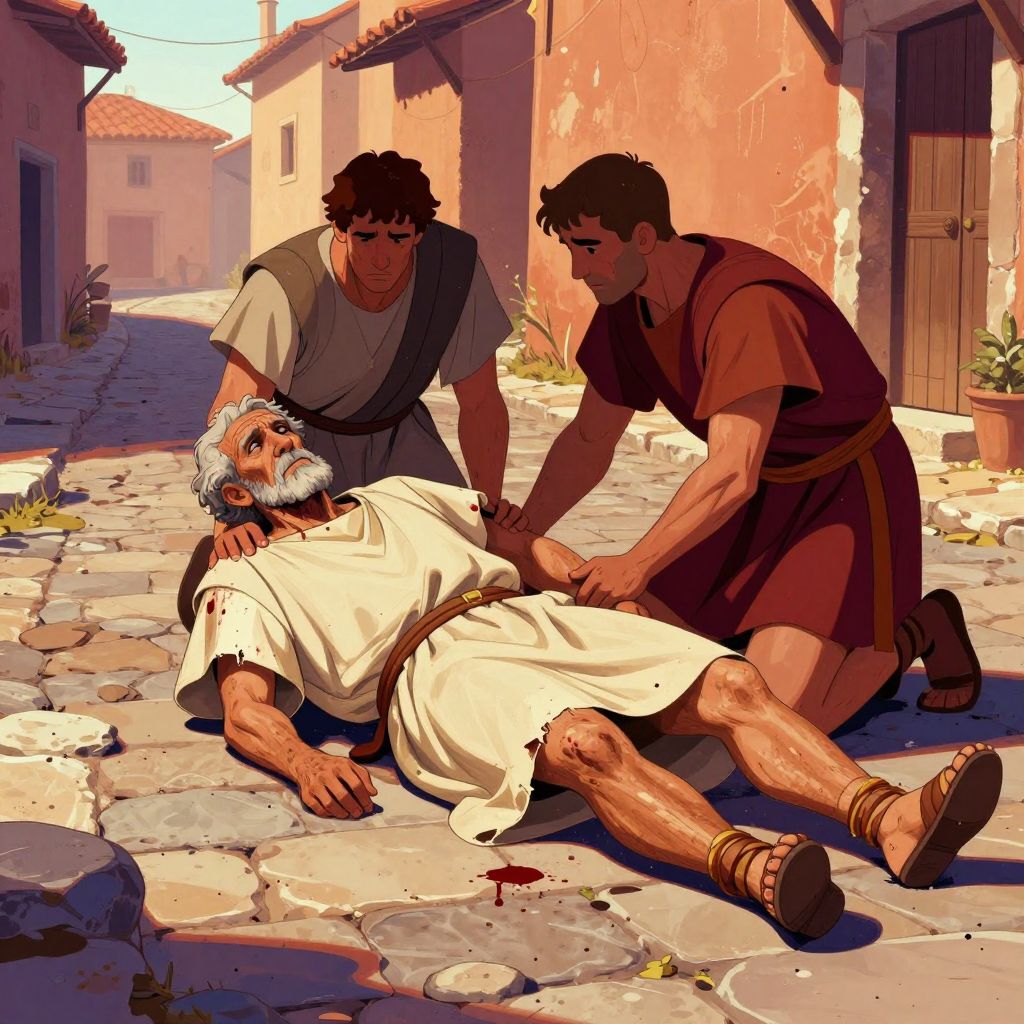
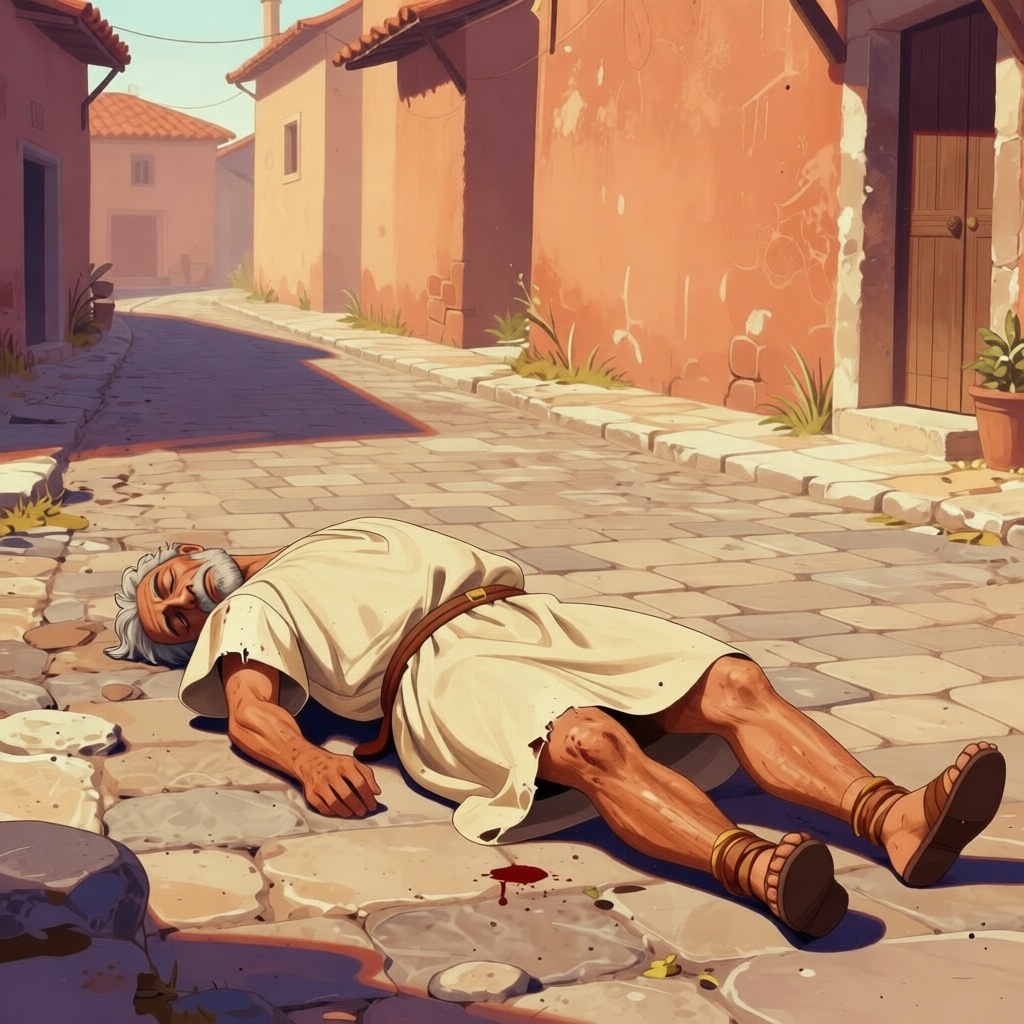
The assassins caught up with Servius in the street and finished the job. The king who had given common Romans a voice in government died on the cobblestones, abandoned by everyone who'd benefited from his reforms. No one was willing to risk death by defending a dying man against the new power in Rome.
Then came Tullia.
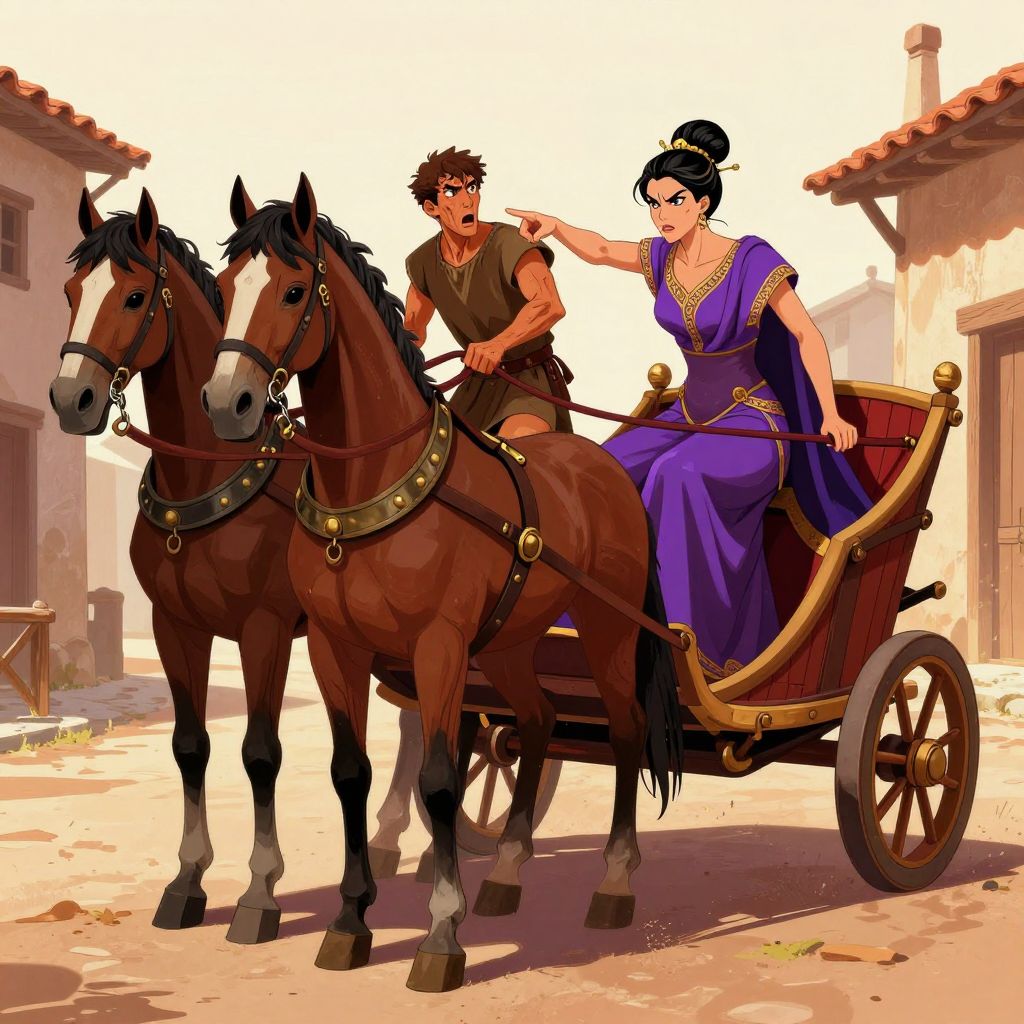
She'd been waiting at the palace, eager for news. When word arrived that her husband had seized the Senate, she rushed out in her chariot to congratulate him, to parade through the streets as the new queen. Her driver took a route through the Esquiline quarter.
The driver saw the body in the road before Tullia did. He recognized Servius. He stopped the horses and refused to continue.
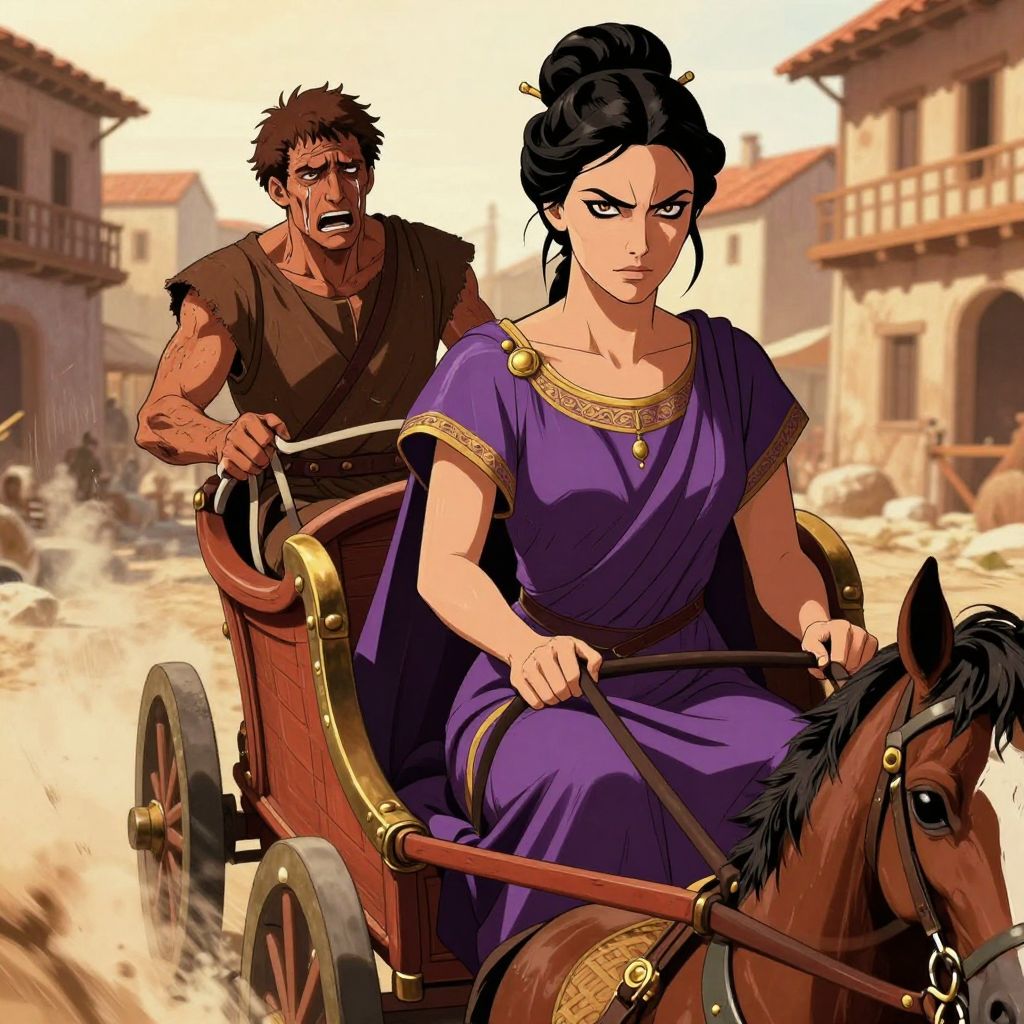
Tullia ordered him to drive on. When he hesitated, she seized the reins herself and drove the chariot over her father's corpse. The blood splattered onto her clothes and onto the chariot's wheels. She arrived at her husband's side covered in her father's blood.
The Romans never forgot. They named that street Vicus Sceleratus, and the name persisted for centuries. Some crimes are too monstrous to forgive, even across generations.
The Reign of Terror
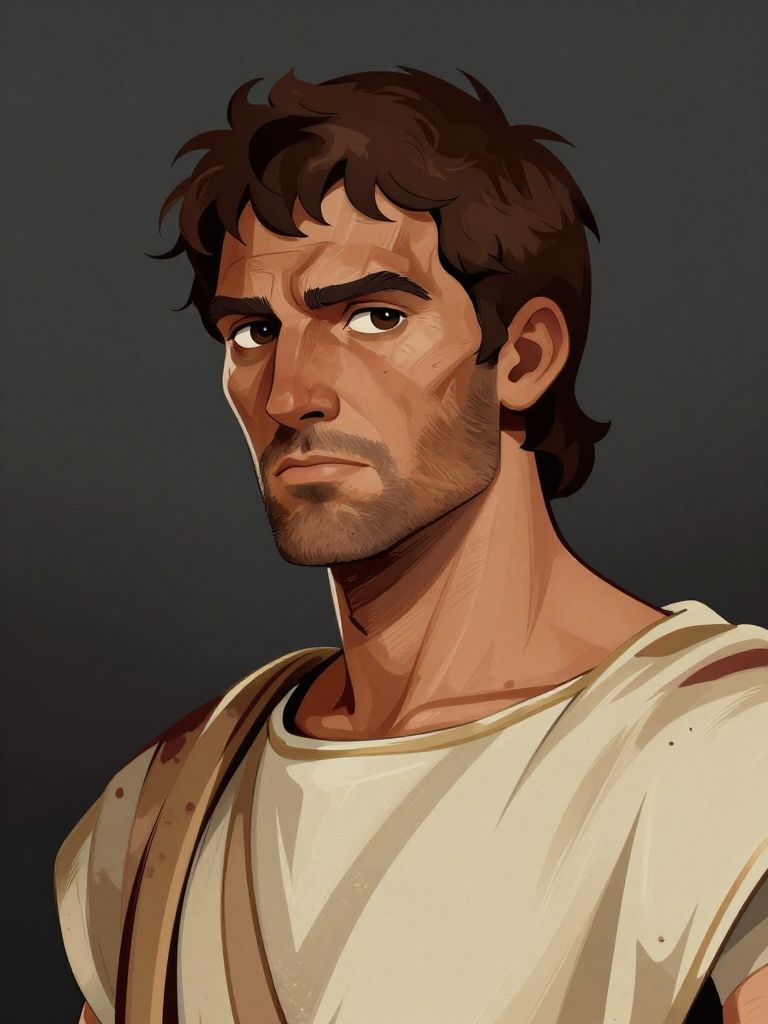
Lucius Tarquinius ruled Rome for approximately 25 years (535-509 BCE). The Romans called him Superbus — "the Proud" or "the Arrogant." It was not a compliment. Ancient sources unanimously describe him as a tyrant who ruled through fear rather than law.
He began by eliminating potential rivals. Senators who had supported Servius Tullius were executed or exiled. Their property was confiscated. The Senate, which had developed into a genuine advisory body under previous kings, was reduced to a rubber stamp that met only when Tarquinius summoned it.
He dispensed with the pretense of consulting the people on matters of war or law. Previous kings had sought at least the appearance of popular consent. Tarquinius didn't bother. He made decisions unilaterally and enforced them through a network of informants and bodyguards.
The common people suffered differently. Tarquinius embarked on ambitious building projects, including completing the Temple of Jupiter Capitolinus that his father had begun. But he funded these projects through forced labor. Roman citizens were conscripted to work without pay on the king's monuments. Those who complained disappeared.
He was militarily successful, conquering several Latin towns and extending Roman territory. He also renewed Rome's alliance with the Latin League, positioning himself as the leader of a regional coalition. These achievements might have earned him respect under different circumstances. Instead, they merely delayed the inevitable reckoning.
The Building Projects
Despite his tyranny, Tarquinius Superbus left Rome more impressive than he found it. The Temple of Jupiter Optimus Maximus on the Capitoline Hill was the most important religious structure in the Roman world. Tarquinius Priscus had begun it; Tarquinius Superbus completed it. Archaeological excavations have confirmed that a major temple existed on the site during this period, with foundations of appropriate size and materials.
He also constructed (or completed) the Cloaca Maxima, the great sewer that drained the Forum and allowed Rome's marshy lowlands to support dense urban development. This engineering achievement remained in use for over two thousand years. Portions of the original structure still function today.
But the methods mattered. Under previous kings, public works involved some combination of paid labor, war captives, and citizen obligation. Tarquinius made the work compulsory and unpaid. Roman citizens who had enjoyed political rights under Servius found themselves treated as slaves by Servius's murderer.
Foreign Policy and the Sibylline Books
One story from Tarquinius's reign became foundational to Roman religion. An old woman came to the king offering nine books of prophecy for a price he considered absurd. When he refused, she burned three of the books and offered the remaining six for the same price. He refused again. She burned three more and offered the final three — still at the original price.
Tarquinius finally bought them. These were the Sibylline Books, supposedly written by the Cumaean Sibyl, a prophetess of Apollo. The Romans consulted these books during times of crisis for centuries afterward. They were kept in the Temple of Jupiter and guarded by specially appointed priests. When the temple burned in 83 BCE, the Romans sent envoys throughout the Mediterranean to reconstruct the collection from other oracles.
Whether this story is historical or legendary, it illustrates something about Tarquinius's reputation. Even in stories where he ultimately makes the right decision, he comes across as stubborn and foolish, a man who had to be tricked into wisdom.
The War with the Volscians
Tarquinius's reign was marked by military expansion. He conquered the Volscian town of Suessa Pometia and used the plunder to fund his building projects. He established Roman colonies in conquered territory, extending Roman influence and providing land for Roman settlers.
He also laid siege to the town of Ardea, a wealthy Latin settlement. The siege dragged on, and the Roman army grew restless in camp. It was during this siege that the events occurred which would end the monarchy forever.
One night, a group of young Roman nobles (including Sextus Tarquinius, the king's son, and Collatinus, a relative of the royal family) were drinking and boasting about their wives' virtue. Collatinus claimed his wife Lucretia was the most virtuous woman in Rome. They rode back to the city to check.
They found the other wives at parties and entertainments. But Lucretia was at home, spinning wool by lamplight with her servants, exactly as a Roman wife was supposed to behave.
Sextus saw her and wanted her.
The Crime That Ended an Age
Several nights later, Sextus Tarquinius returned to Collatinus's house alone. He was welcomed as a guest (as a member of the royal family, he could hardly be refused hospitality). That night, he entered Lucretia's chamber with a sword.
The details of what happened became part of Roman foundational mythology. Sextus threatened that if she resisted, he would kill her and place a slave's body beside her, then claim he had caught them in adultery. Facing death and eternal dishonor, Lucretia submitted.
The next morning, she sent messengers to her father and husband: come home immediately. Bring witnesses.
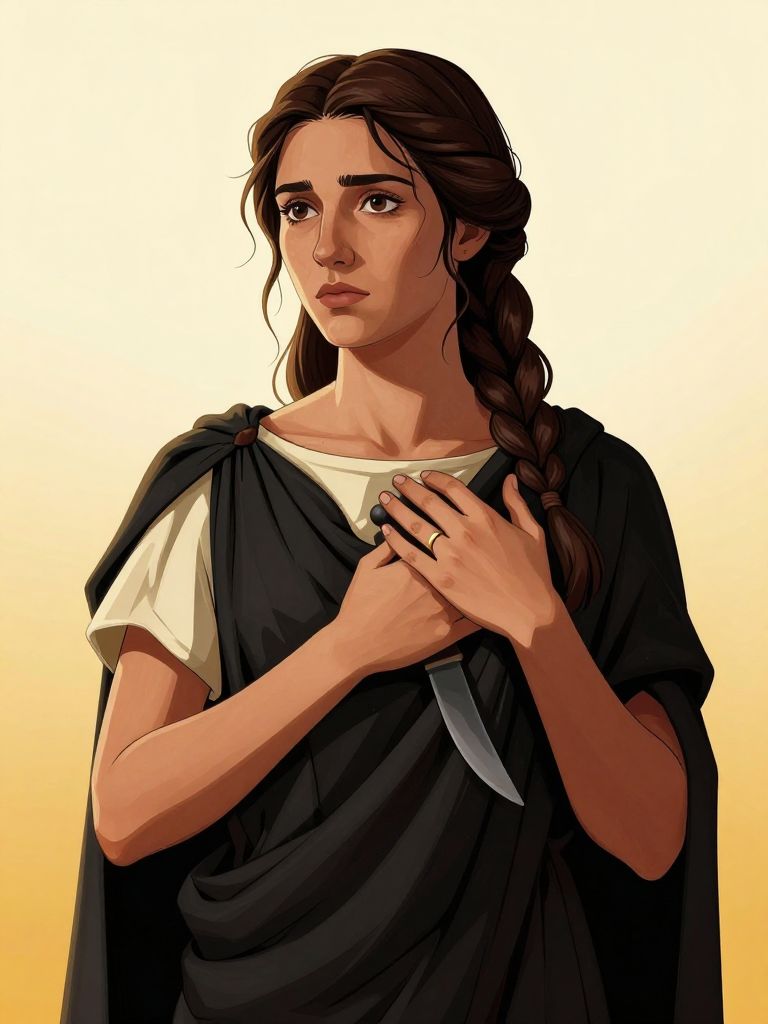
When they arrived, Lucretia told them everything. She named Sextus Tarquinius as her attacker. Then, declaring that no woman would ever use Lucretia as an excuse to survive dishonor, she stabbed herself in the heart.
Among the witnesses was Lucius Junius Brutus, a man who had spent years pretending to be mentally impaired. His name literally meant "stupid." It was protective coloring — Tarquinius had murdered Brutus's father and brother for their wealth, and Brutus had survived by making himself seem harmless.
Lucretia's death changed everything. Brutus pulled the knife from her body, still wet with blood, and swore an oath: he would drive out the Tarquins and Rome would never have another king.
The Revolution
The revolution moved faster than anyone expected. Brutus carried Lucretia's body to the Forum and displayed it publicly, telling the story to anyone who would listen. Romans who had tolerated Tarquinius's tyranny for a quarter century finally had a grievance they couldn't ignore. The king's own son had raped a noblewoman in her home, and she had died rather than live with the shame.
The army at Ardea defected when they heard the news. Soldiers who had been fighting for Tarquinius marched home and joined the revolutionaries. The city garrison surrendered without serious resistance.
Tarquinius Superbus fled Rome with his family. He attempted to return with Etruscan military support — the famous episode at the bridge where Horatius Cocles held off an army is set during one of these attempts. But the Romans held, and the Tarquins were permanently expelled.
The Romans created a new form of government in place of the monarchy: the Republic, from res publica, "the public thing." Two elected consuls would share executive power, each able to veto the other. Term limits prevented anyone from accumulating too much authority. The Senate became the primary deliberative body, with real power to shape policy.
Lucius Junius Brutus became one of the first two consuls. The other was Collatinus, Lucretia's widowed husband. Within months, however, Collatinus was forced to resign and go into exile. His crime? Being related to the Tarquins by blood. Even being named Tarquinius was intolerable in the new Rome.
The Legacy of the Last King
Rome's hatred of kings became foundational to Roman identity. For nearly 500 years, the word rex (king) was politically toxic. When Julius Caesar accumulated too much power in 44 BCE, his assassins justified the murder by comparing him to the Tarquins. The man who led the conspiracy? Marcus Junius Brutus, who claimed descent from the Brutus who'd expelled the kings.
Tarquinius Superbus spent the rest of his life trying to reclaim his throne. He appealed to Etruscan cities, to Greek tyrants, to anyone who would listen. He died in exile at Cumae around 495 BCE, never having returned to the city he'd ruled.
His legacy was paradoxical. The buildings he constructed (through forced labor and confiscated wealth) became symbols of Roman greatness. The Temple of Jupiter stood for centuries as Rome's most important religious site. The Cloaca Maxima drained the Forum and made urban Rome possible.
But Romans remembered him as everything a ruler should not be. The Rex Sacrorum (King of Sacred Rites), a priest who performed religious functions once belonging to the kings, was deliberately excluded from political power in the Republic. The title existed to fulfill ritual obligations, nothing more.
The lesson of Tarquinius Superbus was simple: power seized through violence will be lost through violence. A ruler who governs through fear alone will find that fear is not enough when the moment of reckoning arrives.
What Can We Verify?
The historicity of Rome's early kings is debated among scholars. Literary sources like Livy and Dionysius of Halicarnassus wrote centuries after the events they describe, working from earlier chronicles that have been lost. Many details are clearly legendary or shaped by later political concerns.
However, several elements can be partially verified. Archaeological evidence confirms that Rome was influenced by Etruscan culture during this period. The Regia (royal residence) in the Forum dates to approximately the right era. The Temple of Jupiter's foundations suggest a major construction project consistent with the traditional chronology.
The constitutional changes attributed to the transition from monarchy to republic also align with what we know about early Roman institutions. The consulship, the Senate's advisory role, and the complex system of checks and balances all appear early enough that some transition from kingship is plausible.
Whether Servius Tullius was a reforming king murdered by his son-in-law, whether Tullia really drove over her father's body, whether Lucretia's death sparked a revolution, we cannot say with certainty. But the Romans believed these stories, and that belief shaped everything that followed.
They created a Republic specifically designed to prevent another Tarquinius. They maintained that Republic for five centuries. And when it finally fell, they called the new system a Principate, never an open monarchy. Even the Caesars avoided the word rex.
The memory of the last king was that powerful.
Frequently Asked Questions
1How did Tarquinius Superbus become king?
According to Roman tradition, he seized power by walking into the Senate in royal robes, claiming the throne as his father's son. When the elderly King Servius Tullius confronted him, Tarquinius threw him down the Senate steps. Servius was then murdered in the street by Tarquinius's men.
2What does 'Superbus' mean?
Superbus translates to 'Proud' or 'Arrogant' in Latin. It was not a compliment. The Romans used this cognomen to emphasize his tyrannical nature and contempt for Roman traditions and the people he ruled.
3Why did Tullia drive over her father's body?
According to Livy, Tullia was eager to celebrate her husband's seizure of power. When her chariot driver stopped upon seeing Servius's body in the road, she ordered him to continue. The act was so shocking that Romans named the street Vicus Sceleratus (Street of Crime) in memory of it.
4How long did Tarquinius Superbus rule Rome?
Tarquinius ruled for approximately 25 years, from around 535 to 509 BCE. His reign ended when his son Sextus raped Lucretia, triggering a revolution that expelled the entire Tarquin family and established the Roman Republic.
5What happened to Tarquinius after he was expelled?
Tarquinius spent the rest of his life in exile, attempting to regain his throne through military force with Etruscan and other allies. He died at Cumae around 495 BCE, never having returned to Rome. The Romans permanently banned the Tarquin family from the city.
Experience the Fall of the Kings
Hear the full story of Rome's tyrant king and the revolution that created the Republic, narrated by Lumo.


Listen to Related Stories
The Wheels Were Red
4 minThe wheels of her chariot were red. Not from mud. Not from rust.

Key Figures
Listen to the Full Story
Experience history through immersive audio lessons narrated by Lumo, your immortal wolf guide.