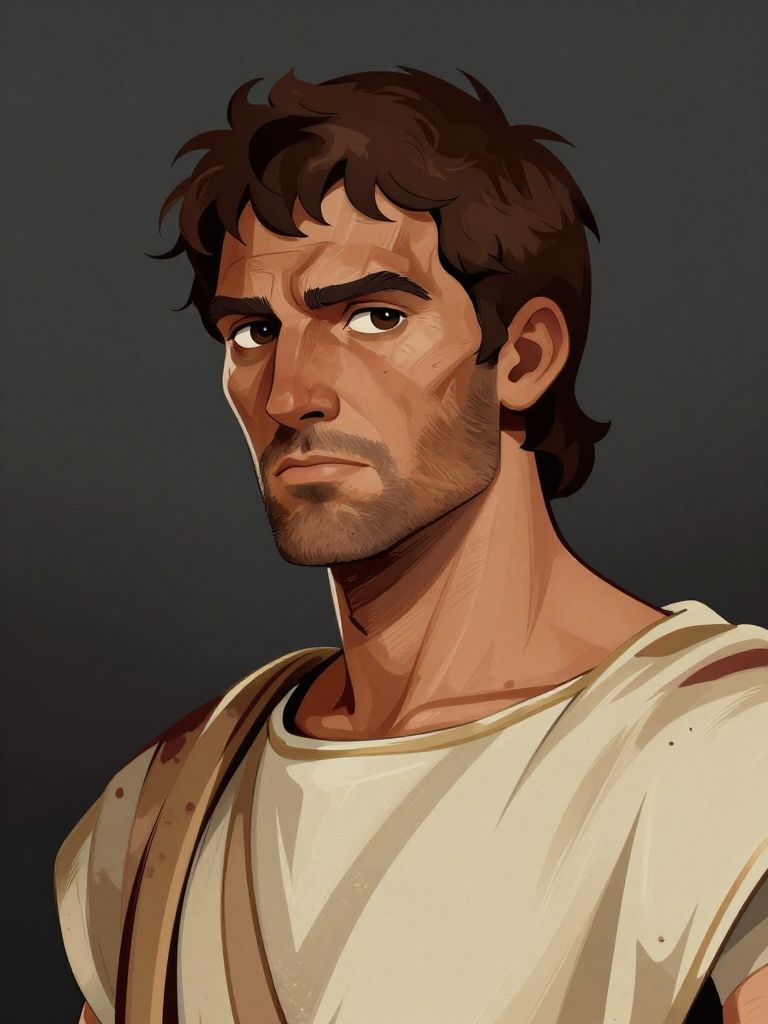
The Father Who Killed His Sons
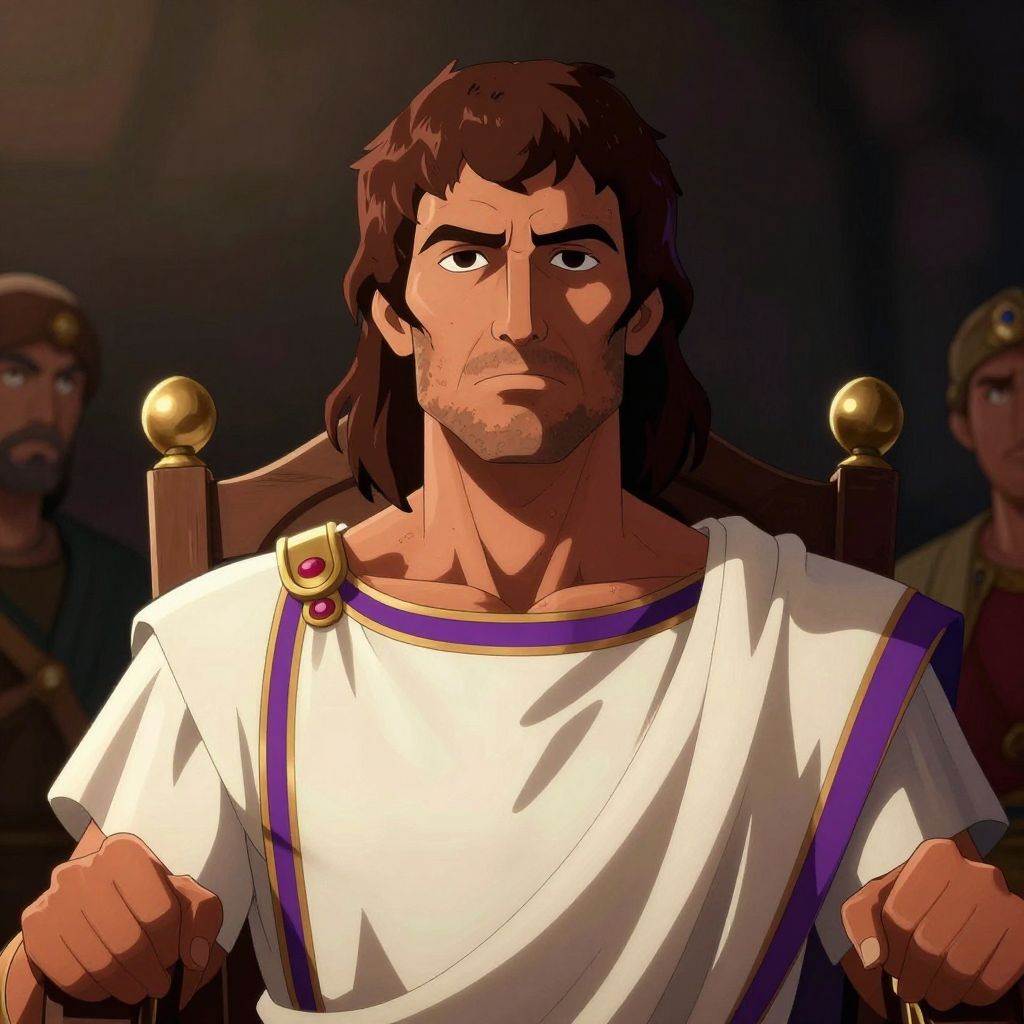
He watched them die. His own children, kneeling in the dirt of the Roman Forum with their hands bound behind their backs. One by one, the lictors stepped forward with axes. The crowd held its breath.
Lucius Junius Brutus, one of Rome's first consuls, sat in his chair and gave the signal. According to Livy, his face stayed blank. He watched everything. When it was finished, the crowd cheered and someone shouted his name. The father of the Roman Republic sat there with blood on the ground before him and showed nothing.
This is the story of how a man who pretended to be a fool for twenty years became the founder of the Roman Republic. And what it cost him.
Twenty Years of Drooling
Brutus was born into the Junii family, connected by blood to the royal house of Tarquin. His mother was Tarquinia, sister to King Tarquinius Superbus. That connection should have guaranteed him wealth and position. Instead, it nearly killed him.
Tarquinius Superbus had a simple approach to potential rivals: eliminate them. When Brutus was still young, the king ordered the execution of his father and elder brother. Their crime? Being too prominent, too respected, too dangerous to leave alive.
Brutus escaped by convincing everyone he was mentally deficient.
The cognomen "Brutus" means "dull" or "stupid" in Latin. He leaned into it. Ancient sources describe him groveling before princes, taking abuse without complaint, acting the simpering fool in every public interaction. At banquets, he drooled. In conversations, he babbled. He presented himself as so harmless, so beneath notice, that the king's paranoia passed over him entirely.
For two decades, this performance continued. Nobody suspected. Not the king, not the courtiers, not even his own family.
Think about that. Twenty years of eating insults. Twenty years of watching your family's murderer walk past you without a second glance because you're too pathetic to notice. Twenty years of playing a character so completely that your own children grow up thinking their father is an idiot.
That takes something. I'm not sure if it's strength or sickness. Maybe both.
The Oracle at Delphi
One story from Livy shows how deep the act went. When Tarquinius sent his sons Titus and Arruns to consult the Oracle at Delphi, they brought Brutus along. Not as a respected companion. As entertainment. The fool who could amuse them on the journey.
At Delphi, after receiving the king's answer, the princes asked a personal question: which of them would be the next ruler of Rome? The oracle answered cryptically, as oracles do: sovereign power would belong to whoever first kissed his mother.
Titus and Arruns raced each other back to Rome, both planning to kiss their mother first.
Brutus understood differently. As they left the sanctuary, he pretended to stumble and fall. While his hands touched the ground, he pressed his lips to the earth. The mother of all things.
Nobody noticed. Nobody ever noticed.
The Breaking Point
The performance ended in 509 BCE, in the bedroom of a noblewoman named Lucretia.
Lucretia was married to Lucius Tarquinius Collatinus, a cousin of the king and a respected nobleman. Sextus Tarquinius, the king's son, forced himself on her at knifepoint in her own home. He threatened that if she resisted, he would kill her and place a slave's naked body beside hers, claiming he had caught them in adultery.
Lucretia survived the night. The next morning, she summoned her father, her husband, and witnesses, including a man everyone knew as a harmless fool. She told them exactly what had happened, named her attacker, then pulled a knife from beneath her dress and drove it into her heart.
While the room erupted in screaming and grief, Brutus walked through the chaos untouched. He knelt beside Lucretia's body and pulled the knife from her chest. When he spoke, his voice was one nobody had ever heard. Clear, commanding, cold with fury.
"By this blood, most pure before the outrage of a prince, I swear that I will drive out Lucius Tarquinius Superbus and all his cursed house. Rome will never have another king."
Twenty years of performance ended in a sentence.
Revolution
The revolution moved fast. Brutus carried the bloody knife through Rome, calling the people to arms. Within days, the army defected. The populace rioted. Tarquinius Superbus, ruler of Rome for a quarter century, found the city gates closed against him.
Brutus immediately called the people to swear a collective oath: no man would ever rule Rome as king again. This oath became the founding principle of the Roman Republic, repeated for centuries whenever someone got too ambitious.
Two consuls were elected to replace the king, magistrates who would share power and serve only one-year terms. The first two consuls were Lucius Junius Brutus and Lucius Tarquinius Collatinus, Lucretia's widowed husband.
The Republic was born. But its first test came from inside Brutus's own house.
The Conspiracy
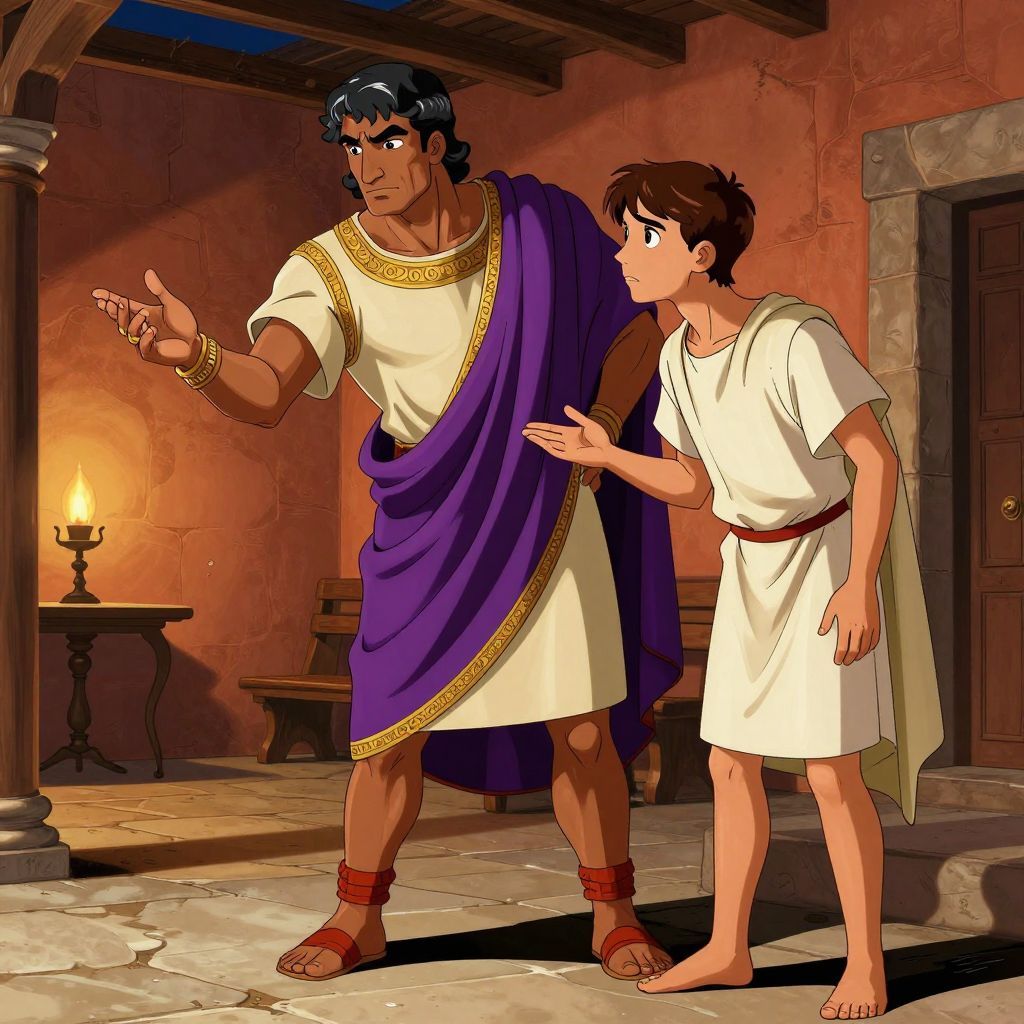
Tarquinius did not accept exile quietly. Within months of the revolution, royal ambassadors arrived in Rome, ostensibly to negotiate the return of the king's personal property that had been seized during the coup. In reality, they carried a different message for anyone willing to listen.
The conspirators they found included two brothers of the Vitellii family, three brothers of the Aquilii, and various other young patricians who missed the privileges of royal favor. Among them were two of Brutus's own sons: Titus Junius Brutus and Tiberius Junius Brutus.
Here's the thing that makes this story genuinely tragic, not just dramatic. The young men had grown up watching their father grovel before princes, bark like a dog on command, absorb humiliation with a vacant smile. They had no reason to believe the revolution was anything but luck. The harmless fool they knew as their father had somehow stumbled into power he could not possibly wield.
The Tarquin pitch was simple: help restore the monarchy, receive positions, wealth, and the gratitude of a restored king. All the conspirators had to do was open gates, pass messages, help from the inside. Titus said yes first. Tiberius followed his brother's lead.
They betrayed their father because they believed the mask. Twenty years of pretending worked too well.
Vindicius the Slave
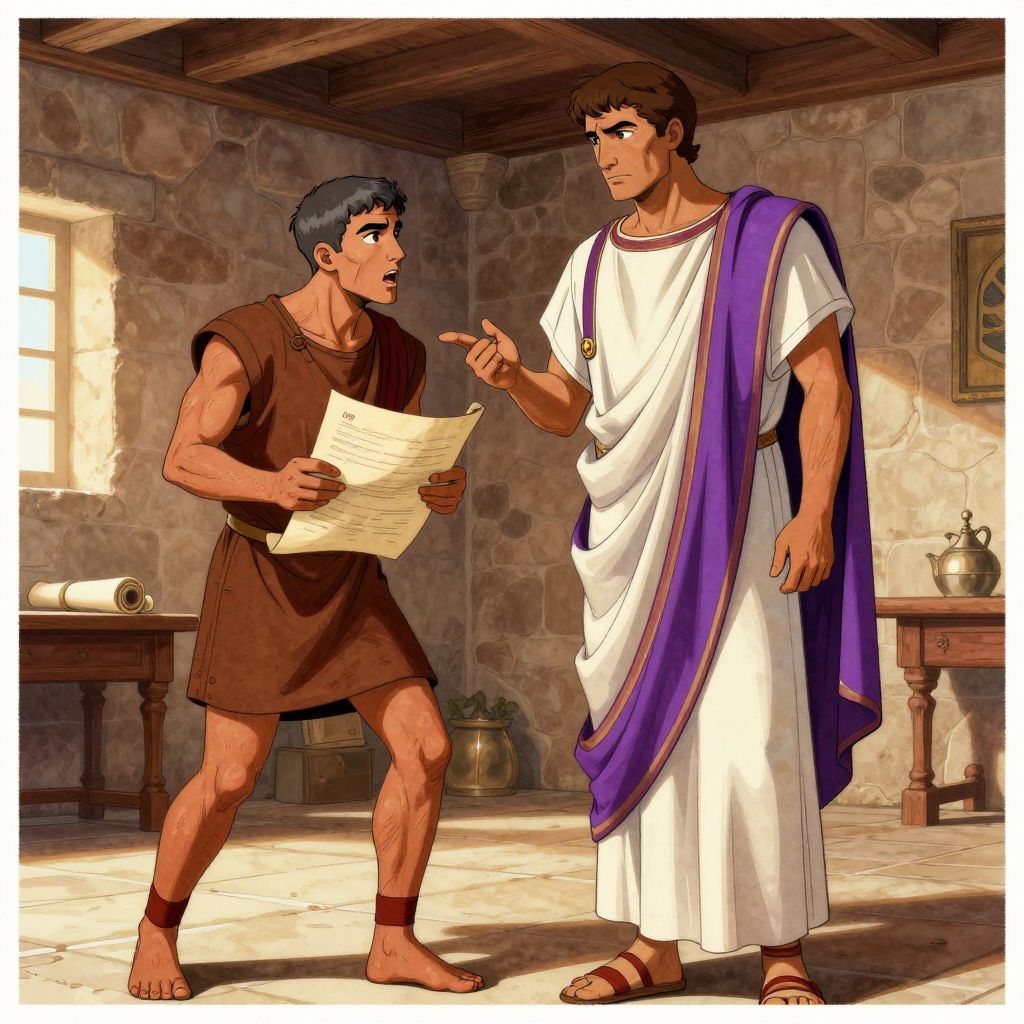
A slave named Vindicius served in the household of the Vitellii family. He witnessed the conspirators' meetings. He saw the letters they wrote to Tarquin, watched them sign pledges of loyalty to the exiled king.
Rather than keeping silent, Vindicius went straight to Publius Valerius, a respected senator known for his approachable manner. He couldn't bring himself to accuse the consuls' own family members to their faces. He brought evidence: the letters themselves, sealed with the conspirators' own names.
The Senate debated what to do with Vindicius himself. A slave who informed on his masters presented a troubling precedent. In the end, they granted him freedom and citizenship, the first recorded case of a slave being manumitted for service to the state. His name became associated with liberty itself; some historians trace the Latin word "vindicta" (a ceremony of manumission) to his act.
The arrested included members of Rome's most prominent families.
The arrested included the consul's own children.
The Trial
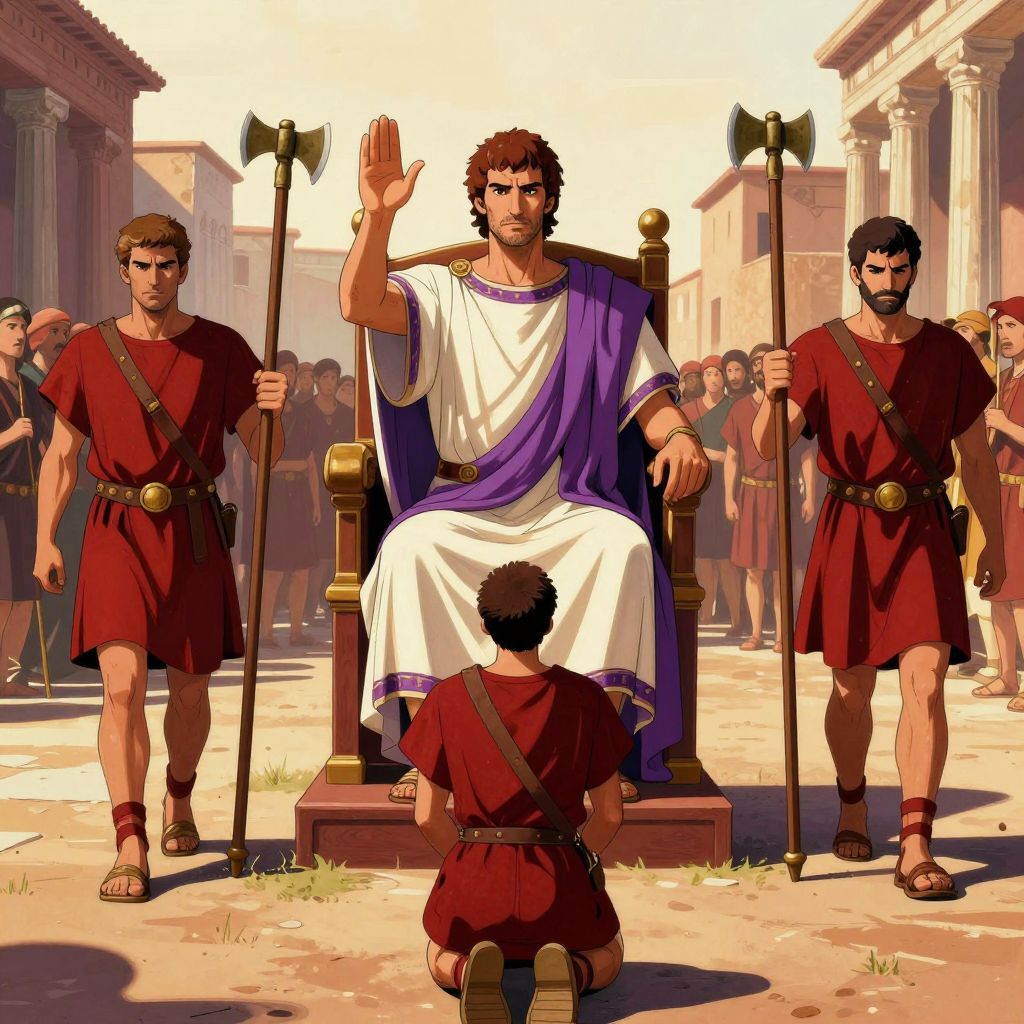
The trial was held in the Forum. The entire city watched. But calling it a trial implies doubt about the outcome. It was an execution dressed in formalities.
Brutus sat in the consul's chair, raised above the crowd on a wooden platform. His sons were brought before him, stripped of their togas and forced to kneel in the dirt. The evidence was read aloud: their own letters, their own handwriting, their own signatures on pledges to restore the tyrant.
He could have recused himself. Roman law and Roman custom would have allowed him to step aside, to let another judge his children.
He refused.
The sentence was death by the fasces, the traditional punishment for traitors. The fasces were bundles of wooden rods bound around an axe, carried by lictors as symbols of consular authority. The rods were for beating, the axe for beheading. Traitors received both.
According to Livy, as the sentence was carried out, Brutus's face betrayed him only in flashes. His jaw clenched so tight the muscles twitched. His knuckles went white on the arms of his chair. But he watched everything, and he gave the signal himself.
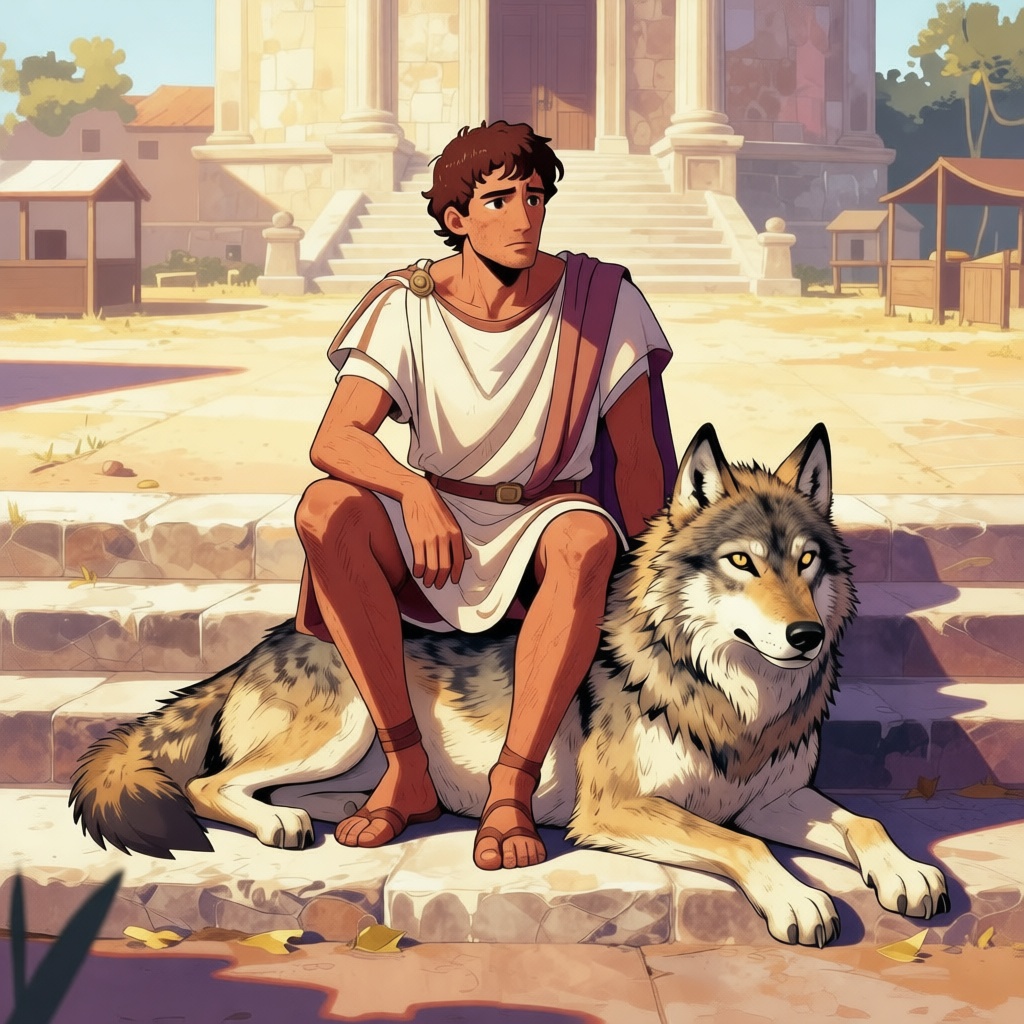
The crowd cheered when it was finished. They shouted "Brutus the Liberator!" and celebrated the Republic's triumph over treason.
The father sat alone on his platform with his sons' blood soaking into the dirt.
Why Did He Do It?
The question has haunted readers for over two thousand years.
One answer is duty. As consul, Brutus held the power of life and death over Roman citizens. Traitors deserved death. His sons were traitors. The logic was brutal but consistent.
Another answer involves the fragility of the new Republic. If the consul pardoned his own children for attempting to restore the monarchy, what message would that send? The revolution was weeks old. Tarquin still commanded armies. Showing weakness, showing favoritism, showing that family trumped state, any of these could have unraveled everything.
A third answer is darker.
Brutus had spent twenty years pretending to be someone he was not. His own sons grew up believing the mask, believing their father was genuinely a fool. They joined the conspiracy because they thought he was weak, incompetent, easily overthrown.
In a twisted way, their treason was his fault. The mask he wore to survive had convinced his own children he was worth betraying.
Did he kill them for Rome? Or did some part of him kill them because they fell for the lie?
I don't know. I suspect he didn't know either.
Death at Silva Arsia
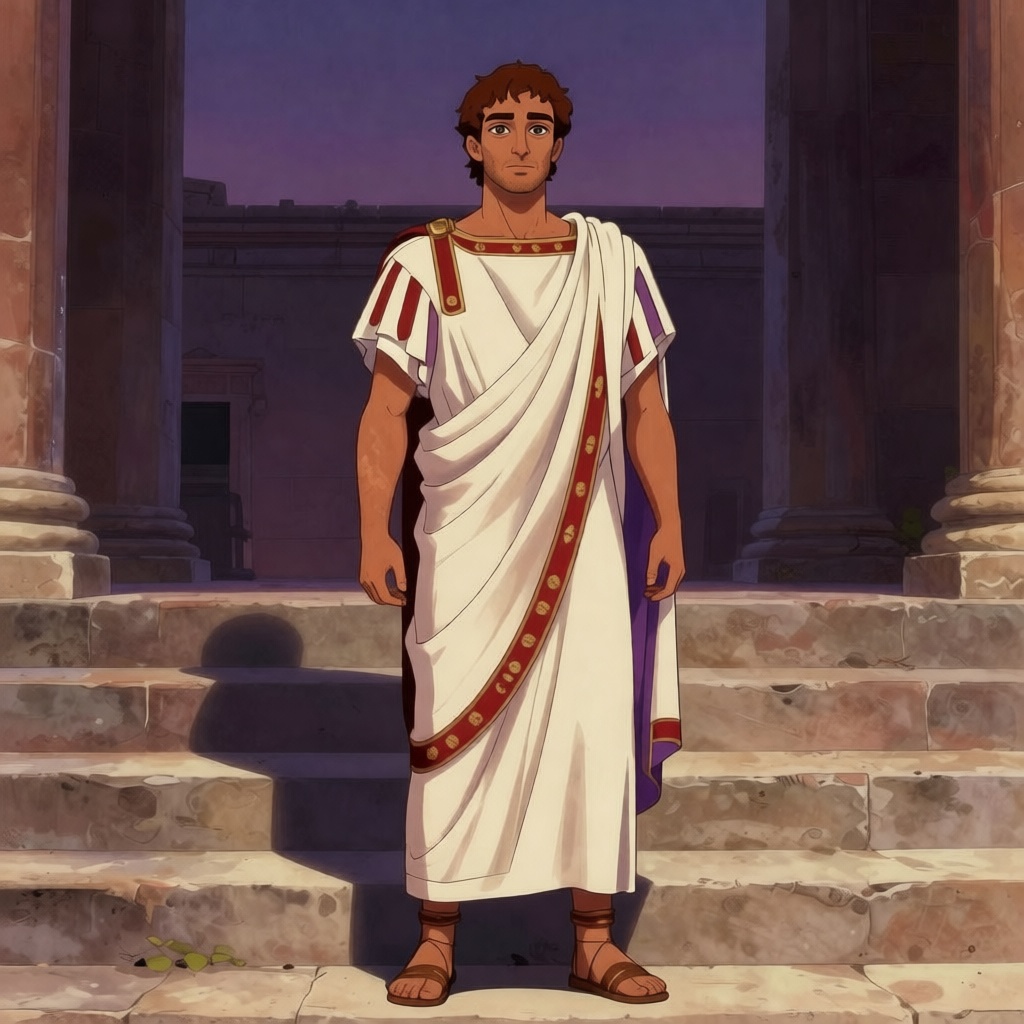
Brutus did not live long enough to see the Republic secure. Later that same year, Tarquinius made another attempt to reclaim his throne. He gathered forces from the Etruscan cities of Tarquinii and Veii and marched on Rome.
At the Battle of Silva Arsia, the Roman army met the Etruscan forces. Consul Publius Valerius commanded the infantry. Brutus led the cavalry.
Across the field, he saw Aruns Tarquinius, the king's son, his own cousin, commanding the enemy horse. The two men recognized each other. According to Livy, both spurred their mounts forward at the same instant, crashing together with such force that their spears pierced each other simultaneously. Both died on the field.
Some historians read this as suicide. Brutus had lost his sons. He had made himself into a symbol of duty over love, state over family. Perhaps there was nothing left.
Others see it differently. Brutus died doing his duty, no matter the cost. If killing his enemy meant dying himself, so be it.
The Romans claimed victory. The voice of the god Silvanus supposedly echoed from the forest after the battle, declaring that Rome had won by one man. The Republic survived.
Brutus was carried back to Rome for a funeral he would never see. The women of Rome mourned him for a full year, not for his military prowess, but as the avenger of Lucretia's honor. He had started the revolution to avenge a woman's violation. They honored him as a protector.
The Legacy That Killed Caesar
The gens Junia, the family that claimed descent from Brutus, remained prominent throughout Roman history. They minted coins featuring his portrait. They told his story at family gatherings. They raised their sons to believe they carried the blood of the Republic's founder.
One descendant took that legacy to its logical conclusion.
In 44 BCE, when Julius Caesar accumulated enough power that some called him a king in all but name, a group of senators conspired to assassinate him. Among them was Marcus Junius Brutus, who claimed Lucius Junius Brutus as his direct ancestor.
According to contemporary sources, graffiti appeared throughout Rome in the months before the assassination. Messages glorified the ancient Brutus. Comments questioned whether his descendant had the courage to live up to the family name. Cassius, one of the lead conspirators, reportedly convinced Marcus Brutus to join by invoking the founder's example.
On the Ides of March, Marcus Brutus stood in the Senate and drove a knife into Caesar. The dictator's reported last words, "Et tu, Brute?" may be legend. But the symbolic weight was real. A Brutus had killed the first man to approach royal power in Rome. Another Brutus killed the last.
Five hundred years, and the name still meant the same thing: we don't tolerate kings here.
The Bronze Head
The most famous image of Lucius Junius Brutus is the bronze bust in the Capitoline Museums in Rome. For centuries, people have gazed at its stern bearded face and imagined they were seeing the man who founded the Republic.
They probably weren't.
The head dates to roughly 300 BCE at the earliest, nearly two centuries after Brutus lived. Some scholars place it even later, in the first century BCE. Nobody knows who it originally depicted. Renaissance antiquarians, finding it on the Capitoline Hill and noting its severe expression, decided it must be Rome's legendary founder. They gave it a toga-clad bust to complete the effect.
The attribution stuck. During the French Revolution, radicals used it as a symbol of tyrannicide. King Louis XVI, facing execution, was compared to the tyrant kings that Brutus overthrew.
The real Brutus left no verified portrait. We have only the stories, and those may themselves be partly legend. Some historians argue that Brutus was not a real person at all, but a symbolic figure created to explain the end of Roman monarchy. Others suggest the basic outline is historical, but decorated with mythic elements over centuries of retelling.
What is certain: the Roman monarchy ended around 509 BCE. The Romans themselves traced that transformation to Brutus and Lucretia. Whether literal history or founding myth, the story shaped how Romans understood their own government for half a millennium.
What Kind of Man?
What kind of man orders his own sons' execution?
The Romans had an answer: a great one. Brutus subordinated everything to duty. He proved that the Republic meant more than blood, that law meant more than love, that Rome would survive because its leaders put the state first.
Modern readers often reach a different conclusion. We see a man who wore masks so long he forgot his own face. A father whose children never knew him. A revolutionary who paid for his principles in blood, first his enemy's, then his family's, then his own.
Both readings are probably right.
Brutus spent twenty years pretending to be something he was not. When he finally showed his true face, he discovered his own sons had believed the lie. They betrayed him because they thought he was weak. He killed them because the law demanded it.
He had won everything: the revolution, the Republic, the consulship, the glory of being called Liberator.
He had lost everything: his sons, his line, perhaps his ability to feel anything at all.
Livy describes Brutus's expression during the execution: the mask showing nothing, the muscles twitching beneath. The face of a man holding himself together by will alone. Perhaps, after twenty years of performance, one more mask was the only thing he knew how to do.
Whether that makes him admirable or tragic depends on what you believe about duty, about family, about the costs of freedom.
The Romans built a Republic on his example. It lasted five centuries before falling to emperors who called themselves divine. Every time power concentrated in one man's hands, someone invoked Brutus's name as a warning.
The founder of Roman liberty died on a battlefield, impaled by his cousin's spear. His sons died in the Forum, executed by their father's order. The Republic he created outlived them all.
Was it worth it?
Brutus never answered. He just gave the signal.
Frequently Asked Questions
1Did Brutus really execute his own sons?
According to Roman historians like Livy and Plutarch, yes. Titus and Tiberius Junius Brutus joined a conspiracy to restore the Tarquin monarchy and were sentenced to death for treason. Brutus, as consul, presided over their execution rather than recusing himself. Some modern scholars question whether the story is entirely historical or contains legendary elements, but the Romans believed it happened.
2Why did Brutus pretend to be stupid for twenty years?
After King Tarquinius Superbus killed his father and brother, Brutus feigned mental impairment to avoid the same fate. The cognomen 'Brutus' means 'dull' or 'stupid' in Latin. By appearing harmless and incompetent, he escaped the king's paranoid purges of potential rivals. The act worked so well that even his own sons believed he was genuinely a fool.
3How did Brutus die?
Brutus died at the Battle of Silva Arsia in 509 BCE, fighting to defend the new Republic against Tarquin's Etruscan allies. He and Aruns Tarquinius, the king's son and his own cousin, charged each other on horseback and killed each other simultaneously with their spears. The Romans claimed victory in the battle, and Brutus was given a state funeral.
4Is Marcus Brutus who killed Julius Caesar related to Lucius Junius Brutus?
Marcus Junius Brutus claimed descent from Lucius Junius Brutus and was deeply conscious of this legacy. He minted coins featuring his ancestor's portrait and was reportedly convinced to join the conspiracy against Caesar partly by appeals to his family history. Whether the genealogical connection was real or invented, Romans at the time believed it.
5What is the Capitoline Brutus?
The Capitoline Brutus is a famous bronze bust in the Capitoline Museums in Rome, long believed to depict Lucius Junius Brutus. However, the head dates to roughly 300 BCE at the earliest, about two centuries after Brutus lived, and there is no direct evidence it was made to represent him. Renaissance antiquarians assigned the identification, which stuck despite scholarly doubts.
6Who was Vindicius?
Vindicius was a slave in the Vitellii household who witnessed the conspiracy to restore the Tarquin monarchy. He reported what he saw to the consuls and provided the letters that proved the conspirators' guilt. As reward, he was granted freedom and citizenship, the first recorded case of a slave being freed for service to the Roman state.
Experience the Full Story
Hear the trial of Brutus's sons narrated by an ancient witness who watched the founder of Rome's liberty make the hardest choice of his life.


Hear Their Story
The Consul Who Couldn't Weep
4 minHis sons plotted to restore the king. The law demanded their deaths. And the father had to watch.

Related Articles
The Ides of March: The Assassination of Julius Caesar
March 15, 44 BCE. Twenty-three stab wounds. Sixty conspirators. One dead god on the Senate floor. The assassination that killed the Republic it was meant to save.
The Story of Lucretia: The Rape That Ended Rome's Monarchy
How Lucretia's death in 509 BCE triggered a revolution that abolished the Roman kings. The calculated martyrdom that launched the Roman Republic.
Tarquinius Superbus: Rome's Last King and the Birth of the Republic
How Lucius Tarquinius Superbus seized power through murder, ruled as a tyrant for 25 years, and lost everything when his son assaulted a noblewoman. The fall of Rome's monarchy.
Experience Lucius Junius Brutus's Story
Go beyond the biography. Hear Lucius Junius Brutus's story told by Lumo, your immortal wolf guide who witnessed these events firsthand.