Twenty-Three
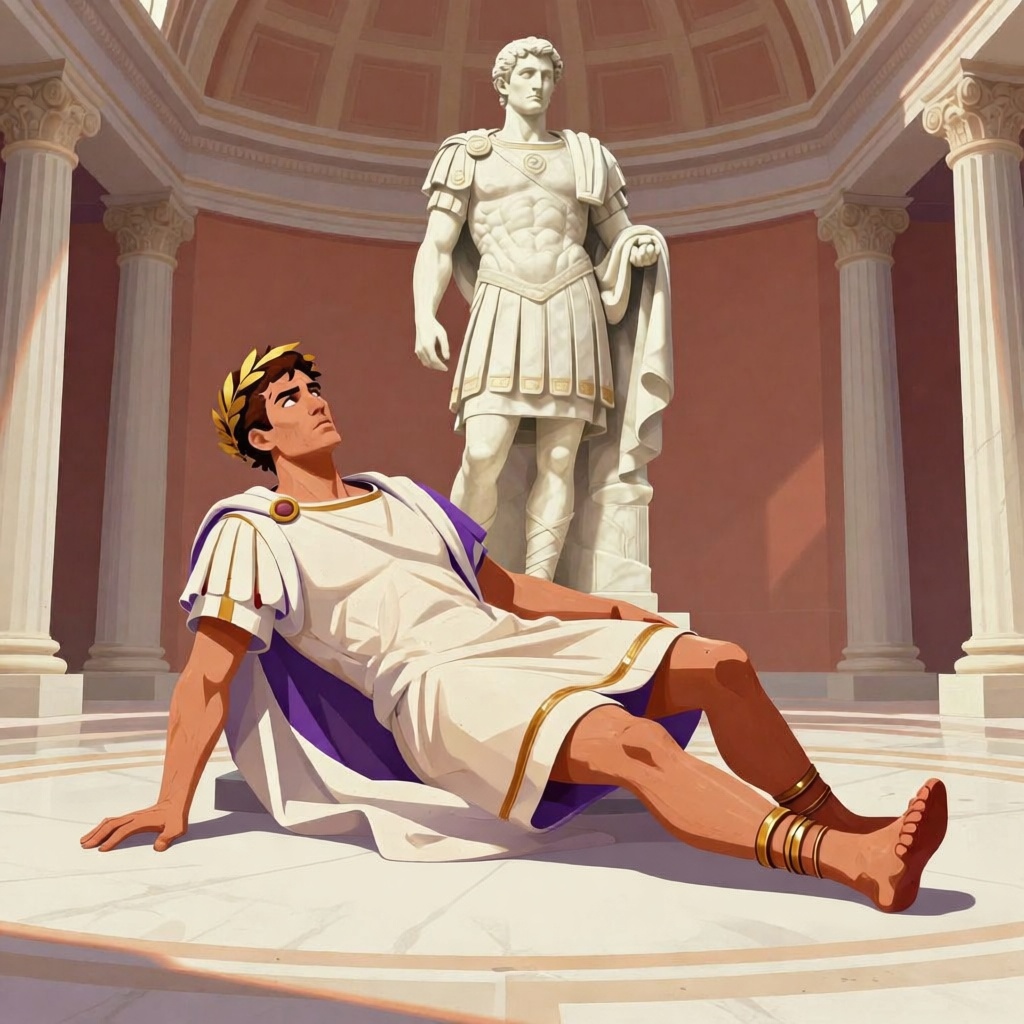
March 15, 44 BCE. Twenty-three stab wounds. Sixty conspirators. One dead god on the Senate floor.
Most people know what happened next. But they don't know the before — the panic, the blood that wasn't even Caesar's, the moment when Rome realized nobody had a plan.
The Conspiracy
The plot to kill Caesar didn't start with Brutus. It started with fear.
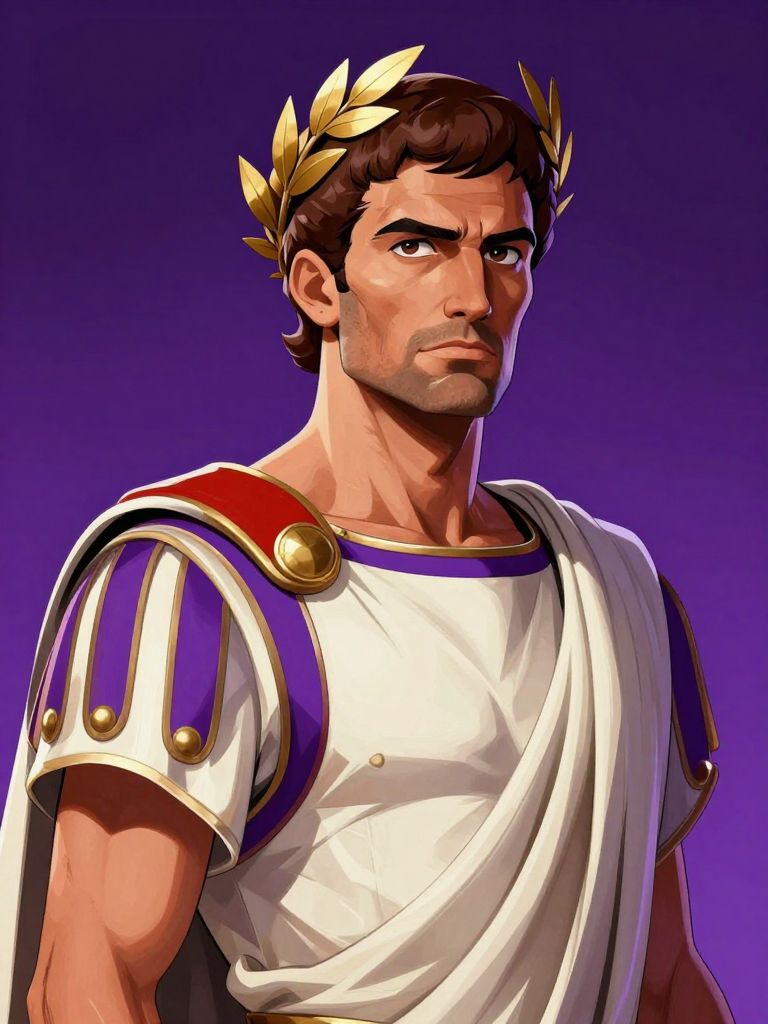
By early 44 BCE, Caesar had crossed every line the Republic held sacred. He'd been declared dictator perpetuo — dictator for life. He sat on a throne-like chair of gold. He wore purple, the color of kings. Rumors spread that he'd ask the Senate to crown him king officially.
To senators who'd grown up on stories of how their ancestors had expelled the last king centuries ago, this was unthinkable.
Gaius Cassius Longinus, a senator with a talent for holding grudges, began recruiting. He needed names that mattered. Names that would turn murder into liberation.
He found them. Decimus Brutus, Caesar's trusted general. Trebonius, another military man. Tillius Cimber. About sixty senators in total, each with their own reasons. Some believed in the Republic. Others just wanted their old power back.
But Cassius needed one name above all: Marcus Junius Brutus.
Brutus was different. He was Caesar's protégé. Some whispered he was Caesar's illegitimate son. Caesar had pardoned him after he'd sided with Pompey in the civil war. Caesar loved him.
That love was exactly why they needed him. If Brutus killed Caesar, it wouldn't be murder. It would be sacrifice.
The Morning
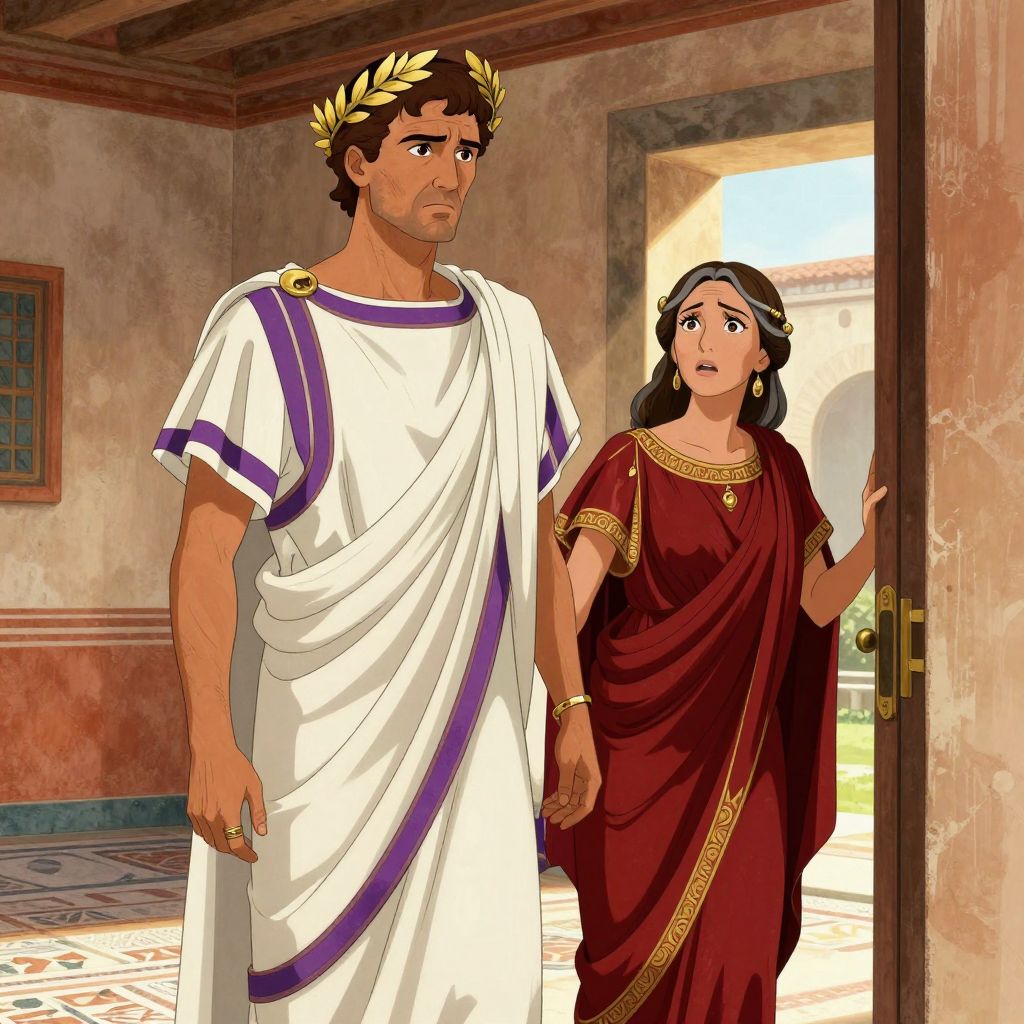
Caesar woke up late on March 15th. His wife Calpurnia had barely slept.
She'd had nightmares — dreams of his statue spouting blood, of his body stabbed and bleeding in her arms. She begged him to stay home. Send word to the Senate that he was ill.
Caesar hesitated. He'd never been a man who listened to omens. But he'd been feeling uneasy lately. The world felt different when you wore purple.
Then Decimus Brutus arrived — one of the conspirators, though Caesar didn't know it. He laughed at Caesar's superstition. The Senate was waiting. They might even offer him the crown he'd been angling for.
Caesar went.
A soothsayer tried to warn him on the street. "Beware the Ides of March," the man had told him weeks earlier. Now Caesar passed him again and smirked: "The Ides of March have come."
"Aye, Caesar," the soothsayer replied, "but not gone."
Caesar kept walking.
The Signal
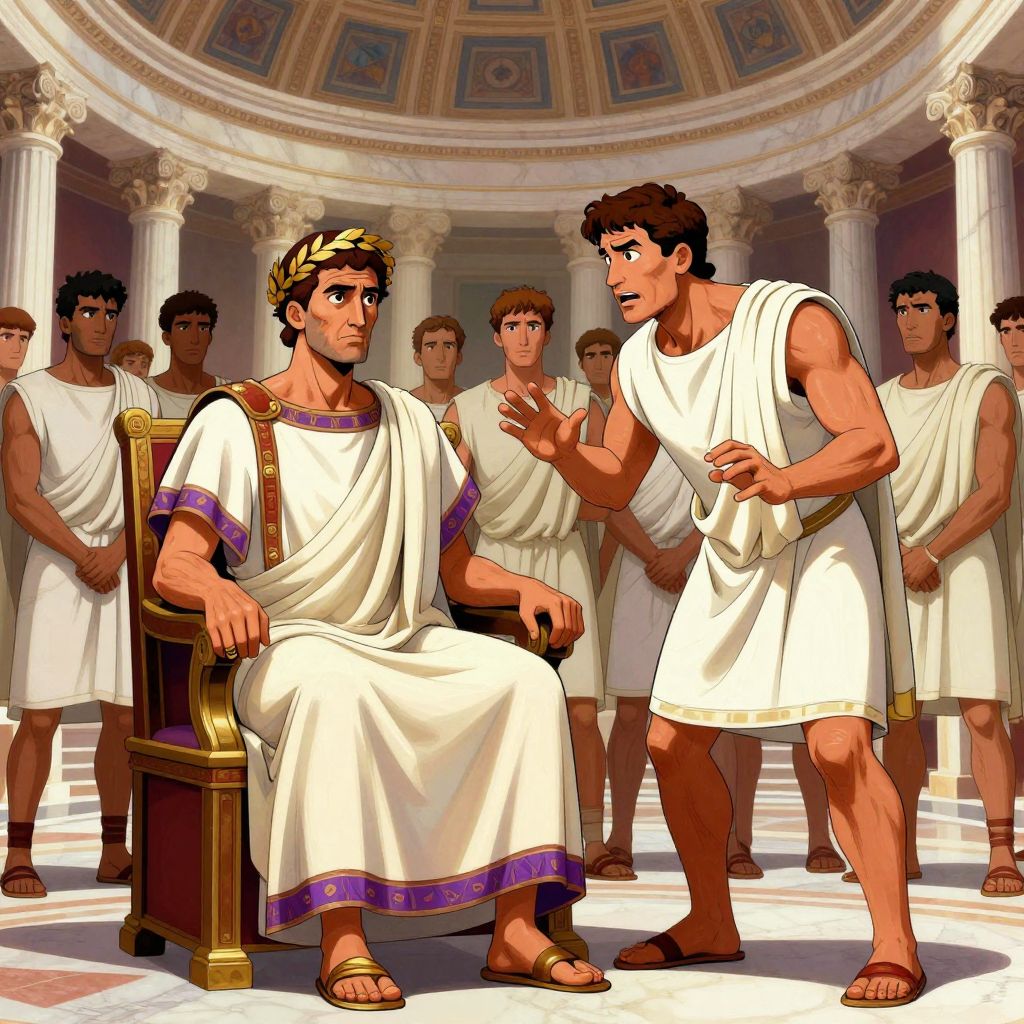
The Senate met that day at the Theater of Pompey — Pompey's building, named for Caesar's old rival. The irony wasn't lost on anyone.
Caesar entered alone. His bodyguards waited outside. Mark Antony, his loyal general, had been deliberately delayed at the door by one of the conspirators.
Caesar took his seat. The conspirators closed in, forming a casual semi-circle. Just senators with petitions. Nothing unusual.
Tillius Cimber approached first, pleading for his exiled brother's pardon. Caesar waved him off. Cimber kept insisting, moving closer. Then he grabbed Caesar's toga at the shoulder and pulled.
That was the signal.
The Killing
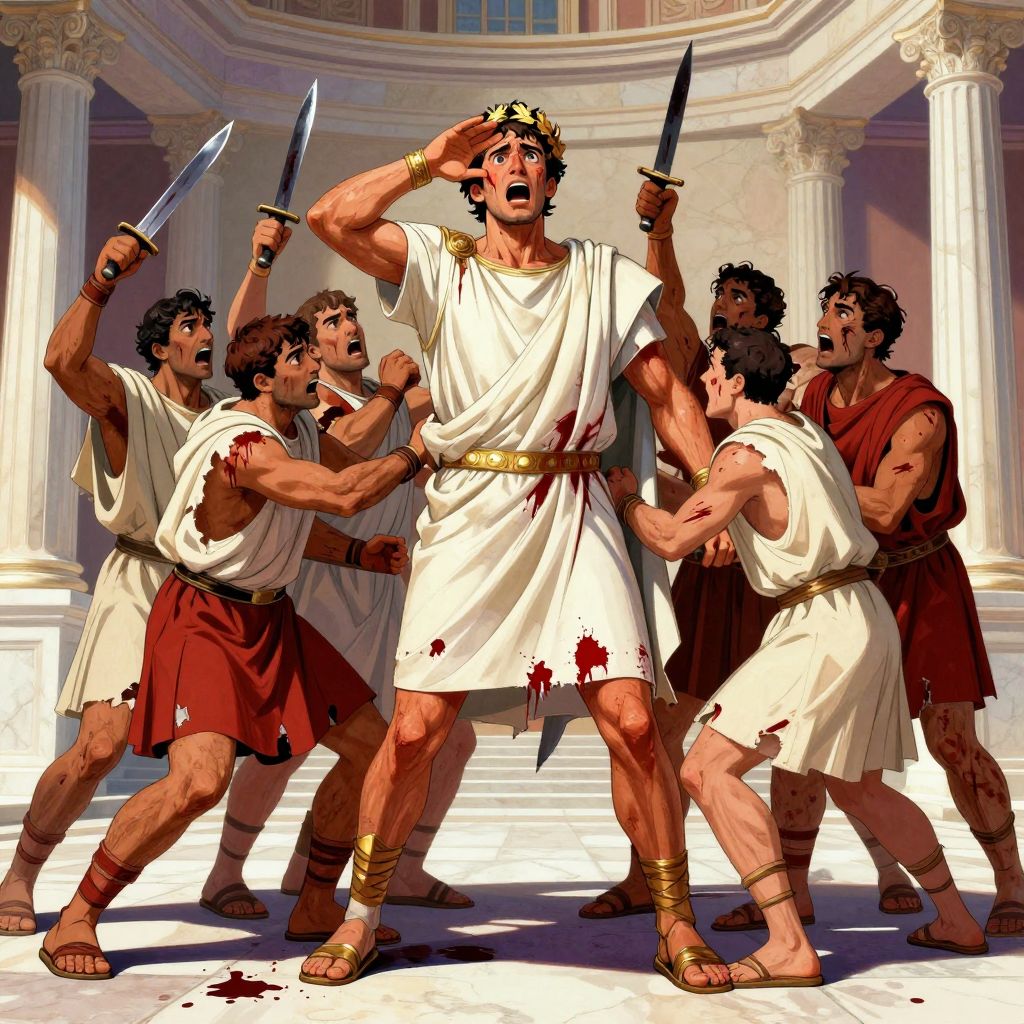
They came from all sides. Sixty conspirators, but only about twenty actually drew blades.
Casca struck first — a glancing blow to Caesar's neck. Caesar spun, grabbing Casca's arm and stabbing back with his stylus, the writing implement every senator carried. Even dying, his instinct was to fight.
Then the rest descended.
It was chaos. Frenzied. The conspirators had convinced themselves this was noble sacrifice, but in the moment it was just butchery. They were so frantic they stabbed each other in the press — blood everywhere, most of it wrong.
Caesar fought. He tried to break through the circle. But there were too many blades, too many angles. He took wounds to his chest, his back, his thighs. Each cut weakening him. Each step slower.
Twenty-three stab wounds total. Doctors would later determine that only one was fatal — a thrust to the chest. The other twenty-two were just senators stabbing a dying man because they'd committed and couldn't stop.
They couldn't even kill efficiently.
Et Tu, Brute?
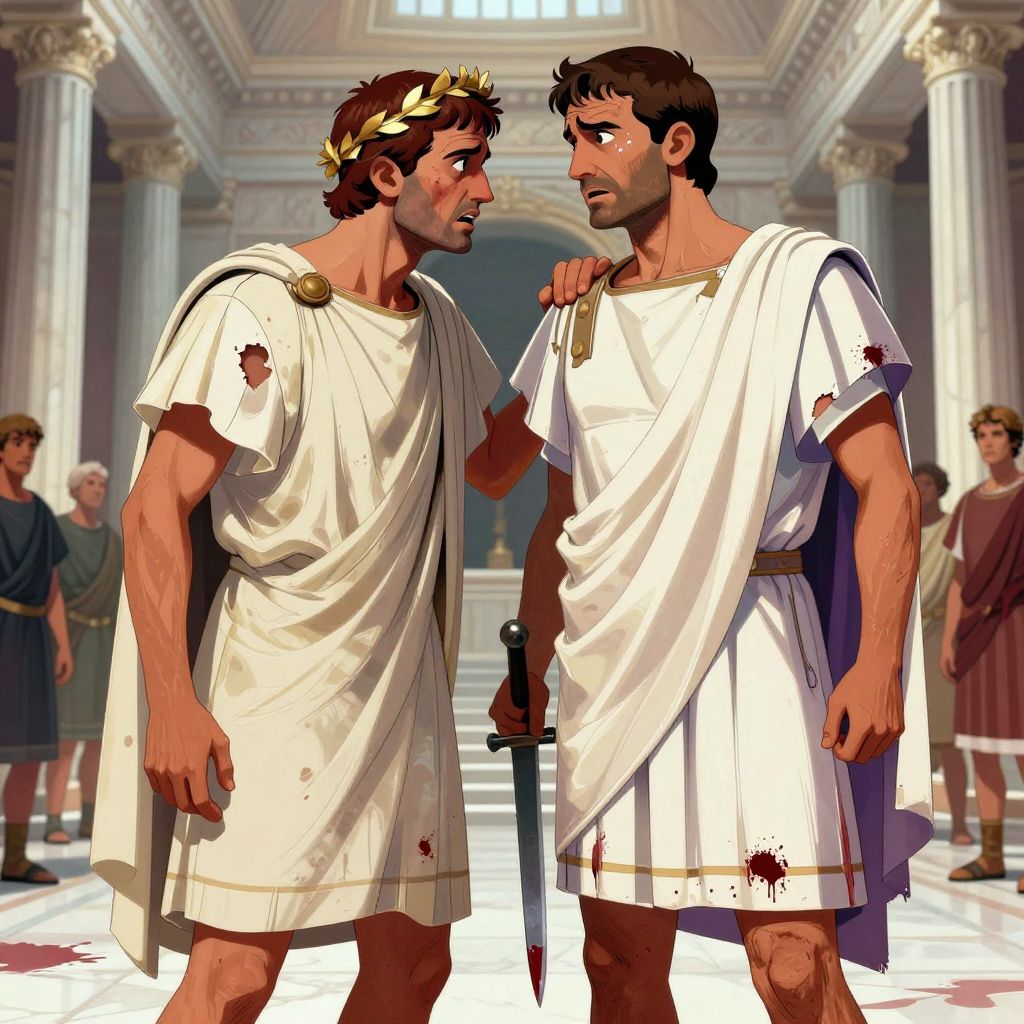
"Et tu, Brute?" — "You too, Brutus?"
That's what the historians wrote later. Greek, Latin, maybe nothing at all. When you're taking blades to the ribs, words don't matter.
What Caesar did was look at Brutus. Just look. Then he stopped fighting. He accepted it.
Caesar fell at the base of Pompey's statue. His old rival watched in marble as he bled out on the Senate floor.
Silence
The conspirators stood over Caesar's body, covered in blood, breathing hard. They'd done it. They'd killed the tyrant.
Now what?
Brutus tried to address the remaining senators — the ones who hadn't fled when the stabbing started. He began explaining why it had been necessary. Why they'd saved the Republic.
Nobody stayed to listen. The Senate chamber emptied fast.
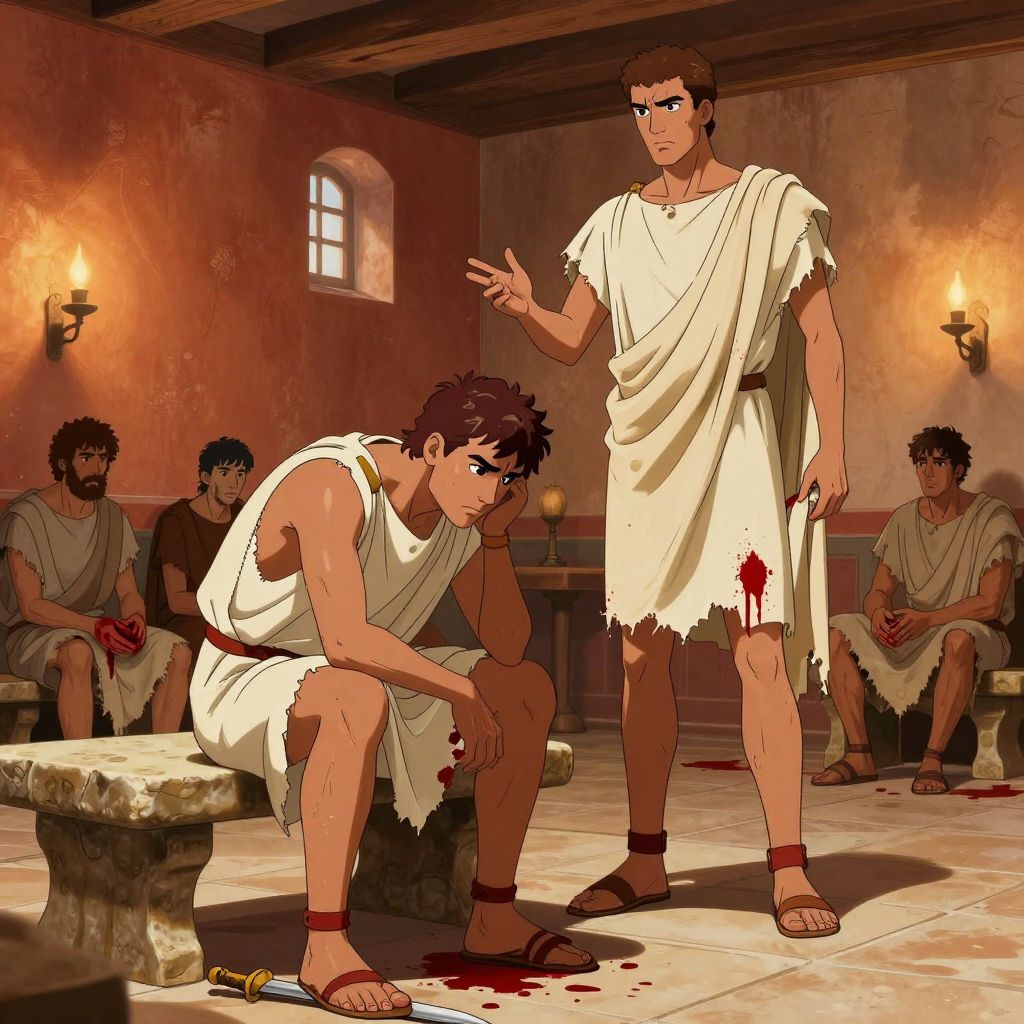
The conspirators emerged into the street. They'd planned this moment — the triumphal procession through Rome, waving their bloody daggers, declaring liberty restored.
"People of Rome!" they shouted. "Tyranny is dead! The Republic is saved!"
Rome locked its doors.
Shop shutters slammed. Citizens vanished into alleys. The streets emptied like someone had announced plague. The conspirators walked through a ghost city, still holding their dripping blades, shouting to no one.
This wasn't how liberation was supposed to look.
The Scramble
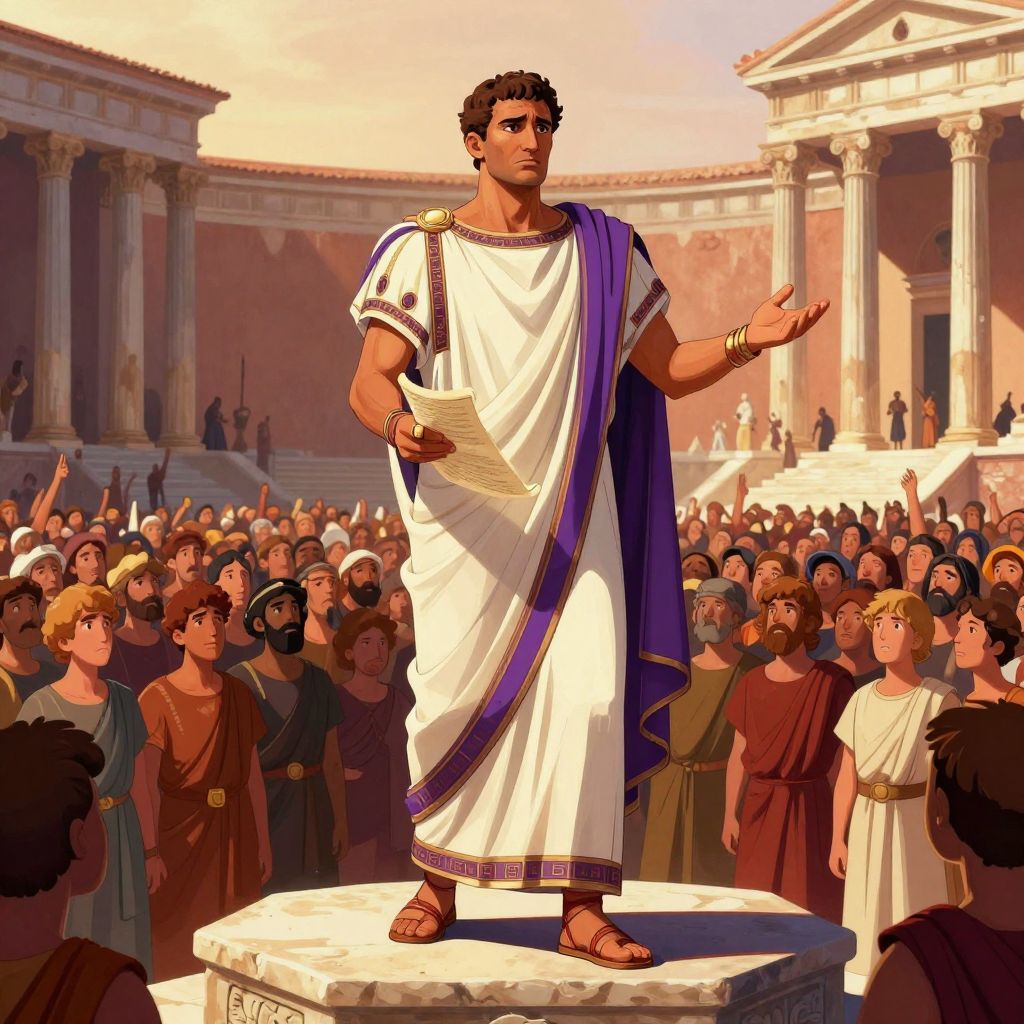
They retreated to a safe house on Capitoline Hill. Sixty senators who'd just committed the most consequential murder in Roman history, and not one of them had planned past the actual killing.
Brutus insisted they'd done the right thing. The Republic was saved. The people would understand once the shock wore off.
Cassius, more pragmatic, wanted to kill Mark Antony too. Caesar's loyal general was still out there, still had Caesar's veteran legions loyal to him. They should have killed him alongside Caesar.
But Brutus had refused. They were liberators, not murderers. They'd killed a tyrant, not started a purge.
Cassius had given in. That decision would cost them everything.
For now, they waited. Surely the people would rally. Surely the Senate would thank them. Surely this was the beginning of Rome restored, not Rome destroyed.
Mark Antony, meanwhile, was making his own plans.
The Funeral
The Senate, desperate to avoid civil war, brokered a compromise. The conspirators would be pardoned. Caesar's acts would remain valid. Everyone would move on.
It lasted three days.
Then came the funeral.
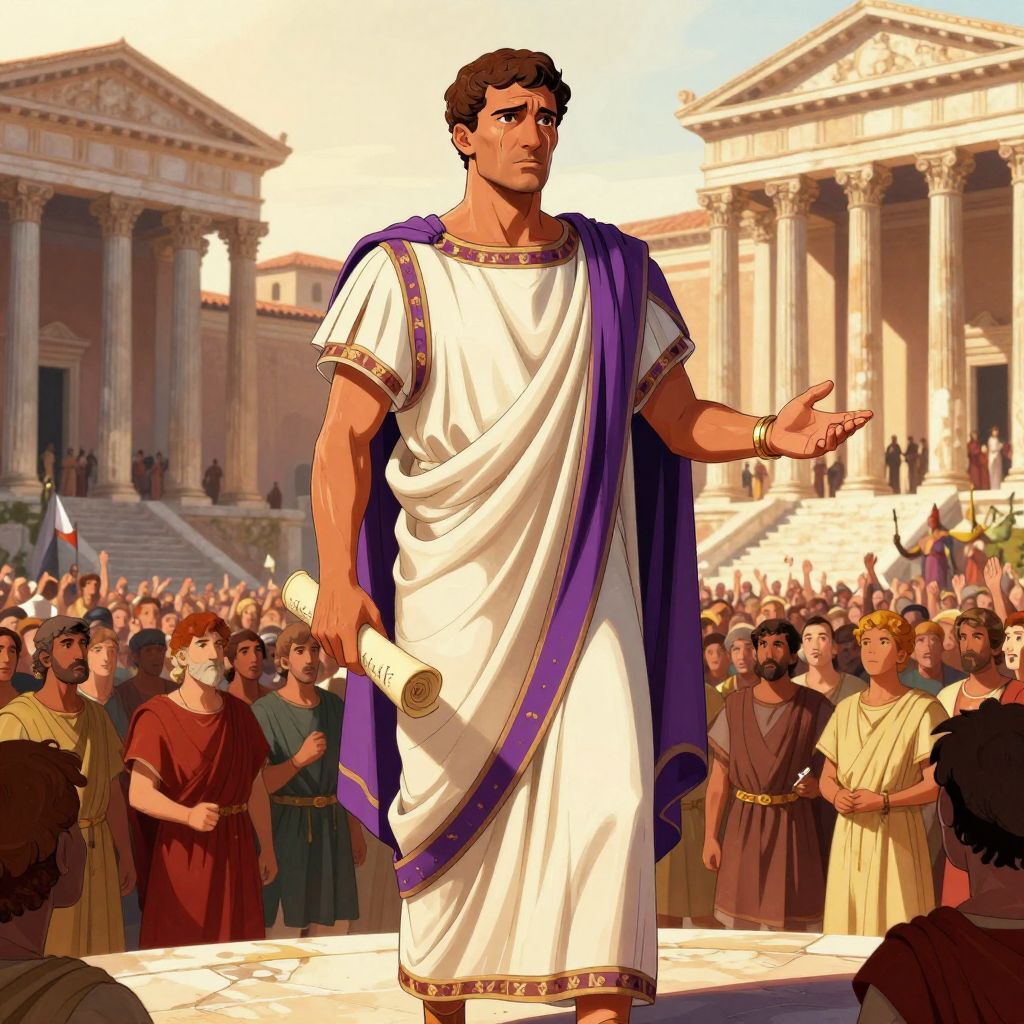
Mark Antony had negotiated the right to give Caesar's eulogy. The conspirators, incredibly, agreed. They still thought public opinion would swing their way.
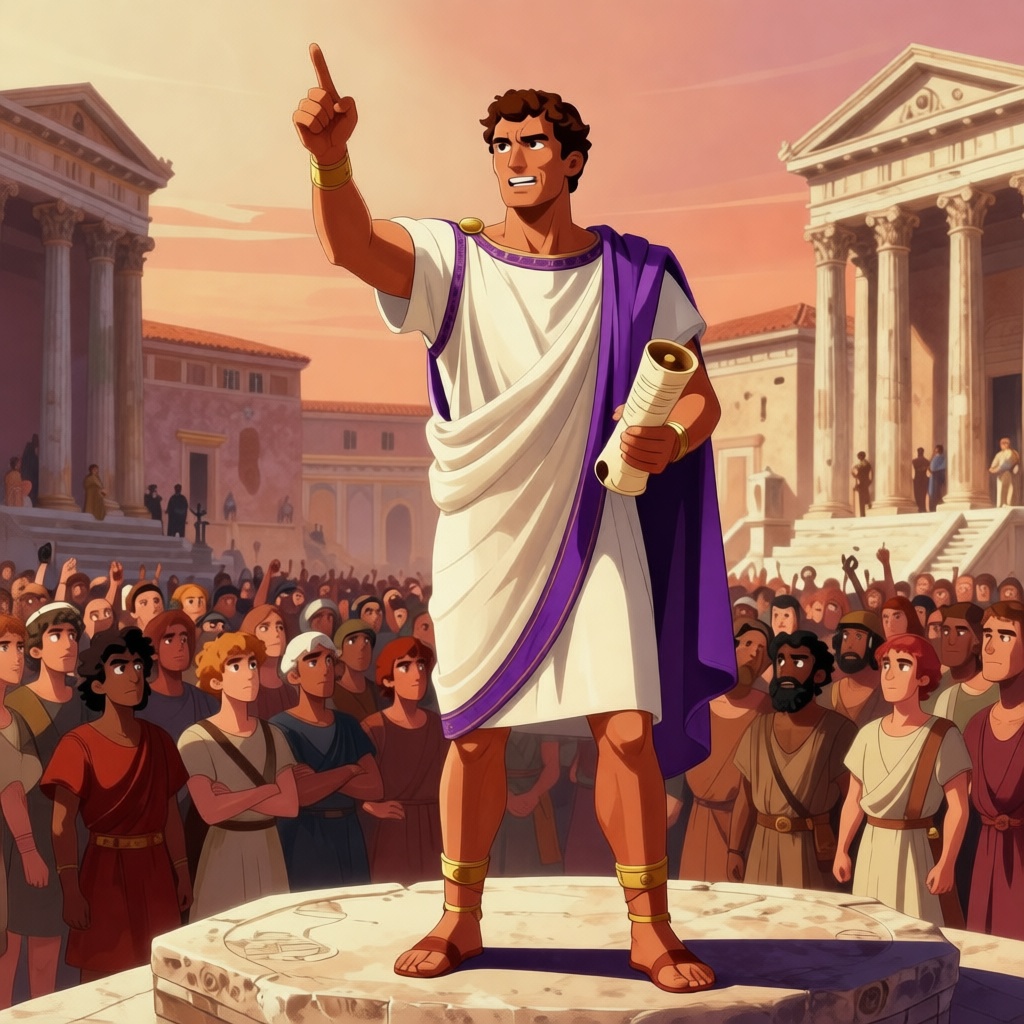
Antony stood at the Rostra — the speaker's platform in the Forum — facing a massive crowd. He held Caesar's will.
He started reading.
Three hundred sesterces to every Roman citizen. A fortune. Caesar's private gardens opened to the public forever. The man they'd called a tyrant had left Rome his wealth and his sanctuary.
The crowd stirred. That didn't sound like a tyrant.
Then Antony unveiled the wax effigy.
It was life-sized, molded from Caesar's actual body. They'd marked every wound — twenty-three dark punctures across the wax chest, back, arms, sides. They mounted it on a rotating stand and turned it slowly.
The crowd counted. One. Two. Five. Ten. Fifteen. Twenty-three.
Twenty-three senators had stabbed an unarmed man. Some from behind. Some while he was already dying.
Antony still hadn't called them murderers. He didn't need to.
"But Brutus says he was ambitious," Antony told the crowd, voice heavy with sarcastic respect. "And Brutus is an honorable man."
He listed Caesar's triumphs. His conquests. His clemency toward enemies. His gifts to Rome.
"But Brutus says he was ambitious. And Brutus is an honorable man."
The crowd understood what he was doing. Antony was weaponizing the word "honor," turning it into poison. Every time he said it, it meant less. By the end, "honorable" meant "murderer."
He never called for violence. He didn't have to.
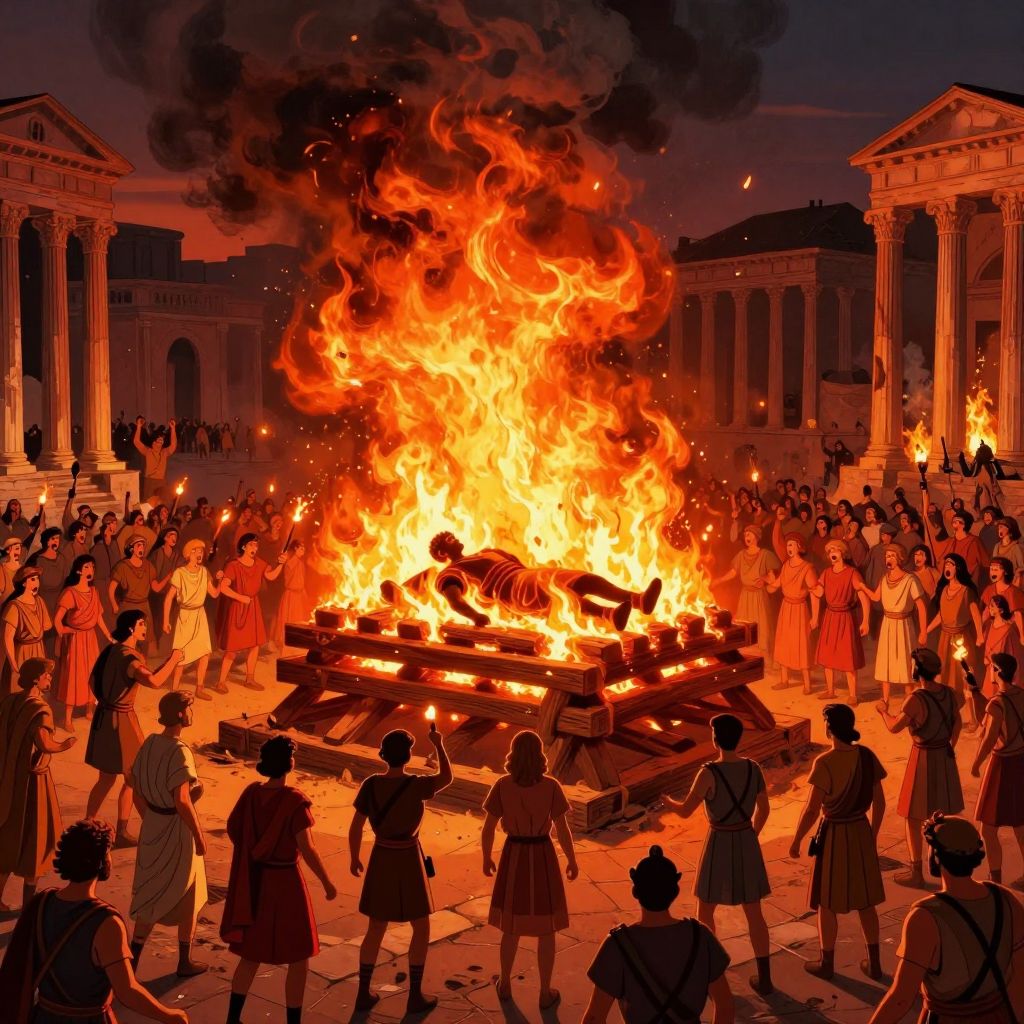
The crowd turned. They didn't wait for the official cremation. They built a pyre right there in the Forum — tearing apart shops for wood, grabbing anything that would burn. They lifted Caesar's body onto the flames.
Then they went hunting for the conspirators.
They found Helvius Cinna, a poet and tribune, on the street. They tore him apart with their bare hands.
Wrong man. They'd wanted Cornelius Cinna, who had publicly denounced Caesar and praised the assassins. But rage doesn't check names carefully.
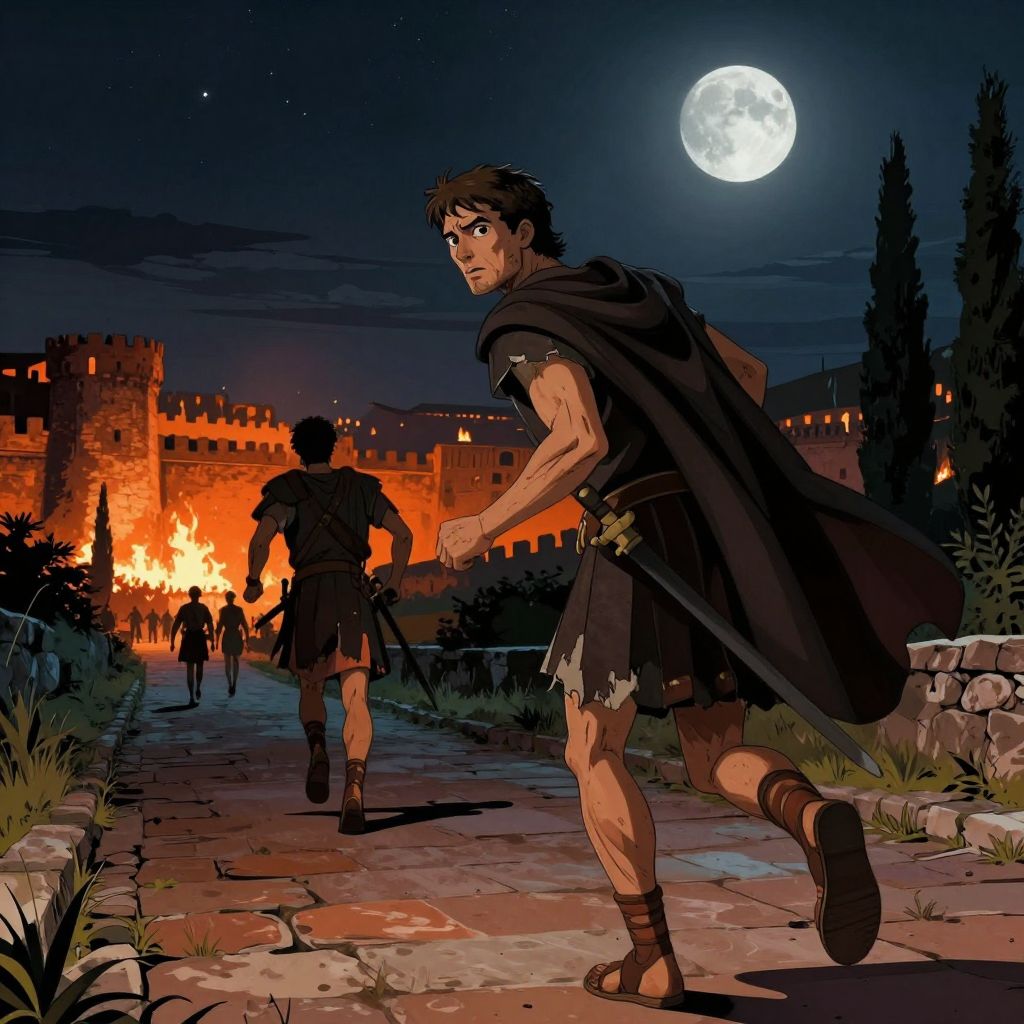
The real conspirators had already fled Rome.
The Heir
Brutus and Cassius fled to the eastern provinces. The "liberators" were now fugitives, though they still commanded armies and held provinces. This wasn't over.
Mark Antony controlled Rome. He had Caesar's papers, Caesar's money, and Caesar's popularity. He was consolidating power fast.
Then, several weeks after the assassination, news arrived that changed everything.
An eighteen-year-old was walking toward Rome from the south. His name was Gaius Octavius, but he'd just learned something interesting from Caesar's will: Caesar had adopted him posthumously.
His name was now Gaius Julius Caesar Octavianus. Octavian, for short.
Caesar's heir.
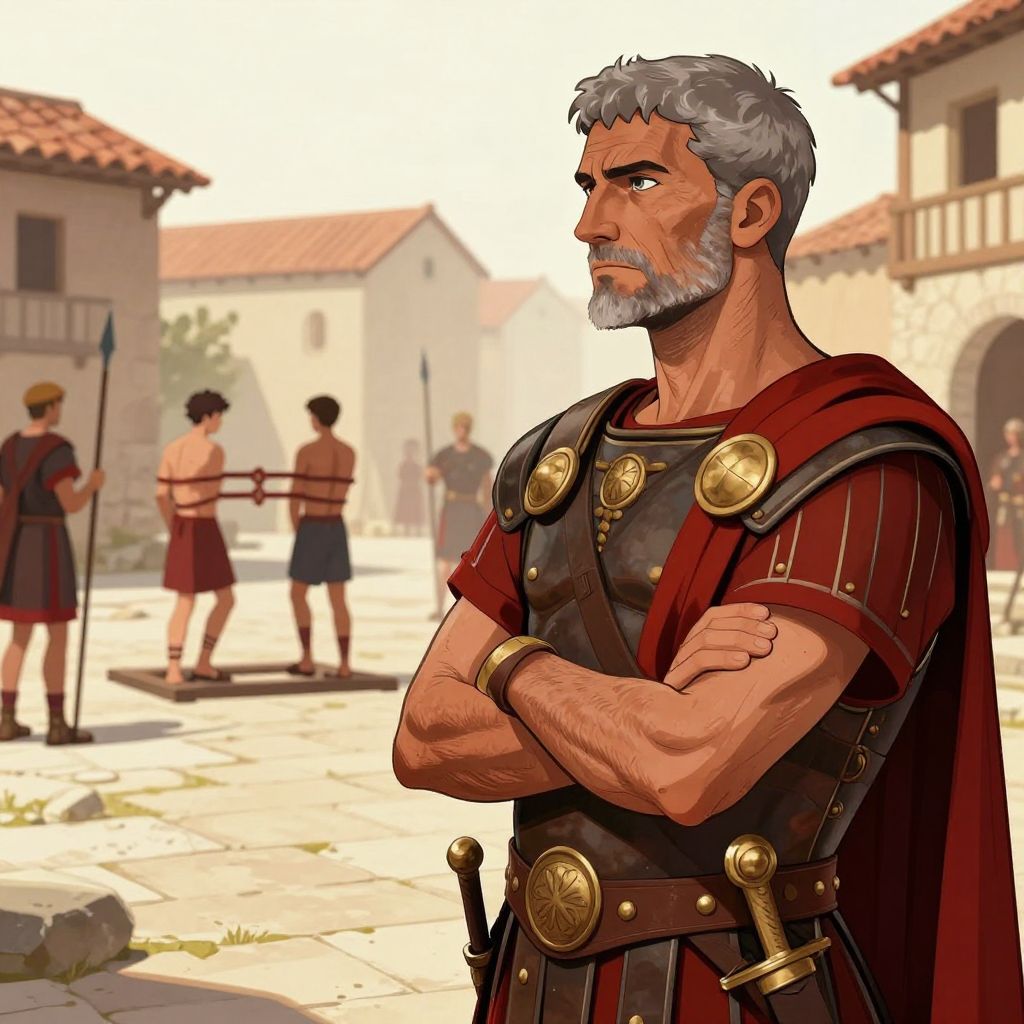
Mark Antony laughed when he heard. A sickly teenager? That was Caesar's chosen heir? Antony had been Caesar's partner, his general, his right hand. He wasn't about to step aside for a boy.
The Senate relaxed slightly. A child couldn't threaten them. Let Antony and the boy fight over Caesar's legacy while the Republic rebuilt.
Brutus and Cassius, watching from the east, saw no threat at all.
Everyone underestimated him.
Octavian entered Rome carrying nothing but his name and a copy of Caesar's will. He was short, thin, chronically ill. He looked like a strong wind would knock him over. He had no legions, no political experience, no allies in the Senate.
But he had Caesar's name. And he knew exactly how much that name was worth.
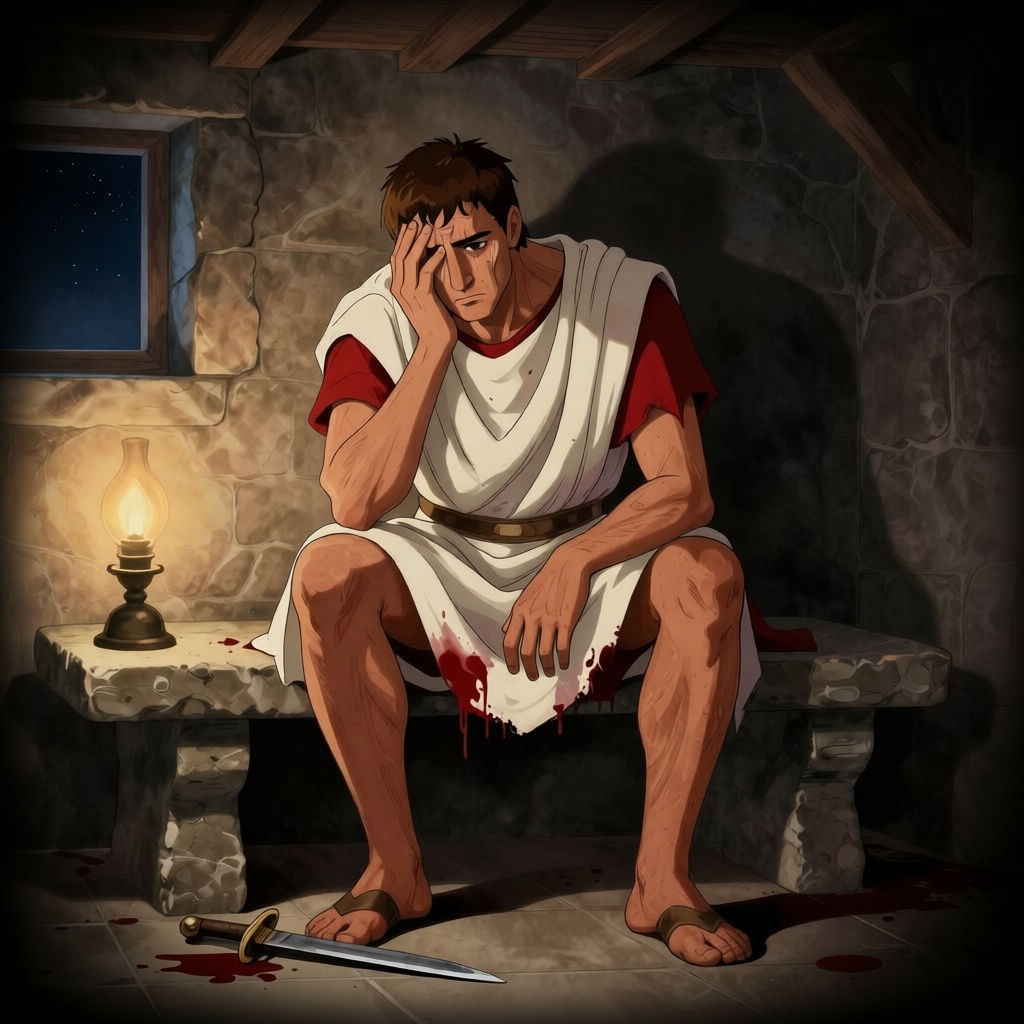
He started visiting Caesar's veterans. Soldiers who'd followed Caesar through Gaul, across the Rubicon, to the ends of the earth. Men who'd been promised land and money when they retired.
Octavian promised to honor those promises. He reminded them what Caesar had meant. What he'd done for them. What had been done to him.
And he had a list.
Sixty names. Every senator who'd participated in the assassination. Octavian wasn't broadcasting it. He was just keeping score, very carefully, waiting for his moment.
Mark Antony still thought the boy was harmless. The Senate thought he was irrelevant. Brutus and Cassius didn't think about him at all.
They would. Octavian was patient. And patient men are the most dangerous kind.
The Republic's Grave
History has a sick sense of irony.
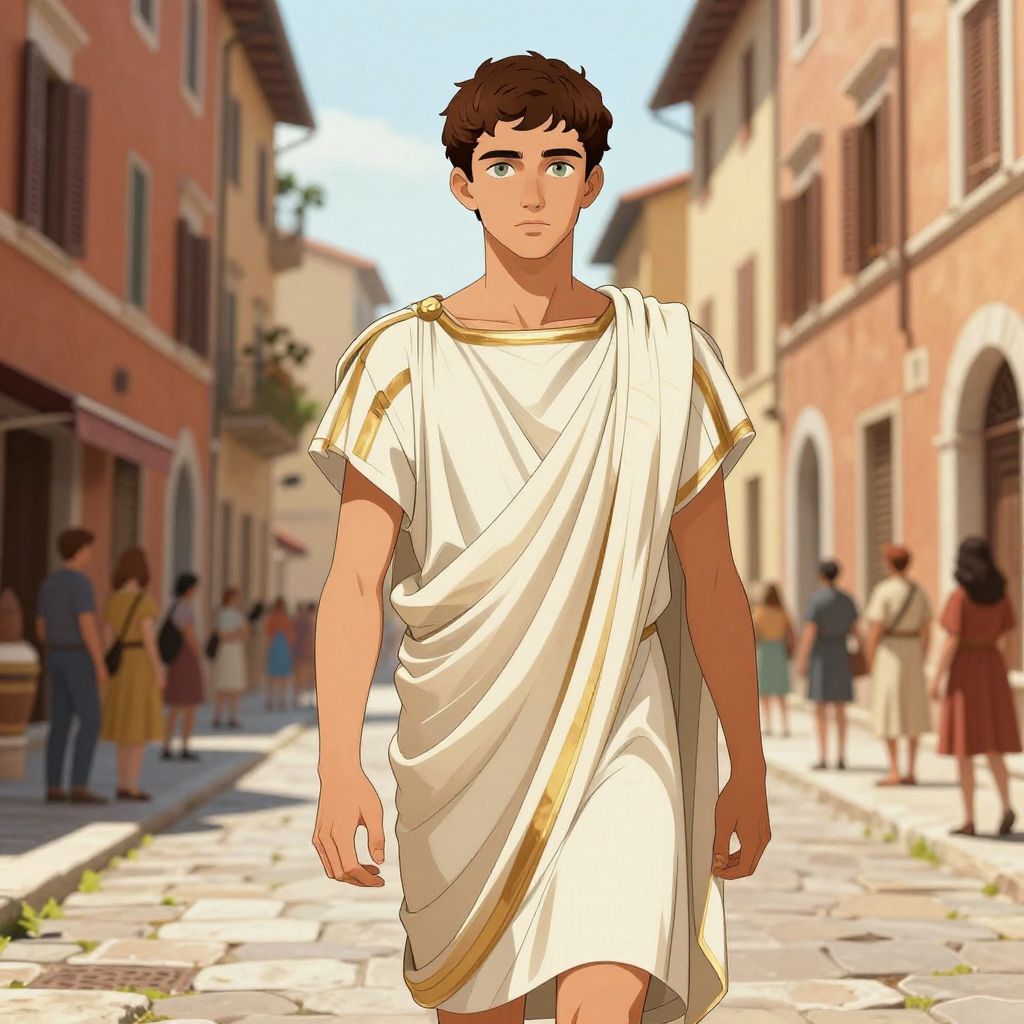
Nearly five centuries earlier, in 509 BCE, a man named Lucius Junius Brutus had founded the Roman Republic. When his own sons conspired to restore the monarchy, he sentenced them to death himself. He watched them executed. Didn't flinch. Didn't look away.
He'd killed what he loved most to build something greater. The Republic.
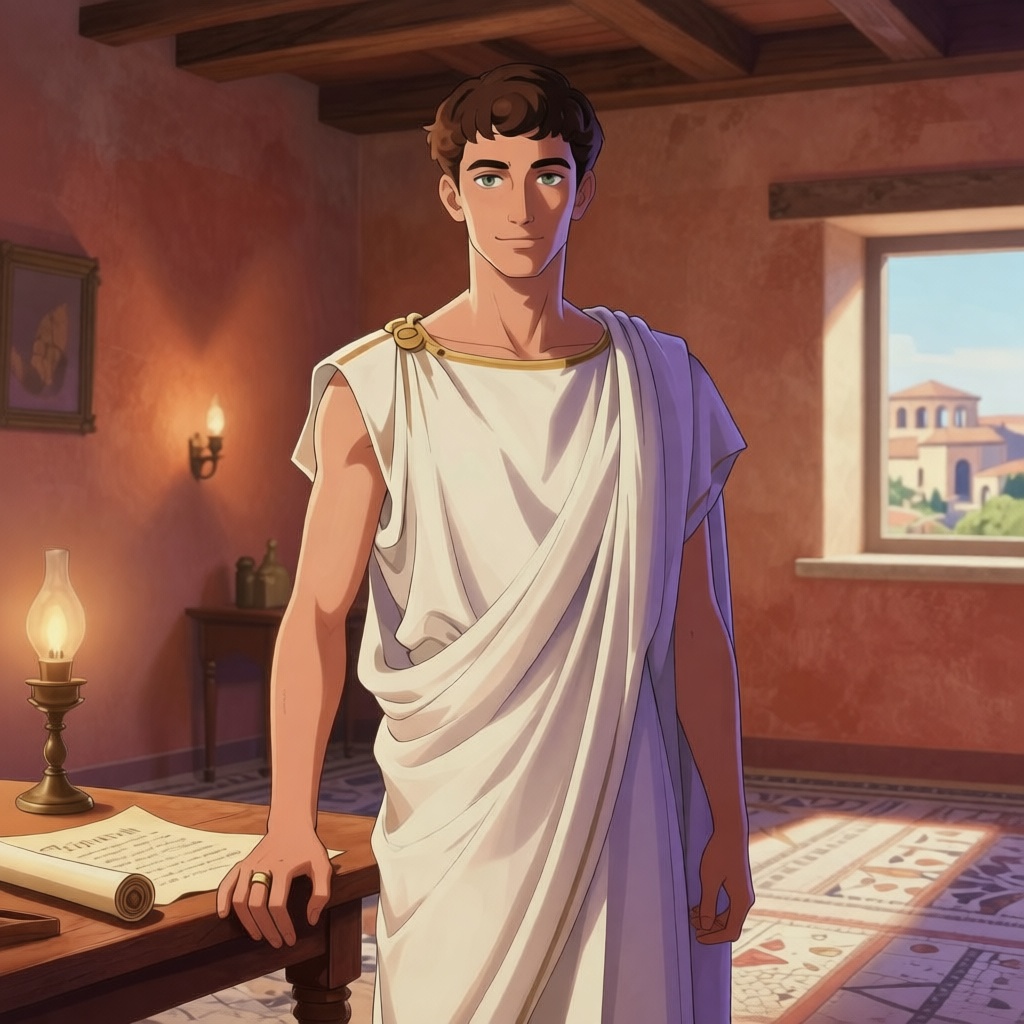
Now, in 44 BCE, another man named Marcus Junius Brutus claimed to be that hero's descendant. He'd killed the man who'd loved him like a son. He thought he was saving the Republic.
He was burying it.
The first Brutus had understood what sacrifice meant. He'd paid the cost with his own blood, his own line. He'd built something that lasted five centuries.
This Brutus thought there would be cheering.
The Aftermath
Within two years, Rome descended into civil war. Again.
Mark Antony and Octavian formed an alliance with another general, Lepidus. They called it the Second Triumvirate, though it was really just legalized revenge.
They published proscription lists — names of enemies to be killed, their property seized. Thousands died. Cicero, Rome's greatest orator, was hunted down and beheaded. His head and hands were nailed to the Rostra where he'd spoken for the Republic all his life.
Brutus and Cassius raised armies in the east. They still believed they'd saved Rome. They still called themselves liberators.
In 42 BCE, the armies met at Philippi in Macedonia.
Brutus and Cassius lost. Both committed suicide rather than face capture.
The "liberators" were dead. All of them, eventually. Most died within three years of the assassination.
But the war wasn't over.
Antony and Octavian turned on each other, as everyone knew they would. Thirteen more years of civil war. Antony allied with Cleopatra in Egypt. Octavian controlled Rome and painted them as traitors.
It ended at Actium in 31 BCE. Octavian won. Antony and Cleopatra killed themselves in Alexandria.
Octavian returned to Rome as the last man standing. He claimed he was restoring the Republic. The Senate even voted to give him a new title: Augustus. "The Revered One."
What he actually became was emperor. The first Roman emperor, though he was smart enough never to use that word.
The Republic the conspirators had killed Caesar to save died with them. What replaced it was exactly what they'd feared — one man with absolute power, ruling for life.
They'd just killed the wrong man.
The Legacy
The Ides of March became a warning about what happens when you kill without a plan for what comes after.
The conspirators believed they were Brutus the Elder — willing to sacrifice anything for principle. But they were something worse: men who destroyed everything for an idea they didn't understand.
The Republic they imagined had never really existed. It had always been corrupt, always been controlled by a few powerful families. Caesar had just stopped pretending.
Killing him didn't restore some golden age. It just triggered seventeen more years of civil war and ended with a system even more autocratic than what they'd feared.
Octavian — that sickly eighteen-year-old nobody thought mattered — ruled for forty-one years. He became the template for every Roman emperor after. He turned "Caesar" from a family name into a title. Kaiser. Czar. Caesar.
The name outlived the Republic by nearly 1,500 years.
The assassins thought they were saving Rome. They were making Caesar immortal.
Frequently Asked Questions
1Why is it called the Ides of March?
The Romans didn't number their days like we do. They counted backward from three fixed points in each month: Kalends (1st), Nones (5th or 7th), and Ides (13th or 15th). In March, the Ides fell on the 15th. It became associated with doom after Caesar's assassination.
2How many times was Caesar stabbed?
Caesar received 23 stab wounds, though only one was fatal. The conspiracy involved about 60 senators, and in the chaos, they even accidentally cut each other. The attack was frenzied and disorganized.
3Did Caesar really say 'Et tu, Brute?'
Probably not in those exact Latin words. Some ancient sources say he spoke in Greek, others that he said nothing. The Latin phrase was popularized by Shakespeare. What sources agree on is that Caesar seemed to recognize Brutus among his attackers and appeared to accept his fate at that moment.
4What happened to the conspirators?
Most of the conspirators died within three years. Brutus and Cassius fled Rome, raised armies in the east, and were defeated at the Battle of Philippi in 42 BCE, where both committed suicide. Others were hunted down by Octavian (later Augustus). The Republic they killed Caesar to save died with them.
Experience the Fall of the Republic
From Calpurnia's warning to Octavian's revenge, hear the assassination and its aftermath told by an ancient witness.


Listen to Related Stories
Twenty-Three
4 minTwenty-three stab wounds. Sixty conspirators. One dead god on the Senate floor.

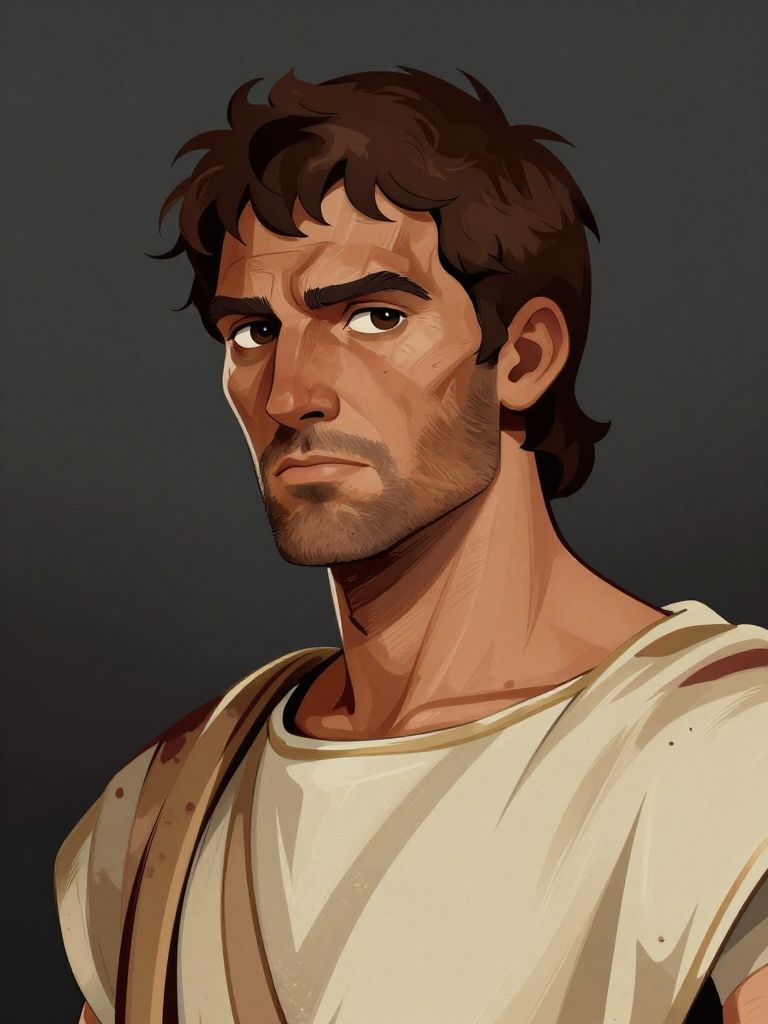
Key Figures
Listen to the Full Story
Experience history through immersive audio lessons narrated by Lumo, your immortal wolf guide.