The Regent Who Stopped Pretending
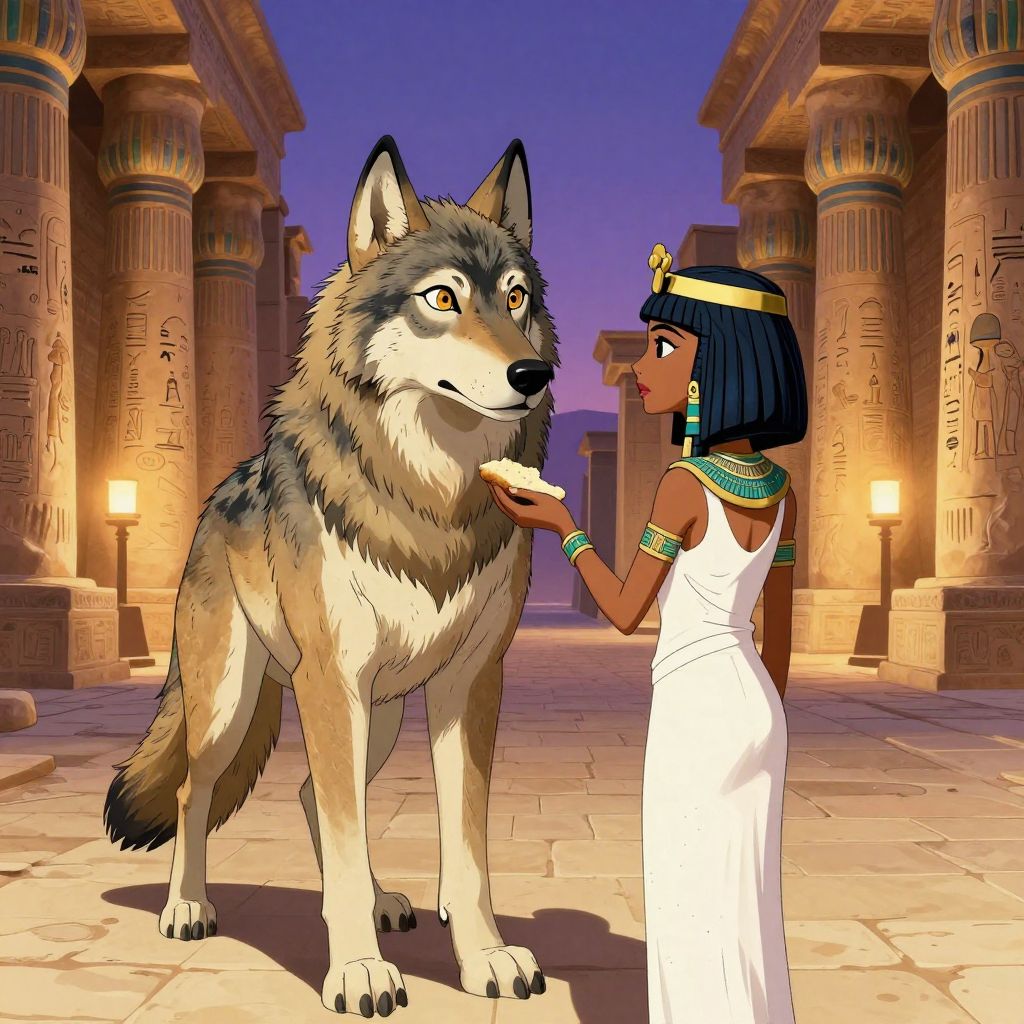
When Thutmose II died around 1479 BCE, his son Thutmose III was still a child — probably between two and ten years old, depending on which Egyptologist you ask. The boy's mother was a minor wife named Isis. The Great Royal Wife was Hatshepsut, daughter of the legendary warrior pharaoh Thutmose I.
Custom demanded that Hatshepsut serve as regent. Manage the kingdom. Keep things stable until the boy came of age. Egyptian history was full of queen regents who did exactly this — wielded real power for a few years, then stepped gracefully aside.
Hatshepsut had other plans.
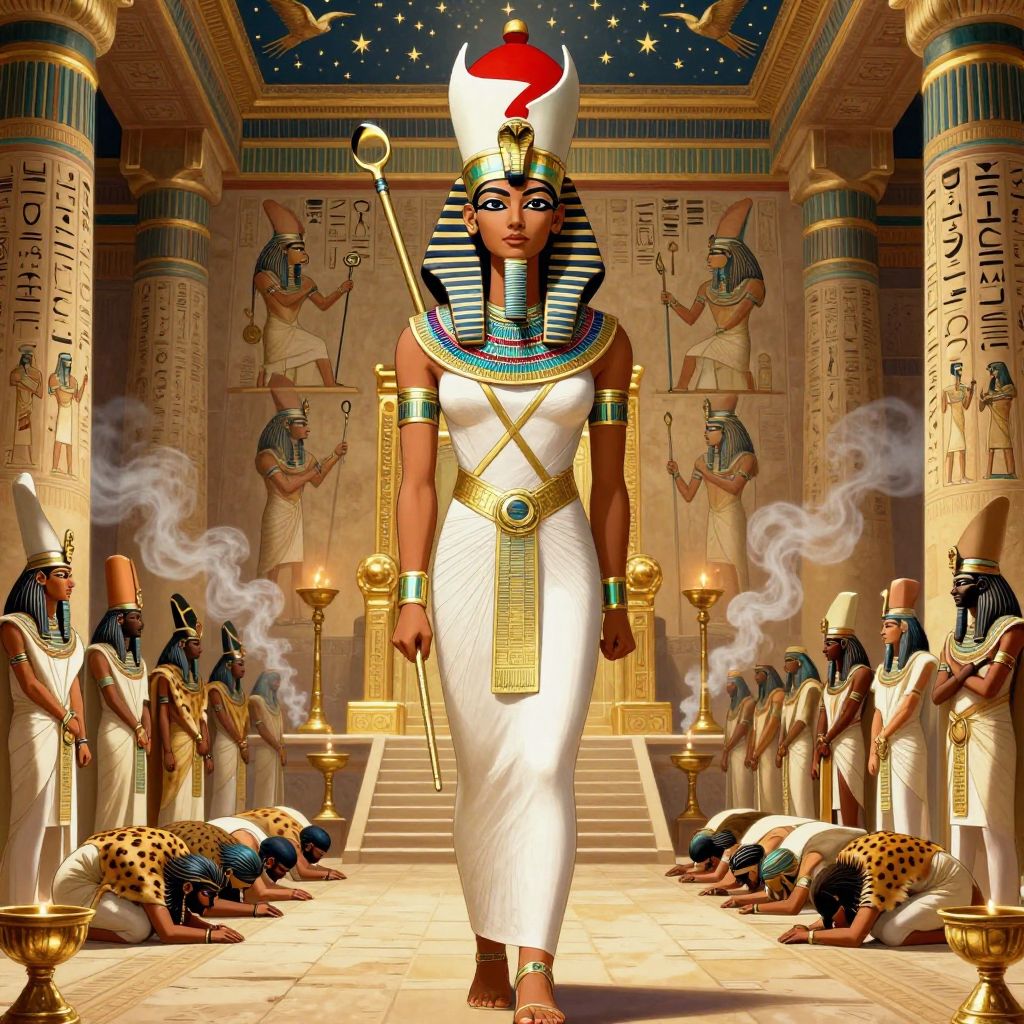
Within seven years of assuming the regency, she had declared herself pharaoh. Not regent. Not queen. King of Upper and Lower Egypt, wearing the double crown and the false beard, claiming divine right to rule.
The Theological Problem
Here's what made Hatshepsut's claim remarkable: Egyptian kingship was fundamentally male. The pharaoh was Horus incarnate, the son of Osiris, the earthly manifestation of divine masculine power. The entire theological framework assumed the king was a man.
Hatshepsut rewrote the framework.
Temple reliefs at Deir el-Bahri depict a divine birth story in which the god Amun himself visited her mother, Queen Ahmose, in the form of Thutmose I. The god "found her as she slept in the beauty of her palace," the inscriptions claim, and the resulting child — Hatshepsut — was therefore divine by conception.
This wasn't unprecedented. Pharaohs regularly claimed divine parentage. What was unprecedented was a woman using this theological tool to claim the throne in her own right.
The priests went along with it. Whether they believed the story or simply recognized that Hatshepsut had the power and they had no choice, they provided the theological justification she needed. They composed hymns declaring her rule divinely ordained. They carved her image into temple walls.
Maatkare: Truth Is the Soul of Ra
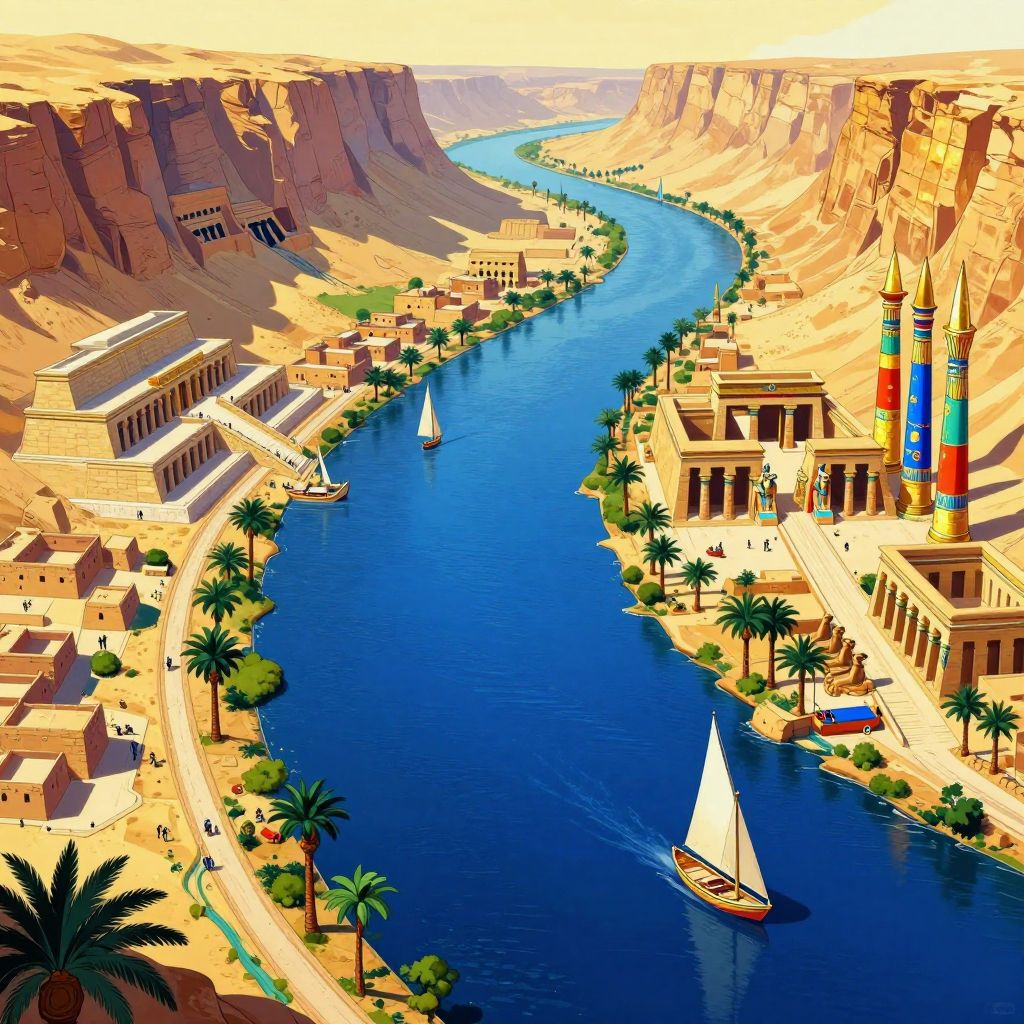
Every pharaoh chose a throne name — a declaration of identity and intention. Hatshepsut chose Maatkare, meaning "Truth is the soul of Ra" or "Truth is the ka (spirit) of Ra."
The name was a statement. Ma'at was the Egyptian concept of cosmic order, truth, justice, balance — the fundamental principle holding the universe together. By claiming Ma'at as her spiritual essence, Hatshepsut was asserting that her rule wasn't a violation of divine order. It was the expression of it.
She was daring anyone to argue.
Not Queen — King
The distinction matters. Egypt had powerful queens before Hatshepsut. Ahhotep I helped drive out the Hyksos invaders during the wars of liberation a generation earlier. Ahmose-Nefertari wielded enormous influence and was deified after her death.
But these women exercised power through their relationships to men — as mothers of kings, wives of kings, regents for child kings. They were powerful women within a male system.
Hatshepsut broke that pattern. She didn't rule as "Great Royal Wife" or "King's Mother." She ruled as pharaoh.
Inscriptions from her reign use male pronouns to describe her. Statues depict her in full pharaonic regalia, including the false beard traditionally worn by kings. Some statues show her with a male torso, though others clearly depict her as female.
Egyptologists debate what this meant. Was she claiming to be male? Probably not — other inscriptions clearly identify her as female. Was she claiming that gender was irrelevant to kingship? Perhaps. Or was she simply claiming all the traditional symbols of pharaonic power, regardless of whether they were originally gendered male?
Whatever her intent, the message was clear: she held the full power of kingship, not some diminished female version of it.
The Co-Regent Who Waited
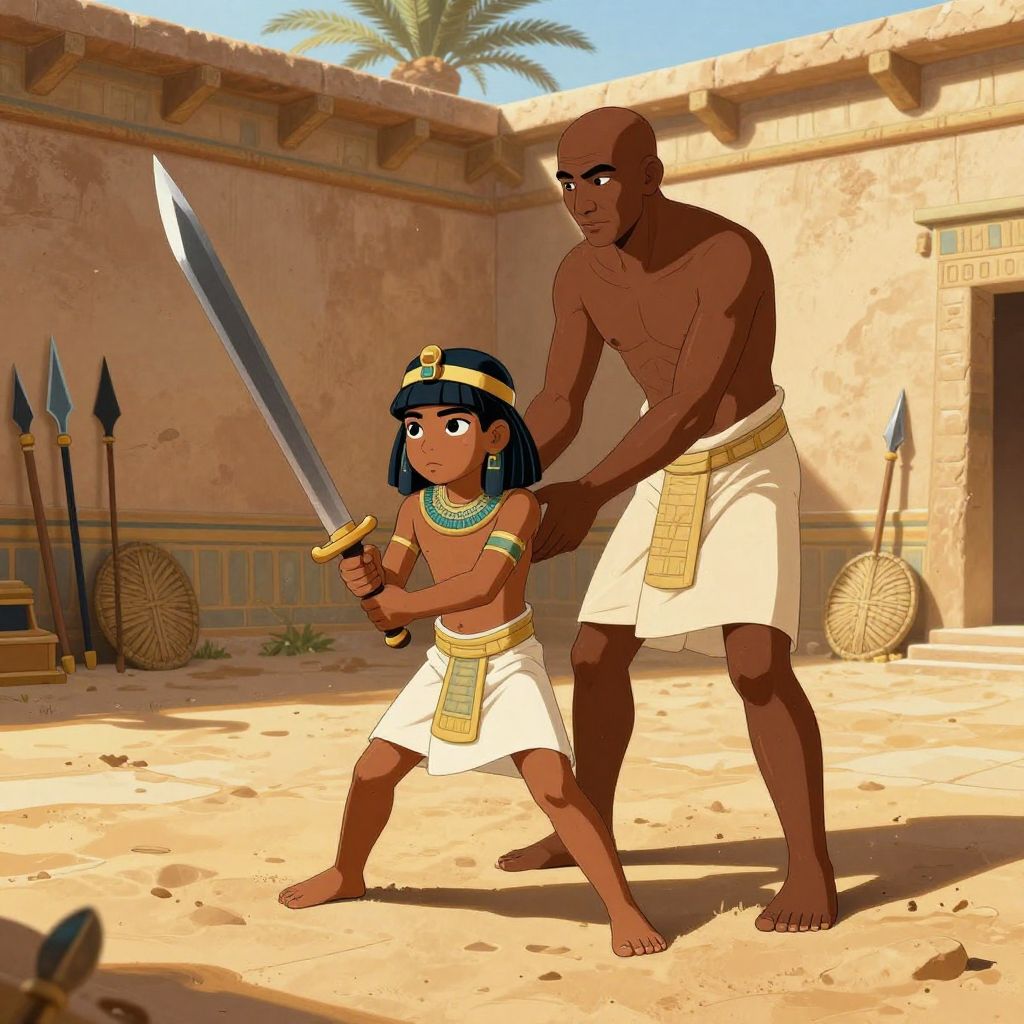
Thutmose III remained co-regent throughout Hatshepsut's twenty-two years as pharaoh. His name appeared alongside hers on monuments. He commanded military expeditions in Nubia while still a teenager. He wasn't locked in a dungeon or hidden away.
But he wasn't in charge.
The dynamic between Hatshepsut and Thutmose III is one of ancient history's great puzzles. Did they hate each other? Work together pragmatically? Maintain formal civility while seething privately? The sources don't tell us.
What we know is that Thutmose III spent his youth training with the military. He led exercises. He commanded troops. The generals respected him — contemporary records describe his physical prowess and courage. He was building exactly the power base you'd want if you intended to rule.
And he waited. Twenty-two years.
The Expedition to Punt
Around 1470 BCE, in the ninth year of her reign, Hatshepsut sent a trading expedition to the land of Punt — a semi-mythical region somewhere along the Red Sea coast, possibly in the area of modern-day Eritrea, Ethiopia, or Somalia.
The expedition was massive: five ships carrying Egyptian goods for trade. They returned laden with treasures: myrrh trees (transplanted with their root balls intact), myrrh resin, gold, ebony, ivory, and exotic animals including baboons and possibly leopards.
Temple reliefs at Deir el-Bahri depict the expedition in remarkable detail. We see the ships. We see the Puntite village with its distinctive beehive-shaped houses built on stilts. We see the Puntite king and his famously corpulent queen. We see the Egyptians loading the ships with incense trees.
This wasn't just trade. It was a propaganda triumph. Egypt hadn't sent an expedition to Punt in generations. Hatshepsut presented herself as a pharaoh who could accomplish what her male predecessors hadn't attempted.
Deir el-Bahri: An Argument in Stone
Hatshepsut's mortuary temple at Deir el-Bahri is the building that still draws tourists today. Built into the base of towering cliffs on the west bank of the Nile near Thebes, it rises in three terraced colonnades connected by long ramps.
The temple was designed by Senenmut, Hatshepsut's chief architect and one of the most powerful non-royal officials in Egyptian history. (Later rumors would claim they were lovers, though there's no solid evidence for this.)
The reliefs on the temple walls told Hatshepsut's story: her divine birth, her coronation, her expedition to Punt, her building projects, her legitimacy. It wasn't just a tomb. It was an argument — carved in stone, meant to last forever.
And it worked. The temple still stands, still impresses, still makes her case thirty-five centuries later.
Twenty-Two Years of Prosperity
Hatshepsut's reign was remarkably stable and prosperous. She didn't wage major wars of conquest — that would come later, under Thutmose III. Instead, she focused on trade, building projects, and consolidating Egypt's control over Nubia.
She restored temples that had been damaged during the Hyksos occupation generations earlier. She built at Karnak, including the famous Red Chapel. She erected obelisks — tall granite spires that were among the most technically challenging construction projects in the ancient world.
Was she a great pharaoh? By the standards of the time — stability, prosperity, impressive building projects, maintenance of ma'at — she clearly was. Even her critics would have difficulty pointing to actual failures in her governance.
Death and Its Aftermath
Hatshepsut died around 1458 BCE, probably in her early fifties. The cause is unknown. Some Egyptologists have suggested the diabetes and bone cancer detected in her mummy contributed; others note that fifty was a reasonable lifespan for the era.
Her death wasn't violent or dramatic. She simply stopped ruling, and Thutmose III finally had sole power.
And then... nothing happened.
For twenty years, Thutmose III ruled without touching Hatshepsut's monuments. He went on to become one of Egypt's greatest warrior pharaohs, conducting seventeen military campaigns and expanding the empire to its greatest extent. He was busy. He had bigger concerns than settling old scores.
Her temples stood. Her obelisks gleamed. Her name remained carved in stone.
The Erasure
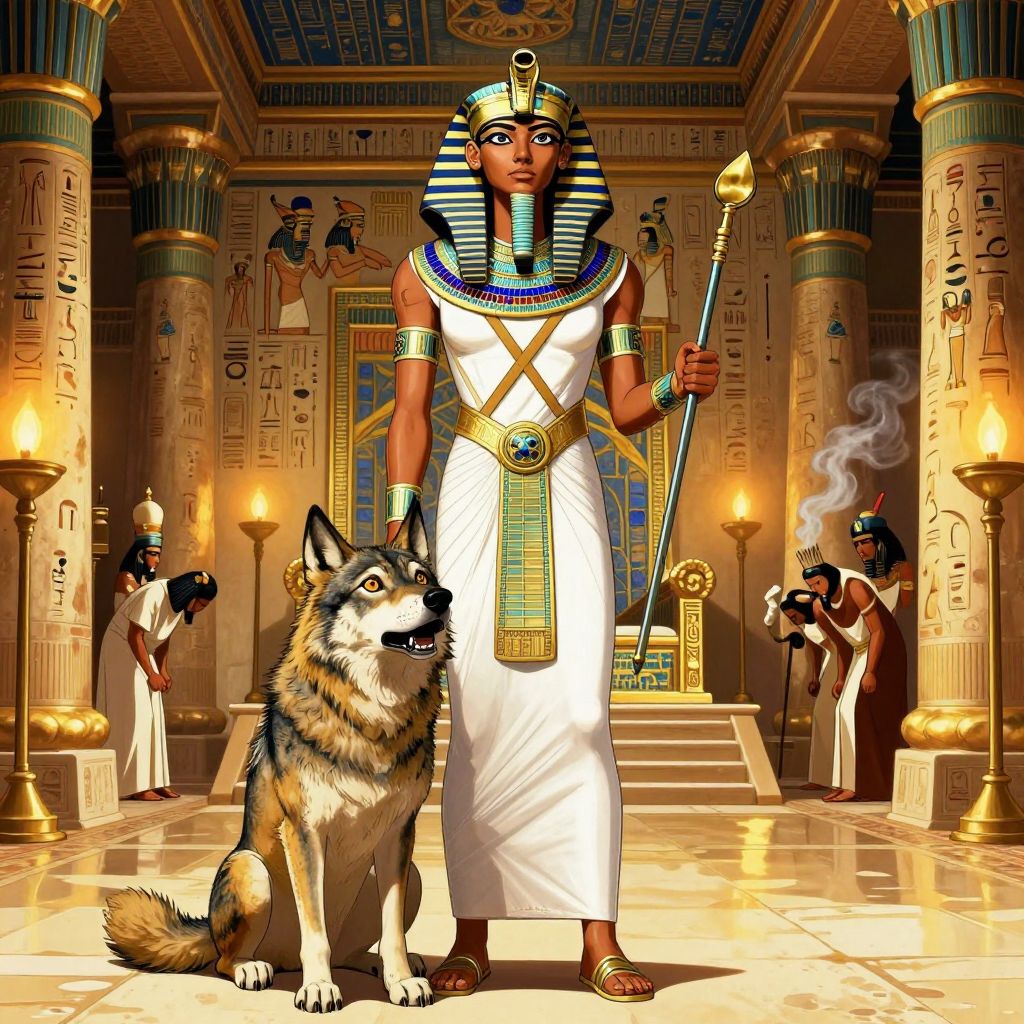
Then, near the end of Thutmose III's fifty-four-year reign, the systematic destruction began.
Workers moved from monument to monument across Egypt. They chiseled out Hatshepsut's cartouches — the oval rings containing royal names. They defaced her images. Her face disappeared from relief carvings. Statues were mutilated or destroyed. Her name was replaced with those of Thutmose I, Thutmose II, or Thutmose III.
The destruction was thorough but not complete. Some cartouches in hard-to-reach places survived. Some statues were buried rather than destroyed and eventually recovered by archaeologists. The erasure was systematic enough to prove intent, incomplete enough to prove the difficulty of truly erasing a twenty-two-year reign.
In Egyptian belief, a person's name — their ren — was a component of their soul. Destroy the name from all records, and you destroyed their chance at eternal life in the afterlife. The erasure wasn't just political. It was metaphysically murderous.
Who Ordered It?
The twenty-year delay between Hatshepsut's death and the erasure is the puzzle.
If Thutmose III hated Hatshepsut, why wait over two decades of sole rule to attack her memory? He wasn't weak or constrained in the early years of his reign. He could have ordered the destruction immediately after her death.
Several theories exist:
Theory One: Late Revenge. Thutmose III finally gave the order in his old age, perhaps as his own death approached and old resentments surfaced.
Theory Two: Succession Politics. By the time of the erasure, Thutmose III's son Amenhotep II was serving as co-regent. Perhaps the erasure was meant to strengthen Amenhotep's claim — removing any precedent for a woman claiming the throne.
Theory Three: Theological Correction. Perhaps the priesthood, rather than the palace, drove the erasure. A woman claiming kingship violated traditional understandings of ma'at. With Hatshepsut safely dead and her immediate supporters aging out, the religious establishment may have decided to "correct" the theological anomaly.
Theory Four: Combined Factors. Most likely, multiple motivations converged — personal resentment, dynastic politics, and theological conservatism all contributing to a decision that no single factor would have driven alone.
We may never know who gave the order or why. What we know is that someone decided Hatshepsut shouldn't exist.
The Erasure's Failure
The attempt to destroy Hatshepsut's memory failed. Spectacularly.
Deir el-Bahri survived. The building was too magnificent to demolish, so they settled for defacing it — which preserved the defacements as evidence of what they tried to hide.
Statues buried in antiquity were recovered by archaeologists. Cartouches in obscure locations escaped the chisels. Written records survived in contexts the erasers didn't think to check.
The erasure made Hatshepsut more famous, not less. The very attempt to destroy her memory became the primary thing we remember about her — the female pharaoh someone tried to erase.
Ironically, we may know more about Hatshepsut than we would have if the erasure had never happened. The defaced monuments are evidence. The pattern of destruction tells a story. Archaeologists have spent more effort investigating her precisely because of the mystery.
Why Hatshepsut Matters
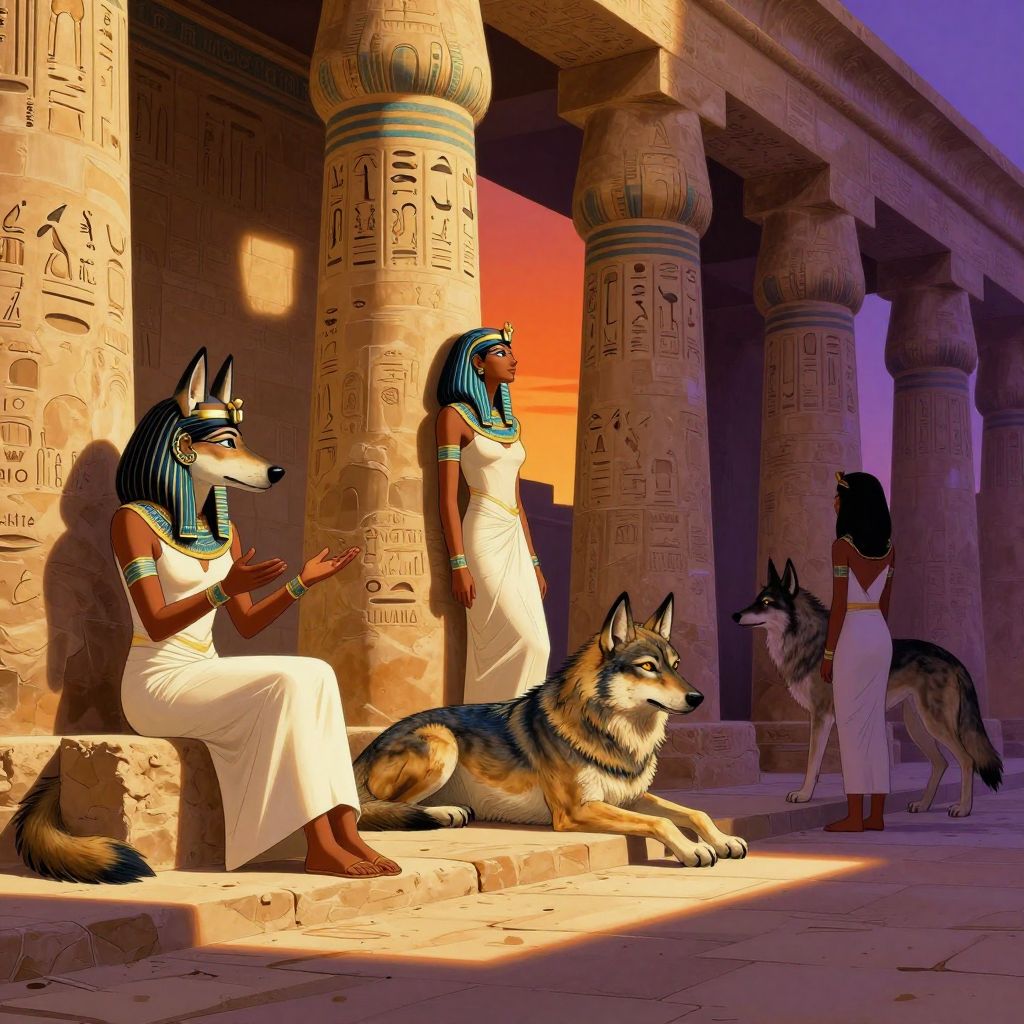
Hatshepsut ruled longer than Cleopatra. Egypt was stable and prosperous under her reign — no civil wars, no invasions, no famines. She commissioned buildings that still stand. She sent expeditions that brought back exotic goods. She restored temples her predecessors had neglected.
And someone decided none of that mattered because she was a woman who refused to know her place.
The erasure failed. Her temple still rises against the cliffs at Deir el-Bahri. Her obelisks still stand at Karnak (one of them, at 97 feet tall, is the second-tallest ancient obelisk still standing). Her mummy rests in the National Museum of Egyptian Civilization in Cairo, identified through CT scanning and a matching tooth in 2007.
She chose "Maatkare" — "Truth is the soul of Ra" — as her throne name. Truth was what she claimed to embody.
Three and a half thousand years later, despite systematic attempts to destroy every trace of her, the truth of her reign survives.
Frequently Asked Questions
1Was Hatshepsut Egypt's only female pharaoh?
No, but she was the most successful. Earlier queens like Sobekneferu ruled briefly during times of crisis. Later, Cleopatra VII ruled as pharaoh, though she's more famous as 'queen.' Hatshepsut is unique because she ruled for over two decades during peacetime and claimed full pharaonic titles, including the false beard and male royal dress.
2Why did Hatshepsut wear a false beard?
The false beard was a symbol of pharaonic authority, traditionally worn by all kings regardless of actual facial hair. By wearing it, Hatshepsut was claiming the full traditional regalia of kingship. It wasn't about disguising her gender but about claiming all the symbols of power that came with the role of pharaoh.
3Did Thutmose III hate Hatshepsut?
Unknown. The twenty-year delay before the erasure suggests the relationship was more complicated than simple hatred. He served as co-regent for 22 years without openly rebelling. After her death, he ruled for over 30 years before the erasure began. If it was personal revenge, why wait? The timing suggests political calculation rather than emotional vendetta.
4What was the purpose of erasing someone's name in ancient Egypt?
Egyptians believed your name (ren) was part of your soul, essential for resurrection in the afterlife. Destroying someone's name from all monuments was theological murder — it meant obliterating their chance at eternal life. The erasure wasn't just about removing Hatshepsut from history, but about destroying her soul according to Egyptian religious belief.
Experience Hatshepsut's Story
From her rise to power to her attempted erasure, hear the full story of Egypt's most successful female pharaoh.


Listen to Related Stories
The Woman Who Would Be King
4 minShe stopped pretending. She declared herself pharaoh.

Key Figures
Listen to the Full Story
Experience history through immersive audio lessons narrated by Lumo, your immortal wolf guide.