The Man Who Waited Twenty-Two Years
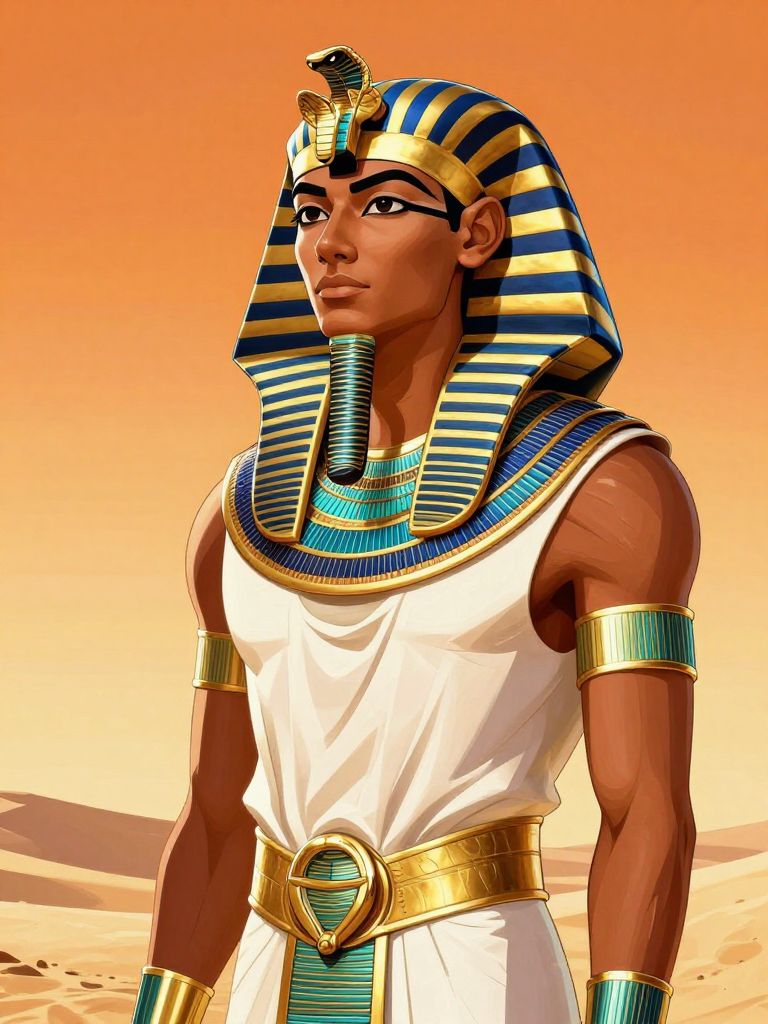
In 1479 BCE, a child became pharaoh of Egypt. He was somewhere between two and ten years old, depending on which Egyptologist you ask. His father, Thutmose II, had just died after a sickly and unremarkable reign. His mother was a minor wife named Isis. The boy had royal blood but no power.
His stepmother, Hatshepsut, was supposed to serve as regent until he came of age. Egyptian tradition demanded it. Queens managed the kingdom for child pharaohs all the time. They wielded real power for a few years, then stepped aside.
Hatshepsut had other plans. Within seven years, she declared herself pharaoh. Not regent. Not queen. King of Upper and Lower Egypt, wearing the double crown and the false beard, claiming divine right to rule.
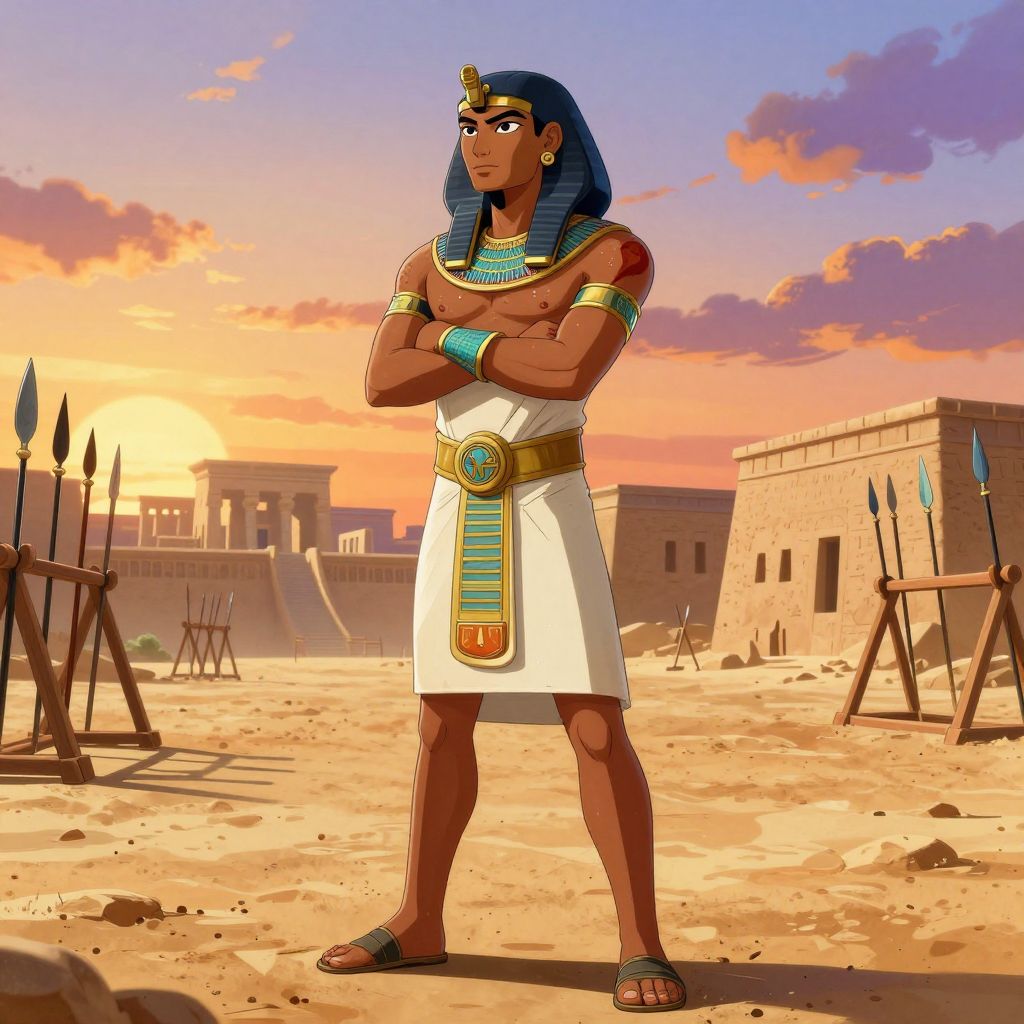
The boy remained co-regent. His name appeared on monuments alongside hers. He trained with the military, led exercises, commanded troops in Nubia. The generals respected him. Contemporary records describe his physical prowess and courage. He was building exactly the power base you'd want if you intended to rule.
And he waited. Twenty-two years.
Growing Up in Someone Else's Shadow
The dynamic between Thutmose III and Hatshepsut remains one of ancient history's enduring puzzles. Did they hate each other? Work together pragmatically? Maintain formal civility while seething privately? The sources don't tell us directly, but the circumstantial evidence is fascinating.
Thutmose wasn't locked in a dungeon. He commanded real troops. He led real military exercises. He returned to court covered in dust from training yards, surrounded by generals who treated him with respect. Every year, his reputation among the soldiers grew. Every year, more generals became loyal to him personally.
But every time he returned to the palace, Hatshepsut was still sitting on the throne.
She built monuments. She sent trading expeditions to Punt — the "Land of the Gods" — bringing back incense trees, exotic animals, and treasures Egypt hadn't seen in generations. She commissioned her mortuary temple at Deir el-Bahri, three terraced colonnades carved into the cliff face, one of ancient Egypt's architectural masterpieces. She was building an argument in stone for her own legitimacy.
Thutmose trained. He watched. He never challenged her publicly after a certain point. But the waiting must have been unbearable. Here was a warrior-king in his prime, relegated to practice campaigns while a woman ruled his kingdom. Whether he burned with resentment or simply calculated that patience was his best strategy, the result was the same.
He waited until she died.
The Explosion of Conquest
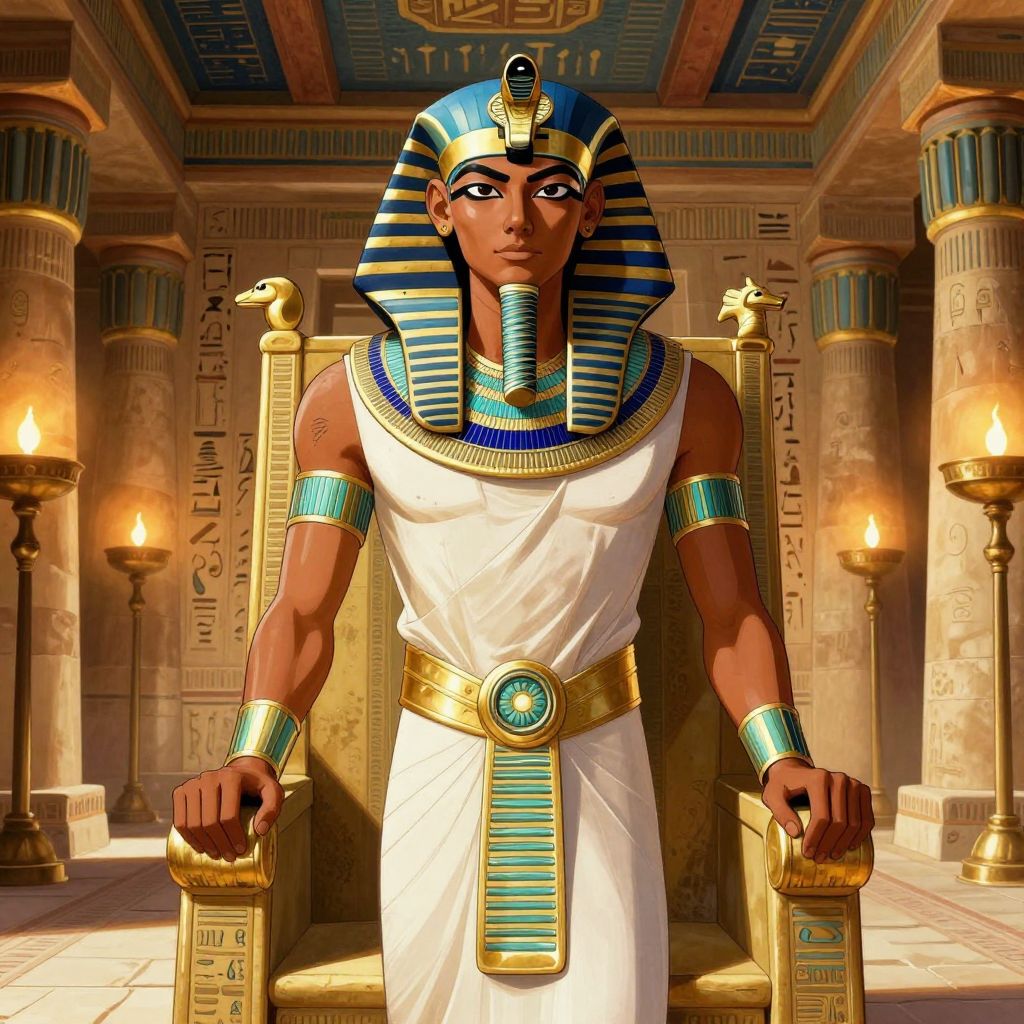
Hatshepsut died around 1458 BCE, probably in her early fifties. The cause is unknown. What happened next suggests that whatever relationship they'd had, Thutmose III was very ready to stop waiting.
His first year as sole ruler, he launched a military campaign.
A coalition of Canaanite kings had united against Egypt. The kingdom of Kadesh led the rebellion, gathering armies near the fortress city of Megiddo. Hundreds of chariots. Thousands of soldiers. They thought Egypt had gone soft under a woman's rule.
They had badly misjudged the man they were about to face.
Thutmose III marched north with twenty thousand men. At Yehem, the Egyptian army stopped to assess their options. Three roads led through the Carmel mountain range to Megiddo. The generals gathered around their maps and immediately identified the problem.
The northern route curved around the mountains. Longer, but safe. The southern route was similar. Both avoided the dangerous terrain.
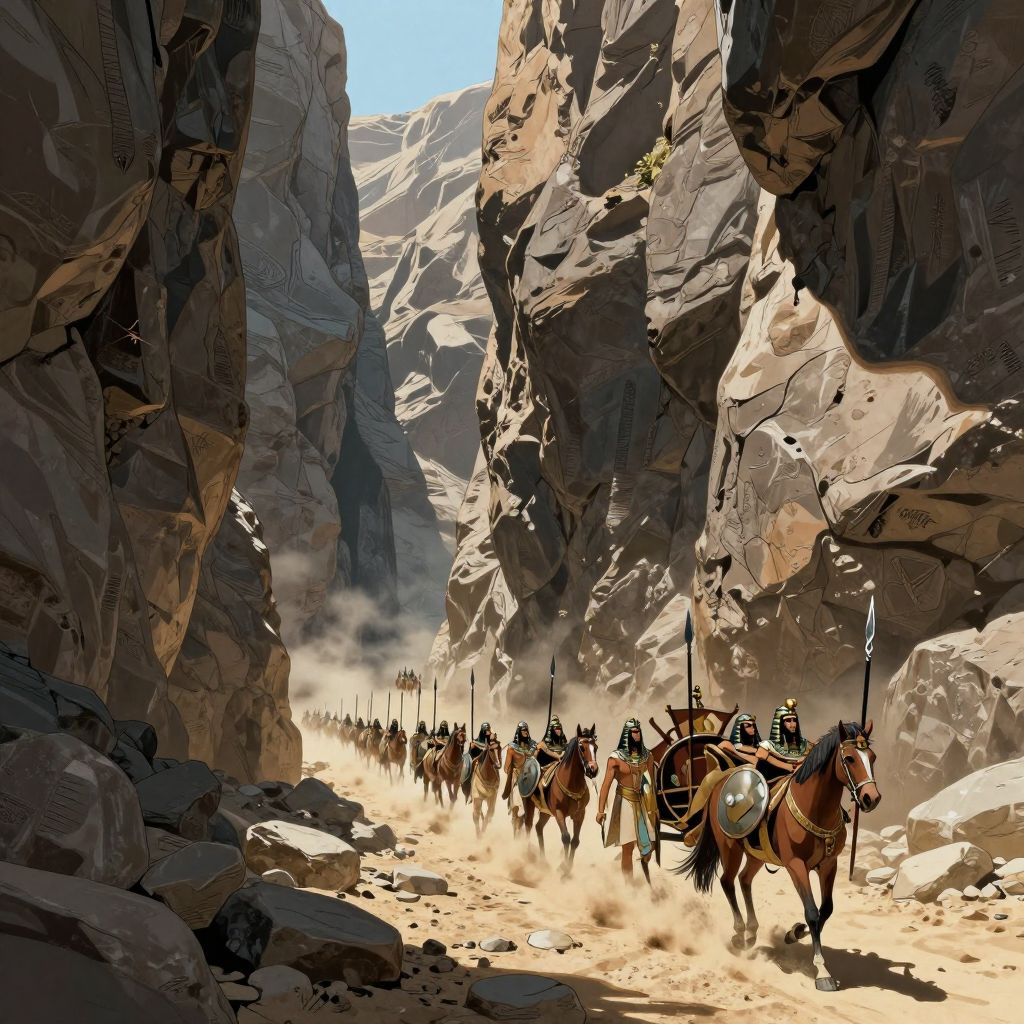
The Aruna pass — the center route — was the most direct. But the path was so narrow that the army would have to march single file. If the enemy was waiting at the exit, they could pick off the Egyptians one by one. It would be slaughter.
The Gamble at Aruna
Thutmose's generals begged him to take the safe routes. The risk of the Aruna pass was too great. If the Canaanites had positioned forces at the exit, the Egyptian army would be destroyed.
Thutmose calculated differently. If the enemy expected Egypt to take the safe routes, they would station their forces at the northern and southern exits. They would split their army. And if Thutmose emerged from the pass they didn't expect anyone to use, he would catch them completely off guard.
According to the Egyptian records, Thutmose responded to his generals' objections by declaring: "I will not let them see my majesty taking the path they think is easy. I will go by the Aruna road."
He reportedly added that if any of them were afraid, they could take the other routes. He was going through the pass.
They went through the pass.
Twenty thousand men through a gorge so narrow that when the vanguard reached the plain of Megiddo, the rear was still entering the mountains. If Thutmose was wrong — if even a small enemy force waited at the exit — the massacre would be total.
The pass was empty.
The Canaanites had split their forces, covering the northern and southern exits exactly as Thutmose had predicted. The Egyptian army emerged onto the plain of Megiddo intact and caught the enemy coalition completely by surprise.
The First Recorded Battle in Tactical Detail
The Battle of Megiddo, fought around 1457 BCE, holds a unique place in military history. It is the first battle for which we have detailed tactical records. The Egyptian scribes carved every moment into stone: formations, movements, numbers, the chronology of the fighting. Military historians still study it today.
The Egyptians deployed south of the city at dawn. Thutmose personally led the center, his chariot at the front of the charge. The Canaanite coalition broke almost immediately. Men fled toward the city walls so fast that Megiddo's defenders had to haul survivors up by their clothing — the gates were locked to keep the pursuing Egyptians out.
Then Thutmose's army made a mistake. They stopped to loot the abandoned enemy camp.
Gold, silver, thousands of cattle, hundreds of chariots — the treasure was irresistible. The Egyptians could have stormed the city that same day, while the defenders were still pulling refugees up the walls. Instead, they counted treasure.
According to the records, Thutmose later told his troops: "Had you captured this city immediately, I would have given a rich offering to Ra today. But you were more interested in plunder, so now we siege them for seven months."
The siege lasted seven months. Megiddo fell. The Canaanite coalition shattered.
And that was just the beginning.
Thirty Years of Endless War
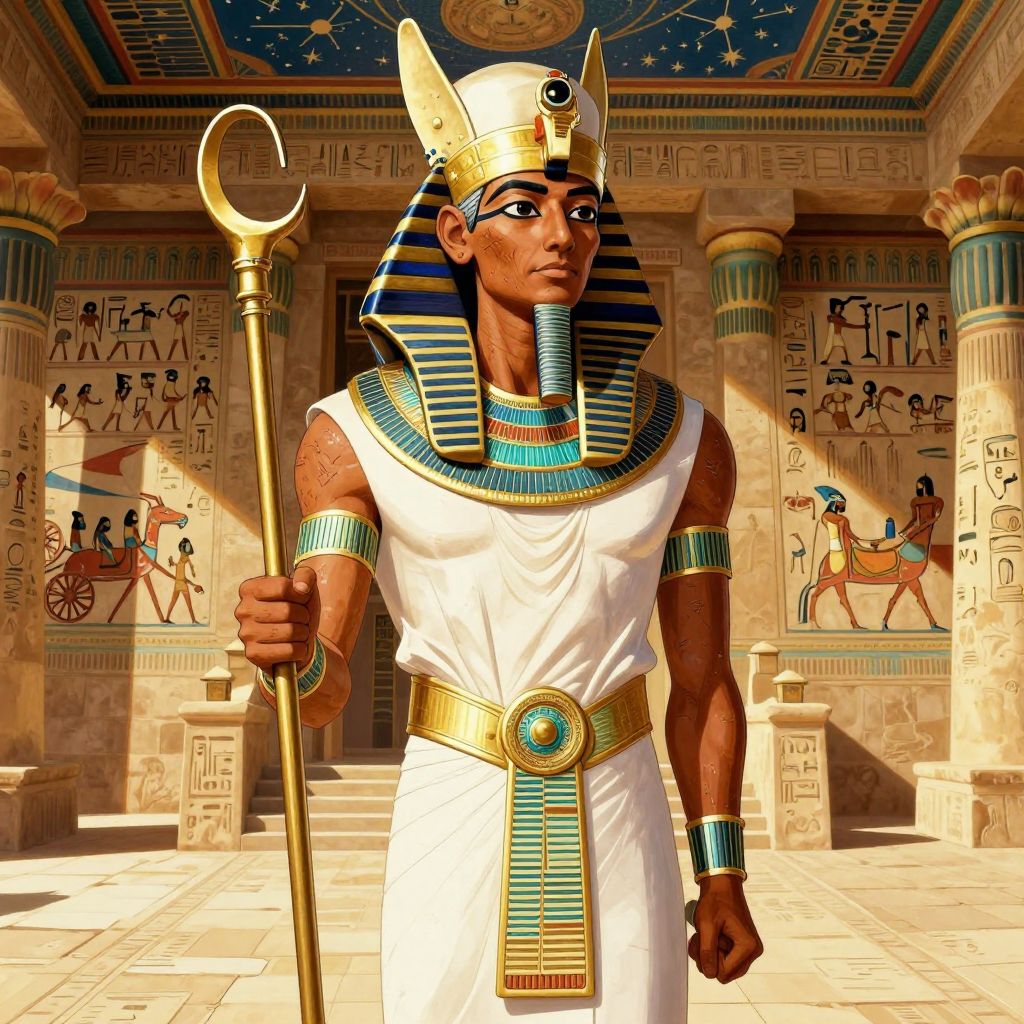
For the next thirty years, Thutmose III fought constantly. Seventeen major military campaigns. No winters off. No peace treaties that stuck. While other pharaohs sat on their thrones and counted tribute, he lived in military camps.
The scope of his conquests is staggering. Approximately 350 cities fell to Egyptian chariots. He pushed Egypt's borders from Nubia in the south to Syria in the north, creating the largest empire Egypt had ever controlled.
His most ambitious campaign took him across the Euphrates River — the edge of the known world for ancient Egyptians. His grandfather, Thutmose I, had crossed the Euphrates once, and that single crossing was celebrated for generations. Thutmose III crossed it and kept going. He defeated the Mitanni kingdom on the far side, extending Egyptian influence into territory no pharaoh before him had reached.
The logistics alone required military genius. To cross the Euphrates, Thutmose had boats built in Syria, then hauled overland by oxen to reach the river. He maintained supply lines stretching hundreds of miles across hostile territory. He managed thousands of soldiers, chariots, horses, and support personnel year after year without modern communications or roads.
The military records carved at Karnak document his campaigns in remarkable detail. We know troop movements, casualty figures, lists of captured goods and prisoners. Thutmose understood that recording his victories was almost as important as winning them.
The Builder-Warrior
Despite thirty years of almost continuous warfare, Thutmose III also built extensively. He expanded the temple of Amun at Karnak, adding festival halls, obelisks, and decorated chambers. He constructed temples and monuments throughout Egypt and Nubia.
The Annals of Thutmose III at Karnak remain our primary source for his military campaigns. They record not just battles won but plants and animals observed in foreign lands, tribute received from conquered territories, and the administration of the expanding empire.
He was meticulous. Whether planning a military campaign or a building project, Thutmose demanded detailed records. Every chariot captured at Megiddo was counted. Every city paying tribute was documented. The bureaucratic infrastructure he created outlasted his conquests.
The Napoleon Comparison
Modern historians often call Thutmose III "the Napoleon of Egypt." The comparison isn't casual.
Both were brilliant tactical commanders who personally led from the front. Both conducted multiple campaigns across vast territories, winning victory after victory against superior numbers. Both built empires through military conquest and maintained them through administrative efficiency. Both understood the propaganda value of recording their victories.
The comparison also works chronologically — Napoleon is "the Thutmose III of France," not the other way around. Thutmose III set the standard for military pharaohs three millennia before Bonaparte was born.
But there's a crucial difference. Napoleon's empire collapsed within his lifetime, destroyed by overreach and coalition opposition. Thutmose III's empire lasted for generations. The territories he conquered remained Egyptian possessions or tributaries for centuries. He didn't just win wars — he built a sustainable imperial system.
The Twenty-Year Delay
Thutmose III ruled for fifty-four years in total, including the co-regency with Hatshepsut. He died around 1425 BCE, having campaigned almost until the end of his life.
Near the end of his reign — more than twenty years after Hatshepsut's death — workers arrived at her monuments. They carried chisels. They carried hammers. They had orders.
Every statue. Every cartouche. Every mention of her name — systematically destroyed across Egypt.
The timing puzzles historians. If Thutmose III hated Hatshepsut, why wait over twenty years of sole rule to attack her memory? He wasn't weak or constrained in the early years of his reign. He could have ordered the destruction immediately after her death.
Several theories exist. Perhaps he finally gave the order in his old age, as his own death approached and old resentments surfaced. Perhaps his son Amenhotep II, already serving as co-regent, wanted to strengthen his own claim by removing the precedent of a female pharaoh. Perhaps the priesthood, rather than the palace, drove the erasure — correcting what they saw as a theological anomaly now that Hatshepsut's immediate supporters had aged out.
We may never know who gave the order or why. What we know is that near the end of the reign of Egypt's greatest warrior-pharaoh, someone decided that his stepmother shouldn't exist.
The Legacy of Conquest
Thutmose III created the largest empire Egypt ever controlled. The military doctrines he developed — rapid movement, intelligence gathering, diplomatic management of vassals — influenced Egyptian warfare for centuries. His detailed campaign records set a standard for military documentation that subsequent pharaohs struggled to match.
He also created a problem his successors couldn't solve: how do you maintain an empire that large? The territories he conquered required constant military attention. Rebellions flared. Tribute payments arrived late or not at all. The empire he built demanded the kind of constant campaigning only Thutmose III seemed capable of sustaining.
His successors tried to match his achievements. Amenhotep II, his son, conducted brutal campaigns to demonstrate he was as fierce as his father. Later pharaohs compared themselves to Thutmose III the way Roman emperors compared themselves to Augustus.
The comparison usually favored Thutmose.
After Every Victory
What drove him? The question haunts any examination of Thutmose III's career. Was it revenge for twenty-two years of waiting? Strategic calculation about Egypt's security? Personal ambition? Religious duty?
Contemporary records don't tell us his motivations. They describe his actions, his victories, his building projects. They don't describe his feelings.
What we can observe is that he never stopped. Victory after victory, campaign after campaign, for thirty years. Other pharaohs would have declared triumph and returned to comfort. Thutmose spent most of his reign in military camps.
Some historians see a man driven by genuine strategic vision — understanding that Egypt's security required controlling neighboring territories before they could threaten the Nile valley. Others see the psychology of someone who could never rest, who looked at every victory and immediately calculated the next campaign.
Perhaps twenty-two years of waiting had trained him too well. Perhaps he could never stop proving that the throne was his.
The greatest military pharaoh in Egyptian history. Seventeen campaigns. Three hundred fifty cities. An empire from the Euphrates to Nubia.
And the systematic erasure of the woman who made him wait.
Frequently Asked Questions
1Why is Thutmose III called 'the Napoleon of Egypt'?
Both were brilliant tactical commanders who personally led their armies, won multiple campaigns against superior forces, and built vast empires through military conquest. Thutmose III set the standard for military leadership three thousand years before Napoleon, making Napoleon the more accurate comparison to Thutmose rather than the reverse. Unlike Napoleon, Thutmose's empire lasted for generations rather than collapsing in his lifetime.
2How long did Thutmose III wait as co-regent before ruling alone?
Thutmose III served as co-regent under his stepmother Hatshepsut for approximately twenty-two years. He became pharaoh as a young child when his father Thutmose II died, but Hatshepsut declared herself pharaoh within seven years and ruled until her death around 1458 BCE.
3Why was the Battle of Megiddo historically significant?
The Battle of Megiddo (c. 1457 BCE) is the first battle in recorded history for which we have detailed tactical documentation. Egyptian scribes carved formations, movements, and chronology into temple walls at Karnak. It also demonstrated Thutmose III's tactical brilliance — he gambled on the dangerous Aruna pass and caught the Canaanite coalition completely by surprise.
4How many military campaigns did Thutmose III conduct?
Thutmose III conducted seventeen major military campaigns over approximately thirty years of active warfare. He conquered roughly 350 cities and extended Egyptian control from Nubia in the south to the Euphrates River in the north, creating the largest empire in Egyptian history.
5Did Thutmose III order the erasure of Hatshepsut's monuments?
The erasure occurred near the end of Thutmose III's reign, approximately twenty years after Hatshepsut's death. Whether he personally ordered it remains debated. The timing — waiting decades after her death — puzzles historians. Some suggest his son Amenhotep II initiated it for succession politics, while others point to priestly concerns about the theological irregularity of a female pharaoh.
Experience Thutmose III's Story
From the twenty-two years of waiting to the Battle of Megiddo, follow Egypt's greatest warrior-pharaoh through the campaigns that built an empire.


Hear Their Story
The Dangerous Pass
4 minHis generals thought he was insane. The enemy expected him to take the safe route. He chose the narrow pass where his army could be slaughtered — and won.

Twenty Years
4 minTwenty-two years. That's how long Thutmose III waited in his stepmother's shadow.
Related Articles
Battle of Megiddo (1457 BCE): History's First Documented Battle
Thutmose III's decisive victory at Megiddo established Egyptian dominance in the Near East and gave us history's first detailed battle records. Learn about the daring mountain pass gamble that caught the Canaanite coalition off guard.
The Erasure of Hatshepsut: When Egypt Tried to Kill a Soul
Twenty years after Hatshepsut died, workers arrived at her monuments with chisels. They weren't just removing her name from history — in Egyptian belief, they were destroying her chance at eternal life.
Hatshepsut: The Woman Who Became King
For 22 years, Hatshepsut ruled Egypt as pharaoh—not queen. She wore the false beard, took the throne name Maatkare, and built monuments that still stand. Twenty years after her death, someone tried to erase her from history entirely.
Hatshepsut's Rise to Power: How a Regent Became Pharaoh
In 1479 BCE, Hatshepsut was supposed to keep the throne warm for a child king. Seven years later, she wore the double crown herself. Here's how a royal widow rewrote the rules of Egyptian kingship.
Experience Thutmose III's Story
Go beyond the biography. Hear Thutmose III's story told by Lumo, your immortal wolf guide who witnessed these events firsthand.