The Pharaoh Who Waited Twenty-Two Years
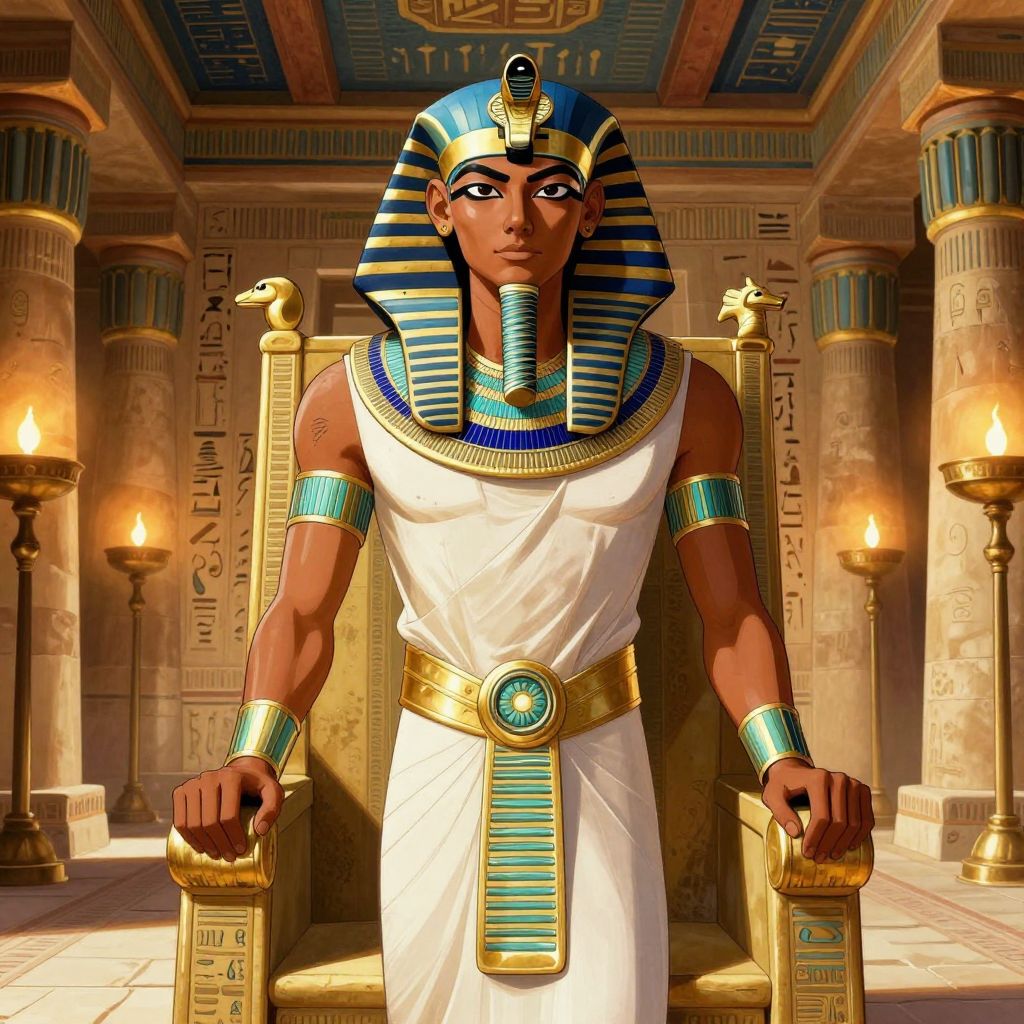
The woman who had kept him from power for over two decades was dead. Hatshepsut, his stepmother and aunt, had declared herself pharaoh and ruled Egypt for twenty-two years. Thutmose III spent his entire adult life as the junior co-regent. He commanded troops in Nubia. He trained with the military. But she made the actual decisions.
Now, in his early thirties, he was pharaoh in more than just title.
His enemies noticed.
Within months of Hatshepsut's death, a coalition of Canaanite city-states under the King of Kadesh rebelled against Egyptian rule. They gathered their forces near Megiddo, a fortress city that controlled the Via Maris trade route connecting Egypt to Mesopotamia and Anatolia. The coalition numbered between 15,000 and 20,000 men, with over 1,000 war chariots.
They thought Egypt had gone soft. A woman had ruled for a generation. The new pharaoh was untested. This was their chance.
Thutmose assembled roughly 20,000 soldiers and 1,000 chariots at the border fortress of Tjaru. He marched north through Gaza and reached the loyal city of Yehem in eleven days. There, he gathered his generals to discuss the approach to Megiddo.
Three roads led through the Carmel mountain range. The choice he made would determine whether he lived or died.
The Aruna Pass Gamble
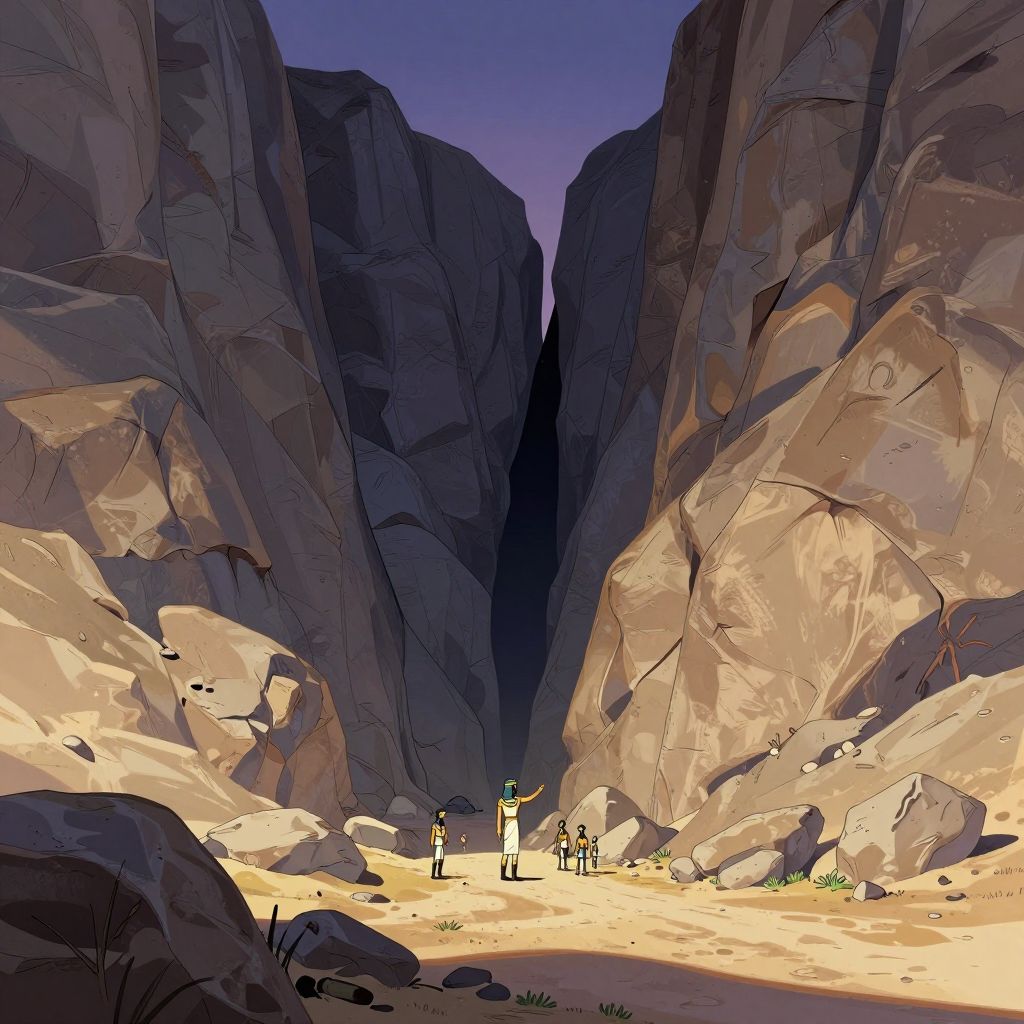
The generals spread their maps on the table. The northern route curved around the mountains through Zefti and Yokneam. The southern route passed by way of Taanach. Both were longer but safer. The army could march in formation, ready for battle.
Then there was the Aruna pass.
The central route was the most direct path to Megiddo, but it followed a narrow ravine through the mountains. The troops would have to march single file. If the enemy positioned forces at the exit, the Egyptians would emerge one at a time into a killing ground. They could be cut down before they had any chance to form battle lines.
The generals urged Thutmose to take one of the safe routes.
Thutmose refused. His reasoning: if the safe routes were obvious to his generals, they were obvious to the enemy. The Canaanites would expect him to avoid the dangerous pass. They would position their forces to ambush him at the northern or southern exits.
The narrow pass was the one place they would not expect him.
"We take Aruna," he ordered. "Single file if we must. The enemy will assume we are cowards."
At dawn, twenty thousand men began filing into a pass so narrow that when the vanguard reached the plain of Megiddo, the rear guard was still entering the mountains on the other side. The column stretched for miles through the ravine. Completely vulnerable. If scouts reported their position, if the enemy was waiting, the entire Egyptian army could be destroyed.
The pass was empty.
The Canaanite coalition had split their forces to cover the northern and southern exits, exactly where Thutmose's generals had wanted to go. When the Egyptian army emerged onto the plain with their forces intact, the enemy was out of position.
The First Documented Battle in History
What happened next was recorded in more detail than any battle before it. A military scribe named Tjaneni kept a daily journal throughout the campaign. Decades later, Thutmose ordered these records inscribed on the walls of the Hall of Annals in the Temple of Amun-Re at Karnak. The hieroglyphic inscriptions describe troop movements, formations, numbers, and tactics.
This makes Megiddo the first battle in recorded history with reliable tactical documentation. It is also the first recorded use of the composite bow in warfare, and the first documented body count.
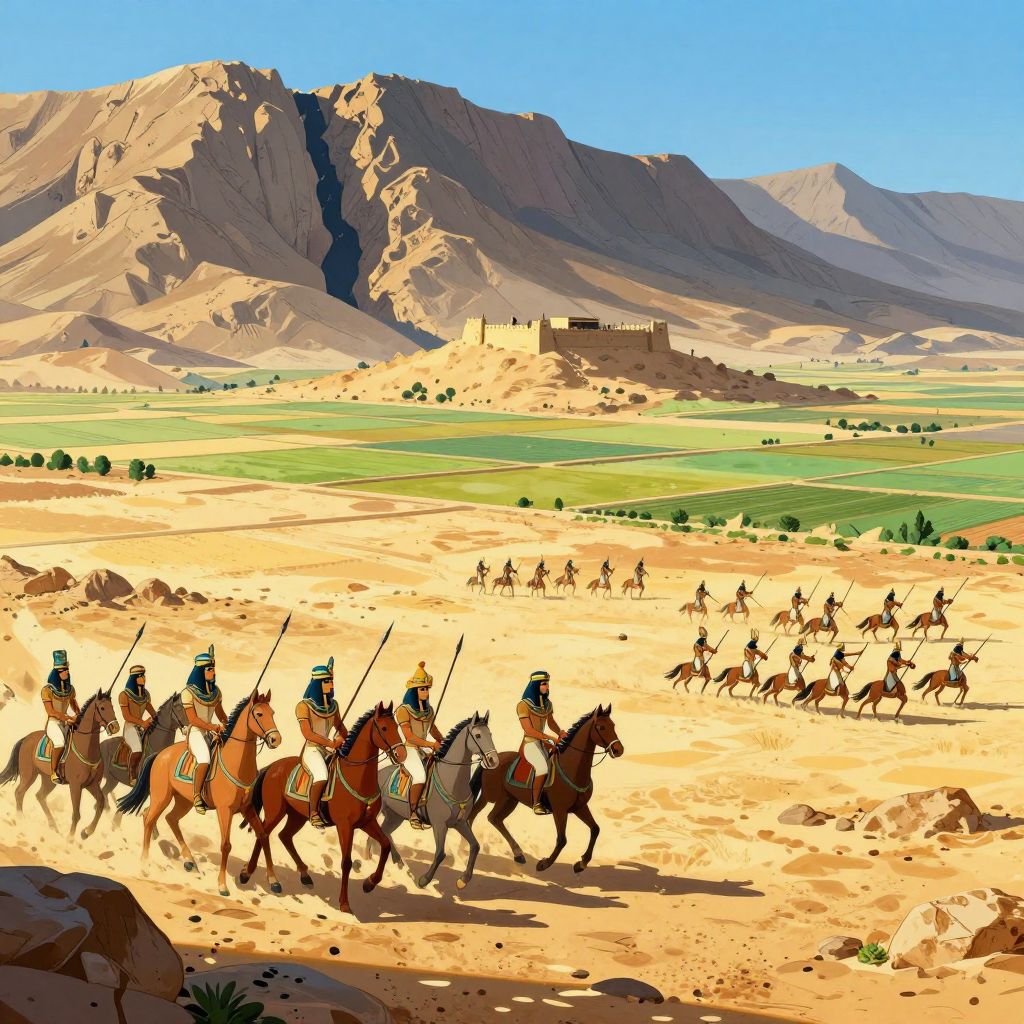
The Egyptians deployed south of Megiddo on the evening they emerged from the pass. Thutmose organized his forces into three divisions. He personally commanded the center, with wings extending on either side in a formation that curved toward the enemy.
At dawn, the Egyptians charged.
The Canaanite coalition, still scattered from their attempt to cover the wrong approaches, could not form effective lines. Egyptian chariots swept forward with archers firing the new composite bows. The infantry followed with bronze-tipped spears and shields.
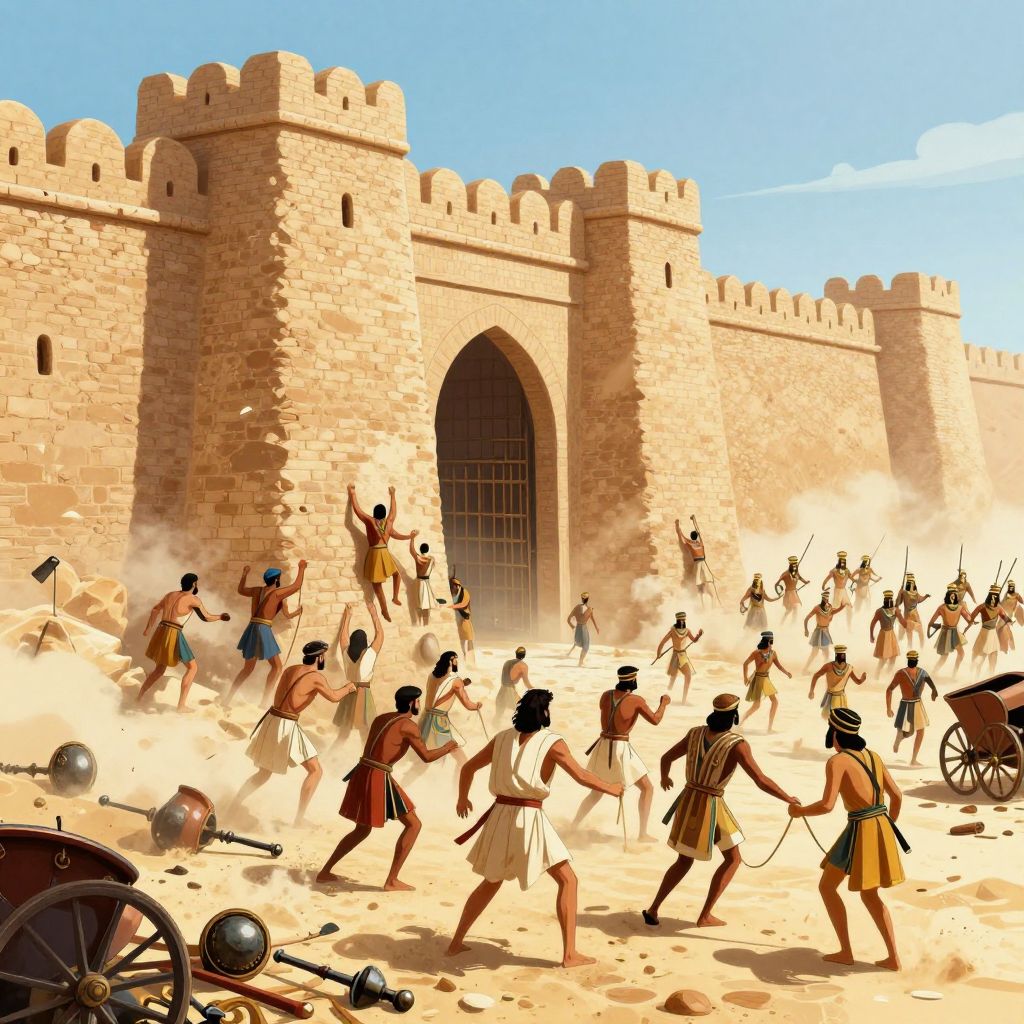
The men of Kadesh broke first. Their retreat became a rout. Soldiers fled toward the walls of Megiddo so fast that the city's defenders had to haul survivors up by their clothing. The gates had been locked to keep the Egyptians from storming in behind them.
The battle itself was over in hours. The victory was decisive.
And then Thutmose's army made a mistake that would haunt them for seven months.
Gold Over Glory
The fleeing Canaanites abandoned their camp. Tents stood unguarded, filled with the wealth of a coalition army: gold jewelry, silver vessels, bronze weapons, ornate chariots. Thousands of cattle grazed in the fields. Horses stood tethered in their lines.
The Egyptian soldiers stopped to plunder.
In ancient warfare, battlefield loot was often the only way an ordinary soldier could become wealthy. The officers could not control their men. Instead of pressing the attack while the enemy was in chaos, the Egyptian army spent the crucial hours after victory collecting treasure and stripping bodies.
If they had continued the assault, they might have stormed Megiddo that same day. The gates were locked, the defenders in disarray, the coalition leadership trapped inside.
Instead, the city had time to organize its defenses. The walls held.
Thutmose was furious. According to the Karnak inscriptions, he degraded the generals who had failed to control their troops. "Had you captured the city afterward," he reportedly told his commanders, "I would have given Re [the sun god] a great offering on this day, because every chief of every country that has rebelled is within it."
The Egyptians settled in for a siege.
Seven Months in the Dust
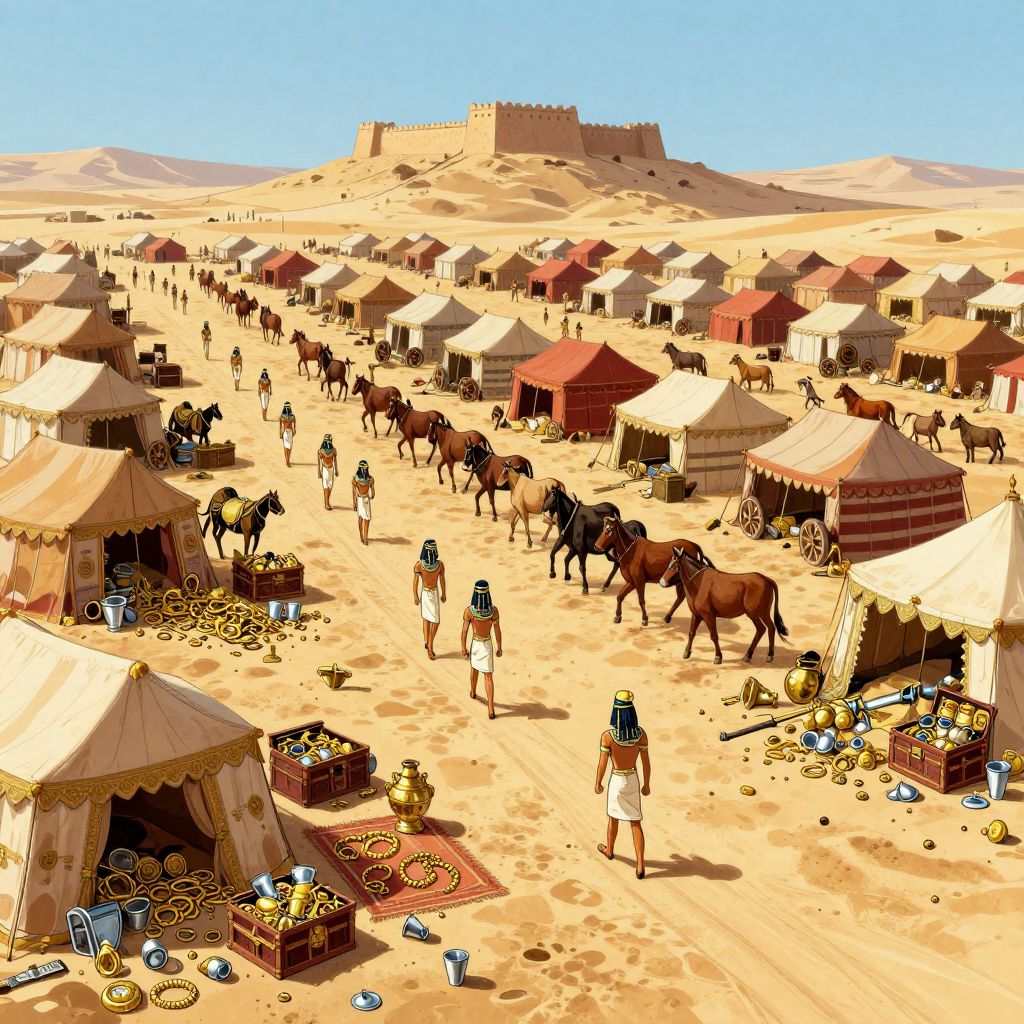
The siege lasted seven months. Thutmose surrounded Megiddo with a moat and a wooden palisade, cutting the city off from supplies and reinforcements. The Egyptians called the encirclement "Menkheperre-is-the-Corraller-of-the-Asiatics" (Menkheperre was Thutmose's throne name).
Inside, the coalition leaders watched their food stores dwindle. They had gambled on Egyptian weakness and lost. The new pharaoh had proven himself more dangerous than the woman they thought had made Egypt soft.
When Megiddo finally surrendered, Thutmose's scribes recorded the captured spoils: 924 chariots, including two gilded with gold that belonged to the kings of Megiddo and Kadesh. 200 suits of armor, including the bronze ceremonial armor of the enemy commanders. Over 2,000 horses, including mares, foals, and stallions. More than 25,000 cattle, sheep, and goats. Vast quantities of gold, silver, and precious materials.
The coalition shattered. The kings who had gathered to resist Egypt became vassals. Their sons were taken as hostages to be educated in the Egyptian court and returned years later to rule as loyal client kings. Egyptian control over the Levant was established for generations.
But Megiddo was only the beginning.
Thirty Years of War
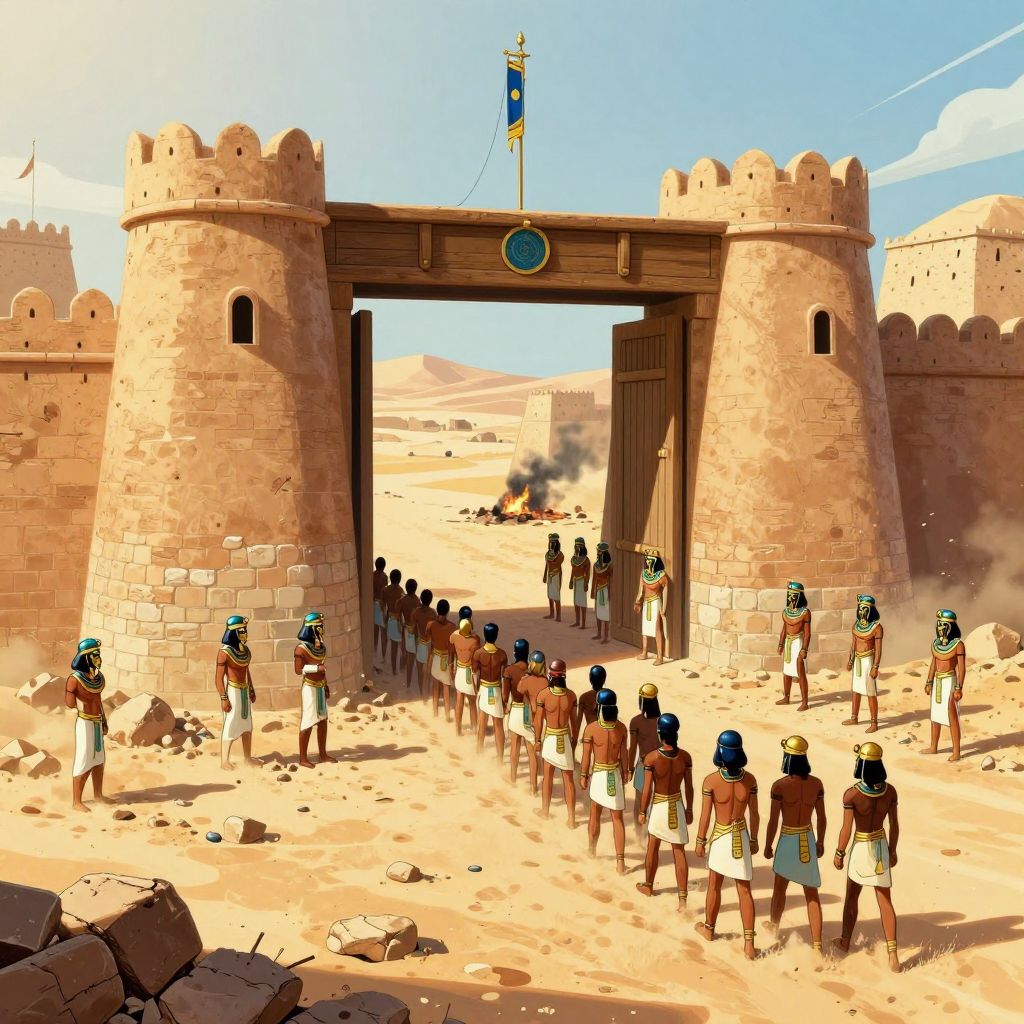
Thutmose III conducted seventeen major military campaigns over the next three decades. He campaigned almost every year, spending more time in military tents than in the palaces of Thebes. About 350 cities fell to Egyptian forces during his reign.
The empire expanded to its greatest extent in Egyptian history. In the north, Egyptian control reached the Euphrates River, which was the edge of the known world at the time. Thutmose's grandfather, Thutmose I, had reached the Euphrates once and erected a victory stele. Thutmose III crossed it and kept going. He defeated the Mitanni kingdom on the other side.
The logistics required for these campaigns were immense. To cross the Euphrates, Thutmose had boats built in Byblos on the Mediterranean coast, then transported overland across Syria to reach the river. His engineers, quartermasters, and scribes managed supply lines stretching hundreds of miles across desert and mountain terrain.
He never lost a major battle. His strategic principles of surprise, speed, concentration of force, and personal leadership from the front would be studied by military commanders for millennia.
Later historians called him "the Napoleon of Egypt." The comparison undersells him. Thutmose III achieved his empire three thousand years before Napoleon was born, with Bronze Age technology, against enemies who had never faced the tactics he invented.
The Records at Karnak
The Hall of Annals at the Temple of Karnak preserves the most detailed military records from the ancient world. Thutmose ordered his campaigns inscribed there in his forty-second regnal year, drawing on the journals kept by his scribes throughout decades of warfare.
The inscriptions describe fourteen campaigns in detail: the routes taken, the cities captured, the tribute received, the offerings made to Amun-Re. They list captured goods down to specific numbers of cattle and bushels of grain. They name enemy commanders and record the fates of conquered cities.
This level of documentation was new. Earlier pharaohs had celebrated their victories in general terms: smiting enemies, receiving tribute, proving divine favor. Thutmose provided something closer to a military history. Strategic reasoning. Tactical details. Logistical challenges. Honest admissions when things went wrong.
The Karnak inscriptions influenced how future pharaohs documented their campaigns. They also gave modern historians a window into Bronze Age warfare that exists nowhere else. Most of what we know about Egyptian military tactics, equipment, and organization in this period comes from Thutmose's records.
Why Megiddo Matters
The Battle of Megiddo was not the largest battle of the ancient world, nor the bloodiest. Its significance lies in what it represented and what it created.
It demonstrated that careful strategic planning could overcome numerical disadvantage. Thutmose's forces were roughly equal to the coalition's, but his choice of the Aruna pass gave him surprise. The battle was decided before the first arrow flew.
It established the template for Egyptian imperial expansion. The tributary system Thutmose created, taking the sons of conquered kings as hostages, educating them in Egyptian culture, and returning them to rule as loyal vassals, maintained Egyptian control for generations without requiring permanent occupation.
It produced the first military records detailed enough to study as history rather than propaganda. Tjaneni's journals, inscribed at Karnak, let us see a Bronze Age campaign as it actually unfolded: the debates among commanders, the risks taken, the mistakes made, and the consequences that followed.
And it revealed the character of the man who would become Egypt's greatest warrior pharaoh. After twenty-two years of waiting, Thutmose III could have played it safe. He could have taken the slow routes and fought conventional battles. Instead, he gambled everything on a narrow mountain pass and spent the next thirty years proving that his boldness at Megiddo was not luck.
The site of Megiddo would be fought over again and again throughout history. The Hebrew name "Har Megiddo" (Mount Megiddo) would later appear in the Book of Revelation as Armageddon, a name that became synonymous with final, apocalyptic battle. But the first documented battle fought there was not an ending. It was the beginning of Egypt's greatest age of empire.
Frequently Asked Questions
1Why is the Battle of Megiddo historically significant?
Megiddo (1457 BCE) is the first battle in recorded history with detailed tactical documentation. A military scribe named Tjaneni kept a daily journal during the campaign, and these records were later inscribed on the walls of the Temple of Karnak. The inscriptions describe troop movements, formations, numbers, captured spoils, and strategic decisions. This information simply does not exist for any earlier battle.
2What was the Aruna pass gamble?
Three routes led through the Carmel mountains to Megiddo. The northern and southern routes were longer but safer, allowing armies to march in formation. The central Aruna pass was direct but so narrow that troops had to march single file. If enemies waited at the exit, the army would be slaughtered one by one. Thutmose chose the dangerous pass, reasoning that the enemy would expect him to take a safe route. He was right.
3Why did the siege of Megiddo last seven months?
After the Egyptian victory in battle, the army stopped to loot the abandoned enemy camp instead of immediately storming the city walls. This gave Megiddo's defenders time to organize and close the gates. What could have been a single-day victory became a seven-month siege. Thutmose reportedly degraded his generals for failing to control their men.
4How many military campaigns did Thutmose III conduct?
Thutmose III conducted seventeen major military campaigns over approximately thirty years of sole rule. He captured roughly 350 cities and expanded Egyptian territory to its greatest extent, from Nubia in the south to the Euphrates River in the north.
5Why is Thutmose III called the Napoleon of Egypt?
Modern historians gave Thutmose III this nickname because of his military record, his constant campaigning, and the vast empire he built. Like Napoleon, he led from the front, took calculated risks, and achieved victories through superior strategy rather than just superior numbers. He also left detailed records of his campaigns, which was unusual for the ancient world.
Experience the Full Story
Hear Thutmose III's daring gamble at Megiddo told by Lumo, an immortal wolf who witnessed Egypt's greatest warrior pharaoh firsthand.


Listen to Related Stories
The Dangerous Pass
4 minHatshepsut was dead. The throne was finally his. And his first act? War.

Key Figures
Listen to the Full Story
Experience history through immersive audio lessons narrated by Lumo, your immortal wolf guide.