A Second Death
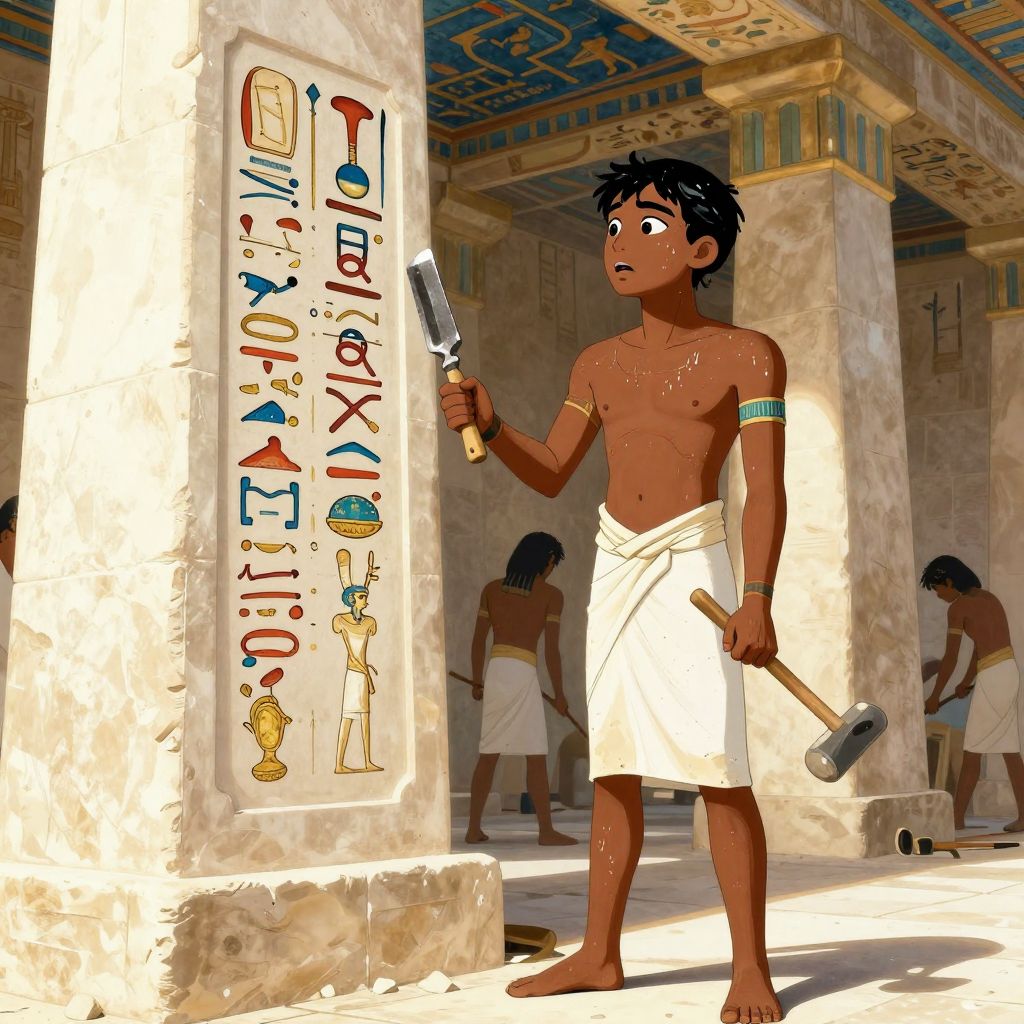
The chisel struck limestone at dawn. Then again. And again.
Across Egypt, from Karnak to Deir el-Bahri, teams of workers had received their orders. The woman who had ruled as pharaoh for twenty-two years — who had worn the false beard and claimed divine birth, who had sent expeditions to Punt and built monuments that rivaled any king's — was to be erased. Every cartouche bearing her name. Every statue showing her face. Every inscription recording her achievements.
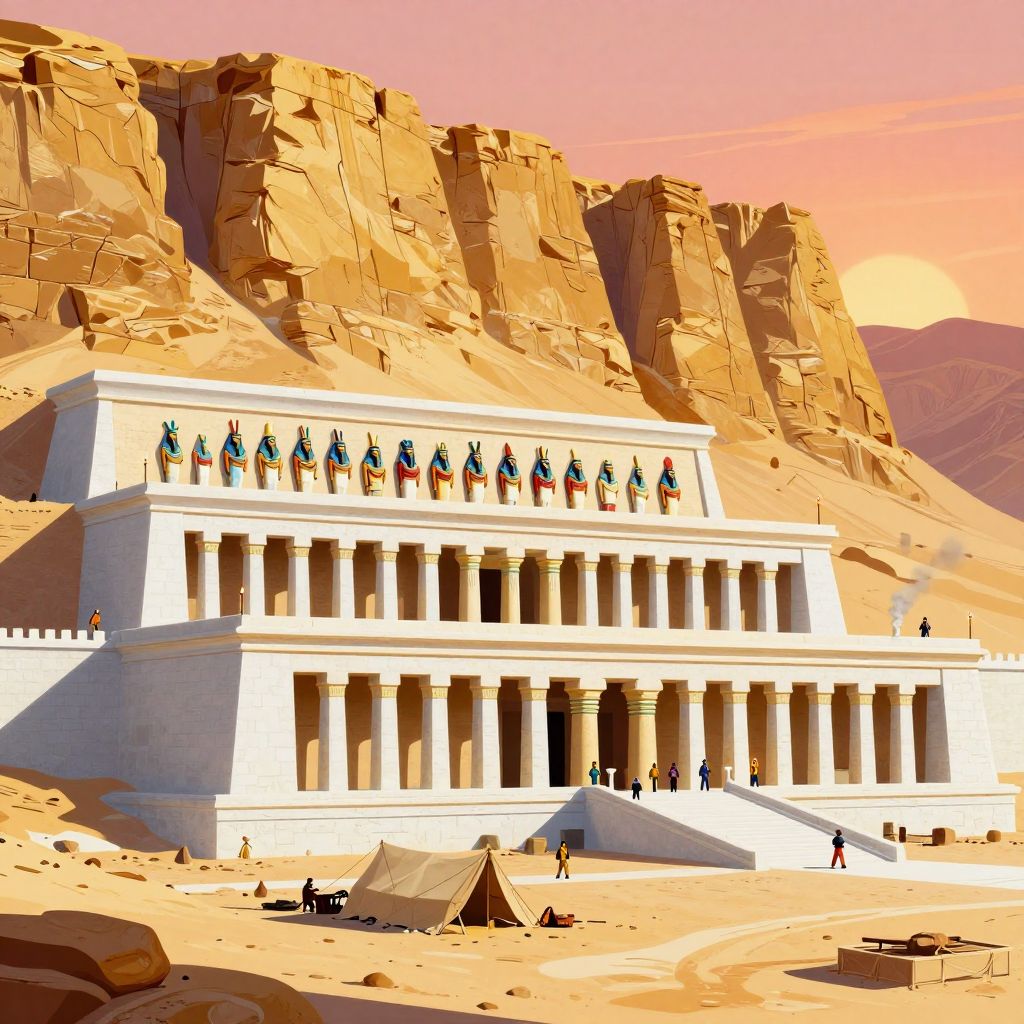
This wasn't merely political. In Egyptian religious belief, your name — your ren — was a component of your soul. Destroy the name, and you destroy the person's chance at resurrection. You condemn them to the worst fate imaginable: non-existence. Not punishment, not suffering — simply ceasing to be, forever.
Approximately twenty years after Hatshepsut died peacefully in her bed, someone decided she deserved worse than death.
The Mechanics of Memory Destruction
The workers who arrived at Hatshepsut's monuments were craftsmen, not vandals. Many had probably helped build the very structures they were now ordered to deface. The destruction was methodical and professional — which is precisely why it failed to be complete.
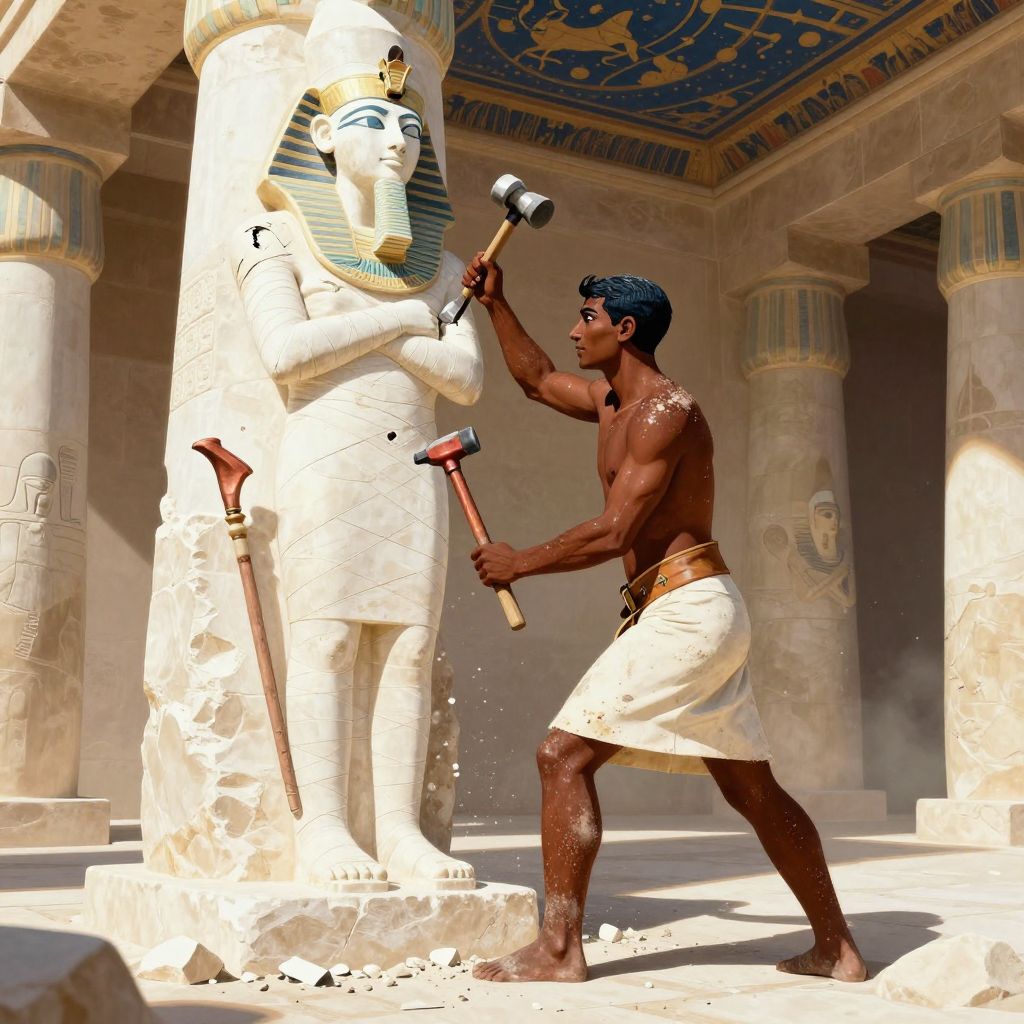
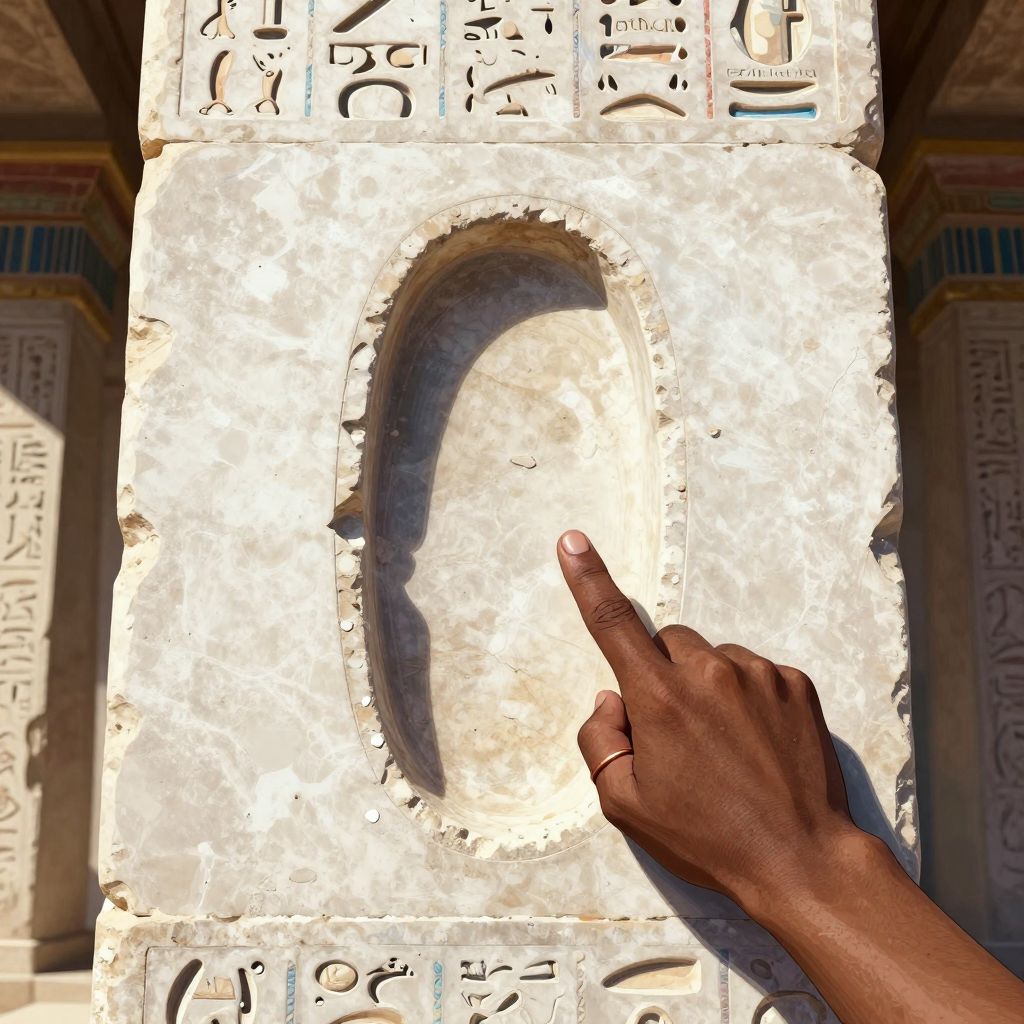
The primary targets were cartouches — the oval frames containing royal names that appeared throughout Egyptian temples and monuments. Hatshepsut's throne name, Maatkare ("Truth is the Soul of Ra"), and her personal name had been carved into stone surfaces across the kingdom during her two-decade reign. Each one needed to be located and removed.
The technique was straightforward: position a bronze or copper chisel at the edge of the carved hieroglyphs, strike with a wooden mallet, and chip away the stone until only a rough, empty oval remained. Skilled workers could remove a cartouche in a matter of minutes. The empty spaces were then either left as scars in the stone or plastered over and recarved with different names — typically Thutmose I, Thutmose II, or Thutmose III.
Beyond the cartouches, the destruction targeted:
Osiride Statues: At Deir el-Bahri, rows of limestone statues depicted Hatshepsut in the form of Osiris — wrapped in mummy bindings, arms crossed holding the royal crook and flail. Workers destroyed the faces, sometimes reducing them to rough gouges where noses, mouths, and eyes had been.
Relief Carvings: Temple walls showing Hatshepsut performing royal duties — making offerings to the gods, receiving divine legitimacy, commemorating her achievements — were attacked. Her image was chiseled out while surrounding figures were often left intact.
Inscriptions: Any text recording her reign, her accomplishments, or her divine status was targeted for removal.
Statues: Numerous statues of Hatshepsut were smashed and buried. Many weren't found until modern archaeological excavations uncovered the fragments, sometimes hundreds of pieces from a single sculpture.
Why the Ren Mattered
To understand the theological weight of what was happening, you need to understand Egyptian beliefs about the soul and the afterlife.
The Egyptians believed a person consisted of multiple spiritual components. The ka was life force, created at birth. The ba was personality, usually depicted as a human-headed bird. The akh was the transformed spirit that existed in the afterlife after successfully navigating the underworld.
And then there was the ren — the name.
Your ren wasn't just what people called you. It was a fundamental part of your being. As long as your name was spoken, as long as it existed carved in stone, part of you continued to exist. The Egyptians went to extraordinary lengths to preserve names: carving them deeply into hard stone, repeating them multiple times on monuments, reciting them in offering formulas that priests would speak for generations.
The phrase "speaking the name of the deceased" wasn't metaphorical. It was a ritual act that kept the dead alive in a real, theological sense. Temple priests were paid to recite the names of dead pharaohs during offering ceremonies. Family members spoke the names of ancestors at their tombs. Names were power.
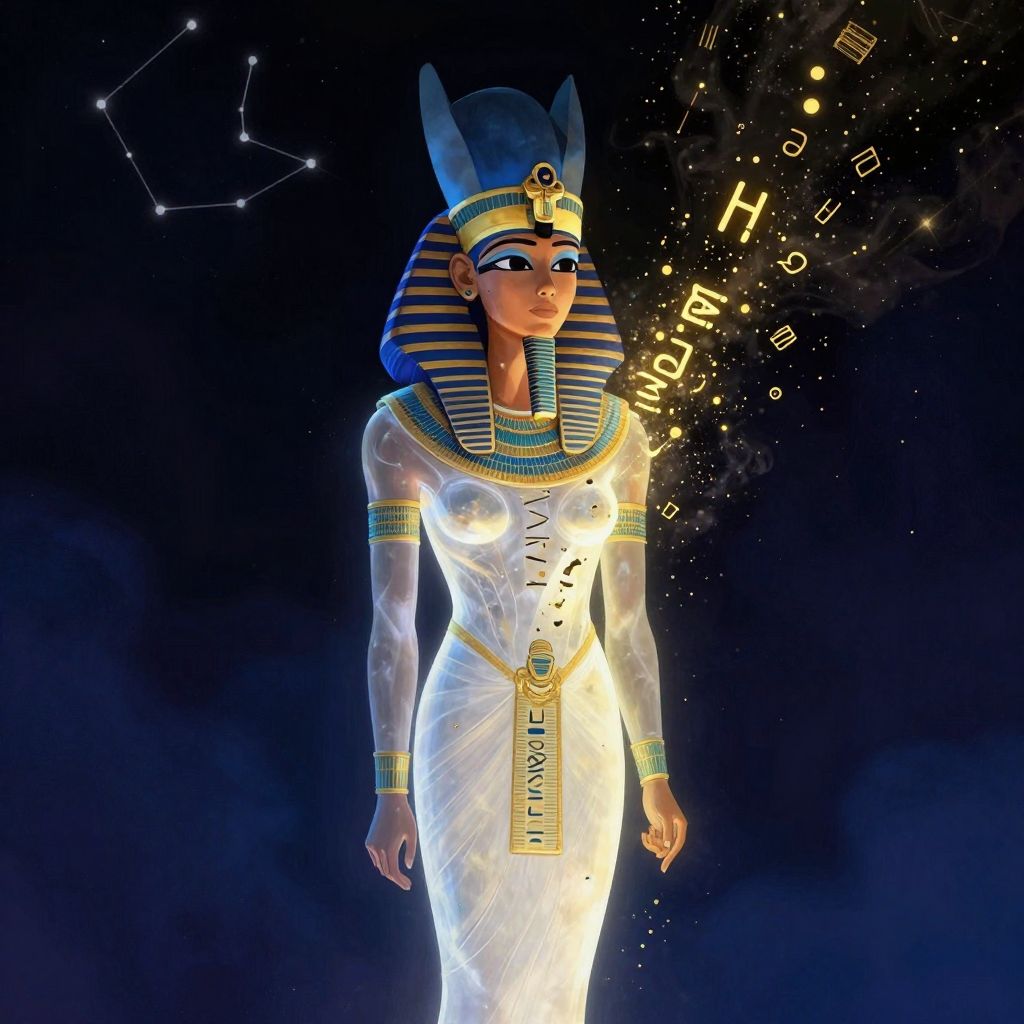
This is why the Book of the Dead — the collection of spells and instructions for navigating the afterlife — included a spell specifically for remembering one's own name. Without your name, you couldn't pass through the gates of the underworld. Without your name, you couldn't be judged by Osiris. Without your name, you simply ceased to exist.
The destruction of Hatshepsut's cartouches wasn't political housekeeping. It was metaphysical murder. Whoever ordered the erasure wasn't just trying to make people forget she had ruled. They were trying to ensure she would never exist in the afterlife. Never be reborn. Never join the eternal cycle of the sun god Ra crossing the sky.
A second death, far worse than the first.
The Twenty-Year Puzzle
Here's what makes Hatshepsut's erasure historically strange: the timing.
Hatshepsut died around 1458 BCE after ruling as pharaoh for approximately twenty-two years. Thutmose III, who had been her co-regent throughout this period, finally assumed sole power. He was in his mid-twenties and at the peak of his abilities.
If Thutmose III hated Hatshepsut — if he had spent twenty-two years seething while she held the real power — you would expect the erasure to begin immediately. He controlled the army. He controlled the priesthood. There was no one to stop him.
Instead, nothing happened.
For roughly twenty years, Thutmose III ruled without touching Hatshepsut's monuments. Her temples stood intact. Her cartouches remained carved in stone. Her mortuary temple at Deir el-Bahri continued to receive offerings. If anything, Thutmose III was busy building his own legacy — seventeen military campaigns, the expansion of Egyptian power to its greatest extent, his own building projects at Karnak and elsewhere.
Only near the end of his reign, when Thutmose III was in his fifties and had ruled for over fifty years (counting his co-regency), did the destruction begin.
Why wait?
Egyptologists have proposed several theories.
Late-Life Reckoning: Perhaps Thutmose III harbored resentment that surfaced as he aged and began thinking about his own death and legacy. As he prepared for his own journey to the afterlife, old grievances may have emerged.
Succession Politics: By the time of the erasure, Thutmose III's son Amenhotep II was serving as co-regent. The destruction may have been intended to strengthen Amenhotep's claim — removing any precedent that a woman could legitimately claim pharaonic power. Future queens might look to Hatshepsut's example. Better to eliminate that example entirely.
Priestly Initiative: The religious establishment may have driven the erasure independently. A female pharaoh violated traditional theological understandings of kingship. With Hatshepsut safely dead and her immediate supporters aged or deceased, conservative priests may have decided to "correct" what they viewed as a cosmic anomaly.
Dynastic Legitimacy: Some scholars suggest the erasure was about clarifying the royal succession. By erasing Hatshepsut and attributing her monuments to other pharaohs, the reign of Thutmose III could be portrayed as a direct continuation from Thutmose II and Thutmose I, without the irregularity of a female ruler in between.
Most likely, multiple motivations converged. Political, religious, and personal factors rarely operate in isolation.
The Damnatio Memoriae Tradition
Hatshepsut's erasure wasn't unique. The practice of condemning someone's memory — known in the Roman tradition as damnatio memoriae — appears across multiple ancient cultures.
The Egyptians would practice memory destruction again. Akhenaten, the "heretic pharaoh" who tried to replace Egypt's traditional gods with worship of a single sun disk, faced his own posthumous erasure a century later. His name was chiseled from monuments. His capital city at Amarna was abandoned and dismantled. His religious revolution was undone.
What made Hatshepsut's case distinctive was the comprehensiveness of the attempt and the apparent lack of clear cause. Akhenaten had upended three thousand years of religious practice — his erasure made a certain theological sense. Hatshepsut had been a successful, prosperous ruler whose reign brought stability and wealth. Her crime, apparently, was being female while claiming full royal power.
The pattern of destruction is revealing. Workers didn't attack every image of Hatshepsut. In some cases, depictions of her as queen — the wife of Thutmose II, the daughter of Thutmose I — were left intact. What was targeted was any representation of Hatshepsut as king: wearing the false beard, using male grammatical forms, claiming divine legitimacy in her own right.
The erasure wasn't about Hatshepsut the person. It was about Hatshepsut the female pharaoh.
What the Workers Left Behind
The erasure failed for a simple reason: the scale of Hatshepsut's monuments exceeded the resources devoted to destroying them.
Hatshepsut had ruled for twenty-two years and built extensively throughout Egypt. Every temple she had touched, every obelisk she had erected, every shrine she had commissioned bore her name multiple times. The logistics of erasing every instance would have required an enormous, sustained effort.
The workers did their jobs. They destroyed thousands of cartouches, defaced hundreds of reliefs, smashed dozens of statues. But they missed things.
Cartouches in hard-to-reach locations — high on walls, hidden in chambers, tucked away in corners — sometimes escaped the chisels. The distinctive style of empty cartouche ovals surrounded by intact hieroglyphs made the erasure obvious to later archaeologists, who could often reconstruct what name had been removed.
Statues that were smashed rather than defaced could be reassembled. At Deir el-Bahri alone, archaeologists have recovered fragments of numerous Hatshepsut statues that were buried in antiquity. The Metropolitan Museum of Art in New York has a famous seated statue of Hatshepsut pieced together from hundreds of fragments discovered in excavations.
Written records survived in contexts the erasers didn't think to check. Administrative documents, letters, and records that mentioned Hatshepsut's reign weren't all destroyed. King lists — official records of royal succession — sometimes preserved her reign under different names or with feminine grammatical endings that revealed the truth.
And the monuments themselves survived. Deir el-Bahri was too magnificent to demolish entirely. The workers contented themselves with defacing it, which paradoxically preserved evidence of what they were trying to hide. Every empty cartouche, every faceless statue, every plastered-over inscription testified to the existence of someone important enough to erase.

Modern Rediscovery
For three thousand years, Hatshepsut was essentially forgotten. The erasure had worked in that sense — later Egyptians had no clear memory of a female pharaoh who had ruled for two decades in the eighteenth dynasty.
The rediscovery began in the nineteenth century, as European scholars started documenting Egyptian monuments. Jean-Francois Champollion, who deciphered hieroglyphics in 1822, and later Egyptologists noticed something strange at Deir el-Bahri and other sites: cartouches that had been deliberately destroyed, replaced names, and obvious signs of tampering.
The pieces came together slowly. The empty cartouches had distinctive shapes that matched intact cartouches found elsewhere. Royal lists provided clues about who had been removed. The titles and context surrounding the erasures pointed to a ruler between Thutmose II and the sole reign of Thutmose III.
By the late nineteenth century, Egyptologists had reconstructed the basic outline: there had been a female pharaoh named Hatshepsut who had ruled for over twenty years, and someone had tried to erase her from history.
The full picture continued to emerge through the twentieth century. In 1903, Howard Carter — before his famous discovery of Tutankhamun's tomb — found Hatshepsut's empty sarcophagus in the Valley of the Kings. Her tomb (KV20) had been robbed in antiquity and her mummy was missing.
In 2007, Egyptian authorities announced the identification of Hatshepsut's mummy. A tooth found in a wooden box with her cartouche matched a missing tooth socket in a mummy that had been discovered in 1903 but remained unidentified for over a century. Preliminary DNA testing supported the identification.
The woman who was supposed to be forgotten now has her mummy in the National Museum of Egyptian Civilization in Cairo. Her temple still draws thousands of visitors annually. Her obelisks still stand at Karnak. And the story of her erasure is now one of the best-known aspects of her biography — making her more famous, not less.
The Irony of Erasure
The attempt to destroy Hatshepsut's memory backfired in ways her enemies couldn't have anticipated.
Destruction creates evidence. The very attempt to erase Hatshepsut made her story more compelling to later investigators. Empty cartouches demanded explanation. Patterns of damage revealed targeting. The conspiracy of silence became noisy in its absence.
Memory is stubborn. Even in a culture where royal memory depended on physical monuments and priestly recitation, twenty-two years of rule left too many traces to eliminate entirely. The erasers found, as so many have since, that you can damage a legacy but rarely destroy it completely.
The pattern of destruction revealed the motive. Workers targeted Hatshepsut as king while sometimes leaving her as queen — which tells us exactly what threatened whoever ordered the erasure. It wasn't Hatshepsut personally. It was the precedent of a woman claiming full royal power.
And there's a final irony: the workers who chiseled away Hatshepsut's cartouches are anonymous. Whoever ordered the erasure left no signed decree. The priests who may have pushed for theological correction are forgotten.
Hatshepsut's name has been spoken more times in the past century than in the previous thirty combined. By the logic of Egyptian theology — where speaking the name sustains the soul — her attempted murderers gave her eternal life.
Frequently Asked Questions
1How long after Hatshepsut's death did the erasure begin?
Approximately twenty years. Hatshepsut died around 1458 BCE, and the destruction of her monuments appears to have begun near the end of Thutmose III's reign, around 1440-1430 BCE. This delay is one of the most puzzling aspects of the erasure — if Thutmose III resented her, why wait so long?
2What was the 'ren' and why did its destruction matter?
The ren was the Egyptian word for 'name,' but it represented far more than a label. Egyptians believed the ren was a component of the soul. As long as your name existed — carved in stone, spoken aloud — part of you continued to exist. Destroying all instances of someone's name was believed to condemn them to eternal non-existence, preventing resurrection in the afterlife.
3Was all evidence of Hatshepsut destroyed?
No. While the erasure was thorough, it was incomplete. Cartouches in inaccessible locations survived. Statues that were smashed rather than ground to dust could be reassembled by archaeologists. Administrative records mentioning her reign weren't all found and destroyed. Her temple at Deir el-Bahri was defaced but not demolished, preserving evidence of her reign.
4Who ordered Hatshepsut's erasure?
We don't know for certain. Thutmose III is the traditional suspect, but the twenty-year delay raises questions. Some scholars suggest his son Amenhotep II, religious conservatives, or some combination of political and theological motivations. No signed order or decree has been found.
5How was Hatshepsut rediscovered?
European Egyptologists in the nineteenth century noticed deliberate erasures at Egyptian monuments — cartouches destroyed, names replaced. By comparing patterns and surviving evidence, they reconstructed the existence of a female pharaoh. Her mummy was identified in 2007 primarily through a matching tooth, with preliminary DNA testing supporting the conclusion.
Experience the Full Story
Hear the erasure of Hatshepsut told through the eyes of someone who witnessed it — an immortal wolf who watched the workers destroy the memory of the only pharaoh who ever saw him as more than divine.


Listen to Related Stories
The Erasure
4 minThe sound woke me at dawn. Chisel on stone.

Key Figures
Listen to the Full Story
Experience history through immersive audio lessons narrated by Lumo, your immortal wolf guide.