The Widow's Gambit
The boy was two years old. Maybe younger. Egyptian records are frustratingly vague about such details, and Egyptologists still argue about whether Thutmose III was an infant or a toddler when his father died around 1479 BCE. What they do not argue about is who held the real power.
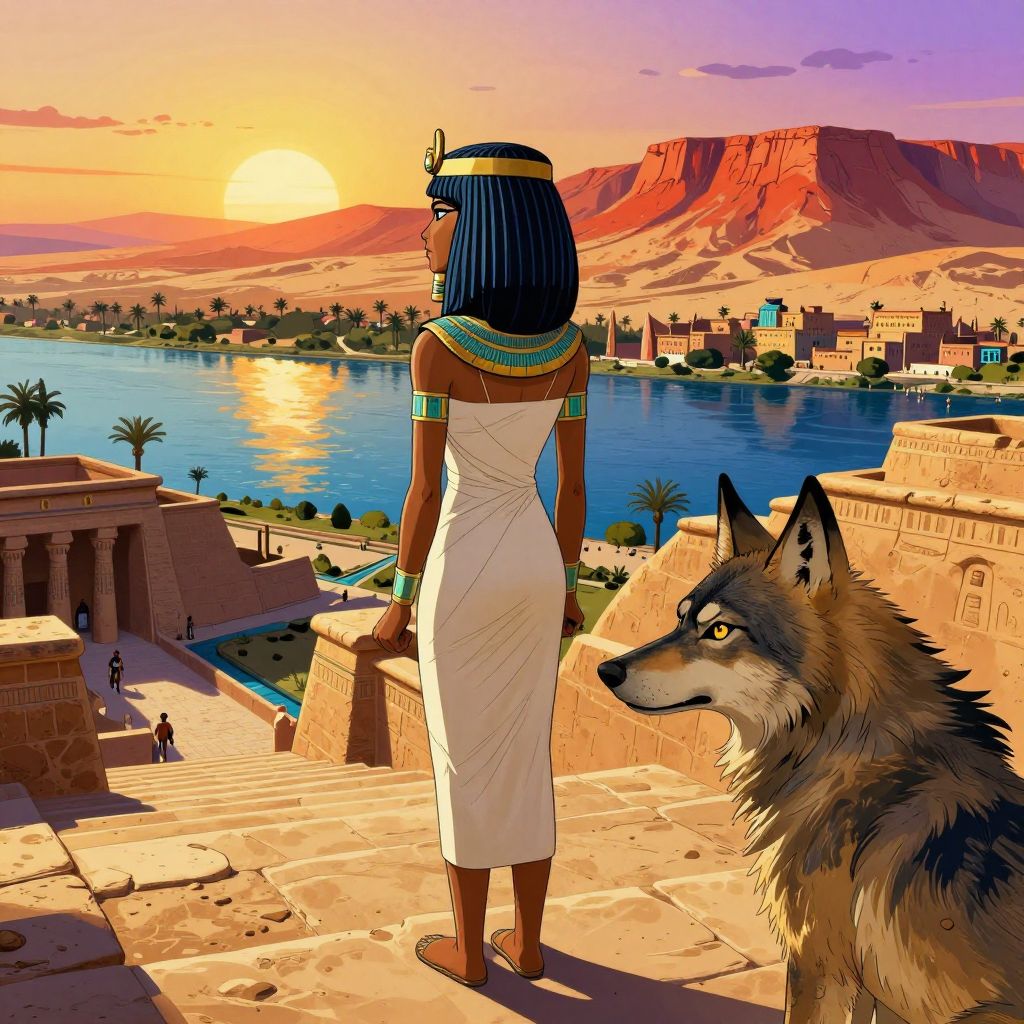
Hatshepsut was not the boy's mother. That distinction belonged to Isis, a minor wife in the royal harem whose name suggests she was not of royal blood. The child's claim to the throne came from his father, Thutmose II, not his mother. In the complex mathematics of Egyptian royal succession, that made Thutmose III legitimate but vulnerable.
Hatshepsut was something else entirely. She was the Great Royal Wife, the highest-ranking woman in Egypt. More importantly, she was the daughter of Thutmose I, the warrior pharaoh who had extended Egypt's borders further than any king before him. Her blood was pure royalty. Her husband's had been diluted.
Egyptian tradition had a solution for situations like this: regency. A queen or queen mother would manage affairs until the child came of age, then step aside. It had happened before. Everyone expected it to happen again.
For the first few years, Hatshepsut played her role exactly as tradition demanded. Inscriptions from this period show her as regent, not ruler. She administered the kingdom. She managed the bureaucracy. She kept the priests happy and the generals fed. She did everything a regent was supposed to do.
And then, somewhere around year seven of her stepson's reign, she decided that was not enough.
The Daughter of the Conqueror
To understand why Hatshepsut believed she deserved the throne, you have to understand her father. Thutmose I was not born to be pharaoh. His claim came through his wife, Ahmose, who carried the royal bloodline. But once he held the crook and flail, he proved himself worthy of them through conquest.
His first campaign came within a year of taking the throne. Nubia had rebelled against Egyptian rule, as it often did when a new pharaoh's authority seemed uncertain. Thutmose I traveled south with his army and personally killed the Nubian king in battle. According to the tomb autobiography of Ahmose son of Ebana, a naval officer who served under multiple pharaohs, Thutmose had the dead king's body hung from the prow of his ship as he sailed back to Thebes.
The message was clear: this pharaoh was not to be tested.
He campaigned again in his third year, ordering the first cataract canal dredged to allow easier passage of his ships into Nubia. In his fourth year, when Nubia rebelled yet again, he pushed even further south. An inscription at Kurgus, south of the fourth cataract of the Nile, marks the furthest extent of Egyptian penetration into Africa. No pharaoh before had reached so far. Few after would match it.
Then he turned north. Thutmose I became the first pharaoh to cross the Euphrates River, pursuing campaigns into Syria and establishing Egyptian influence as far as Carchemish. One of his inscriptions claims the Euphrates as Egypt's border before he even arrived there, which tells you something about his confidence.
Hatshepsut grew up watching her father transform Egypt from a regional power recovering from foreign occupation into an empire stretching from Nubia to the Euphrates. She watched him command armies, receive tribute, build monuments. She learned what kingship looked like when exercised by someone who believed in their own greatness.
And she learned that she, not the son of a minor harem wife, carried his blood.
The Problem of Succession
The death of Thutmose II around 1479 BCE created a succession crisis that Egyptian records carefully avoided documenting. We do not know how he died. We do not know if his death was expected. We do know that his reign was short, perhaps thirteen years according to the ancient historian Manetho though some modern scholars argue for as few as three, and that he left behind a child heir whose mother lacked royal pedigree.

Egyptian royal succession was messier than later dynasties liked to admit. The throne did not automatically pass from father to eldest son. Royal women mattered tremendously because they carried legitimacy. A pharaoh was ideally born to a Great Royal Wife, not a secondary wife. The child's father being pharaoh was necessary but not sufficient.
Thutmose III was the son of Isis, about whom we know almost nothing except that she was not of royal blood. He was legitimate because his father was king. But he was not ideal.
Hatshepsut, by contrast, was the daughter of Thutmose I by his Great Royal Wife, Ahmose. Her blood was as pure as Egyptian royal blood got. She had married her half-brother, as Egyptian royalty often did, and served as his Great Royal Wife. She had performed the religious duties of a queen. She had borne daughters but, apparently, no surviving sons.
When her husband died, she was still young enough to remarry and produce heirs. She did not. That decision, or perhaps that circumstance, would reshape Egyptian history.
Regent to Ruler: The Seven Year Transition
The transformation was gradual. Egyptian royal protocol evolved in stages, and we can trace Hatshepsut's growing power through the monuments she built and the titles she claimed.
In the early years, inscriptions show Hatshepsut as regent using feminine titles and pronouns. She was the "God's Wife of Amun" and the "Great Royal Wife," prestigious but subsidiary positions. Thutmose III was pharaoh. She was his regent. The hierarchy was clear.
By year seven of Thutmose III's reign, around 1472 BCE, that hierarchy had been overturned. Hatshepsut had assumed a full royal titulary. She wore the double crown of Upper and Lower Egypt. She carried the crook and flail. She had taken the throne name Maatkare, meaning "Truth is the soul of Ra," a declaration that her rule embodied cosmic order itself.
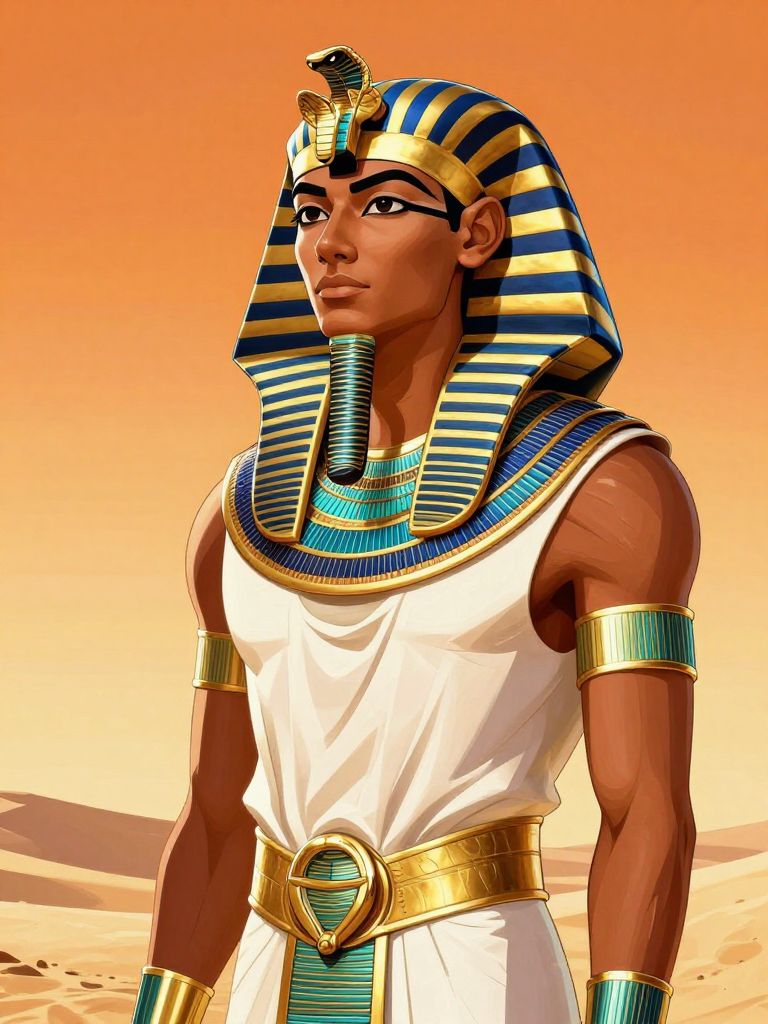
She did not depose Thutmose III. That would have been too dangerous, too unprecedented, too likely to provoke the kind of dynastic violence that had torn earlier periods apart. Instead, she elevated herself to co-regent, nominally ruling alongside her stepson but very clearly the senior partner. Official records began describing her with male pronouns and depicting her in male pharaonic dress.
This was not about fooling anyone. The Egyptians knew perfectly well that their senior pharaoh was female. The male imagery was about claiming power, not disguising identity. There were no words for a female king in Egyptian. There were no images. Hatshepsut used the existing vocabulary of kingship because that was all there was.
The Divine Birth Campaign
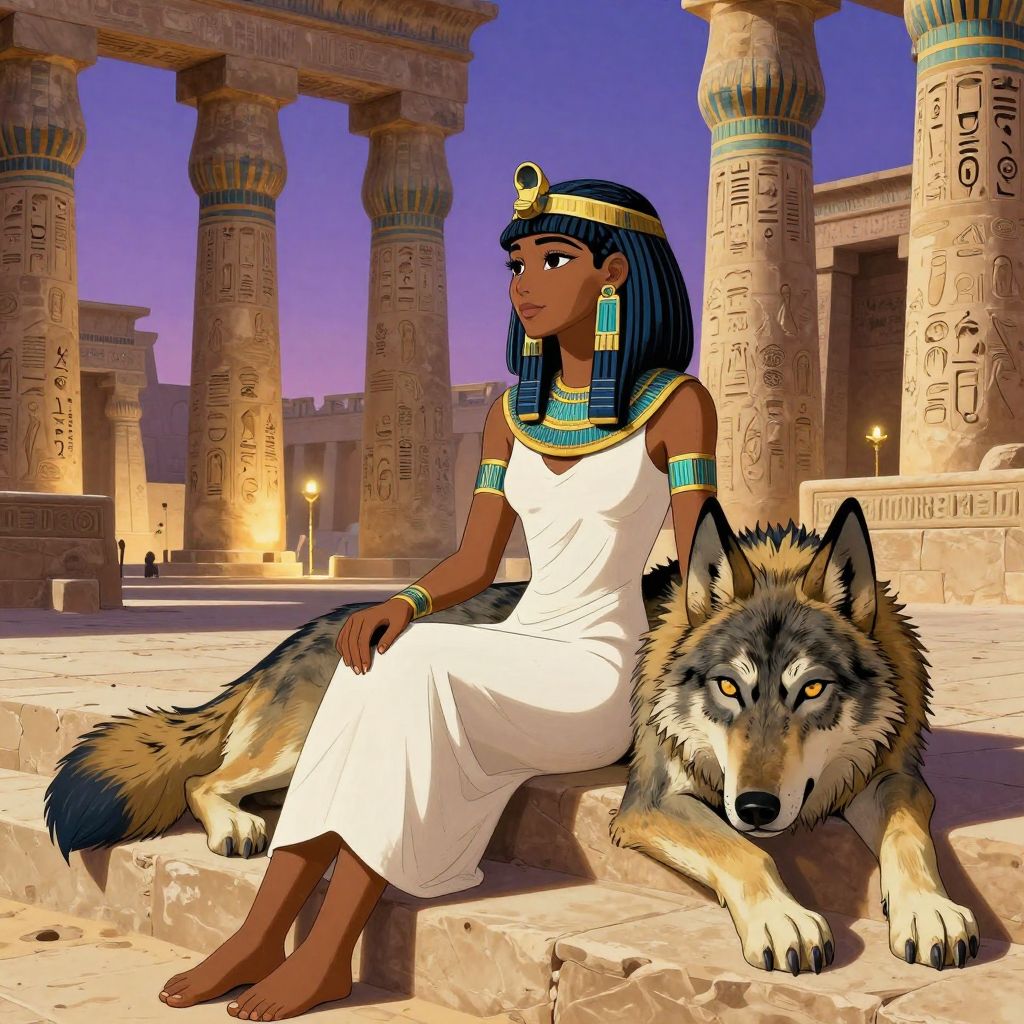
Every pharaoh needed divine legitimacy. Egyptian kingship was fundamentally a religious office. The pharaoh was Horus incarnate, the living god who maintained ma'at, the cosmic order that kept the universe functioning. Mortals did not simply decide to become pharaoh. The gods chose them.
Hatshepsut needed divine choice more than most. She was female, and Egyptian theology had never contemplated a female Horus. The entire framework of divine kingship assumed a male ruler. If Hatshepsut was going to claim the throne, she needed to rewrite the theology.
Temple reliefs at Deir el-Bahri tell the story she commissioned. The god Amun, king of the gods, disguised himself as Thutmose I and visited Queen Ahmose in her chambers. The inscriptions are explicit about what happened next: Ahmose "inhaled the breath of life" from the god, a delicate euphemism for divine conception.
Amun then revealed his true identity to Ahmose and prophesied that the child she would bear was destined to rule Egypt. The god instructed Khnum, the divine potter who shaped human bodies on his wheel, to form Hatshepsut's physical form and her ka, her spiritual essence, with particular care. She was not merely born royal. She was designed for kingship by the gods themselves.
This divine birth narrative was not original to Hatshepsut. Pharaohs had claimed divine parentage since the Fifth Dynasty, over a thousand years earlier. What was original was a woman using this theological tool to claim sole kingship rather than to support a male heir's claim.
The priests of Amun endorsed the narrative. Whether they genuinely believed the god had chosen a female pharaoh, or simply recognized that Hatshepsut had the power and they had no choice, they provided the theological infrastructure she needed. Hymns declared her rule divinely ordained. Temple carvings depicted the gods blessing her coronation.
The Coronation Narrative
Hatshepsut's mortuary temple at Deir el-Bahri includes detailed reliefs of her coronation, designed to establish beyond question that she held the throne legitimately. The narrative presents her ascension as something her father, Thutmose I, had always planned.
In these reliefs, Thutmose I presents young Hatshepsut to the court and declares her his heir. The gods attend the coronation and bestow their blessings. The ritual proceeds exactly as it would for any male pharaoh. The imagery insists there was nothing unusual about this succession except that other pharaohs had merely inherited power while Hatshepsut had been chosen by both divine and human authority.
Historians debate how much of this reflected actual events. Did Thutmose I really designate his daughter as heir while sons from other wives were still alive? The divine birth scenes are clearly mythological, but the coronation narrative is presented as historical. It may contain genuine memories of a father who favored his royal-blooded daughter, or it may be retrospective propaganda designed to legitimize what was essentially a coup.
What we know is that Hatshepsut needed this narrative. A female pharaoh without overwhelming theological support would be vulnerable to challenges from generals, priests, and rival claimants. The inscriptions at Deir el-Bahri were not merely decorative. They were arguments in stone, meant to settle any debate about whether her rule was legitimate.
The Infrastructure of Power
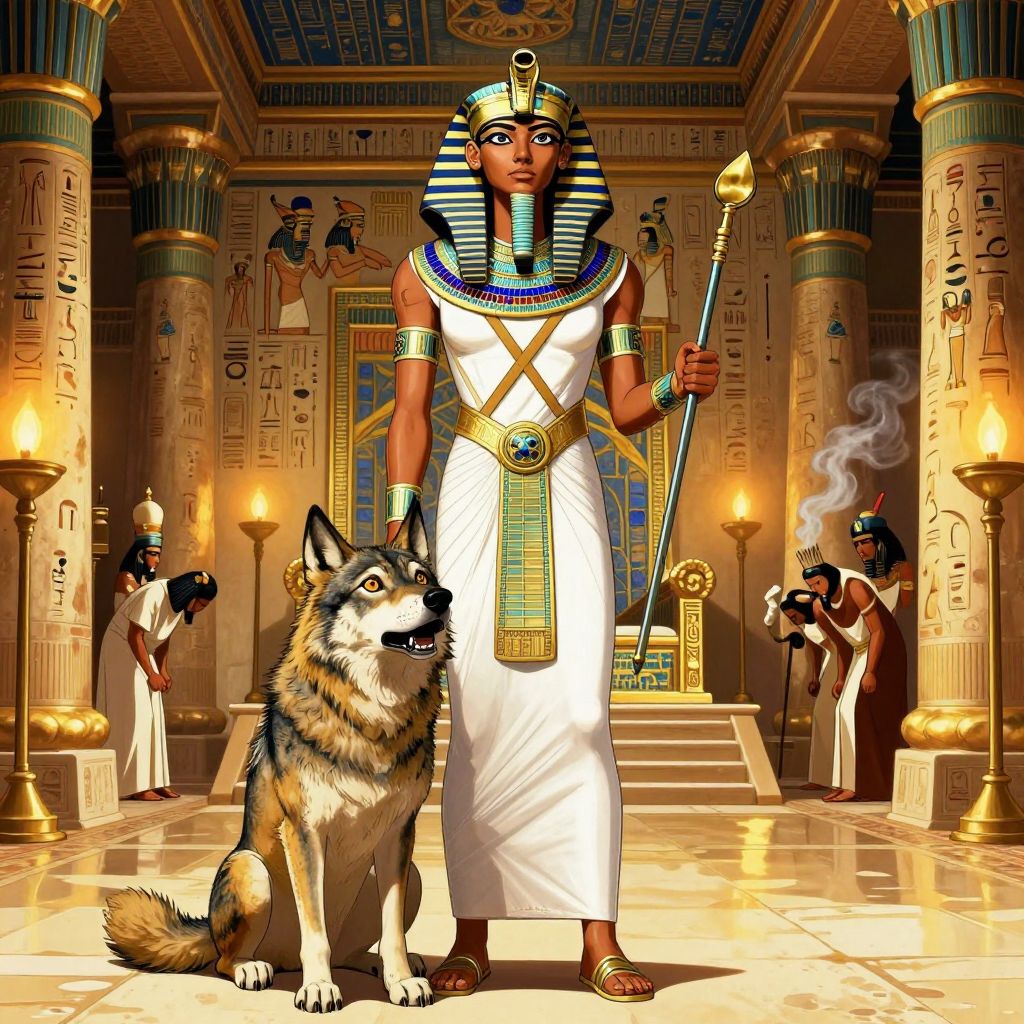
Hatshepsut did not seize power through military force. She built a coalition of supporters who benefited from her rule and who would defend it against challenges.
The priests of Amun were crucial. Hatshepsut was lavish in her devotion to Amun, building temples, commissioning statues, funding religious festivals. The temple at Karnak received particular attention. She erected obelisks there, including one that still stands at ninety-seven feet tall, one of the tallest ancient obelisks in existence. The priesthood repaid her generosity with theological support for her kingship.
Her administrative apparatus was staffed with loyal appointees. Chief among them was Senenmut, a man of non-royal origin who rose to become the most powerful official in Egypt. He accumulated nearly a hundred titles, including "Steward of the God's Wife," "Steward of the King's Daughter," "Overseer of Works," and "High Steward of the King." He was tutor to Hatshepsut's daughter Neferure. He supervised the construction of Deir el-Bahri.
The relationship between Hatshepsut and Senenmut has generated endless speculation. He never married, unusual for an Egyptian official of his status. He was granted the privilege of building a tomb near Hatshepsut's own mortuary temple. His image was hidden in parts of Deir el-Bahri in locations that would normally be reserved for family members. Ancient graffiti depicting a pharaoh and a male figure in intimate circumstances has been interpreted as a crude joke about their relationship, though the figures are not specifically identified.
Whether or not they were lovers, Senenmut was essential to Hatshepsut's power. He managed the construction projects that advertised her legitimacy. He administered the bureaucracy that kept Egypt functioning. He tutored the princess who might someday need her own propaganda of royal blood.
Managing the Co-Regent
Thutmose III did not disappear during Hatshepsut's twenty-two years as senior pharaoh. He remained co-regent, his name appearing on monuments alongside hers. He was not imprisoned, not exiled, not murdered. He was raised, educated, and trained.
Specifically, he was trained for war.
The young Thutmose spent his co-regency years with the military, learning generalship and commanding expeditions in Nubia while still a teenager. The army respected him. Contemporary records describe his physical courage and martial skill. He was building exactly the power base you would want if you intended to challenge a regent, or if you intended to rule effectively once your turn finally came.
Hatshepsut could not have been ignorant of what this meant. A young man raised by soldiers, trained in violence, waiting for his inheritance while a stepmother held what he might have considered his rightful throne. Every year he grew older, stronger, more capable of leading an army. Every year her position became more dependent on the continued support of the priesthood and bureaucracy she had cultivated.
She managed this threat by not making him a threat. Thutmose III was co-regent, not prisoner. He had dignity, position, the promise of eventual sole rule. He had no grievance that would justify rebellion, no claim that he was being denied what was his. The throne was still his by right. He merely had to share it with his stepmother for a time.
That time lasted twenty-two years.
The Throne Name's Declaration
"Maatkare" was not merely a name. It was a theological statement and a political challenge.
Ma'at was the foundational concept of Egyptian civilization. It meant truth, justice, balance, cosmic order. It was the opposite of chaos, the principle that held the universe together. Every pharaoh was supposed to maintain ma'at through proper ritual, just governance, and military protection of Egypt's borders.
By claiming that "Truth is the soul of Ra," Hatshepsut was asserting that her rule embodied ma'at itself. She was not violating divine order by being a female pharaoh. She was the expression of divine order. Her kingship was cosmic truth made manifest.
The name dared anyone to argue. How could you oppose truth itself? How could you claim that the gods' order was wrong? The priests who had blessed her coronation would have had to reverse themselves, admit they had been deceived, confess that their oracles were false. The bureaucrats who administered her realm would have had to declare that twenty-two years of stable, prosperous rule had somehow violated the natural order.
Hatshepsut understood that power requires narrative. The person who controls the story controls perception, and perception shapes loyalty. By the time she died around 1458 BCE, her story had been carved into stone temples across Egypt. She had ruled longer than Cleopatra would. She had transformed the ideology of Egyptian kingship to accommodate her existence.
And then, for twenty years, nothing happened to that story.
The Successor's Patience
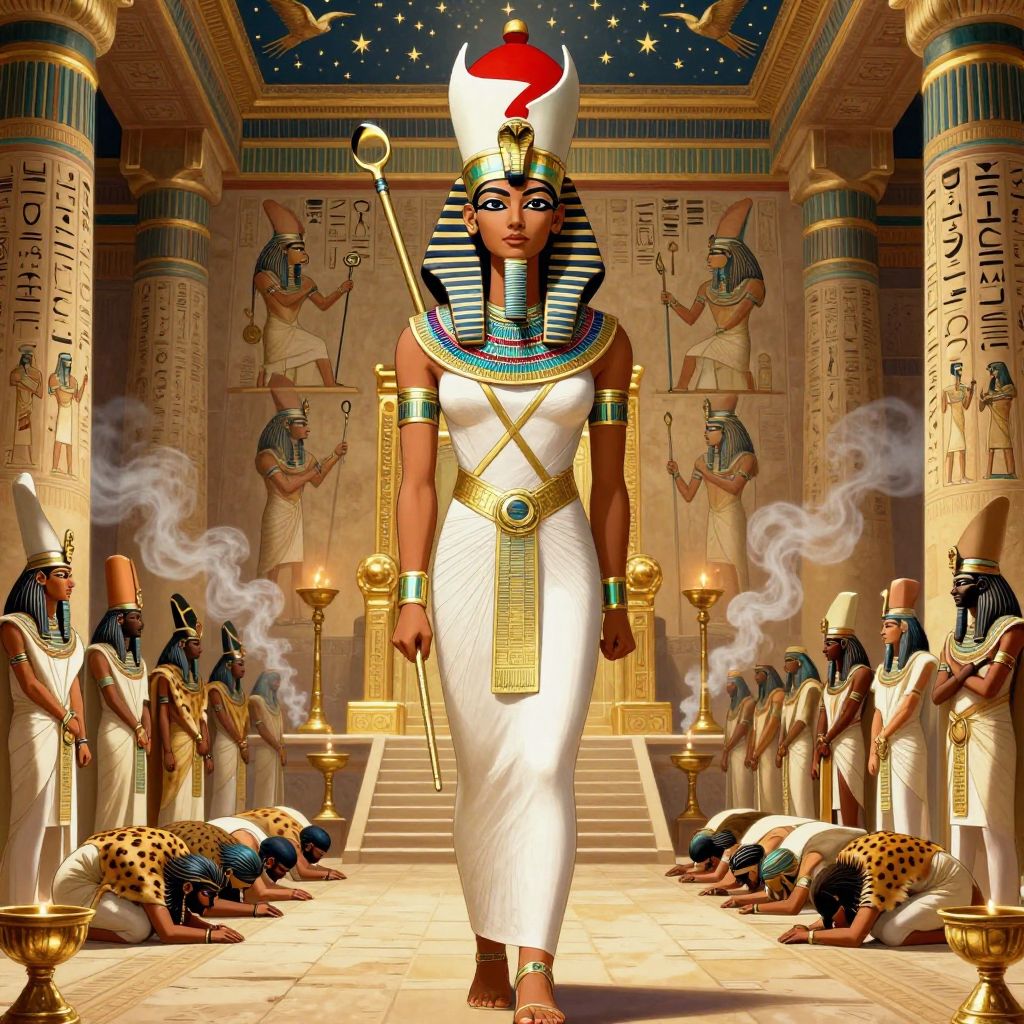
Thutmose III finally ruled alone after 1458 BCE. He immediately launched a series of military campaigns that would eventually number seventeen, expanding the Egyptian empire to its greatest extent. He conquered territories from Nubia to the Euphrates. He fought the famous Battle of Megiddo, the first battle in recorded history for which we have detailed tactical records. Modern historians call him "the Napoleon of Egypt."
And for twenty years, he left Hatshepsut's monuments standing.
This is the detail that complicates any simple narrative of revenge. If Thutmose III hated his stepmother, if he had spent twenty-two years seething at her usurpation, he had the power to begin erasing her memory immediately. He did not use it. He was busy conquering, yes, but he found time for plenty of building projects of his own. He simply did not touch hers.
The systematic destruction of Hatshepsut's images and cartouches began only near the end of Thutmose III's reign, possibly under his son Amenhotep II. Workers with chisels moved from monument to monument, removing her face, her name, her memory. In Egyptian belief, destroying someone's name destroyed their chance at eternal life. The erasure was not just political. It was theologically murderous.
Why the twenty-year delay? The question has generated numerous theories. Perhaps Thutmose III only became bitter in old age. Perhaps succession politics required removing the precedent of female rule before his own heir took power. Perhaps the priesthood, not the palace, drove the decision. Perhaps multiple factors converged.
We may never know. What we know is that the erasure failed. Hatshepsut's temple at Deir el-Bahri still stands. Her obelisks still rise at Karnak. Her mummy was identified through DNA testing in 2007. Her name, which someone tried so hard to destroy, is remembered three and a half thousand years later.
The Legacy of a Claim
Hatshepsut's rise to power was unprecedented in Egyptian history, but it was not impossible to understand within Egyptian categories. She was royal by blood, more royal than her stepson. She was chosen by the gods, according to the temples she built. She was effective as a ruler, maintaining prosperity and stability for two decades.
The obstacle was purely categorical. Egyptian kingship assumed a male ruler because Egyptian kingship had always had male rulers. The theology described the pharaoh as Horus, son of Osiris, masculine divine power incarnate. There were no words for what Hatshepsut claimed to be.
So she used the words that existed. She wore the false beard and the double crown. She let scribes use male pronouns. She let artists depict her with a male body. Not because she was pretending to be a man, but because the vocabulary of kingship was male, and she was claiming kingship.
Her rise demonstrated something that later centuries would forget and rediscover: that power is as much about narrative as about force. Hatshepsut controlled the story. She commissioned the temples that told her divine birth. She appointed the priests who blessed her coronation. She promoted the officials who administered her kingdom and praised her reign. By the time anyone might have wanted to challenge her, the story was already carved in stone.
The erasure that came later proved both the power and the limits of controlling narrative. Someone decided her story was too dangerous to survive. They tried to destroy every trace of her name, her face, her existence. They failed because stone is stubborn, because some cartouches were too high to reach, because some statues were buried instead of destroyed.
Three and a half thousand years later, we know her name. We know her story. We know that a widow who was supposed to keep the throne warm decided the throne was hers.
Maatkare Hatshepsut. Truth is the soul of Ra.
She was right.
Frequently Asked Questions
1How long was Hatshepsut regent before becoming pharaoh?
Hatshepsut served as regent for approximately seven years before claiming the title of pharaoh around 1472 BCE. During this period, she transitioned from using feminine titles and pronouns to adopting full royal titulary, including the throne name Maatkare and the traditional male pharaonic regalia.
2Why didn't Thutmose III challenge Hatshepsut's rule?
Thutmose III remained co-regent throughout Hatshepsut's reign and was never imprisoned or sidelined. He was trained by the military and led expeditions to Nubia while still a teenager. Hatshepsut managed potential opposition by giving him dignity and position rather than treating him as a threat, which left him with no legitimate grievance that would justify rebellion.
3What was the divine birth story and why did Hatshepsut need it?
Hatshepsut commissioned temple reliefs showing the god Amun visiting her mother Ahmose and fathering Hatshepsut through divine conception. This narrative was necessary because Egyptian kingship was theologically male - the pharaoh was Horus incarnate, son of Osiris. By claiming divine parentage and prophesied destiny, Hatshepsut provided the theological justification the priesthood needed to endorse a female pharaoh.
4Who was Senenmut and what was his role in Hatshepsut's rise?
Senenmut was a non-royal official who accumulated nearly a hundred titles under Hatshepsut, including High Steward and Overseer of Works. He supervised the construction of Deir el-Bahri, tutored Hatshepsut's daughter Neferure, and administered much of the government. He was essential to building and maintaining the infrastructure that supported her claim to power.
5What does 'Maatkare' mean and why was it significant?
Maatkare means 'Truth is the soul of Ra.' Ma'at was the Egyptian concept of cosmic order, truth, and justice. By choosing this throne name, Hatshepsut declared that her rule embodied divine order itself - making opposition to her reign equivalent to opposing cosmic truth. It was both a theological statement and a political challenge.
Experience Hatshepsut's Story
Hear the full narrative of Egypt's most successful female pharaoh, from her seven years as regent to her declaration of divine kingship.


Listen to Related Stories
The Woman Who Would Be King
4 minShe stopped pretending. She declared herself pharaoh.

Key Figures
Listen to the Full Story
Experience history through immersive audio lessons narrated by Lumo, your immortal wolf guide.