The Skull That Testified
In 1881, archaeologists found a cache of royal mummies hidden in a cliff tomb near Deir el-Bahri. Among them was Seqenenre Tao, a pharaoh of Thebes who ruled around 1560 BCE. No hieroglyphic record described his death. His body did.
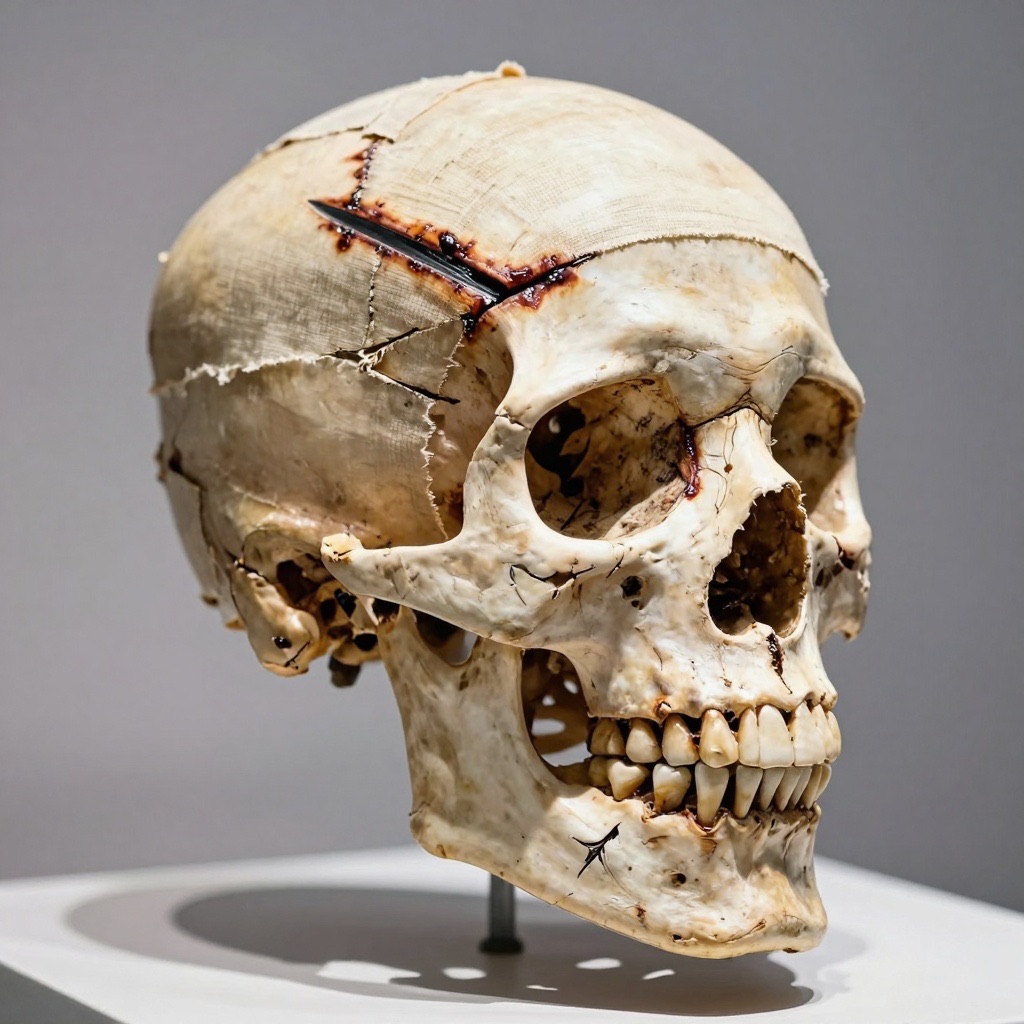
Five wounds marked his skull. A blade cut across his forehead. A blow crushed the bone above his right eye. His nose was shattered. A deep slash ran through his left cheek. A spear had been driven through the base of his skull behind his left ear. CT scans conducted in 2021 confirmed what Victorian-era archaeologists could only guess: multiple attackers with multiple weapons had killed this man while he was restrained.
The weapons matched Hyksos armaments. The wounds came from different angles, suggesting several assailants. This was combat or execution. Either way, a pharaoh died fighting foreign occupiers who had ruled northern Egypt for a century.
Seqenenre Tao's rebellion failed. His army was broken. By any reasonable measure, his cause should have died with him. But his sons kept fighting. Within a generation, the Hyksos dynasty would be driven from Egypt entirely.
Who Were the Hyksos?
The name comes from the Egyptian phrase heqa khasut, meaning "rulers of foreign lands." By the Middle Kingdom, Egyptians used the term for any foreign chiefs. History remembers it as the name of the dynasty that conquered northern Egypt during the Second Intermediate Period, roughly 1650 to 1550 BCE.
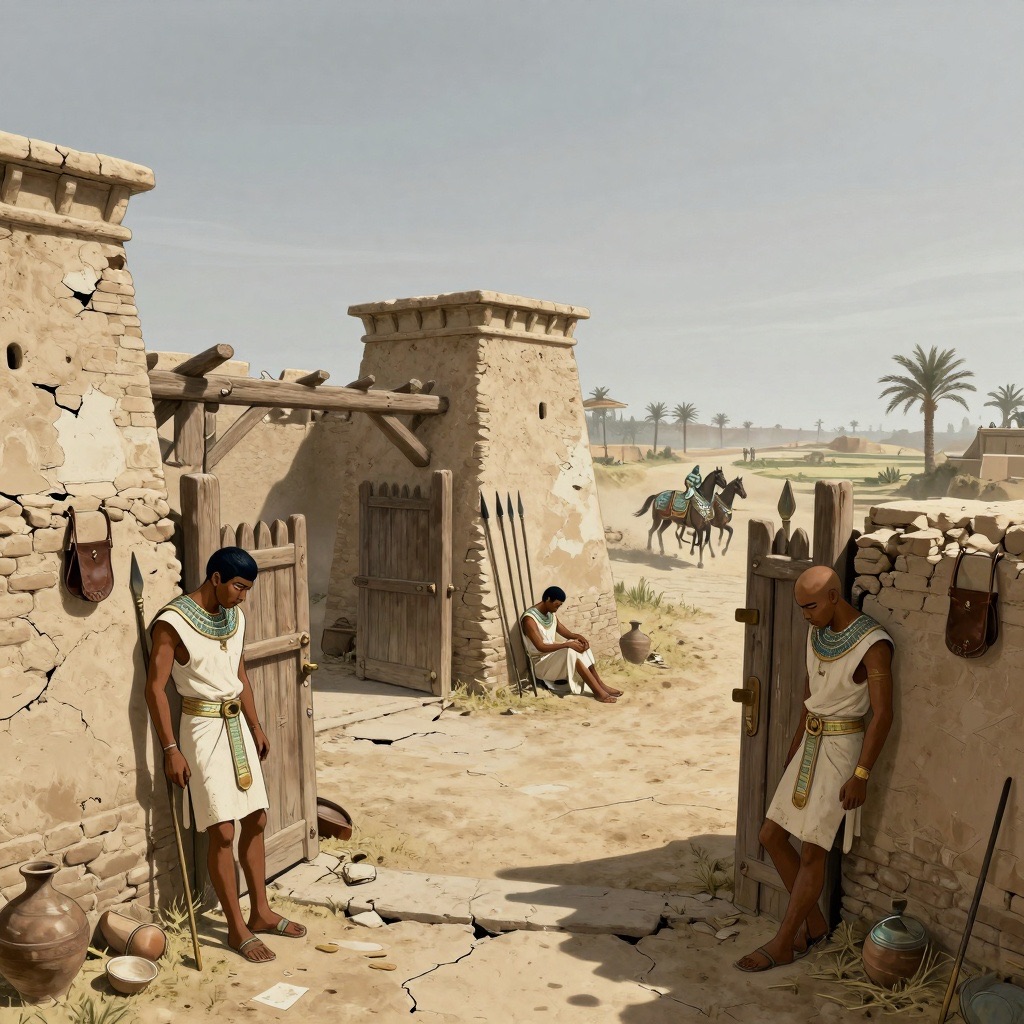
The Hyksos were not a single ethnic group. They were a coalition of peoples from the Levant and western Asia: Canaanites, Amorites, possibly groups from further east. They entered Egypt gradually during the late Middle Kingdom, settling in the eastern Nile Delta as traders, laborers, and mercenaries.
When central Egyptian authority weakened at the end of the Thirteenth Dynasty, these foreign settlers filled the vacuum. By around 1650 BCE, a Hyksos ruler had established himself at Avaris in the northeastern Delta. Within decades, Hyksos kings controlled Memphis and all of Lower Egypt.
Here's the strange part: they didn't destroy Egyptian culture. They adopted it. They wrote their names in hieroglyphs, worshipped Egyptian gods (while maintaining their own deity, the storm god Baal-Seth), and presented themselves as legitimate pharaohs. Archaeological evidence from Avaris shows a hybrid culture: Egyptian administrative practices combined with Levantine architectural styles, religious imagery blending both traditions.
But they were still foreign. The native Egyptian dynasty ruling from Thebes never forgot that.
A Century Under Foreign Rule
The Hyksos period lasted approximately 100 to 150 years, depending on which chronology you accept. During this time, Egypt was divided. The Hyksos Fifteenth Dynasty controlled the Delta and Middle Egypt from Avaris. The native Egyptian Seventeenth Dynasty ruled Upper Egypt from Thebes. To the south, the Kingdom of Kush (Nubia) maintained independence.
The Theban pharaohs were vassals. They paid tribute. They maintained diplomatic relations. They pretended to accept the status quo while foreigners sat on the throne of the Two Lands.
The Hyksos brought military technology Egypt had never seen. Horses had been known in the Near East for centuries, but Egypt had no tradition of using them in warfare. The Hyksos introduced the horse-drawn chariot, a mobile weapons platform that could sweep infantry from the field. They brought composite bows with greater range and penetrating power than Egyptian self bows. Their bronze weapons cut through Egyptian copper.
On open ground, the Hyksos were nearly invincible. The Egyptians couldn't match their speed, range, or striking power.
For generations, the Theban pharaohs accepted this. They maintained regional power, guarded their southern borders, and avoided provoking the overlords who could crush them.
Then Seqenenre Tao decided a hundred years was enough.
The Pharaoh Who Chose to Fight
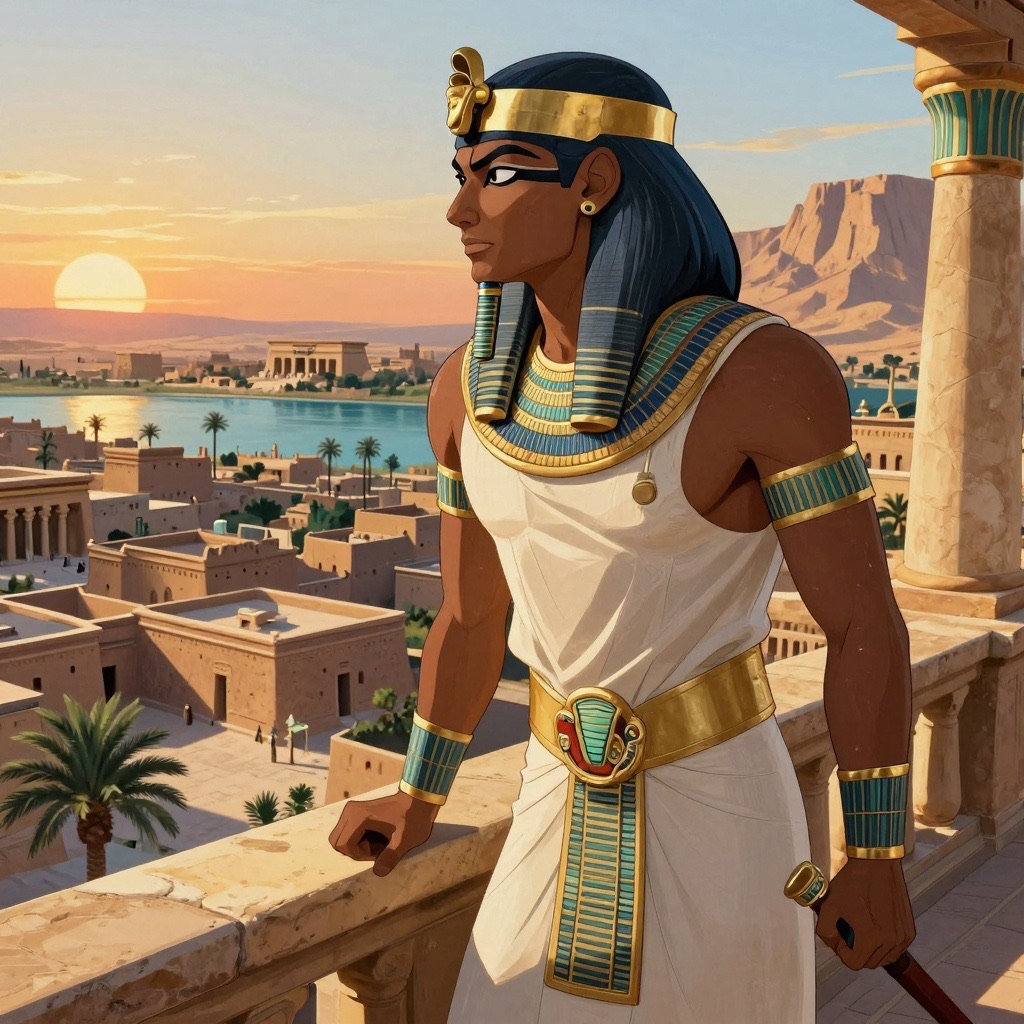
Seqenenre Tao ruled Thebes sometime around 1560-1555 BCE. His exact reign dates are uncertain. The manner of his death is not.
Why did he rebel? The historical sources are fragmentary. A later text called the Quarrel of Apophis and Seqenenre tells a story about the Hyksos king Apepi complaining that hippopotamuses in a pool at Thebes were keeping him awake in Avaris, hundreds of miles away. The complaint was obviously absurd, probably a deliberate insult. Whether the story has any historical truth is debated, but it preserves the tradition that Seqenenre started the fight.
What we know is that he gathered an army and marched north. The Egyptians were outmatched. They had no answer for Hyksos chariots.
Seqenenre Tao died in battle or shortly after capture. His mummy shows hasty embalming, which means his body was recovered under bad conditions and preserved urgently before decomposition destroyed it. The embalmers did incomplete work. But they preserved enough that 3,500 years later, we can count every wound on his skull.
His rebellion failed. His army scattered. The Hyksos had killed the pharaoh and sent a message to anyone else considering resistance.
But Seqenenre Tao had sons.
Kamose: The Prince Who Refused to Wait
Kamose inherited his father's throne and his father's war. His highest confirmed regnal year is three, though some scholars argue he ruled up to five years. In that time, he transformed Egyptian strategy.
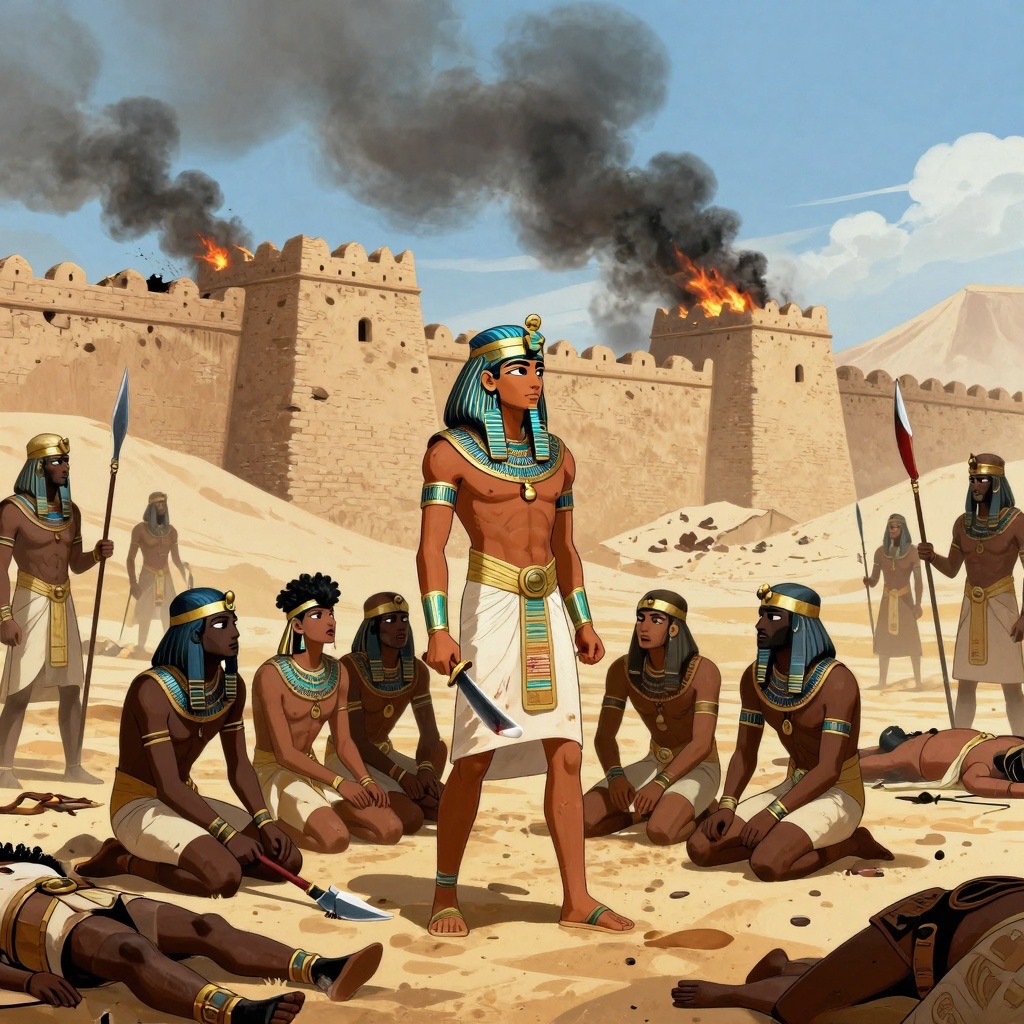
His council advised patience. Build strength. Make alliances. Wait. Kamose refused. His father had waited. His grandfather had waited. A hundred years of waiting had achieved nothing.
But Kamose was not stupid. He learned from his father's defeat. The Hyksos ruled the Nile with chariots that dominated open terrain. So Kamose decided not to fight on open terrain.
He built a fleet.
The Nile was Egypt's highway, connecting Upper and Lower Egypt. Kamose gathered boats, armed them with soldiers, and attacked from the river. Chariots cannot swim. On water, Egyptian seamanship and local knowledge outweighed Hyksos technology.
Kamose also recruited the Medjay, Nubian warriors from the south who had served Egypt for generations. Desert fighters, fierce and loyal to Thebes. They would serve Egyptian armies for centuries, eventually becoming an elite police force.
In his third year as pharaoh, Kamose sailed north. His first target was Nefrusy, a garrison manned by Egyptians loyal to the Hyksos. Collaborators first. The garrison fell. The message was clear: choose sides now, because there would be no second chances.
The Intercepted Letter
The Hyksos king Apepi panicked. Kamose's river campaign was cutting through territory that should have been safe. Unable to stop the Egyptian fleet with chariots, Apepi tried diplomacy.
He sent messengers south, past Kamose's forces, to the Kingdom of Kush beyond Egypt's southern border. The letter proposed an alliance: the Nubians would attack Egypt from behind while the Hyksos pressed from the north. Kamose would be caught between two enemies.
Kamose's scouts intercepted the messenger in the desert. They brought the letter to Kamose still sealed.
This interception is historical fact, preserved in Kamose's own inscriptions on stelae at Karnak. He ordered the letter read aloud to his troops. The Hyksos king, ruler of the mighty northern kingdom, was so afraid that he was begging foreign Nubians to save him. The propaganda was devastating.
Kamose sailed all the way to Avaris, the Hyksos capital. He lacked the forces to take it. The fortifications were too strong. But he got close enough to strip the surrounding territory and taunt the Hyksos from the river. His inscriptions claim he left nothing belonging to Avaris untouched. That was probably exaggeration, but the psychological impact was real.
He seized the Bahariya Oasis in the Western Desert, cutting off any Kushite alliance. He captured Hyksos ships laden with weapons. He proved the Hyksos were not invincible.
Then he died.
The War Continues
We don't know how Kamose died. His mummy has never been identified. He ruled perhaps three to five years, long enough to turn the tide but not to see the end.
His younger brother Ahmose was about ten years old when he became pharaoh. A child king inheriting an unfinished war against an enemy that had already killed his father and possibly his brother.
The Hyksos must have thought they had won. Kill the father. Outlast the son. Wait for the child to grow up weak, or die young.
They miscalculated badly.
Ahmose spent his minority learning from his mother, Queen Ahhotep, who held the kingdom together through two pharaohs' wars. When he came of age, he resumed the campaign.
The details of Ahmose's final war against the Hyksos are poorly documented, but the outcome is clear. He drove them from Avaris. He pursued them into Canaan, besieging their refuge at Sharuhen for three years before destroying it. He made sure they could never return.
The liberation was complete. The Hyksos period was over. The New Kingdom had begun.
What Egypt Learned
The Hyksos taught Egypt things the occupiers never intended.
Egypt adopted the horse and chariot. Within generations, Egyptian chariotry became the terror of the Near East. Pharaohs like Thutmose III and Ramesses II used it to build an empire from Nubia to the Euphrates.
Egypt adopted the composite bow. The weapon that had given the Hyksos such advantage became standard Egyptian equipment.
Egypt adopted aggression. Before the Hyksos, Egypt was relatively isolationist, content with the Nile Valley and buffer zones in Nubia and Sinai. After the Hyksos, Egyptian pharaohs understood that passive defense invited conquest. The New Kingdom projected power far beyond Egypt's borders, attacking potential threats before they could become actual ones.
The occupation proved that Egypt could be conquered. The liberation proved that Egypt could conquer back.
The Archaeology of Avaris
Modern excavations at Tell el-Dab'a, the site of ancient Avaris, have revealed what Hyksos rule looked like materially. Austrian archaeologist Manfred Bietak has led investigations since 1966, uncovering a city that blended Egyptian and Levantine cultures.
The Hyksos built temples in both styles. They used Egyptian administrative systems while keeping their own customs. Burials at Avaris include both Egyptian and Levantine practices, sometimes in the same tomb.
The city covered several square kilometers, massive by ancient standards. Its fortifications explain why Kamose could sail to its walls but not take them. Only a sustained campaign with a mature, well-supplied army could reduce such a stronghold.
Ahmose did what his father and brother couldn't because he had what they lacked: time. Time to build his army. Time to accumulate resources. Time to finish what they started.
The Mummy's Testimony
The 2021 CT scan study of Seqenenre Tao's mummy, led by Dr. Sahar Saleem of Cairo University, added new details to his death. The researchers identified at least five different weapons matching Hyksos armaments: an axe, a spear, and several daggers.
The wound angles and lack of defensive injuries suggest his hands were bound when he was killed. This points to execution rather than combat. He couldn't raise his arms to protect himself.
The hasty embalming matters too. Egyptian royal mummification took seventy days. Seqenenre's mummy shows shortcuts and incomplete work. His body was recovered under emergency conditions and preserved quickly before further decay.
His brain wasn't removed through the usual nasal route, probably because the facial wounds made that impossible. The body had begun decomposing before embalming started. The embalmers improvised, using linen and resins to disguise the damage.
They preserved enough. Three and a half millennia later, we can reconstruct his final moments with forensic precision.
Legacy
The expulsion of the Hyksos defined Egyptian identity for centuries. New Kingdom pharaohs justified their conquests as preventing another occupation. The memory of foreign rule became motivation.
Hatshepsut, ruling nearly a century after the liberation, was still restoring temples damaged during the Hyksos period.
The Eighteenth Dynasty, founded by Ahmose, produced some of Egypt's most famous rulers: Hatshepsut, who built the temple at Deir el-Bahri; Thutmose III, who conquered an empire; Akhenaten, who tried to revolutionize Egyptian religion; Tutankhamun, whose intact tomb made him famous. All of them ruled because Seqenenre Tao decided he would rather die fighting than live paying tribute to foreigners.
Three Generations
The war against the Hyksos took three generations to win.
Seqenenre Tao started it. He chose to fight when his ancestors had accepted subordination for a century. He died, probably executed, his rebellion apparently crushed.
Kamose adapted. He learned from his father's failure and built a strategy that avoided Hyksos strengths. The river fleet. The strikes against collaborators. The propaganda of the intercepted letter. He turned the tide but died before finishing.
Ahmose completed it. He grew up in a kingdom at war, learned from his mother's governance and his brother's campaigns, and drove the Hyksos out entirely. He founded a dynasty that would rule for centuries.
No single pharaoh could have done it alone. It required someone willing to start a fight they couldn't win, someone clever enough to find a way around the enemy's advantages, and someone patient enough to see it through. One family, three generations, a hundred years of accumulated rage.
Frequently Asked Questions
1Where did the Hyksos come from?
They were a coalition of peoples from the Levant and western Asia, including Canaanites, Amorites, and possibly groups from further east. They entered Egypt gradually during the late Middle Kingdom as traders and settlers before seizing power around 1650 BCE when central authority weakened.
2How long did the Hyksos rule Egypt?
About 100-150 years, from around 1650 BCE to 1550 BCE. They ruled northern Egypt from Avaris while native Egyptian pharaohs maintained a vassal kingdom at Thebes in the south.
3What military technology did the Hyksos bring?
Horse-drawn war chariots, composite bows with greater range than Egyptian self bows, and superior bronze weapons. Egypt had no tradition of using horses in warfare before the Hyksos. After the liberation, Egyptian chariotry became one of the most feared military forces in the ancient world.
4How did Kamose defeat the Hyksos chariots?
He avoided open ground where chariots dominated. He built a river fleet and attacked via the Nile, where Egyptian seamanship gave him the advantage. Chariots are useless on water.
5What do we know about Seqenenre Tao's death?
CT scans reveal at least five major skull wounds from different Hyksos weapons. The wound angles and lack of defensive injuries suggest his hands were bound when he was killed. His mummy was hastily embalmed, meaning his body was recovered under emergency conditions.
Experience the Liberation of Egypt
From Seqenenre Tao's defiant stand to Ahmose's final victory, hear the full story of Egypt's war against the Hyksos occupation.


Listen to Related Stories
The Skull With Five Wounds
4 minA pharaoh's mummy tells the story of his violent death...

The Prince Who Wouldn't Wait
4 minKamose refused to accept what his ancestors had tolerated...
Listen to the Full Story
Experience history through immersive audio lessons narrated by Lumo, your immortal wolf guide.