A Dead King on the Throne
In 579 BCE, Rome's fifth king lay murdered in his own doorway. Assassins had split his skull with axes. Blood pooled on the marble floors he'd imported from his Etruscan homeland. Any other royal household would have descended into chaos. The queen would have screamed for guards. Servants would have fled. Power would have fractured into competing factions fighting over the corpse.
Tanaquil did none of these things.
Instead, the Etruscan queen walked to the palace window, looked down at the anxious crowd gathering below, and lied. The king was wounded but alive, she announced. He had appointed Servius Tullius to handle state affairs until he recovered. Everyone should go home and pray for their sovereign's recovery.
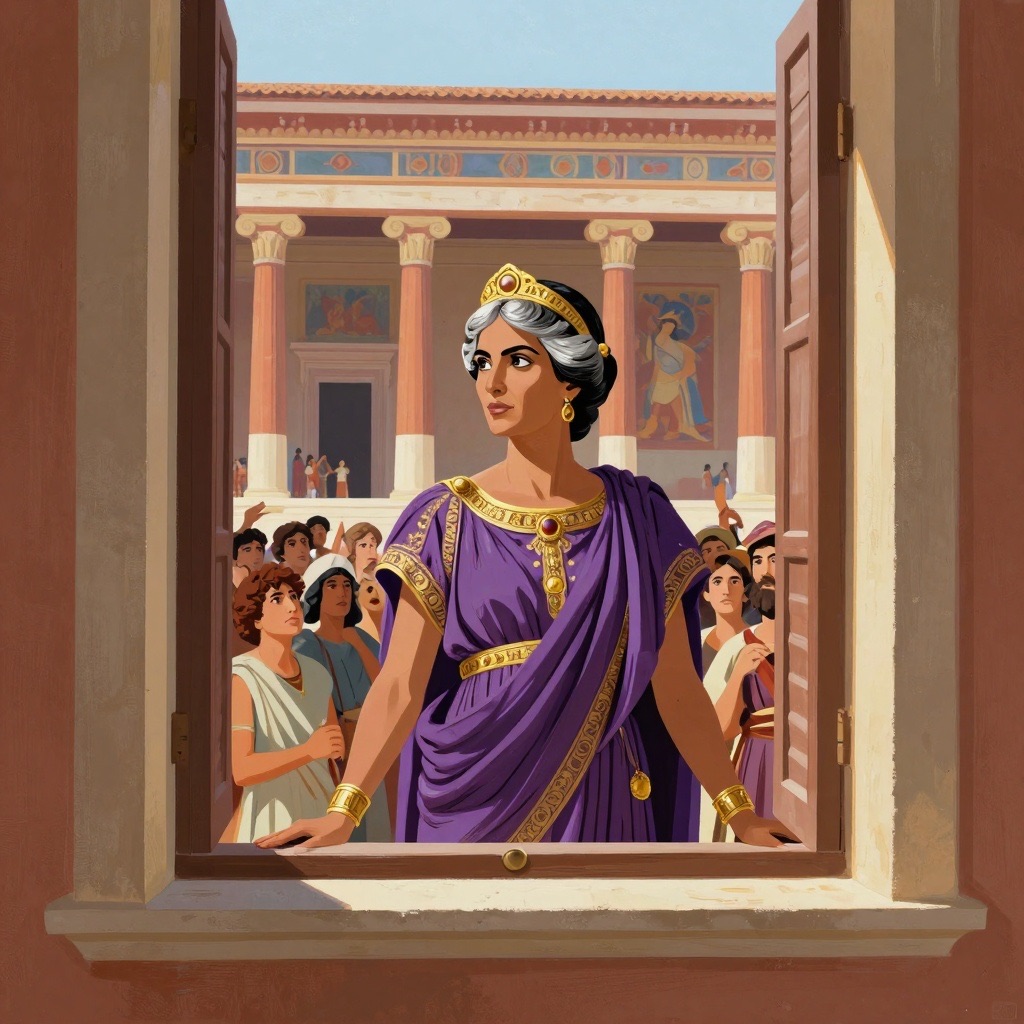
For days, Tanaquil kept up the fiction. Long enough for Servius Tullius to start giving orders. Long enough for senators to get used to following them. Long enough for Rome's power brokers to accept the new reality. By the time anyone realized Tarquinius Priscus was actually dead, his chosen successor was already running the government.
The Senate confirmed what everyone already assumed. The assassins (sons of the previous king Ancus Marcius, finally avenging a thirty-eight-year-old grievance) fled the city. And a man born into slavery became the sixth king of Rome.
From Servant to Sovereign
How Servius came to power is inseparable from how Rome's outsider dynasty established itself in the first place. Tarquinius Priscus was the first non-Roman to rule the city. An Etruscan from Tarquinii, he'd arrived in Rome as a wealthy immigrant, charmed his way into the inner circles of power, and seized the throne through good timing and ruthless opportunism.
When the previous king Ancus Marcius died, Priscus convinced the dead king's sons to leave the city on a hunting expedition. By the time they returned, Rome had elected a new king. The sons of Ancus got nothing but exile and a lifetime of resentment. That resentment would eventually express itself in murder, thirty-eight years later.
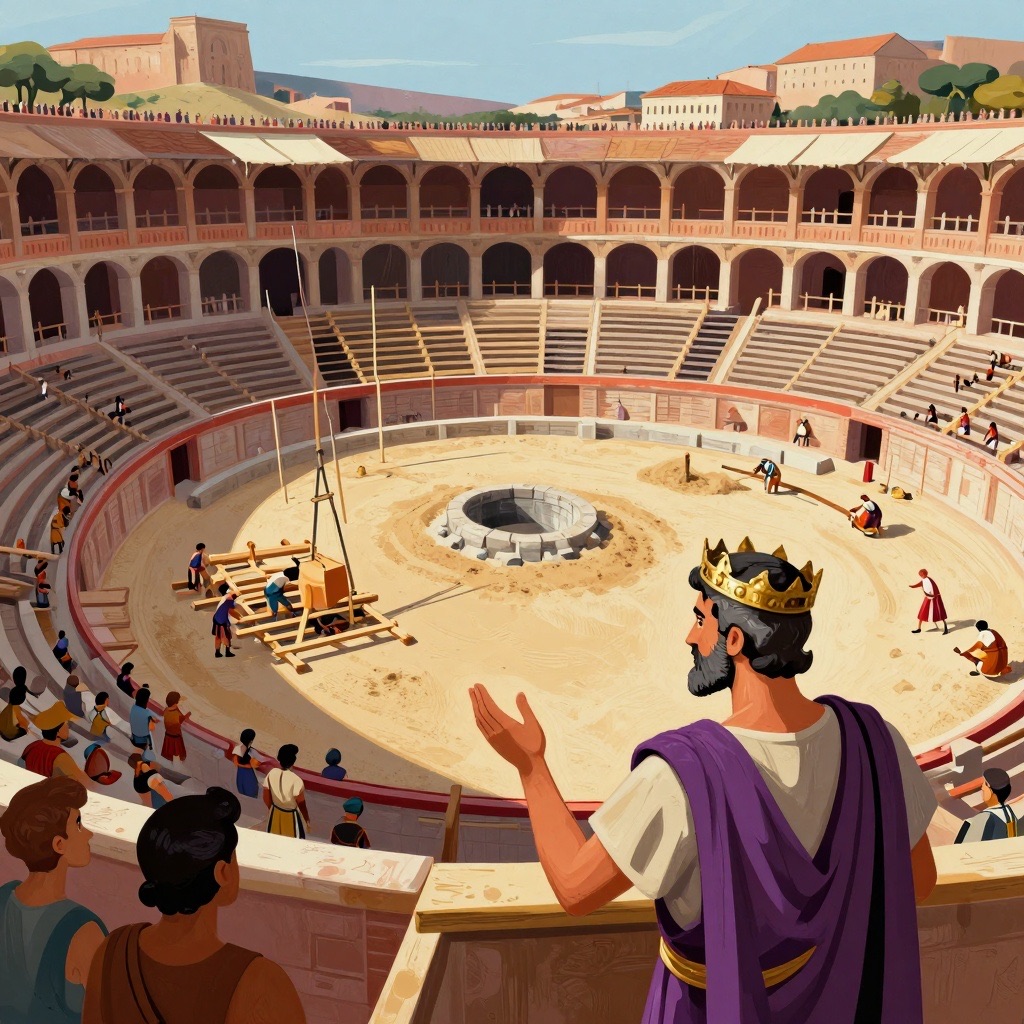
But Priscus was more than a clever politician. He rebuilt Rome. Where there had been mud huts on seven hills, he built the Circus Maximus for chariot races and public entertainment. He started construction on the Temple of Jupiter on the Capitoline Hill. He drained the swamps between the hills, creating the space that would become the Roman Forum. He expanded the Senate, bringing new families into the governing class.
His philosophy was simple: give people something to cheer for, and they won't kill each other. The approach worked for thirty-eight years. Then the axes came.
The Boy with Fire Around His Head
How did a servant's son end up positioned to inherit a throne? According to Roman tradition, it started with an omen that only Tanaquil was clever enough to interpret correctly.
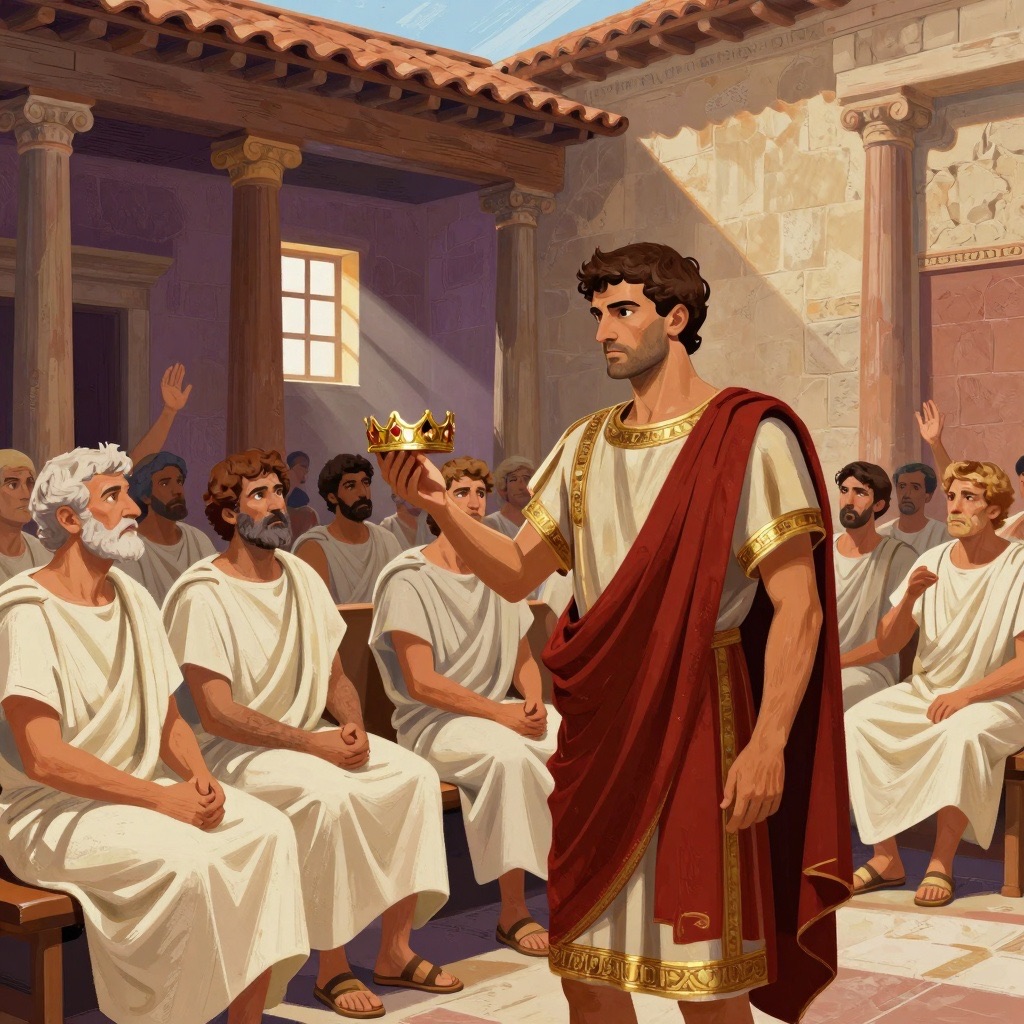
Years before Priscus was murdered, Tanaquil found flames dancing around the head of a sleeping boy in the palace. The child was the son of a servant woman, possibly a slave. Anyone else would have panicked and doused the flames. Tanaquil, trained in Etruscan religious traditions and skilled at reading omens, recognized the sign. This boy was destined for something.
She and Priscus raised the boy as their own. They educated him alongside their children, trained him in governance and war, and eventually married him to their daughter. Whether they always intended him to inherit the throne, or whether Tanaquil improvised brilliantly after her husband's assassination, the result was the same. A slave's son wore the crown.
The Romans themselves seemed uncertain what to make of this. Servius Tullius never received the formal approval of citizens that previous kings had enjoyed. He ruled, according to some accounts, without ever being properly elected. His legitimacy rested entirely on the royal family's support and the Senate's willingness to accept accomplished facts.
The Census and the Classes
What made Servius remarkable wasn't how he gained power. It was what he did with it. Previous Roman kings had been warriors or priests or politicians. Servius thought like an accountant.
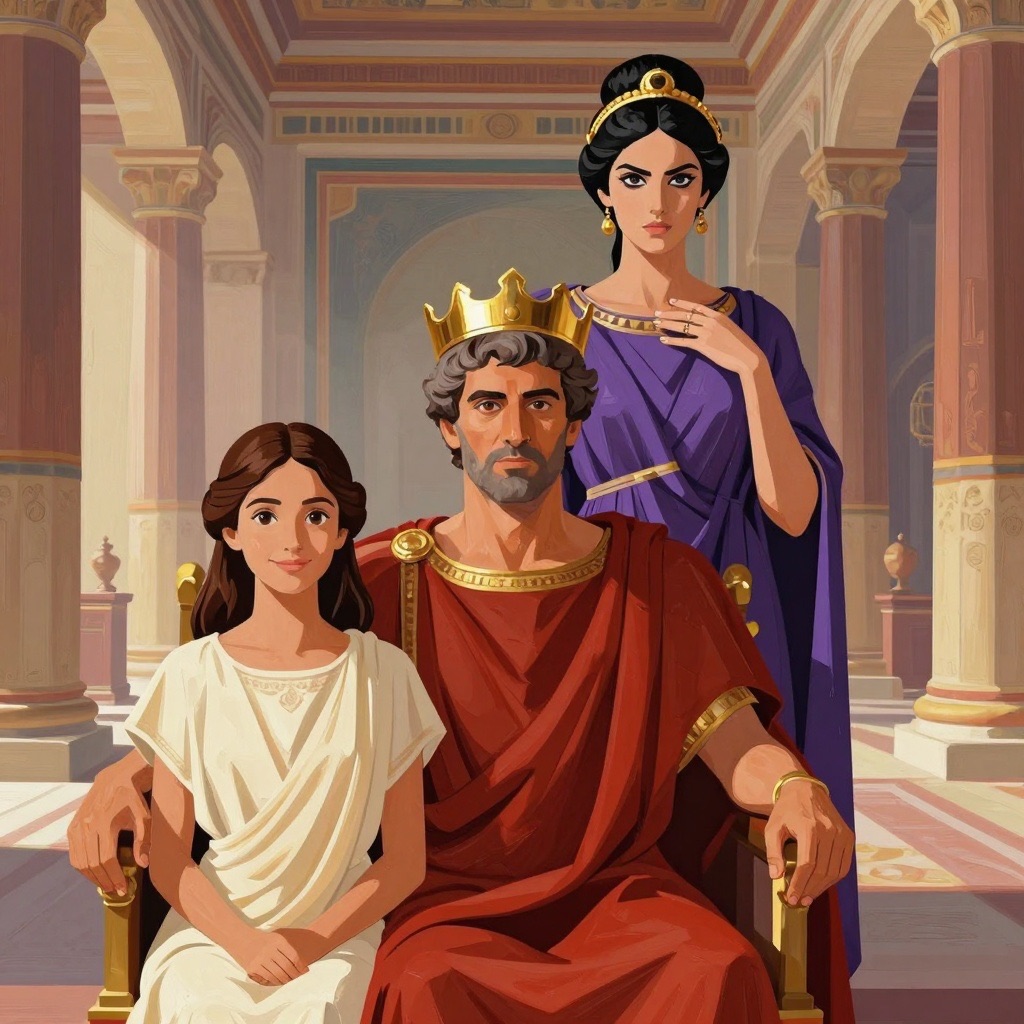
He conducted Rome's first census, counting every citizen and recording their property. Then he reorganized Roman society into classes based on wealth. The richest citizens formed the first class, equipped with full armor and stationed in the front lines of the army. The poorest formed the fifth class, armed with little more than slings and stones, positioned at the rear.
Cold? Yes. But it was also new.
Before Servius, Roman political participation depended primarily on birth. The old patrician families held power because their ancestors had held power. The system perpetuated itself through tradition, blood, and the vague justification that this was how things had always been done.
Servius replaced inherited status with measured wealth. If you owned enough property, you could participate in the assemblies regardless of your family background. Your vote weight corresponded to your economic stake in the community. The wealthy had more political power because they had more to lose and more to contribute in taxes and military service.
The system wasn't democratic. The poor had almost no voice. The wealthy dominated every decision. But it was organized. It created a framework that could be modified and reformed over centuries. The basic structure Servius established would survive until the end of the Roman Republic, nearly five hundred years later.
The Servian Constitution
Servius divided Roman citizens into 193 "centuries," voting units that determined both military organization and political participation. The wealthy provided more centuries (and thus more votes) because they provided more soldiers. A Roman could climb the social ladder by acquiring property, or fall by losing it.
He also reorganized Rome geographically, creating the first formal division of the city into territorial "tribes" that would eventually replace family-based organizations as the foundation of civic life. Citizens were registered by where they lived, not just by which clan claimed them.
The reforms addressed a fundamental problem that all ancient cities faced: how do you get people to fight for the community? Previous systems relied on personal loyalty to kings or clan chiefs. Servius made military service a civic duty tied to economic status. If you owned property in Rome, you had a stake in defending Rome. Your place in the army reflected your place in society.
Historians debate how much of this system Servius actually created and how much was attributed to him by later Romans who wanted an ancient founder for their institutions. The Romans had a habit of crediting their best ideas to ancient kings and lawgivers. But whether Servius invented these reforms entirely or merely began a process that later generations completed, Roman tradition credits him with creating the constitution.
The Servian Wall
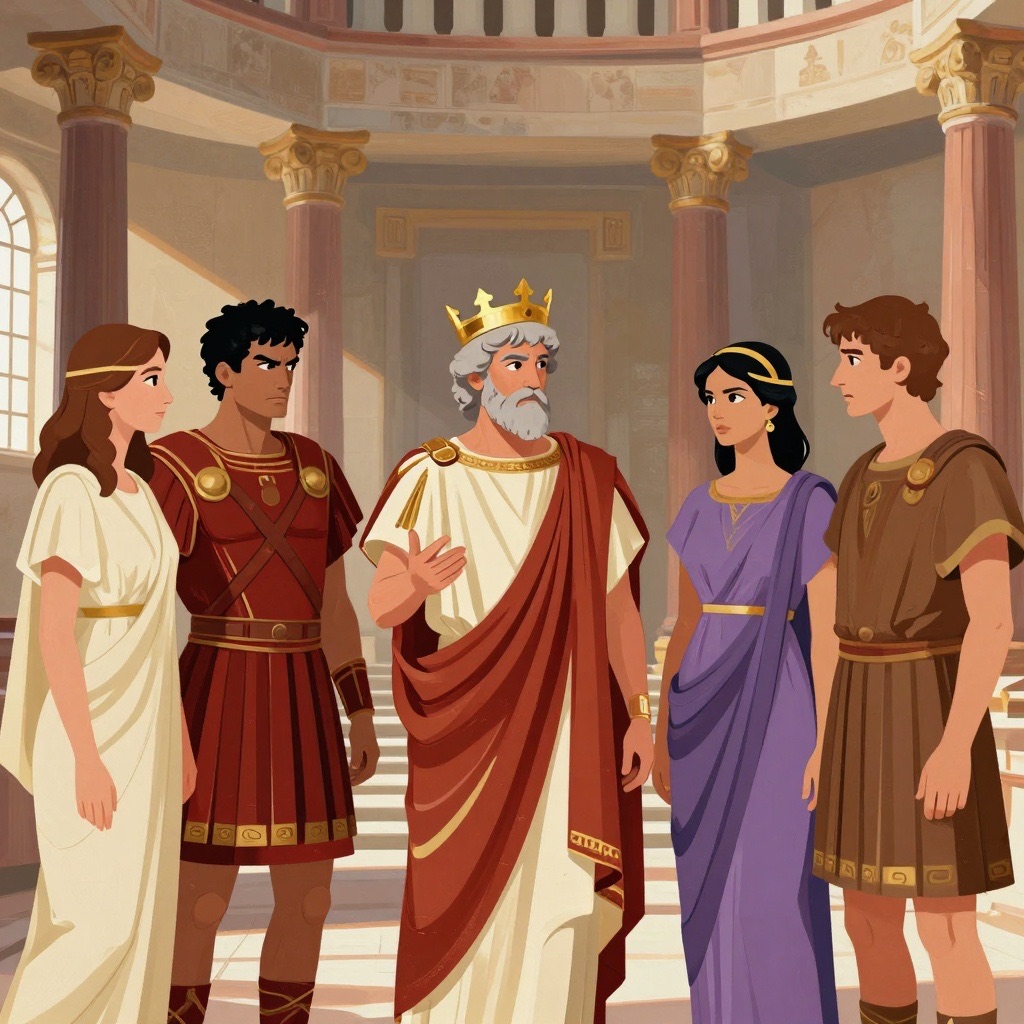
Servius also fortified Rome with the first comprehensive city wall, later known as the Servian Wall (though archaeologists believe much of the surviving wall dates to rebuilding after the Gallic sack of 390 BCE). The wall enclosed all seven hills, protecting a population that had grown substantially under his long reign.
Archaeological evidence suggests Rome expanded dramatically during the sixth century BCE. New temples, new public buildings, new residential districts. The city Servius defended was not the village Romulus had founded two centuries earlier. It was becoming a real power in central Italy, wealthy enough to attract both trade and enemies.
The wall defined who was inside Rome and who was outside. It marked the boundary between citizen and foreigner, between protected and exposed. In an age when most Italian towns were still unwalled clusters of huts, Rome was announcing its permanence.
Forty-Four Years of Peace
Servius Tullius reigned for forty-four years. Despite his irregular path to power, despite his servile origins, despite the violence that accompanied his succession, the Romans kept him as their king for nearly half a century.
The ancient sources describe him as beloved by the common people. He had given them representation they'd never possessed. He had counted them, organized them, and assigned them a place in the political order. For the poor of Rome, Servius was the king who acknowledged their existence.
But Servius made enemies where it mattered. The old aristocratic families resented his reforms. Elevating wealth over birth threatened their monopoly on power. And within his own household, ambition was breeding.
The Ambitious Daughter
Servius had two daughters. Both were named Tullia (Romans weren't creative with women's names). Ancient sources describe them in starkly contrasting terms: the elder was gentle and quiet, the younger was ambitious and ruthless.
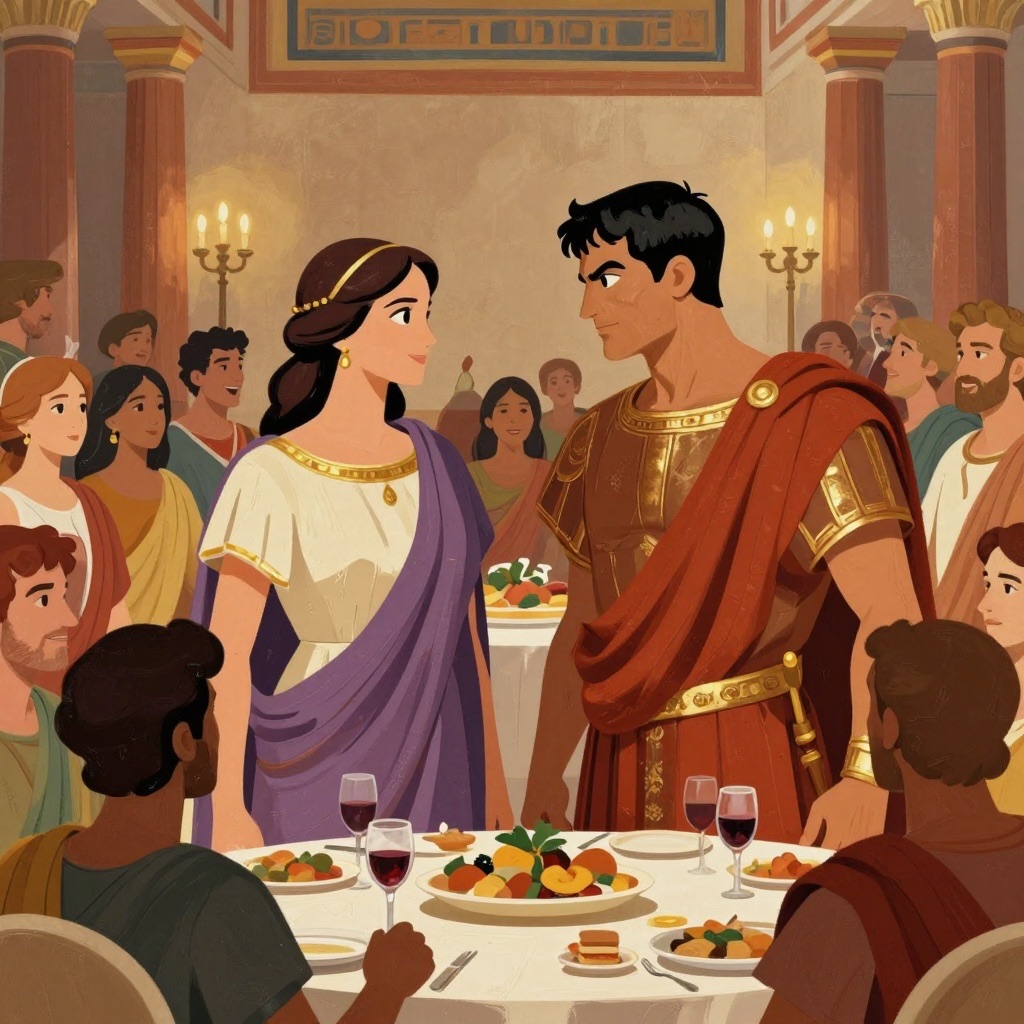
Servius tried to neutralize potential conflict through strategic marriages. He matched his gentle daughter with Lucius Tarquinius, the fierce grandson of Tarquinius Priscus. He matched his ambitious daughter with Arruns, Lucius's mild-mannered brother. Gentle with aggressive, ambitious with passive. Balance the family. Simple math.
The math failed.
The younger Tullia and Lucius Tarquinius recognized something in each other across crowded rooms. The same hunger. The same contempt for anyone standing in their way. The same willingness to do whatever it took.
Convenient Deaths
What happened next follows a pattern familiar from royal courts throughout history. The gentle ones died. Arruns took sick. The elder Tullia stopped breathing one night. Quiet deaths, convenient deaths, deaths that left no evidence and asked no questions.
Nobody could prove anything. But the coincidence was noted. The ambitious daughter and the ambitious grandson of the former king married each other, uniting the two people most likely to want Servius dead.
Servius was horrified. But he let the marriage happen. Keep your enemies close, he told himself. Keep your daughter where you can watch her. Parents always think they can control their children. They never can.
The Cold Eyes of His Daughter
Years passed. Servius grew old. He remained beloved by the common people, still trusted by the Senate. But something had changed in the palace.
Tullia had spent years studying her father's court. She knew which senators owed debts. She knew which could be bribed. She knew which could be threatened. Her husband Lucius had a claim to the throne through his grandfather Tarquinius Priscus. All they needed was an opportunity.
The ancient sources describe Servius noticing something in his daughter's eyes when she looked at him. Something patient. Something cold. The gaze of a predator waiting for the right moment.
He tried to secure the succession. He shored up alliances. He attempted to have the people formally confirm his rule after all these years. But he was old now, and they were young.
Death in the Senate
The end came suddenly. One morning, Lucius Tarquinius walked into the Senate wearing royal robes he had no right to wear. He sat on the throne and started issuing orders. When Servius arrived to confront the usurper, Lucius threw the eighty-year-old king down the steps of the Senate house.
Servius lay bleeding in the street. His servants tried to carry him home. They didn't make it. Lucius had sent men ahead.
The killers finished their work on a Roman street. The king who had given the common people a voice died in the dirt.
The Street of Crime
Then came the chariot.
Tullia had come to see her husband's victory. To ride through the streets as the new queen. When her driver saw the body in the road (her own father), he stopped. He couldn't do it. He wouldn't do it.
Tullia told him to drive.
The wheels of her chariot passed over what was left of Servius Tullius. The street where it happened became known as the Vicus Sceleratus, the Street of Crime. Romans would remember that name for centuries.
What Came After
Lucius Tarquinius took the throne and ruled as Tarquinius Superbus, "Tarquin the Proud." The name was not a compliment. He governed through terror for twenty-five years until his son's assault on a noblewoman named Lucretia triggered the revolution that ended the Roman monarchy forever.
But the system Servius created survived the kings. The census continued. The classes remained. The voting centuries persisted. When Romans established their Republic, they built it on the framework Servius had laid.
Later Romans revered Servius as one of their greatest kings. They credited him with transforming Rome from an aristocratic tyranny into something approaching a government of citizens. He gave the common people a stake in their community. He made wealth, not blood, the measure of civic participation.
Was this fair? No. The rich dominated the system completely. But it was organized, and it was a framework that could evolve. The Roman Republic that would eventually conquer the Mediterranean operated on principles Servius Tullius had established.
The slave's son who became a king died in the street, killed by his own family, his body crushed by his daughter's chariot wheels. But his institutions outlived his murderers by half a millennium.
The Historical Debate
Modern historians approach the story of Servius Tullius with appropriate skepticism. The supernatural omen of flames around a sleeping boy sounds like mythology. The perfectly evil daughter and perfectly calculating queen read like dramatic archetypes. The constitutional reforms credited to one king seem too sophisticated for sixth-century Rome.
Some scholars argue that "Servius Tullius" might represent an Etruscan ruler whose name was later Latinized. The Etruscan name Mastarna appears in some sources as potentially identical to Servius. Archaeological evidence of Etruscan influence in sixth-century Rome is substantial.
Others suggest that the reforms attributed to Servius were actually developed over centuries and retroactively credited to a single founding figure. Romans liked their history neat, with great men responsible for great innovations.
But whether Servius Tullius was one man or many, whether his story is history or legend, the Romans themselves believed it. They organized their Republic around institutions they credited to the slave king. They pointed to the Vicus Sceleratus and told their children what happened there. They used Servius as proof that Rome rewarded merit, that even a servant's son could become king through virtue and wisdom.
The story they told said something about who they wanted to be.
Frequently Asked Questions
1Was Servius Tullius really born a slave?
Roman tradition claims his mother was a servant or slave in the royal household, though some accounts suggest she was a noblewoman captured in war. The 'slave king' narrative may have been emphasized to show that Roman virtue could transcend circumstances of birth.
2What were the Servian reforms?
Servius reorganized Roman society based on wealth rather than birth. He conducted the first census, divided citizens into classes based on property ownership, created the centuriate assembly for voting and military organization, and established territorial tribes that formed the basis of civic identity.
3Did Servius Tullius really build the Servian Wall?
Tradition credits him with Rome's first comprehensive fortification, but archaeologists believe much of the surviving wall dates to the fourth century BCE, rebuilt after the Gallic sack of 390 BCE. Servius may have begun fortification efforts that were later expanded.
4How did Servius Tullius die?
According to Roman tradition, his son-in-law Lucius Tarquinius threw him down the Senate steps, then had him killed by assassins in the street. His daughter Tullia then drove her chariot over his body. The street became known as the Vicus Sceleratus ('Street of Crime').
5Why is Servius Tullius considered important?
He transformed Roman political organization from a system based primarily on aristocratic birth to one based on measurable wealth. His census and class divisions created the constitutional framework the Roman Republic would use for nearly 500 years.
Experience the Full Story
Hear the rise and fall of Rome's kings narrated by Lumo, including the tragic fate of Servius Tullius.


Listen to Related Stories
The Slave King
5 minThe cleverest queen I ever knew kept a dead man on the throne for days.

Listen to the Full Story
Experience history through immersive audio lessons narrated by Lumo, your immortal wolf guide.