When Laws Belonged to the Powerful
Before 450 BCE, Roman law was a secret. Not written, not codified, not available for ordinary citizens to consult. The laws existed only in the memories of patrician priests who interpreted them however suited their interests. If a patrician creditor wanted to claim a plebeian owed him more money than documented, he could. If a plebeian sought legal redress against a nobleman, the priests could conveniently "remember" that no such right existed.
This was power in its rawest form. The ability to define reality. To claim that tradition supported whatever the ruling class wanted it to support.
For decades, the plebeians (Rome's common citizens, the laborers and soldiers who built and defended the city) had demanded written laws. They wanted to know their rights. They wanted to point at something physical and say "Show me where it says that." The patricians refused. Why surrender an advantage that had served them so well?
Then, in 451 BCE, something broke. The plebeians threatened to abandon Rome entirely, taking their labor, their military service, their essential contributions to Roman society with them. The patricians, facing the collapse of their city, finally agreed to put the laws in writing.
What emerged from that crisis became the foundation of Western legal tradition. Twelve bronze tablets displayed in the Roman Forum, inscribed with laws that anyone could read. The Twelve Tables weren't perfect. They preserved class inequality in several provisions. But they established a principle that would echo through millennia: the law must be visible, knowable, and applicable to all.
The Crisis That Forced Change

The events leading to the Twelve Tables began with a fundamental power imbalance. Patricians controlled the Senate, the priesthoods, and the courts. They owned most of the land. Plebeians had numbers, but numbers meant nothing if you couldn't access the legal system that governed your life.
In 462 BCE, the tribune Gaius Terentilius Harsa proposed that a commission be established to write down the laws. The patricians responded with a decade of obstruction. They delayed, debated, filibustered, and distracted. Ten years passed with no progress.
The breakthrough came from an unlikely source: a delegation to Athens. Around 452 BCE, Roman envoys traveled to Greece to study the Solonian Constitution, the legal reforms that had transformed Athenian society. They examined how written law could function, how disputes could be resolved through transparent procedures rather than the arbitrary judgments of priests.
When the delegation returned, the political landscape had shifted enough to make change possible. In 451 BCE, normal magistracies were suspended and a commission of ten men (the decemviri legibus scribundis, "ten men for writing laws") were appointed to draft Rome's first legal code. These decemviri held supreme power, not subject to appeal, so they could work without political interference.
The first commission, led by Appius Claudius Crassus, produced ten tables of laws by the end of 451 BCE. But the work was incomplete. A second commission was appointed for 450 BCE to add two supplementary tables. This second commission, however, would abuse its power in ways that nearly destroyed the reform entirely.
What the Twelve Tables Actually Said
The Twelve Tables covered most aspects of Roman legal life. They weren't comprehensive by modern standards (Roman jurisprudence would develop for another millennium), but they established fundamental principles that had never been formalized before.
Tables I through III addressed court procedures and debt. They established that if someone was summoned to court, they had to appear. If they refused, they could be brought by force. Debtors were given thirty days to pay what they owed. After that, if unpaid, they could be held in chains for sixty days while their creditor publicly announced the debt three times, seeking someone to pay on their behalf. If no one stepped forward, the debtor could be sold into slavery or, according to the original text, even killed.
This sounds brutal by modern standards. It was brutal. But it was also transparent. Before the Tables, patrician creditors could make claims without documentation, stretch debts without limits, and punish defaulters according to whim. Now there were rules. Harsh rules, but knowable ones.
Table IV addressed paternal power (patria potestas), granting Roman fathers absolute authority over their families. "A dreadfully deformed child shall be killed" appears in this section, reflecting the harsh realities of ancient society. But even this power had limits. If a father sold his son into bondage three times, the son was automatically freed. The code acknowledged that even supreme authority could be abused.
Table V covered inheritance and guardianship. Women and minors required guardians for legal transactions. Property passed through the male line. These provisions reinforced patriarchal structures, but they also clarified them. Previously, inheritance disputes were resolved by whoever had more powerful friends. Now there were procedures.
Table VI established rules for property and a form of common-law marriage. If a man and woman lived together continuously for a year, they were legally married. The woman became part of the husband's family with the legal status of a daughter. This seems oppressive to modern readers, but it also provided legal protection. A woman in such a marriage couldn't simply be discarded. Her status was defined and enforceable.
Tables VII and VIII addressed property boundaries and private wrongs. Neighbors had obligations to maintain shared roads. Trees that fell onto another's property could be legally removed. Injury to a freeman resulted in specific penalties: three hundred coins for a broken bone. Injury to a slave: one hundred fifty coins. The distinction is uncomfortable, but the specification is revolutionary. Before this, injuries could be avenged through blood feuds. Now they had price tags.
Tables IX and X covered public law and religious matters. Capital punishment could only be imposed by the people's assembly. Judges who took bribes faced the death penalty. Bodies could not be buried or burned within the city limits. Excessive funeral displays were prohibited. These provisions reveal a society trying to balance traditional practices with civic order.
The Eleventh Table: Writing Inequality Into Law

The most controversial provisions appeared in Tables XI and XII, the supplementary tablets added by the second decemvirate. Among them: "Marriage shall not take place between a patrician and a plebeian."
Cicero, writing centuries later, called these last two tables "duae tabulae iniquarum legum" ("two tables of unjust laws"). The marriage ban was particularly galling. Before the Twelve Tables, intermarriage between classes existed in a legal gray area. Some patricians took plebeian wives. Some plebeian families had married into nobility. The relationships were complicated, but possible.
Now the prohibition was explicit. Carved in bronze. Displayed in the Forum for everyone to see. The patricians had agreed to write down the laws, but they'd used the opportunity to formalize their superiority.
This provision would not survive long. In 445 BCE, just four years after the Twelve Tables were promulgated, the tribune Gaius Canuleius proposed a law repealing the marriage ban. After intense debate, the lex Canuleia passed. The first crack in written patrician supremacy.
But the willingness to include such a provision reveals something important about the Twelve Tables. They were a compromise, not a revolution. The plebeians got transparency. The patricians got to encode many of their privileges into permanent law. Both sides won something. Neither got everything.
The Fall of the Decemviri

The second decemvirate, which added Tables XI and XII, refused to give up power after completing their work. Led by Appius Claudius, the same man who had chaired the first commission, they attempted to make their extraordinary authority permanent. They cancelled elections. They ruled as tyrants.
The crisis came to a head through an event that echoed the founding of the Republic itself. Appius Claudius desired a plebeian woman named Verginia, the daughter of a respected centurion and betrothed to Lucius Icilius, a former tribune. When Verginia rejected his advances, Appius had one of his clients claim she was actually a slave. He intended to use his power as decemvir to adjudicate the case himself.
Verginia's father, Verginius, saw no way out. If Appius ruled against his daughter, she would be enslaved and violated. So Verginius took a knife and killed his own daughter in the Forum rather than let her fall into the decemvir's hands.
The parallel to Lucretia, whose death had ended the monarchy sixty years earlier, was unmistakable. Roman historians recorded the story as deliberate mirror: another woman's death exposing tyranny, another outrage demanding revolution.
The plebeians withdrew from Rome in what would be called the Second Secession of the Plebs. They marched to the Sacred Mount, taking the army with them. They refused to negotiate until every decemvir was removed from power.
The Senate, facing the collapse of the state, capitulated within days. The decemvirs were overthrown. The tribunes of the plebs were restored. Appius Claudius was arrested, thrown in prison, and killed himself before his trial.
Bronze Tablets in the Forum
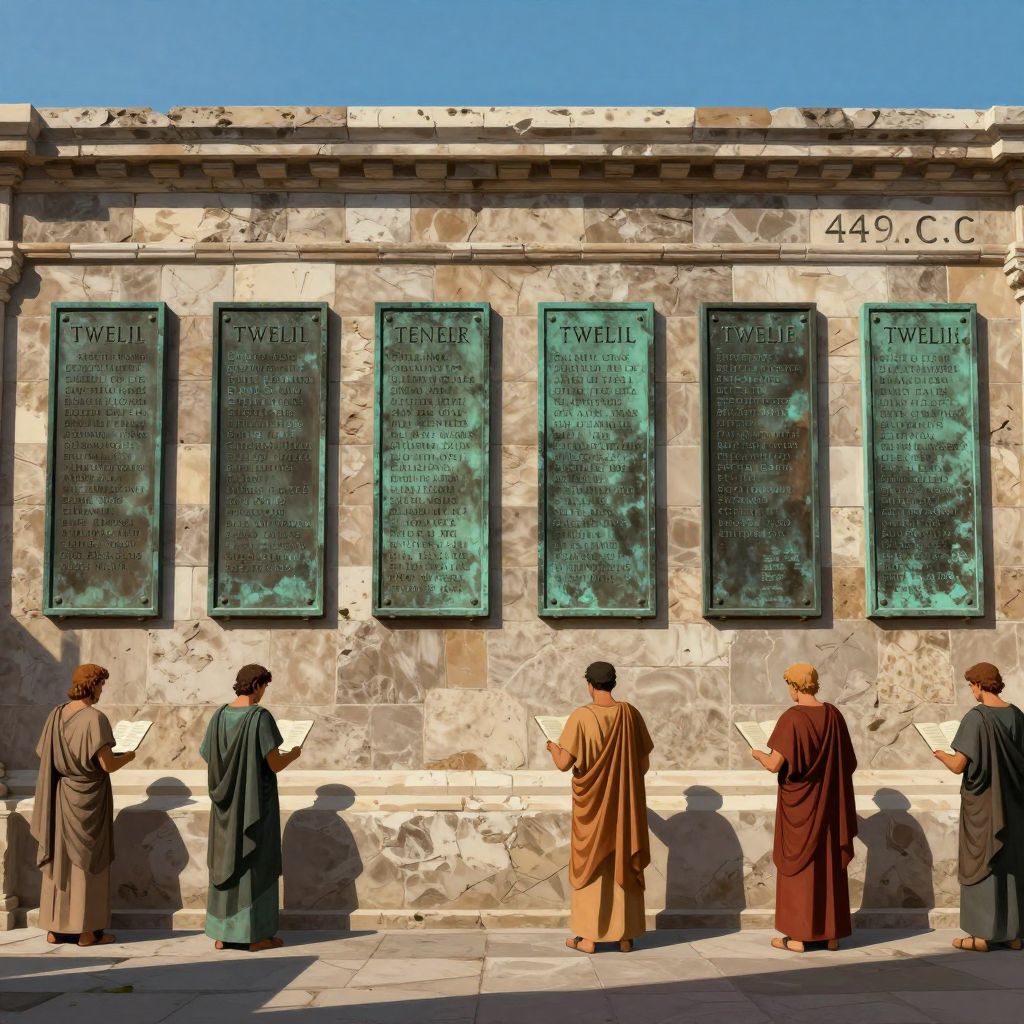
After the fall of the decemviri, the law code was revised with plebeian input and finally promulgated in 449 BCE. Twelve bronze tablets were erected in the Roman Forum, in the heart of the city, where anyone could see them.
The psychological impact is hard to overstate. For generations, Romans had lived under laws they couldn't verify. Patricians claimed authority for positions that might or might not have traditional support. Priests interpreted religious obligations that might or might not exist. Now, you could walk to the Forum and check.
"Show me where it says that" became possible. If a patrician claimed the law required something, a plebeian could point at the bronze and demand proof. If a magistrate overstepped his authority, citizens could cite the specific tablet that constrained him.
Roman boys were required to memorize the Twelve Tables as part of their education. Cicero, writing in the first century BCE (four hundred years after their creation), reported that students still learned them by heart. The tablets had become more than law. They were civic scripture, the foundational text of Roman identity.
The original bronze tablets were reportedly destroyed when the Gauls sacked Rome around 390 BCE. But copies existed throughout the city, and the text had been committed to memory by generations of students. The Twelve Tables survived the destruction of their physical form because they had become part of Roman consciousness.
Limitations and Legacy
The Twelve Tables didn't solve class conflict in Rome. Patricians still controlled the Senate, the major priesthoods, and most of the land. The tribunes could veto legislation, but they couldn't force change. The struggle between patricians and plebeians (the "Conflict of the Orders") would continue for another two centuries.
But the Tables established precedents that proved impossible to reverse. Written law. Public access. Transparent procedures. The principle that even the powerful were subject to documented rules.
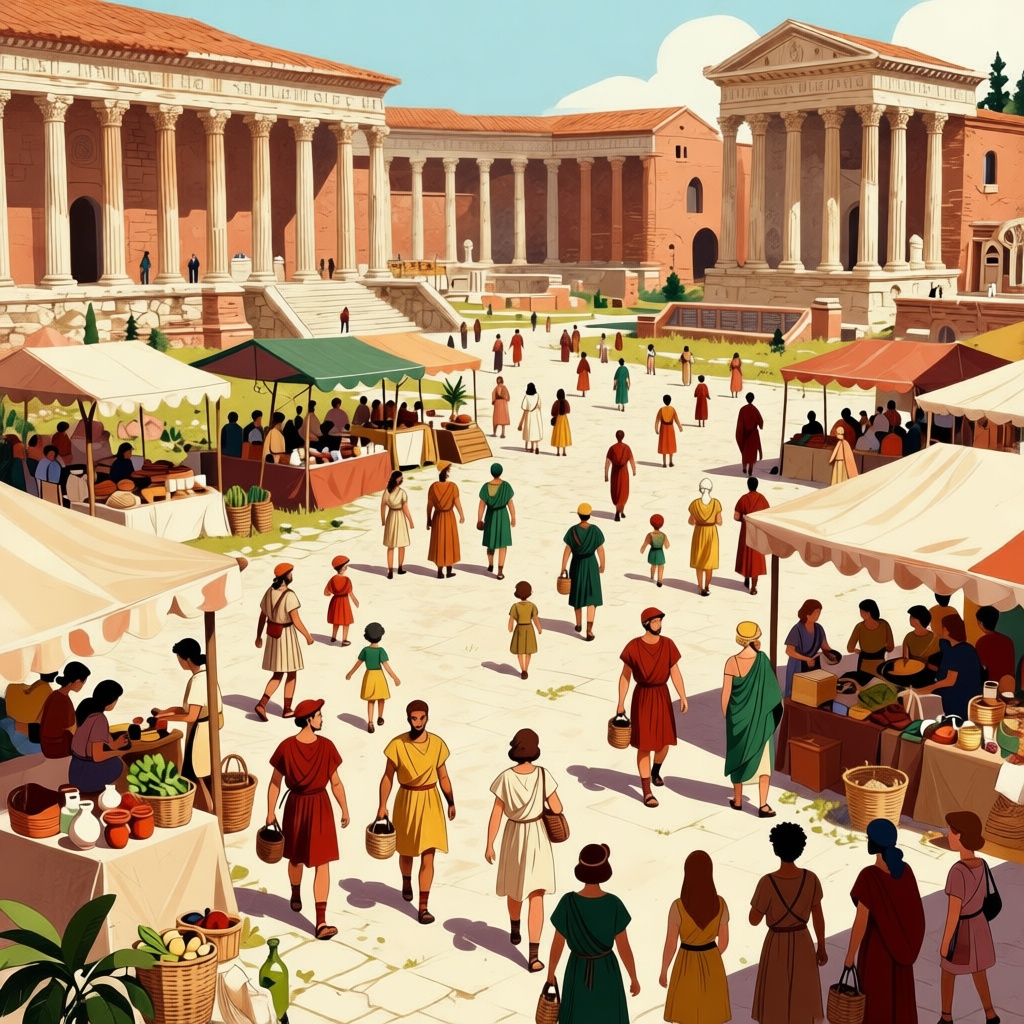
Roman jurisprudence would develop far beyond these twelve tablets. Praetors' edicts, senatorial decrees, imperial constitutions, and the writings of jurists would create a legal system of extraordinary sophistication. But jurists always traced their tradition back to the Twelve Tables. Later compilations (most notably Justinian's Corpus Juris Civilis in the sixth century CE) would explicitly reference the Tables as the starting point of Roman law.
Through Justinian's compilation, the principles of the Twelve Tables influenced European legal development for the next fifteen hundred years. Civil law systems across continental Europe, Latin America, and much of Asia trace their intellectual heritage through Roman law back to these bronze tablets. The idea that law should be written, published, and accessible to all citizens didn't originate with the Twelve Tables, but their success in Rome ensured that idea would spread throughout the Western world.
From Tablets to Tradition
The Twelve Tables represented a particular moment in Roman history: the point where social pressure forced transparency, where the powerful agreed (under duress) to limit their own arbitrary authority. The tablets themselves were tools, physical objects that could be pointed to, memorized, cited in disputes.
But the lasting impact came from what the Tables represented rather than their specific provisions. Most of their particular laws became obsolete within centuries. Marriage law changed. Debt provisions were reformed. The brutal punishments were softened. What survived was the principle: that law gains legitimacy through visibility, that citizens have the right to know the rules that govern them, that power exercised in secret is power that invites abuse.
The plebeians who marched to the Sacred Mount in 449 BCE wanted specific reforms. They got them. But they also established something larger: the expectation that legal systems should be transparent. That expectation proved more durable than any bronze tablet.
When the Gauls burned Rome in 390 BCE, the original Twelve Tables were lost to fire. But by then, every Roman schoolchild had memorized them. The laws had become something more powerful than bronze: they had become tradition. And tradition, unlike tablets, cannot be destroyed by sacking a city.
Frequently Asked Questions
1What were the Twelve Tables?
The Twelve Tables (lex duodecim tabularum) were Rome's first written law code, created in 451-450 BCE and formally promulgated in 449 BCE. They were inscribed on twelve bronze tablets and displayed in the Roman Forum, making Roman law publicly accessible for the first time.
2Why were the Twelve Tables created?
Before the Tables, Roman law existed only in the memories of patrician priests who could interpret it however they wished. Plebeians demanded written laws they could consult and cite. After decades of political struggle, including the threat of plebeian secession, the patricians finally agreed to codify Roman law.
3What happened to the original Twelve Tables?
The original bronze tablets were reportedly destroyed when the Gauls sacked Rome around 390 BCE. However, the text survived because Roman boys memorized the Tables as part of their education, and copies existed throughout the city. Cicero reported that students were still learning them by heart four centuries later.
4Did the Twelve Tables give plebeians equality?
No. The Tables preserved many patrician privileges, including a ban on intermarriage between classes in Table XI. However, they did establish that laws must be written and public, which gave plebeians legal standing they previously lacked. The marriage ban was repealed just four years later in 445 BCE.
5How did the Twelve Tables influence modern law?
The Twelve Tables established the principle that law should be written, published, and accessible to citizens. Roman law, tracing back to the Tables, was compiled by Emperor Justinian in the 6th century CE and became the foundation for civil law systems across Europe, Latin America, and much of Asia.
6Who were the decemviri?
The decemviri ('ten men') were commissioners appointed in 451-450 BCE to write Rome's laws. The first commission produced ten tables; a second commission added two more. The second decemvirate, led by Appius Claudius, attempted to hold power permanently and was overthrown after the scandal involving Verginia.
Experience Ancient Rome
Hear the story of Rome's legal revolution as told by Lumo, from the abuse of power that sparked the crisis to the bronze tablets that changed everything.


Listen to Related Stories
Words on Bronze
4 minRome sent envoys to the Sacred Mountain. Icilius refused to meet them.

Listen to the Full Story
Experience history through immersive audio lessons narrated by Lumo, your immortal wolf guide.