Two Roman consuls. An entire army. Thousands of Rome's best soldiers trapped like sheep in a mountain pen. And not a single sword drawn in combat.
The Caudine Forks in 321 BCE was not a battle. It was a trap so perfect that Rome's military machine simply stopped working. No room to form lines. No way to climb the cliffs. No options except surrender and humiliation at the hands of mountain warriors Rome had dismissed as backward hill tribes.
The soldiers who walked out of that pass were not the same men who walked in. And Rome would spend the next century making sure the Samnites paid for every minute of it.
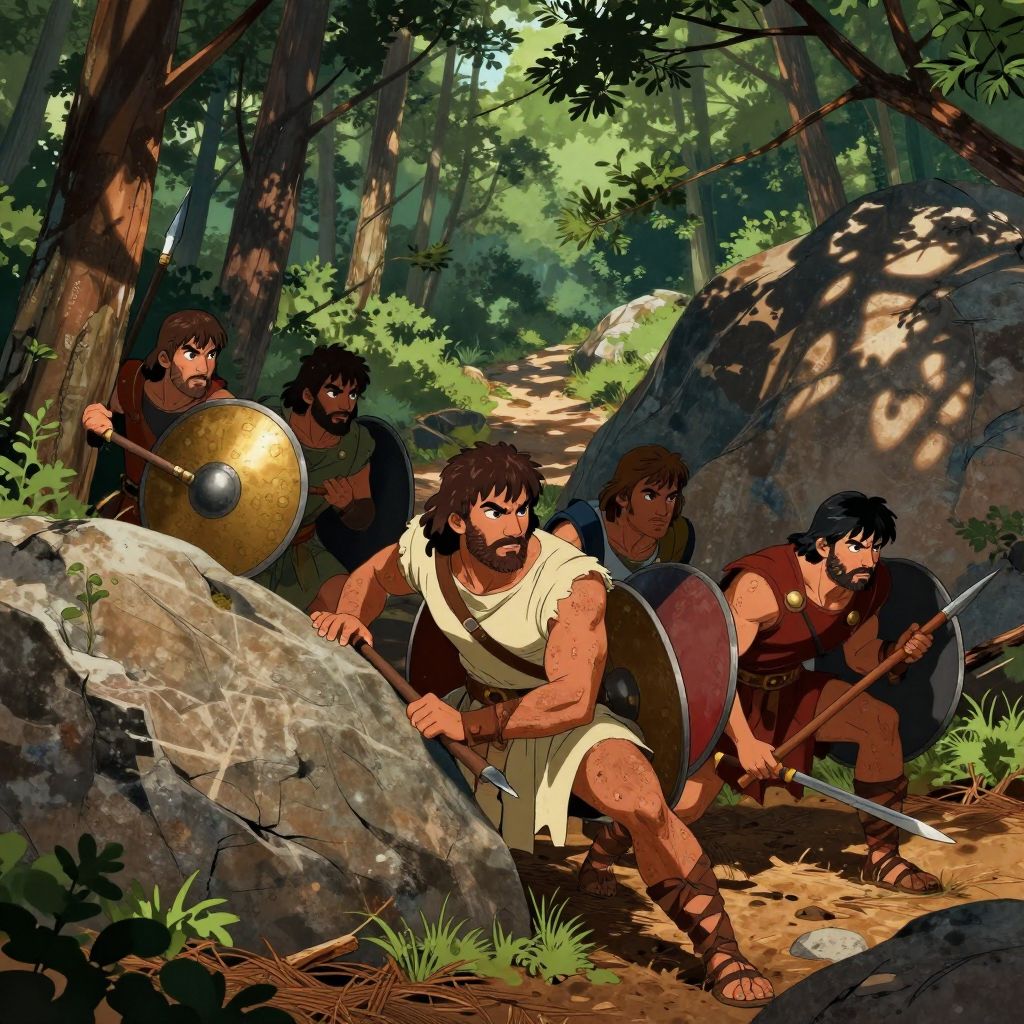
The Samnites: Warriors Rome Couldn't Break
By 321 BCE, Rome had already fought one inconclusive war against the Samnites and was deep into a second. These were not enemies Romans liked fighting. The Samnites lived in the Apennine Mountains, the rocky spine running down the Italian peninsula, a landscape of narrow valleys and sheer cliffs where standard Roman tactics fell apart.
Samnite warfare was frustrating. They didn't stand in neat lines waiting to be ground down by Roman discipline. They ambushed. They retreated. They disappeared into terrain that swallowed Roman columns whole. Their warriors were tough, patient, and knew every rock and goat path in mountains that Romans could barely navigate.
The First Samnite War (343-341 BCE) had ended inconclusively when Rome faced a Latin rebellion and had to redirect its legions. The Second Samnite War started in 326 BCE and was supposed to finish the job. By 321 BCE, five years in, Rome was getting impatient.
The trigger for disaster was Luceria, a Roman ally on the eastern side of Italy. Word reached the Roman consuls that Samnites were threatening the city. The consuls for that year, Titus Veturius Calvinus and Spurius Postumius Albinus, decided to march with a full consular army, somewhere between 15,000 and 20,000 men including allies.
The intelligence about Luceria was fabricated. According to the Roman historian Livy, the Samnite commander Gaius Pontius had sent soldiers disguised as shepherds to spread false reports. The Roman consuls, eager for a fight, swallowed the bait and chose the fastest route to Luceria, a path through a narrow mountain pass called the Caudine Forks.
The Trap

The Caudine Forks, near the town of Caudium (modern Montesarchio in Campania), was a natural chokepoint. Two narrow passes connected by a broader basin, surrounded by steep mountain walls. To reach Luceria by the quick route, the Romans had to march through.
They entered the first defile without trouble. Crossed the basin. Reached the second pass on the far side. It was blocked. Felled trees. Boulders. Fresh-cut timber piled across the narrow gap.
The consuls ordered the column to turn around. The army marched back to the first pass, the entrance they had come through hours earlier. Also blocked. Samnite warriors lined the ridges on both sides, watching.
The Romans were penned in a basin with walls they couldn't climb, passes they couldn't force, and an enemy they couldn't reach. There was no room to deploy their battle lines. They couldn't charge uphill against men throwing javelins down. The Samnites didn't even need to attack. They just had to wait.
The Romans had marched light, planning to resupply at Luceria. Food ran low. Water was limited. Morale collapsed. Day after day, the soldiers watched the ridges above them, helpless, as Samnite warriors prepared to kill anyone who tried to climb out.
The consuls had to negotiate.
The Old Man's Warning
Gaius Pontius had achieved what generals dream about: total victory without battle. An entire Roman army at his mercy. But he wasn't sure what to do with it.
According to Livy, Pontius sent for his father, Herennius Pontius, an elderly statesman considered the wisest man in Samnium. When Herennius arrived at the ridge overlooking the trapped Romans, his son asked what should be done.
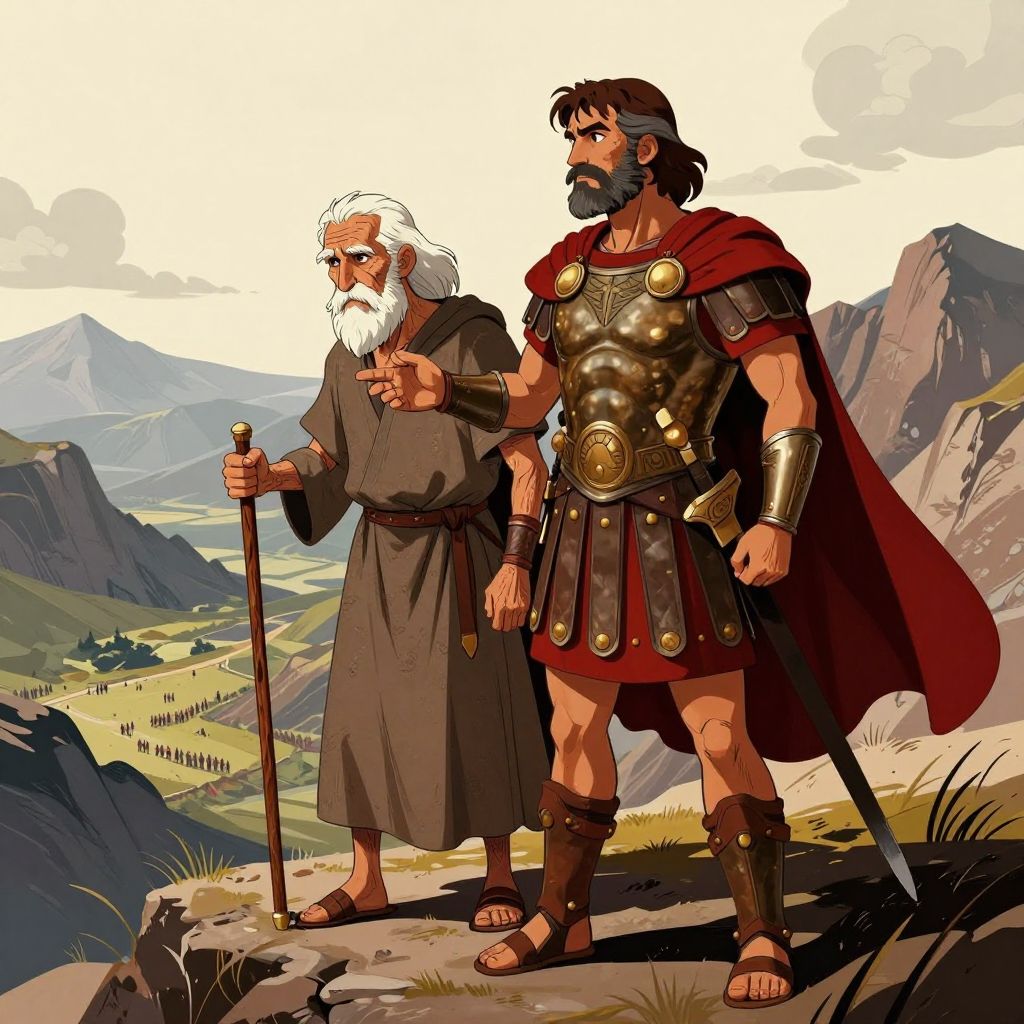
The old man's first advice was counterintuitive: release them. Every soldier, unharmed, with honor intact. Send them home with goodwill. Such generosity, Herennius argued, would bind Rome to Samnium with gratitude rather than conquest. Rome would remember the mercy and become a friend.
Gaius Pontius rejected this. Too soft. How could he just let them walk away after years of fighting?
His father offered the opposite: kill them all. Every Roman soldier, from the consuls down to the last auxiliary. A massacre this size would cripple Rome for a generation. They couldn't replace an entire consular army. The loss of two consuls, hundreds of experienced officers, thousands of trained soldiers would leave Rome unable to wage offensive war for years.
Pontius found this equally distasteful. Maybe he was reluctant to commit mass slaughter. Maybe he couldn't stomach killing helpless men in cold blood. Maybe he just didn't have the cruelty for it.
He asked about a middle way. Humiliate them and let them go. Force a public surrender, impose harsh terms, send them home in disgrace.
Herennius's response was blunt: there is no middle way with Rome. You will not win their friendship. You will not destroy their power. You will create an enemy that will never stop until it has destroyed you.
Gaius Pontius ignored his father and chose the middle way.
Under the Yoke
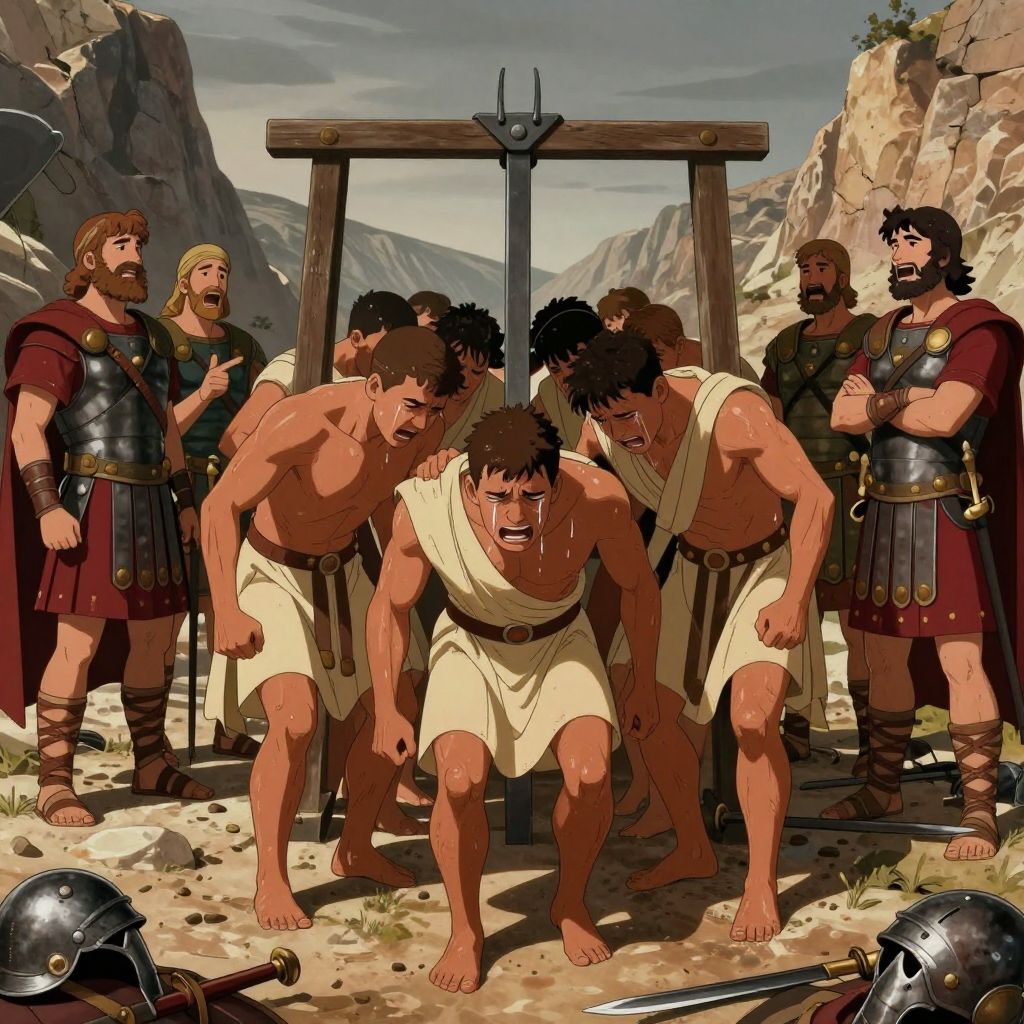
The terms Pontius imposed were harsh but not unprecedented. The Romans would surrender their weapons and armor. They would agree to withdraw their colonies from Samnite territory, including Fregellae and Cales. They would sign a peace treaty on Samnite terms. Six hundred Roman equites would be handed over as hostages.
But the final condition was the one that would burn in Roman memory for centuries: the entire army, starting with the two consuls, would pass under the yoke.
The yoke was simple. Three spears lashed together. Two stuck upright in the ground about five feet apart. The third tied horizontally across their tops, low enough that men had to bend nearly double to pass beneath. It was the posture of an animal. A slave. A creature that existed only at the sufferance of its conquerors.
The consuls went first. Titus Veturius Calvinus and Spurius Postumius Albinus, the highest commanders Rome had in the field, stripped of armor and insignia, bent low and shuffled beneath the spears. Then the legates. The tribunes. The centurions. Then rank after rank of legionaries, thousands of them, each one stooping while Samnite warriors lined both sides of the path.
Some Samnites laughed. Some mocked. Some stood in silent satisfaction. The procession took hours. Thousands of men. The Romans emerged stripped of everything that had made them soldiers. Their weapons lay in piles behind them. Their armor gleamed in heaps. Their pride was ground into the mountain dirt.
Ancient sources say Roman soldiers wept openly as they passed beneath the yoke. Not tears of fear, but of shame. These were men who had faced death in battle without flinching. This ritual degradation broke them in ways combat never had.
The Walk Back to Rome
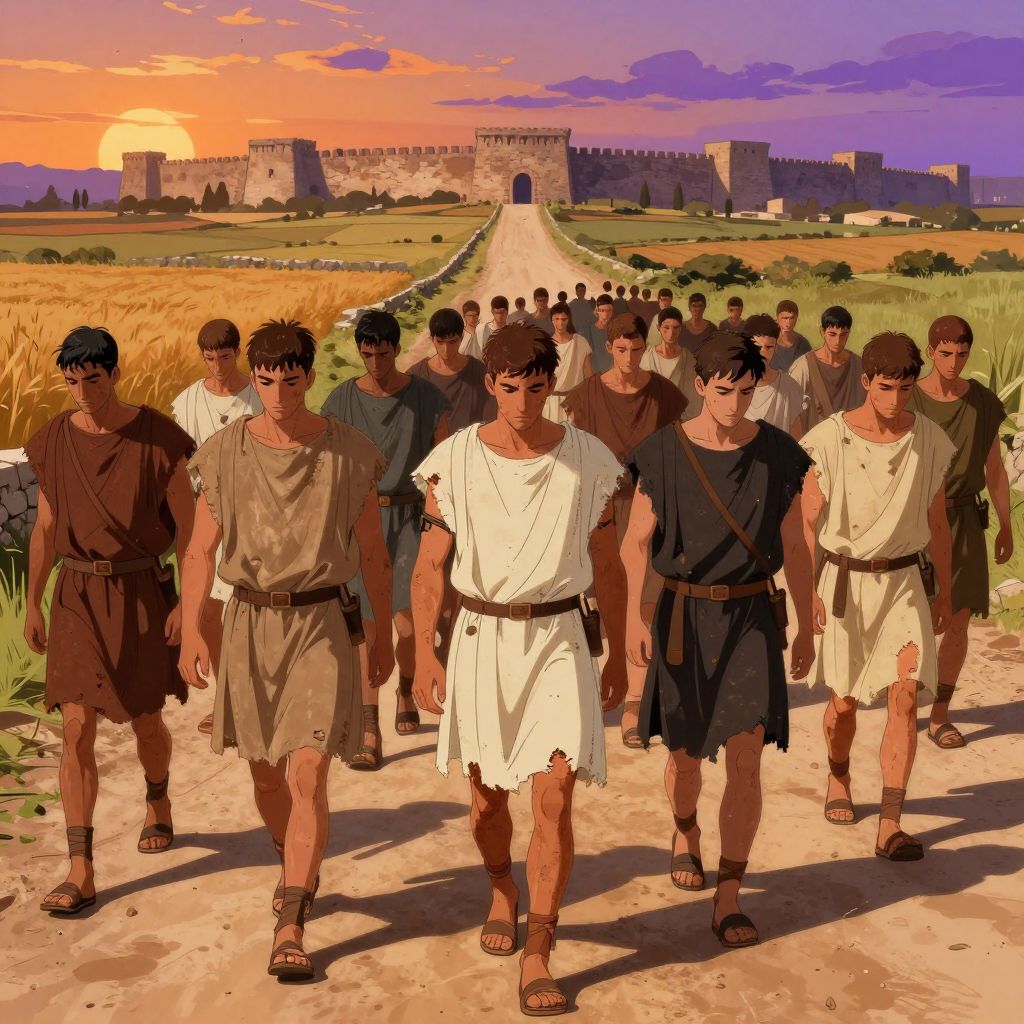
The march back to Rome was a walk through purgatory. The soldiers moved in near-total silence. No marching songs. No conversation. They passed through the Italian countryside like ghosts, visible to everyone who saw them, a procession of shame walking home.
Word of the disaster reached Rome before the survivors did. The news spread through the city like disease. When the defeated army finally arrived at the gates, they found Rome in mourning. Shops had closed. The Forum stood empty. Citizens stayed indoors, unwilling to witness their army's humiliation made flesh.
The survivors disappeared into their homes and refused to come out. They wouldn't attend public gatherings. They wouldn't speak of what happened. They avoided their neighbors' eyes. For days, Rome existed in a strange suspended state, everyone knowing what had occurred but no one willing to address it.
The Senate met behind closed doors. No records survive of what was said.
Rome Refuses
The peace treaty presented a constitutional problem. Treaties required ratification by the Senate and people. The consuls had agreed to terms under duress, trapped and facing death, without proper authorization. Did such an agreement bind Rome?
Spurius Postumius Albinus, one of the humiliated consuls, argued it did not. The guarantee had been given without authorization from the Roman people. Rome could resume the war, provided it returned what rightfully belonged to the Samnites: the persons of those who had made the promise.
The Senate agreed. The consuls and the other officers who had sworn to the peace were stripped of their ranks. They were bound and delivered to the Samnites by the fetiales, the priests who handled matters of war and peace. Rome was offering its own commanders as sacrifices to void a treaty it found intolerable.
Gaius Pontius refused them. He understood the game. By handing over the guarantors, Rome was creating a legal fiction to repudiate the treaty while claiming technical compliance. Pontius rejected the maneuver, insisting that if Rome wouldn't honor the peace, there would be no peace.
The war resumed. But it was a different war now. Rome fought with a cold fury. Within a few years, the Roman general Lucius Papirius Cursor forced a Samnite army to pass under a Roman yoke in deliberate retaliation. The humiliation was not forgotten. It was returned.
The Lesson Rome Learned
The Caudine Forks became permanent shorthand for disaster. For centuries, the phrase referenced any humiliating defeat. Roman writers from Livy to Cicero used it as the standard against which other catastrophes were measured.
The shame did not fade. If anything, it intensified as Rome grew powerful. The mightier Rome became, the more inconceivable it seemed that Romans had once crawled beneath enemy spears. Each new conquest was both compensation for and reminder of that day in 321 BCE.
Modern historians debate how much of Livy's account is accurate. The dialogue between Herennius and his son has the structure of a moral fable, warning against half-measures. Some scholars think it was invented by later Roman writers explaining why the Samnites lost: they had the chance to befriend Rome or destroy it and chose neither.
But the core facts are not seriously disputed. A Roman army was trapped at the Caudine Forks. It surrendered. It passed under the yoke. Rome did not forget.
The Samnite Wars continued for decades. The Third Samnite War (298-290 BCE) ended with Rome's victory and the absorption of Samnium. The Samnites fought against Rome again during the Social War of 91-88 BCE, still chasing the independence their ancestors had nearly won. They backed Rome's enemies during Sulla's civil war and were destroyed for it. By the end of the Roman Republic, the Samnites had essentially ceased to exist as a people.
Herennius Pontius was right. There is no middle way with Rome.
What Humiliation Does
The Caudine Forks offers something of a case study in military psychology. The Romans lost no soldiers to enemy weapons that day. The army that passed under the yoke walked back to Rome largely intact. In material terms, the defeat was recoverable.
The psychological damage was something else. The humiliation of the yoke created a debt Rome felt compelled to repay with interest. The shame became fuel. Rome's refusal to accept the treaty, its repudiation of terms agreed to under duress, its campaigns of vengeance, all flowed from that experience of powerlessness.
This pattern repeated throughout Roman history. Rome lost battles. Rome suffered setbacks. The Gauls sacked Rome itself in 390 BCE. Hannibal destroyed a Roman army of perhaps 80,000 at Cannae in 216 BCE. In some ways Cannae was worse. But even Cannae didn't break Rome's will.
The Caudine Forks stood apart because of its particular humiliation. Death in battle was honorable. Surrender and degradation were not. The Romans who passed under the yoke did not merely lose. They were unmade as soldiers, forced to acknowledge with their own bodies that they had been conquered.
For the Samnites, victory proved hollow. They won without fighting, achieved everything a commander could want, and still lost the war. The lesson, if there was one, was the lesson Herennius tried to teach his son: some enemies cannot be merely defeated. They must be either made into friends or removed entirely. Half-measures create grudges that grow.
Rome learned this well. In later conflicts, Rome became notoriously ruthless. The destruction of Carthage in 146 BCE. The razing of Corinth. The treatment of Judea. Rome developed a reputation for total war that made enemies reconsider before provoking Roman anger.
Some of that ruthlessness was born in a mountain pass in 321 BCE, when Rome learned what it felt like to be helpless, and decided never to feel that way again.
Frequently Asked Questions
1Was the Battle of Caudine Forks actually a battle?
No. Despite the name, there was no fighting. The Roman army was trapped in a mountain pass and forced to surrender without combat. The Samnites won through superior positioning and deception rather than military engagement.
2What was passing under the yoke and why did it matter?
The yoke was three spears arranged so that defeated soldiers had to bend nearly double to pass beneath. For Romans, who prized military dignity above almost everything, this ritual was a devastating psychological blow. Soldiers reportedly wept during the procession.
3Did Rome honor the peace treaty?
No. The Senate refused to ratify it, arguing it had been signed under duress without proper authorization. Rome offered to surrender the consuls who signed it, but the Samnites refused to accept this as valid, and the war resumed.
4What did Herennius Pontius advise?
He gave two options: release the Romans with full honors to win their friendship forever, or kill them all to cripple Rome's military for a generation. He warned against anything in between. His son ignored him and chose humiliation.
5What happened to the Samnites?
Rome eventually won the Samnite Wars in 290 BCE. The Samnites continued resisting on and off until Sulla's civil war in the 80s BCE, when they backed the losing side and were effectively destroyed as a people.
Experience Rome's Story
Hear the full story of Rome's rise through defeats and triumphs, narrated by Lumo, the immortal wolf who witnessed it all.


Listen to Related Stories
Under the Yoke
4 minTwo legions walked into those mountains. None of them came back the same.

Listen to the Full Story
Experience history through immersive audio lessons narrated by Lumo, your immortal wolf guide.