A Patrician With Empty Pockets
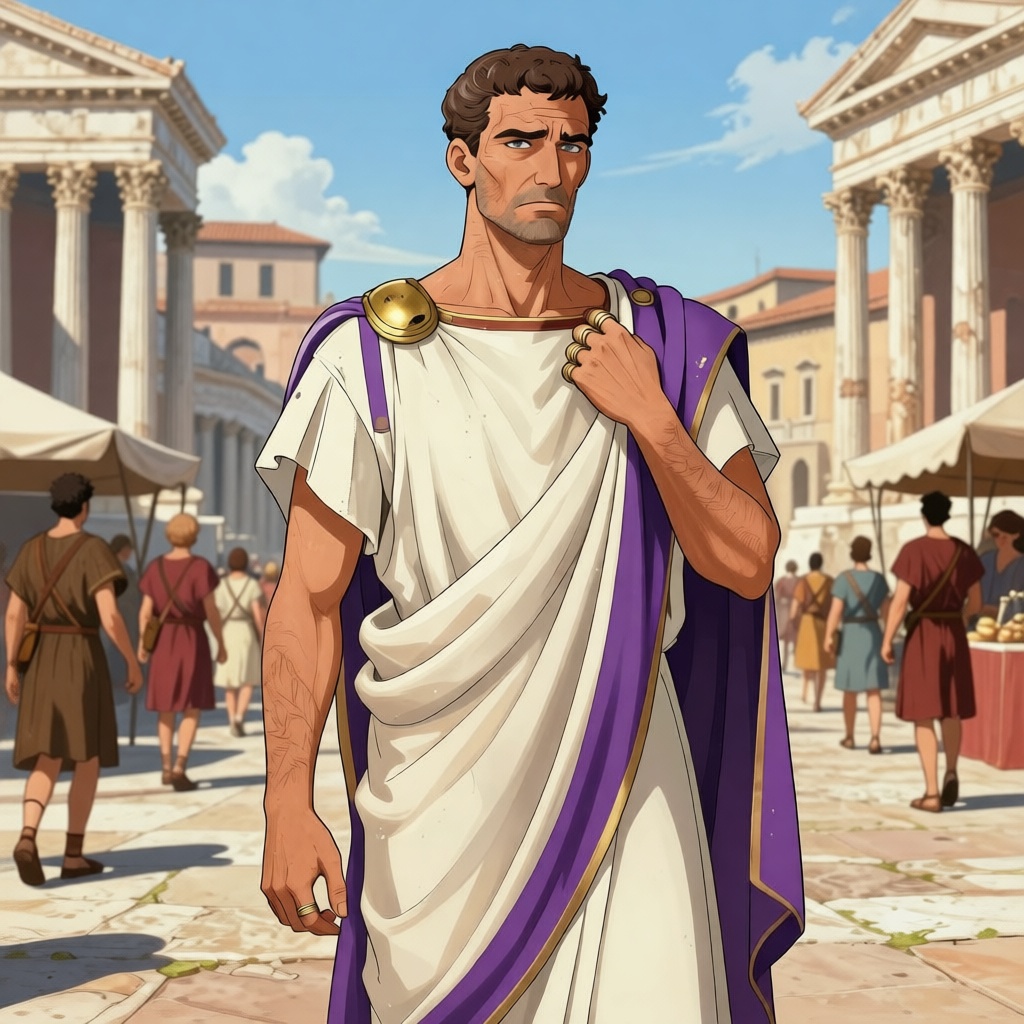
Lucius Sergius Catilina came from one of Rome's oldest families. The Sergii traced their lineage back to Sergestus, a companion of Aeneas himself. For centuries, his ancestors had held the highest offices.
By 63 BCE, none of that mattered. Catiline was broke.
He had expensive tastes and the debts to prove it. He owed money to half the Senate. He had lost two consecutive elections for the consulship, the highest executive office in Rome. Each campaign had cost a fortune he didn't have, borrowed against a future that kept refusing to arrive.
At 45 years old, Catiline faced a choice: accept his fall from patrician glory, or burn the system down.
He chose fire.
The Conspiracy Takes Shape
Catiline gathered an army of the desperate. Failed aristocrats who had gambled away their inheritances. Veterans of Sulla's civil wars who had been promised land grants that never materialized. Young nobles drowning in debt with no prospects. Anyone who had nothing left to lose.
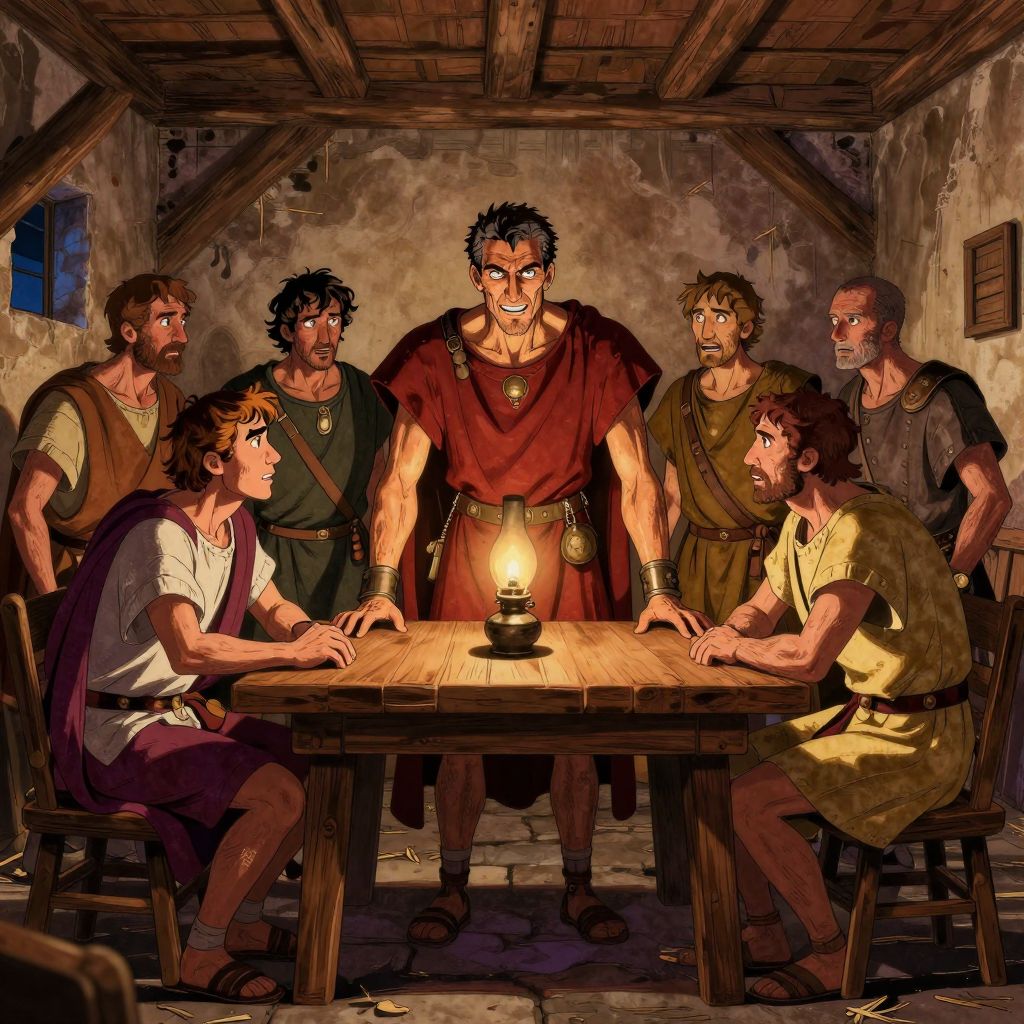
His plan was simple: overthrow the government, massacre the senators who opposed them, cancel all debts, redistribute wealth, and start fresh. He would raise an army in Etruria while his allies inside Rome set fires and assassinated opponents. In the chaos, Catiline would march on the city and seize power.
The conspiracy drew supporters from across Roman society. Senators, equestrians, veterans, even some women of noble families reportedly contributed money and support. Ancient sources claim the conspiracy included hundreds of participants, though exact numbers are impossible to verify.
What made Catiline dangerous was his charisma. The Roman historian Sallust, writing a generation later, described him as possessing tremendous physical and mental stamina, the ability to endure hunger, cold, and sleeplessness beyond normal human limits. He could charm anyone when needed, but beneath the surface lurked something darker.
The New Man
Standing between Catiline and revolution was Marcus Tullius Cicero, the consul of 63 BCE.
Cicero was everything Catiline was not. Where Catiline came from ancient nobility, Cicero was a "new man" with no famous ancestors and no military glory. His family were wealthy equestrians from the provincial town of Arpinum, the same town that had produced the general Marius a generation earlier. But Marius had won his status through military conquest. Cicero had only his voice.
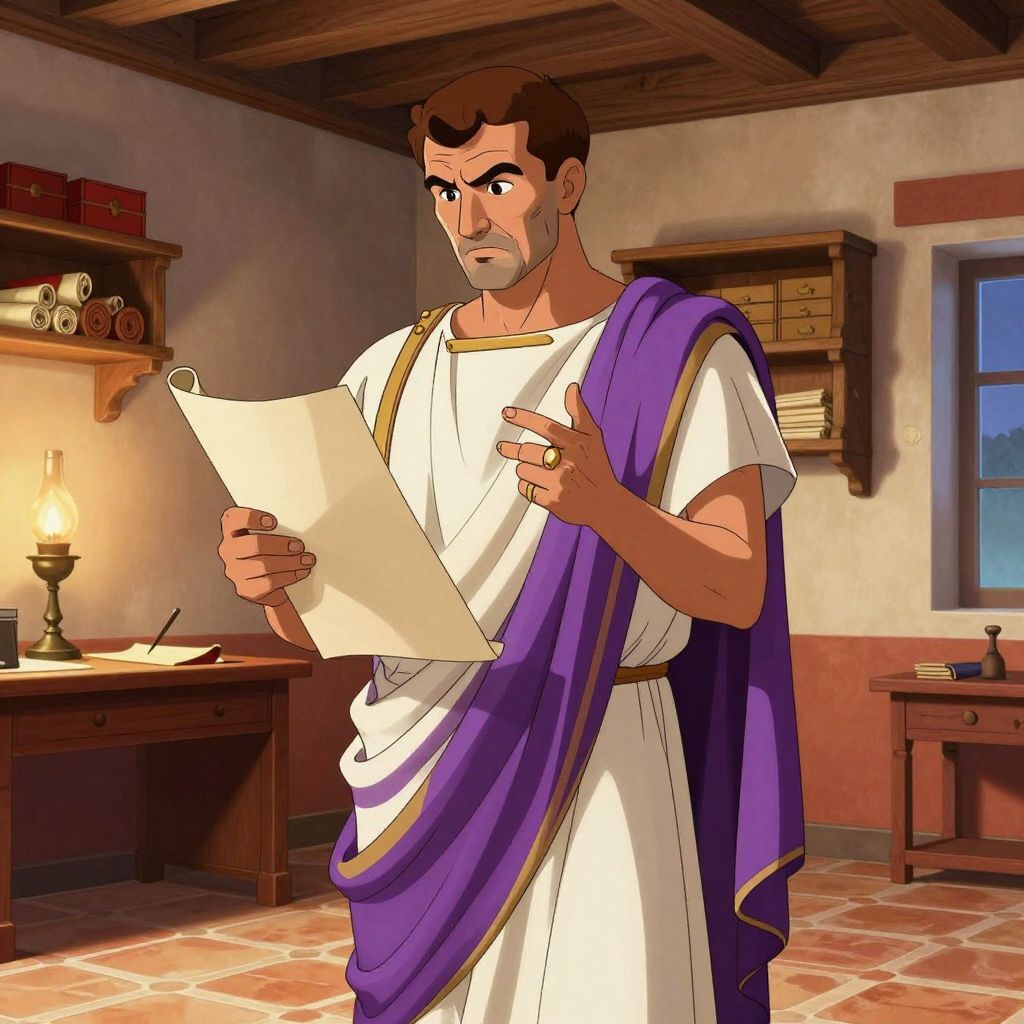
He had risen through the Roman cursus honorum, the ladder of political offices, entirely on the strength of his legal advocacy and public speaking. He had won cases that seemed impossible. He had prosecuted corrupt governors when no one else dared. He had defended clients against the most powerful men in Rome and won.
By 63 BCE, Cicero had reached the consulship at the minimum legal age of 42, a remarkable achievement for someone without a noble family. He was determined to prove that his election had not been a mistake. When rumors of conspiracy began circulating through Rome, Cicero saw both a threat and an opportunity.
He had spies everywhere.
The Information War
Cicero's intelligence network was extensive. He cultivated informants among Catiline's followers, including a woman named Fulvia, the mistress of one of the leading conspirators. Through her, Cicero learned meeting places, weapons caches, the identities of participants, and eventually the planned date of the uprising.

The consul played a careful game. He gathered evidence but waited for the right moment to strike. He needed the conspiracy to reveal itself clearly enough that the Senate would act, but not so late that Rome would burn.
In late October, the conspirators made their move. Assassins came for Cicero at his home. But Cicero's spies had warned him. He refused to see the visitors, and the assassination attempt failed.
Now Cicero had what he needed: a direct threat against the consul of Rome. The conspiracy could no longer be dismissed as rumor.
November 8th: The First Oration
On November 8, 63 BCE, the Senate convened in the Temple of Jupiter Stator rather than its usual meeting place in the Curia. Security concerns required the more defensible location.
Catiline attended. He was still a Roman senator, and he had not been formally charged with any crime. He walked into the chamber and took his usual seat.
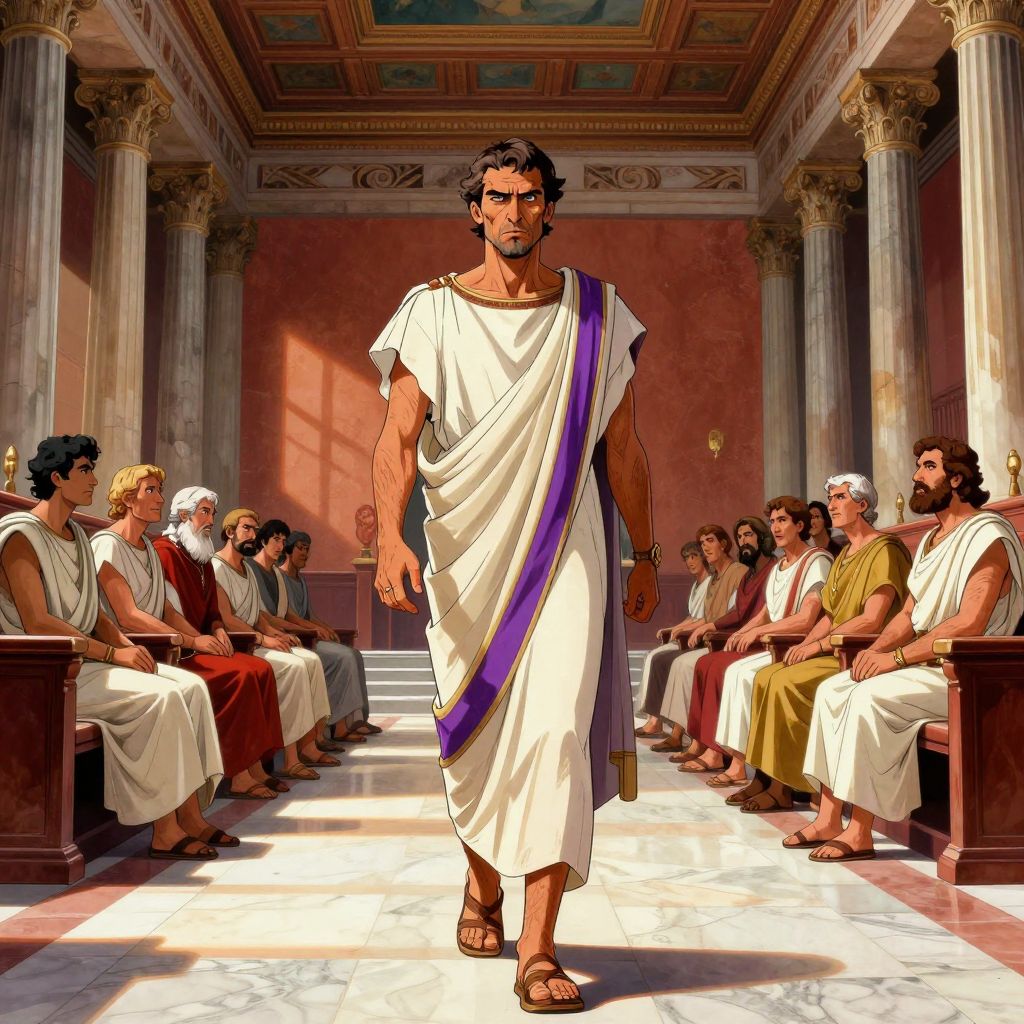
Nobody sat near him. Senators moved away, leaving empty benches around him like he carried plague. Catiline sat in isolation, surrounded by the contempt of his peers.
Then Cicero rose to speak.
The speech that followed would be studied for two thousand years. Schoolchildren across Europe memorized it. It became the model for political denunciation in every language that drew from the classical tradition.
It began with words that still echo: "Quo usque tandem abutere, Catilina, patientia nostra?"
"How long, O Catiline, will you abuse our patience?"
The Rhetoric of Destruction

Cicero did not shout. He did not need to. Every word landed like a blade.
He told Catiline that the Senate knew everything. The meeting places. The conspirators. The weapons. The planned date of the uprising. He asked why Catiline had not yet been executed, then answered his own question: execution without trial would make Catiline a martyr. Better to let the conspiracy expose itself completely.
The speech was a masterpiece of rhetorical technique. Cicero addressed Catiline directly, using the second person, making the denunciation personal and immediate. He invoked the authority of the Roman ancestors, the temples, the gods themselves as witnesses to Catiline's crimes. He painted a picture of a city under threat, of wives and children endangered by one man's ambition.
He urged Catiline to leave Rome. Go to Etruria, he suggested. Join your army. Stop pretending to be a loyal citizen. Your guilt is obvious; your presence here insults us all.
Catiline tried to respond. He rose to defend himself, to claim that he was being persecuted, that the accusations were false. The Senate howled him down. They shouted him silent, refusing to let him speak.
That night, Catiline fled Rome.
The Trap Springs Shut
Catiline's departure proved Cicero's accusations. An innocent man would have stayed to fight the charges. Flight was confession.
But Catiline had left conspirators behind in Rome, led by Publius Cornelius Lentulus Sura, a former consul, and Gaius Cornelius Cethegus, a man known for his violent temperament. Their job was to coordinate with Catiline's army and create chaos in the city when the time came.
They made a catastrophic mistake.
The Allobroges, a Gallic tribe from the region of modern Vienne in southeastern France, had sent ambassadors to Rome to complain about Roman governance of their territory. The conspirators, desperate for military support, approached these ambassadors and tried to recruit them for the uprising.
The ambassadors reported everything to their Roman patron, who reported to Cicero.
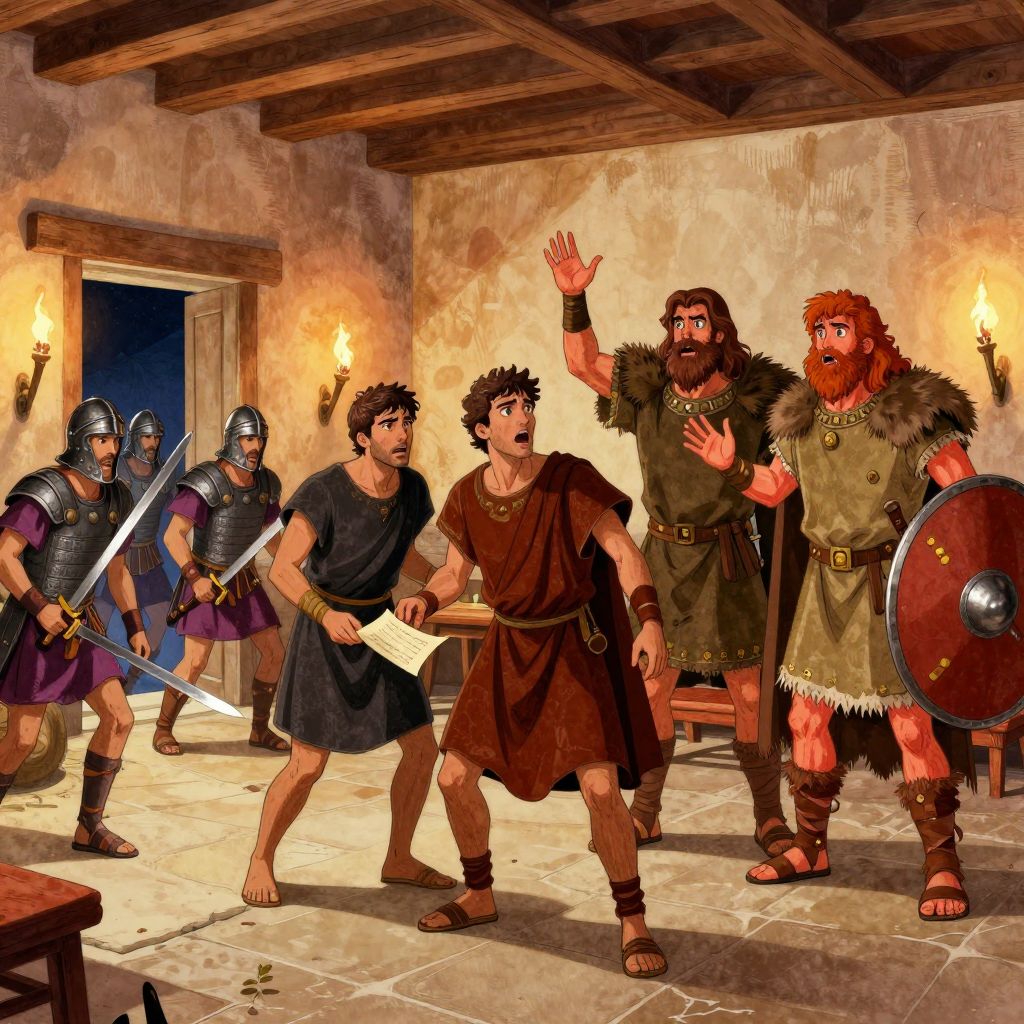
Cicero arranged a trap. He had the ambassadors request written documents from the conspirators, letters proving their involvement that could be shown to the Gallic Senate. The conspirators obliged. Then Cicero had the ambassadors arrested as they left the city, along with the incriminating letters.
The evidence was irrefutable. Letters in the conspirators' own hands, sealed with their own seals, promising alliance against the Roman state.
The Final Decree
The Senate had already invoked the senatus consultum ultimum, the ultimate decree, back in October. This emergency measure, reserved for existential threats to the state, authorized the consuls to take whatever actions necessary to defend Rome. It suspended normal legal protections.
On December 5, 63 BCE, the question before the Senate: what to do with the captured conspirators?
The debate that followed would shape Roman history.
Julius Caesar, then a 37-year-old rising politician, spoke against execution. He proposed life imprisonment and confiscation of property instead. Killing Roman citizens without trial, he argued, set a dangerous precedent. Future demagogues could use the same justification to eliminate their enemies. The mos maiorum, the customs of the ancestors, demanded better.
Some historians suggest Caesar's opposition was principled. Others argue he had connections to the conspiracy himself and wanted to protect associates. The truth is probably more complex: Caesar was building a political brand as a populist defender of citizens' rights, and opposing senatorial executions served that image.
Marcus Porcius Cato, the great-grandson of Cato the Censor and a rigid defender of traditional Roman values, spoke for execution. The conspirators had forfeited their citizenship by making war on Rome. They were enemies of the state, not citizens entitled to legal protection. Mercy would be weakness.
The Senate voted for death.
The Tullianum
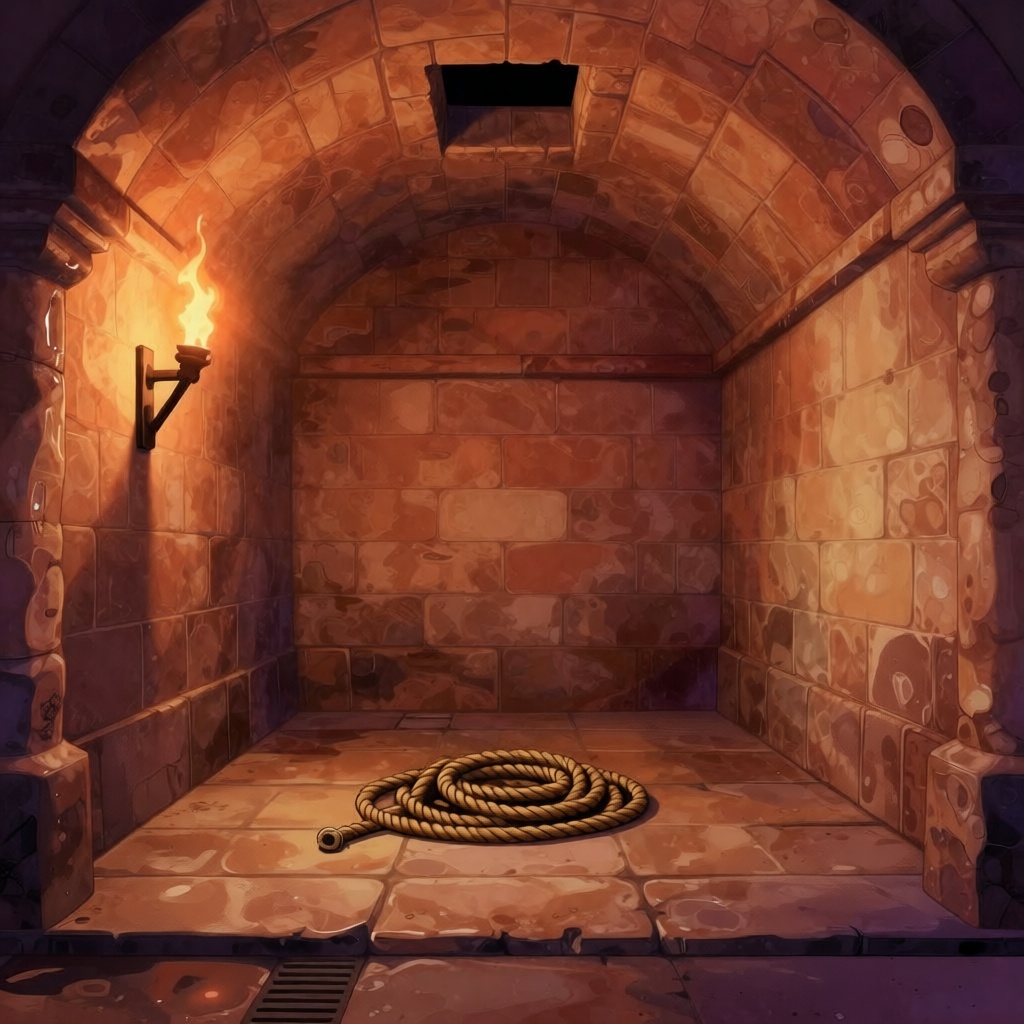
That same evening, Cicero personally escorted the five leading conspirators to the Tullianum, Rome's ancient prison beneath the Capitoline Hill. The structure dated back to the kings. Its lower chamber, carved from the living rock, was designed not for holding prisoners but for executing them.
Lentulus, Cethegus, and three others were lowered through a hole in the floor into the execution chamber. One by one, executioners strangled them with leather cords.
When it was done, Cicero emerged and spoke a single word to the waiting crowd: "Vixerunt." They have lived. The perfect tense in Latin, implying completion. They lived; they live no longer.
The crowd cheered. Cicero was escorted home by torchlight, citizens lining the streets to celebrate the savior of the Republic.
Catiline's Last Stand
Catiline learned of his allies' execution while raising his army in Etruria. His forces numbered perhaps three thousand men by this point, though ancient sources vary. Many deserted when they heard the news from Rome. The cause was clearly lost.
Catiline could have fled. The borders of the Republic were porous, and a man with his skills might have found employment as a mercenary commander in the East or Africa. He chose to fight instead.
In January 62 BCE, near the town of Pistoria in northern Italy, a Roman army nominally under Gaius Antonius Hybrida caught Catiline's forces. Antonius claimed illness on the day of battle, and his legate Marcus Petreius took actual command.
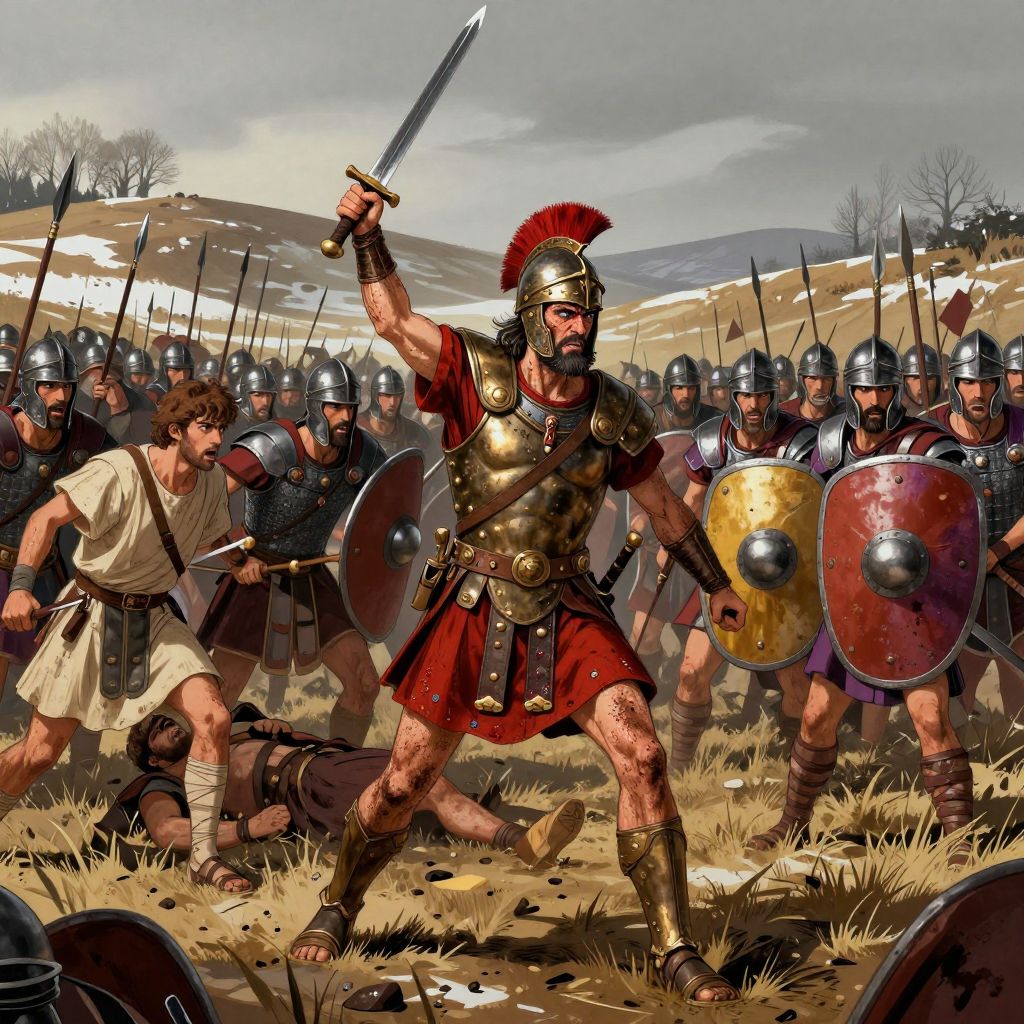
The battle was brutal. Catiline placed himself in the front line. When his standard-bearers fell, he picked up the eagle himself. He fought until Roman swords found him, dying with his weapon in hand, facing his enemies.
The ancient sources, even those hostile to Catiline, recorded that his killers respected how he fell. After the battle, his body was found far ahead of his own lines, surrounded by the corpses of enemies he had killed before they killed him. Whatever his crimes, he died like a Roman.
The Aftermath
Cicero saved the Republic. He would tell everyone so, constantly, for the rest of his life.
The Senate awarded him the title "Pater Patriae," Father of the Fatherland. He had defeated a conspiracy that threatened to destroy everything Rome had built. He had done it without an army, armed only with words and political skill.
But the executions haunted him.
Executing Roman citizens without trial, even under the senatus consultum ultimum, pushed against the boundaries of Roman law. The tribune Clodius would later use this against Cicero, forcing him into exile in 58 BCE for the unlawful killing of citizens. Though Cicero eventually returned, his political career never fully recovered.

And then there was Caesar.
The young politician who had voted against the executions would remember Cicero's actions. Fourteen years later, when Caesar crossed the Rubicon with his legions, Cicero would find himself on the wrong side of another civil war. He would hesitate, vacillate, and ultimately join the losing faction.
In 43 BCE, twenty years after the Catiline conspiracy, Mark Antony's soldiers found Cicero trying to flee by sea. They cut off his head and hands. Antony's wife Fulvia reportedly drove hairpins through the tongue that had spoken so devastatingly against her husband's allies.
The Republic that Cicero saved would die within a generation.
Why the Conspiracy Failed
Historians have debated what doomed Catiline. Some point to Cicero's intelligence network. Others blame the conspirators' incompetence in approaching the Allobroges. But the deeper answer may be simpler: Catiline was trying to start a revolution with revolutionaries, and revolutionaries are notoriously bad at keeping secrets.
The men who joined Catiline were desperate, not disciplined. They talked too much, trusted too easily, and moved too slowly. Cicero, by contrast, was methodical. He gathered evidence, waited for the right moment, and struck decisively.
The conspiracy also lacked a coherent ideology beyond "burn it down and start over." Catiline promised debt cancellation and land redistribution, but these appeals worked better on the margins than in the center. Rome's wealthy citizens had too much to lose. The urban poor, who might have supported revolution, were not organized enough to matter.
And Cicero's rhetoric worked. The First Catilinarian painted Catiline as a monster, a disease, a threat to everything Romans held sacred. Once that narrative took hold, Catiline was finished.
The Deeper Problem
But modern historians see complexity that Cicero's speeches obscured. Was Catiline simply a villain, or was he responding to genuine grievances in Roman society?
The debt crisis that drove his conspiracy was real. Veterans who had fought for Rome genuinely had been cheated of promised rewards. The concentration of wealth among the senatorial aristocracy had created an underclass of desperate men ready for revolution.
Cicero's victory preserved the Republic, but it did not solve the underlying problems. Those problems would continue to fester until they produced Caesar, then Augustus, then the Empire.
The Catiline Conspiracy showed that the Roman system was breaking. Cicero held it together for another twenty years. But the cracks he papered over would ultimately split the Republic apart.
Two Thousand Years Later
"Quo usque tandem" still works because the question it asks is eternal: how long will we tolerate those who would destroy what we have built?
Cicero's answer was: not one day longer.
The Romans who heard him speak that day knew they were witnessing something historic. They were right. Two thousand years later, we are still quoting his words. Law students still memorize his arguments. Politicians still study his techniques.
But we should remember what came after. Cicero saved the Republic with words. He killed citizens without trial to do it. He was celebrated as a hero, then exiled for his heroism, then murdered by the forces his actions helped unleash.
History rarely gives clean victories. Cicero won and lost and won and lost again, all within twenty years. The Republic he saved died anyway. The principles he violated in saving it became precedents for the men who destroyed it.
That is the Catiline Conspiracy: a story of eloquence and desperation, of conspiracy and betrayal, of a Republic that survived one crisis only to fall to the next.
Frequently Asked Questions
1What was Catiline's actual plan?
Catiline planned to raise an army in Etruria (modern Tuscany), while conspirators inside Rome would set fires and assassinate key senators. In the chaos, he would march on Rome, seize power, cancel all debts, and redistribute wealth. The conspiracy included debt-ridden nobles, landless veterans, and others who felt the Roman system had failed them.
2Why didn't Cicero arrest Catiline immediately?
Cicero needed irrefutable proof before the Senate would act. Rumors and spy reports were not enough to move against a sitting senator from an ancient family. By letting Catiline flee Rome after the first speech, Cicero forced him to reveal his guilt through action. The subsequent arrest of conspirators with written evidence sealed the case.
3Was executing the conspirators legal?
The legality was contested even at the time. The senatus consultum ultimum gave consuls emergency powers, but whether this overrode citizens' right to trial was debated. Julius Caesar argued for imprisonment rather than execution. The tribune Clodius later prosecuted Cicero for the executions, forcing him into temporary exile in 58 BCE.
4Why did Caesar oppose the executions?
Caesar argued on principle that killing citizens without trial set a dangerous precedent that future tyrants could abuse. Some historians suggest he may have had connections to the conspiracy itself, though this is not proven. Politically, opposing the executions helped Caesar build his image as a defender of citizens' rights against senatorial overreach.
5What happened to Cicero after the conspiracy?
Cicero enjoyed enormous prestige initially, being named 'Father of the Fatherland.' But the tribune Clodius, an enemy of Cicero, prosecuted him for the executions, forcing him into exile from 58-57 BCE. Though he returned, his political influence diminished. He was killed in 43 BCE during the proscriptions following Caesar's assassination.
Experience the Full Story
Hear Cicero's greatest moment told by an ancient witness who stood in that Senate chamber.


Listen to Related Stories
How Long, Catiline?
4 minA senator rises. Everyone knows who he's about to destroy.

Key Figures

Listen to the Full Story
Experience history through immersive audio lessons narrated by Lumo, your immortal wolf guide.