Eighty thousand Roman soldiers died in a single afternoon at the Battle of Arausio in 105 BCE. Two Roman armies, commanded by generals who refused to coordinate with each other, walked straight into annihilation at the hands of the Cimbri, a Germanic tribe migrating south from what is now Denmark. It was worse than Cannae. Worse than any defeat in living memory. The survivors staggered home with stories of giants who could not be stopped.
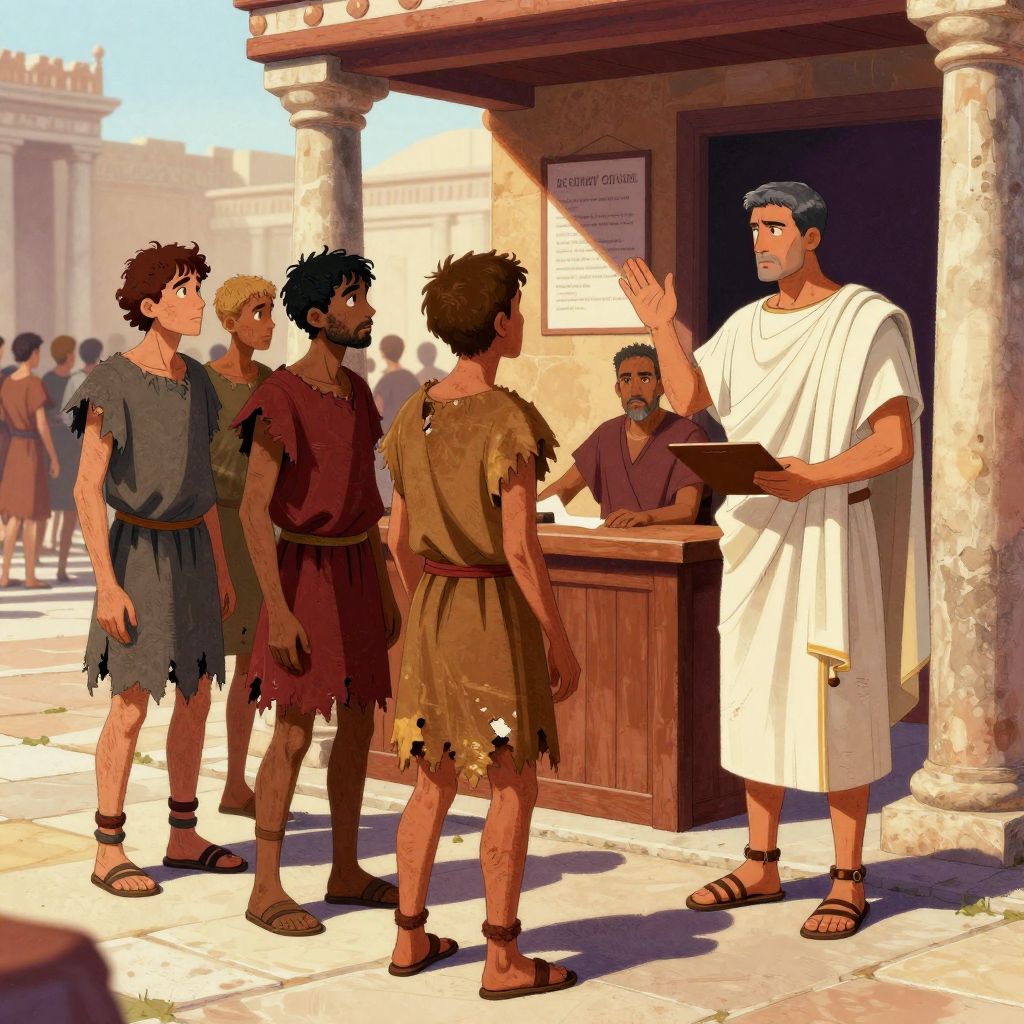
Into this chaos stepped a man named Gaius Marius. He was not a patrician. He was not even from a distinguished family. What he was, however, was very, very good at war. And in Rome's moment of existential terror, that turned out to be the only thing that mattered.
The reforms Marius implemented between 107 and 104 BCE solved Rome's immediate crisis. They created the most effective military machine the ancient world had ever seen. They also planted a time bomb at the heart of the Roman state, one that would detonate repeatedly over the next century until the Republic lay in ruins.
The Crisis That Demanded Change
To understand why Marius's reforms mattered, you have to understand what he was replacing. The traditional Roman army was not a professional military in any modern sense. It was a citizen militia built on a simple principle: only men who owned property could serve.
The logic made sense in the early Republic. A soldier who owned land had something to fight for. He would defend Rome because Rome's survival meant his farm's survival. He provided his own equipment, based on what he could afford. Wealthier citizens served as cavalry or heavy infantry; poorer ones served as light troops. When the war ended, everyone went home to tend their fields.
This system had conquered Italy. It had defeated Hannibal after years of devastating war. It had made Rome the dominant power in the Mediterranean. But by the late second century BCE, the system was breaking.
Constant warfare had transformed the Roman economy. The influx of slaves from conquered territories, combined with the growth of massive agricultural estates owned by wealthy senators, drove small farmers off their land. A soldier who left for a five-year campaign in Spain might return to find his family destitute and his farm absorbed into a neighbor's holdings. The very success of Roman expansion was destroying the class of men who made that expansion possible.
The Gracchi brothers had tried to address this crisis through land reform in the 130s and 120s BCE. Both ended up murdered for their trouble. The underlying problem remained unsolved: Rome needed soldiers, but the pool of property-owning citizens who could serve was shrinking every year.
By the time the Cimbri appeared, the legions were struggling to fill their ranks. Commanders lowered property requirements, then lowered them again. It was not enough. Rome faced the worst military threat since Hannibal with an army it could barely assemble.
The Man Who Changed Everything
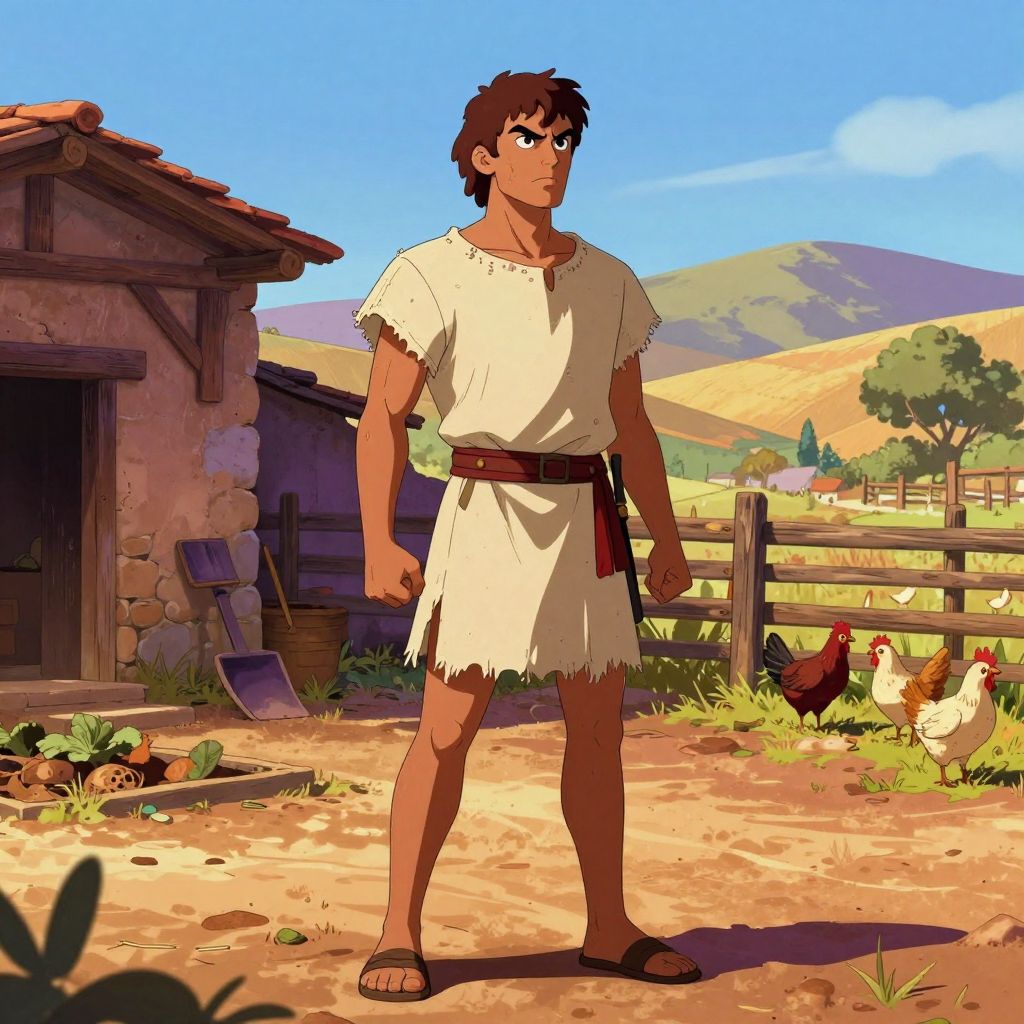
Gaius Marius was born around 157 BCE in Arpinum, about 60 miles southeast of Rome. His family were wealthy landowners by local standards but possessed no political connections in Rome. They were what the Romans called equestrians, the class of businessmen and landowners who stood just below the senatorial elite.
Marius made his reputation the hard way, through military service. He served with distinction in Spain under Scipio Aemilianus, the destroyer of Carthage. He earned a reputation for personal bravery and an exceptional ability to connect with common soldiers. He also developed an intense hatred for the aristocratic officers who looked down on him as a provincial nobody.
In Roman politics, men like Marius were called novi homines, new men. It was not a compliment. To become consul, the highest office in Rome, you were supposed to have ancestors who had held the position. Your family name was supposed to open doors. Marius had neither advantage.
He ran for consul anyway in 108 BCE, during Rome's frustrating war against Jugurtha, king of Numidia (roughly modern Algeria). The war had dragged on for years, embarrassing Rome as Jugurtha repeatedly outmaneuvered Roman commanders through a combination of guerrilla tactics and bribery. The Roman public was furious at what seemed like aristocratic incompetence.
Marius campaigned as the outsider who would get the job done. He attacked the senatorial establishment directly, promising that he would end the war that their precious noble-born generals could not finish. The voters elected him in a landslide. The Senate, bound by law to respect the election result, seethed.
Opening the Legions
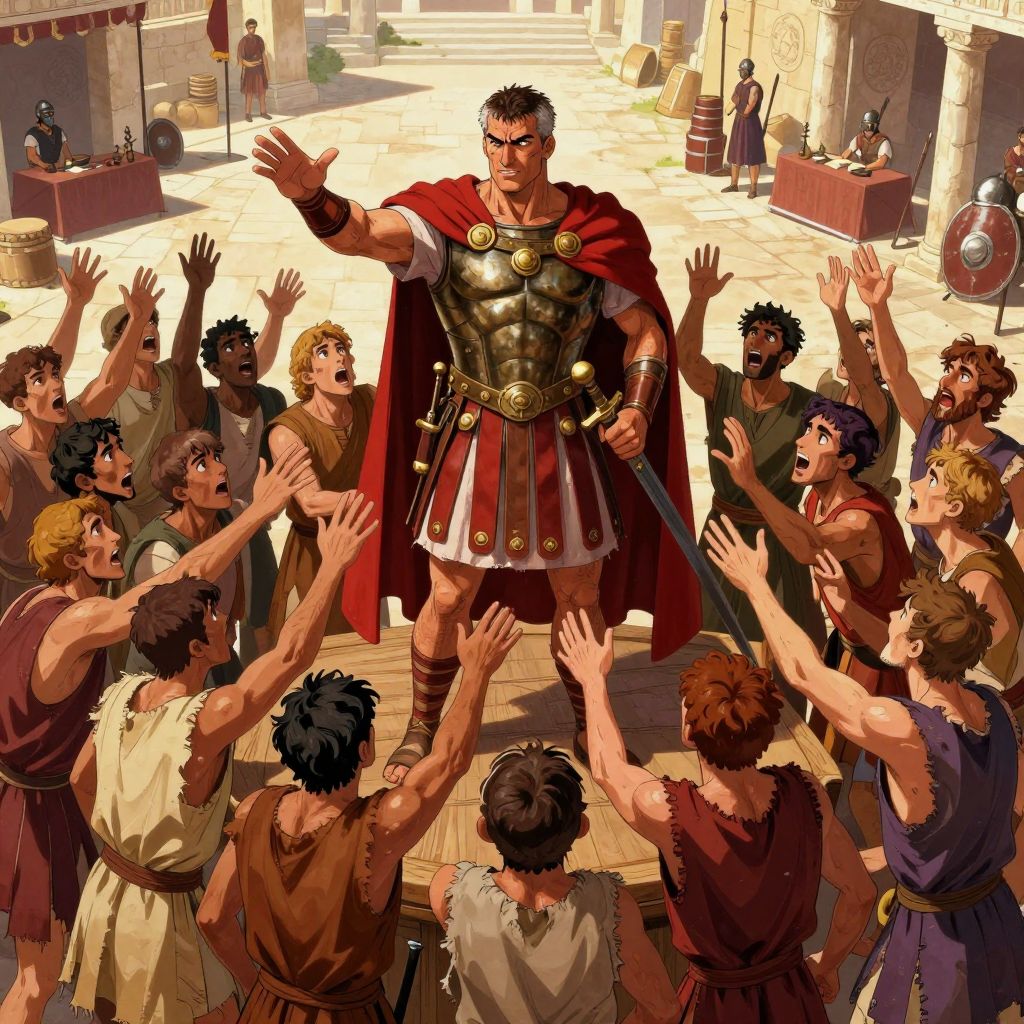
With war against Jugurtha still ongoing and the Germanic threat looming, Marius needed soldiers fast. The traditional recruitment pool could not provide them. So he made a decision that changed Roman history: he opened enrollment to the proletarii, citizens so poor they were recorded on the census rolls by their children (proles) rather than by property.
These men owned nothing. Under the old system, they had been considered too unreliable to serve. They had no stake in Roman society beyond their citizenship. They were exactly the soldiers Marius needed.
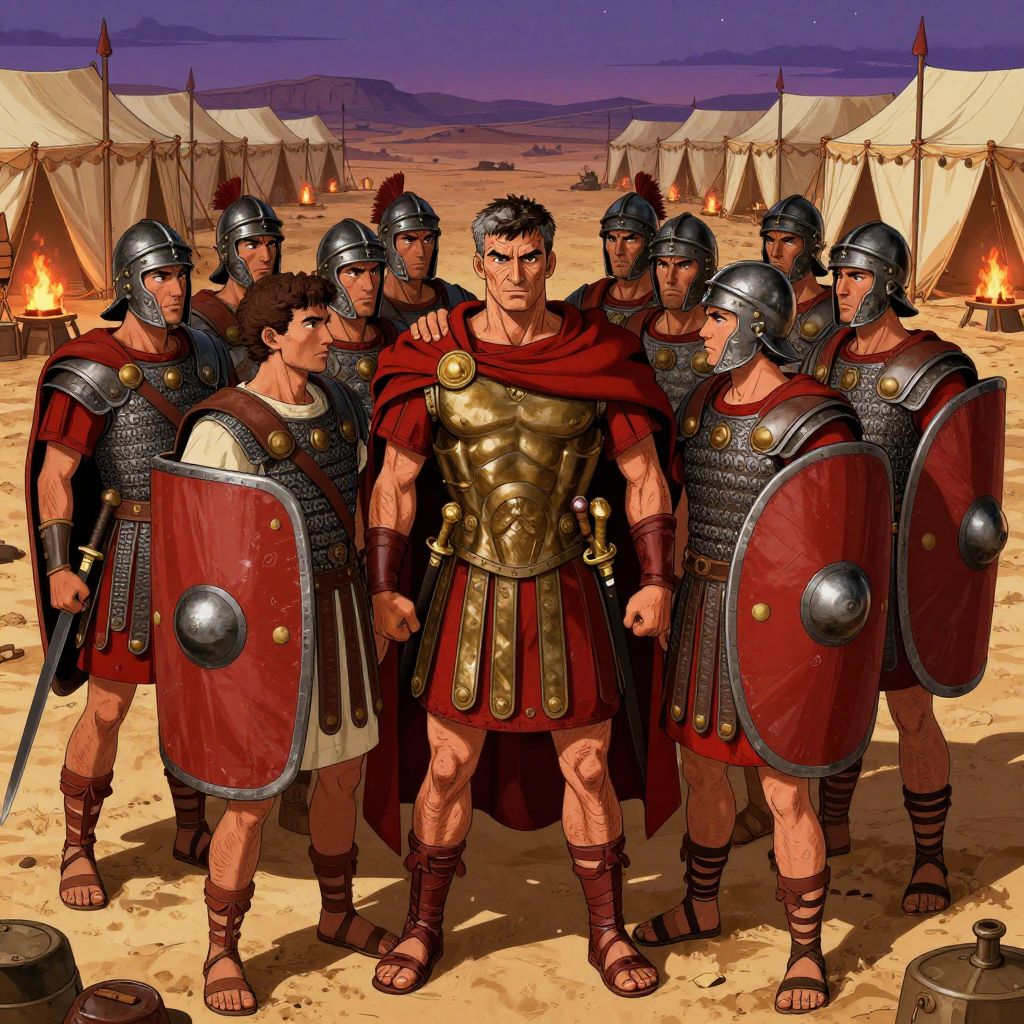
He provided them with standardized equipment at state expense. He organized them into a new type of legion, with cohorts replacing the older manipular system. He trained them to professional standards, emphasizing physical conditioning and unit cohesion. His soldiers marched carrying their own gear, including entrenching tools, cooking equipment, and rations. They called themselves Marii muli, Marius's Mules, and they were proud of it.
The tactical reforms were significant. The standardized equipment and cohort organization made Roman armies more flexible and easier to command. The professional training produced soldiers who could execute complex maneuvers under pressure. These innovations would shape Roman military practice for centuries.
But the structural change was far more important than the tactical ones. Marius had created something that had never existed before in Rome: an army of professional soldiers whose entire livelihood depended on military service.
These men had no farms to return to when the war ended. They had no trade to resume, no family business to manage. The army was their life, their community, and their only hope for a future. When their service was complete, they would need land to settle on, money to establish themselves. And there was only one person who could provide those things.
Victory and Its Price
Marius delivered on his promises. He ended the Jugurthine War in 105 BCE when his subordinate Lucius Cornelius Sulla negotiated Jugurtha's capture through treachery. Then he turned north to face the Germanic threat.
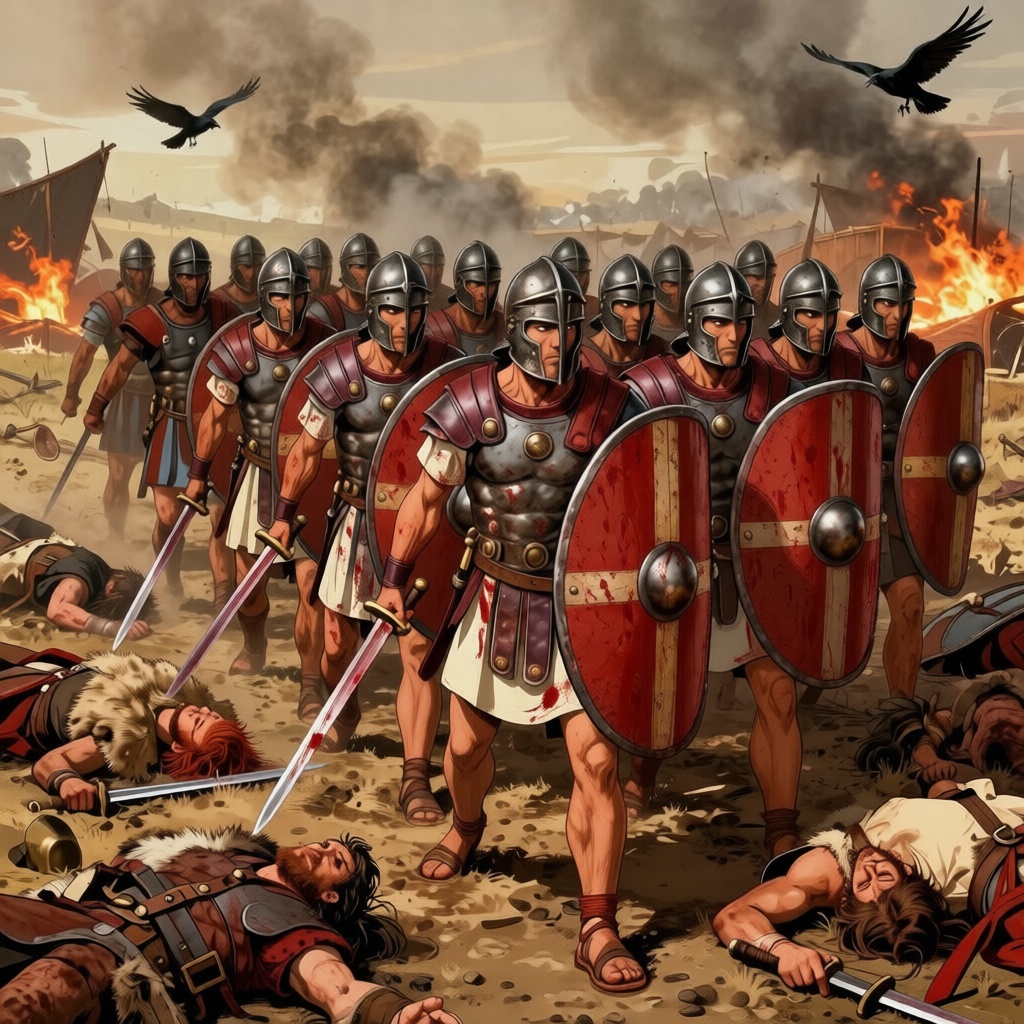
The Cimbri and their allies, the Teutones, had spent years wandering through Gaul and Spain, defeating every army sent against them. Roman sources claimed their combined numbers exceeded 300,000, though this is almost certainly exaggerated. Whatever their actual strength, they represented the most serious threat to Italy since Hannibal.
Marius met the Teutones at Aquae Sextiae (modern Aix-en-Provence) in 102 BCE. His professional legions, disciplined and well-trained, destroyed them. Roman sources claim 100,000 Teutones died; the actual number was probably lower but still represented a catastrophic defeat for the tribe.
The following year, Marius intercepted the Cimbri at Vercellae in northern Italy. The battle was even more decisive. The Cimbrian threat, which had terrified Rome for over a decade, ended in a single afternoon.
Marius was hailed as the third founder of Rome, after Romulus and Camillus. The Roman people elected him consul five times in succession, from 104 to 100 BCE, an unprecedented and technically illegal honor. The ten-year waiting period between consulships was a constitutional safeguard against exactly this kind of accumulated power. But Rome was too grateful, and too scared, to care about constitutional niceties.
The crisis was over. The reforms that made victory possible, however, created problems that would take a century to play out.
The Dangerous Innovation
The soldiers who had defeated Jugurtha, the Teutones, and the Cimbri had served for years. Many had joined the legions as destitute men with nothing to lose. Now they were veterans with expectations.
The Roman state had no system for providing land to discharged soldiers. The Senate, dominated by wealthy landowners who had opposed Marius from the start, had no interest in creating one. Veterans looked to their general for the rewards they had earned with blood and suffering.
Marius understood the problem. He allied with a tribune named Saturninus to force through land distribution for his veterans over senatorial opposition. The effort succeeded, but only through political violence that foreshadowed the civil wars to come. Saturninus was eventually killed by a mob, and Marius's political reputation never fully recovered.
The deeper issue remained unresolved. Roman soldiers now looked to their commanders, not to the state, for their futures. A general who could promise land, who could deliver rewards, who could protect his men's interests against a hostile Senate, commanded absolute loyalty. That loyalty was personal, not institutional.
For years, this remained a potential problem rather than an active one. The next generation of ambitious generals understood what Marius had built, but none immediately turned it against Rome. Marius himself, despite his political setbacks, never marched his army against the city.
That distinction belongs to his former subordinate Sulla, who used the weapon Marius had forged to establish a new and terrifying precedent. But Sulla's story is for another time.
The Professional Army Takes Shape
Beyond the immediate political consequences, the Marian reforms transformed what it meant to be a Roman soldier. The legionary of the late Republic and early Empire, the iconic figure of Roman military power, was a product of this transformation.
Training became systematic and rigorous. Recruits spent months learning formation drill, weapons handling, and physical conditioning before they saw combat. Vegetius, writing centuries later, described a training regimen that included marching twenty miles in five hours while carrying full equipment, swimming, and weapons practice against posts with wooden swords heavier than actual gladii.
The equipment became standardized around the gladius (short sword), pilum (heavy javelin), and scutum (curved rectangular shield). Earlier Roman armies had seen considerable variation in armament based on individual wealth. Marius's legions presented a uniform appearance, with every soldier equipped identically for his role.
Unit cohesion became paramount. Soldiers lived, trained, and fought together for years. They developed the kind of trust that only comes from shared hardship. The Roman legion became famous for its ability to maintain formation under pressure that would scatter less disciplined forces.
This professional army required professional logistics. Roman camps followed standardized plans, with every soldier knowing exactly where his tent would be pitched and where to find the latrines, the hospital, and the headquarters. An army that could march all day and then construct a fortified camp before nightfall possessed enormous operational advantages over enemies who had to choose between mobility and security.
The Long Shadow
Marius died in 86 BCE, shortly after seizing Rome for the final time during the civil war with Sulla. His later years were marked by paranoia, brutality, and political massacre. The man who had saved Rome from the barbarians spent his final months drowning it in blood.
His military reforms outlasted him by centuries. The professional legionary army he created endured, with modifications, until the fall of the Western Empire. The tactical organization, the training methods, the emphasis on discipline and logistics, all became standard Roman practice.
The political consequences proved equally durable. Every ambitious general who came after Marius understood that an army of landless professionals was a tool that could be turned inward as easily as outward. Julius Caesar crossed the Rubicon with soldiers who owed everything to him personally. Augustus built an empire on the foundation of soldiers bound to his family by pay and pension.
The Republic did not fall because of the Marian reforms. It fell because of a complex interaction of economic inequality, political dysfunction, and personal ambition. But Marius's creation of a professional army loyal to generals rather than the state made the final collapse possible. You cannot have a military dictatorship without a military willing to follow the dictator.
Legacy and Lessons
Modern militaries owe a considerable debt to the principles Marius established, even if they have long since forgotten the source. The concept of a standing professional army, equipped and paid by the state, trained to common standards, loyal to the nation through the chain of command: these ideas trace back to the desperate expedient of a Roman general who needed soldiers and found them among the dispossessed.
The dangers Marius inadvertently created are equally instructive. Any military that serves the interests of its commanders rather than the constitutional order is a threat to democratic governance. The Roman experience demonstrated this with brutal clarity over the century following Marius's reforms, as general after general turned the legions against Rome itself.
Marius himself remains a figure of tragic dimensions. His genuine military genius is beyond question. His reforms solved a real problem and created a genuinely more effective fighting force. He rose from obscure provincial origins to save Rome from existential threat, achieving a level of success that should have guaranteed him a honored place in Roman memory.
Instead, he is remembered as much for the civil wars his innovations made possible as for the victories they enabled. He built a weapon and never fully understood what he had created. Others, less scrupulous than he, would use it to tear the Republic apart.
Frequently Asked Questions
1What were the main changes in the Marian Reforms?
The key changes included opening military service to landless citizens (proletarii), providing standardized equipment at state expense, reorganizing legions into cohorts, and creating a professional training system. Soldiers now served for extended terms rather than a single campaign, creating Rome's first truly professional army.
2Why did Roman soldiers become loyal to their generals instead of Rome?
Under the reformed system, soldiers were landless poor with no property or prospects. Their general recruited them, trained them, led them to victory, and most importantly, promised them land when they retired. The Senate often blocked these land grants, so veterans depended on their commander to fight for their interests.
3What was the Battle of Arausio and why did it matter?
The Battle of Arausio in 105 BCE was Rome's worst defeat since Cannae. Two Roman armies, commanded by generals who refused to cooperate, were destroyed by the Cimbri, a Germanic tribe. Approximately 80,000 Romans died in a single day, creating the panic that allowed Marius to implement his reforms.
4How did Marius defeat the Cimbri and Teutones?
Marius destroyed the Teutones at Aquae Sextiae in 102 BCE and the Cimbri at Vercellae in 101 BCE. His newly professional legions, well-trained and disciplined, outfought the Germanic warriors in pitched battle. These victories ended a threat that had terrified Rome for over a decade.
5What does novus homo mean and why was it significant for Marius?
Novus homo (new man) was the term for someone whose family had never held high office in Rome. It was often used dismissively. While not the first novus homo to reach the consulship, Marius was the most prominent example of the late Republic, rising largely on military merit rather than political connections and challenging the aristocratic grip on power.
6Did Marius himself march on Rome?
Yes, but only late in his life. During the civil war with Sulla (88-87 BCE), Marius returned from exile and seized Rome by force, conducting bloody proscriptions against his enemies. He died shortly after, in early 86 BCE. The first general to march a Roman army against Rome was actually Sulla, in 88 BCE.
Experience the Full Story
Hear Marius's rise and Rome's transformation told by Lumo, the immortal wolf who witnessed the Republic's slow collapse into civil war.


Listen to Related Stories
Marius's Mules
4 minHe saved Rome from the barbarians. Then he drowned it in blood.

Listen to the Full Story
Experience history through immersive audio lessons narrated by Lumo, your immortal wolf guide.