The Fog Lifts Too Late

The morning fog was so thick that Roman soldiers could barely see thirty feet ahead. That was the problem. By the time they realized what was happening, Carthaginian infantry was already pouring down from the hillsides on all sides, and the only escape routes were blocked by cavalry or led into the lake itself.
On June 21st, 217 BCE, roughly 25,000 Roman soldiers marched into a narrow corridor along the northern shore of Lake Trasimene in central Italy. Within three hours, around 15,000 of them were dead. The consul who led them, Gaius Flaminius, was among the first to fall. The survivors — those who weren't captured or drowned — fled into the hills, only to be hunted down by Numidian cavalry the next morning.
The Battle of Lake Trasimene remains the largest successful ambush in recorded military history. Hannibal Barca, already famous for crossing the Alps with elephants and crushing a Roman army at the Trebia River, had pulled off something even more audacious: he had made an entire consular army disappear.
The March Through the Arno Marshes
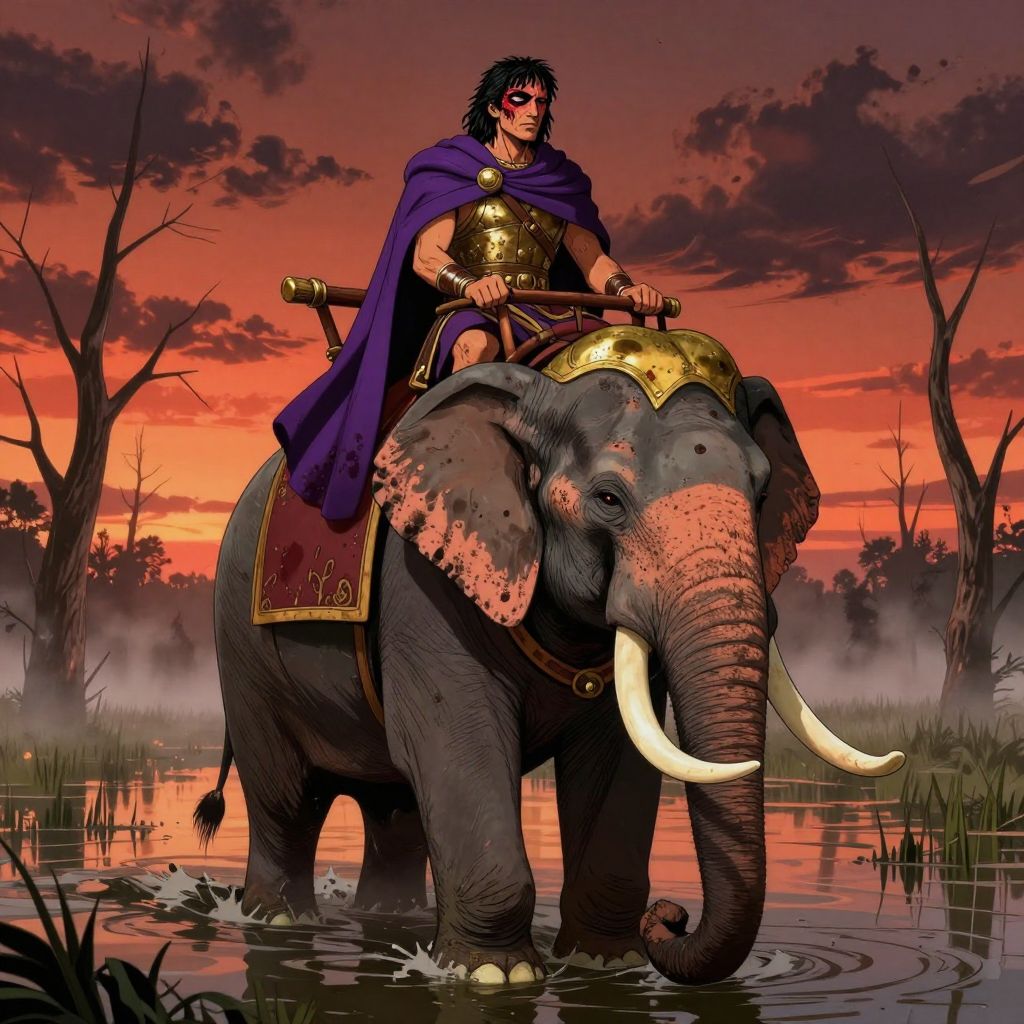
Before Trasimene, there was the swamp.
After his victory at the Battle of the Trebia in late 218 BCE, Hannibal faced a strategic decision. Two routes led south into the Italian heartland: the Via Flaminia along the Adriatic coast, which was well-guarded by Roman forces, and the inland route through the Arno River valley — a treacherous stretch of semi-permanent marshland that the Romans considered impassable for a large army.
Hannibal chose the marshes.
For four days and three nights, his army slogged through waist-deep water, sucking mud, and clouds of biting insects. The Arno valley in the 3rd century BCE was not the drained farmland we see today — it was a network of ancient lakebeds and "padule" (pervasive swampland) that flooded seasonally and never fully dried. Soldiers drowned. Pack animals disappeared beneath the surface. Men collapsed from exhaustion and were left behind.
The crossing cost Hannibal something permanent: his right eye. According to the Greek historian Polybius, Hannibal contracted a severe case of ophthalmia — an acute eye infection — during the marsh crossing. Modern medical researchers suggest the infection was likely caused by waterborne pathogens such as Pseudomonas aeruginosa or Acanthamoeba, organisms that thrive in stagnant, muddy water. Without time to stop for treatment, the infection progressed until Hannibal lost vision in one eye entirely.
His generals urged him to halt. A half-blind commander leading a weakened army through hostile territory seemed like a recipe for disaster.
Hannibal refused. He emerged from the marshes west of Arretium (modern Arezzo) before the Romans even knew he had left the Po Valley. The element of surprise was worth any price.
Consul Flaminius: Eager for Glory
The Roman consul Gaius Flaminius was exactly the kind of commander Hannibal loved to face.
Flaminius was a populist politician who had risen to prominence by championing land distribution to common citizens — a stance that made him beloved by the plebeians and despised by the senatorial aristocracy. He was confident, aggressive, and deeply concerned with his public reputation. He had been elected consul specifically to destroy Hannibal, and he had no intention of sharing that glory with his co-consul, Gnaeus Servilius Geminus, who was stationed with the other Roman army near Ariminum on the Adriatic coast.
When Hannibal emerged from the marshes and began raiding the fertile countryside around Lake Trasimene, Flaminius saw his opportunity. The Carthaginian army was moving south, apparently unconcerned about Roman pursuit. Flaminius interpreted this as either carelessness or weakness. He was wrong on both counts.
Despite warnings from his officers — and reportedly unfavorable omens that included a horse throwing him during a sacrifice — Flaminius ordered an immediate pursuit. He was so eager to catch Hannibal that he neglected to send advance scouts ahead of his main column. The consul assumed that if Hannibal was retreating, he must be afraid.
Hannibal was not retreating. He was baiting a trap.
The Perfect Killing Ground
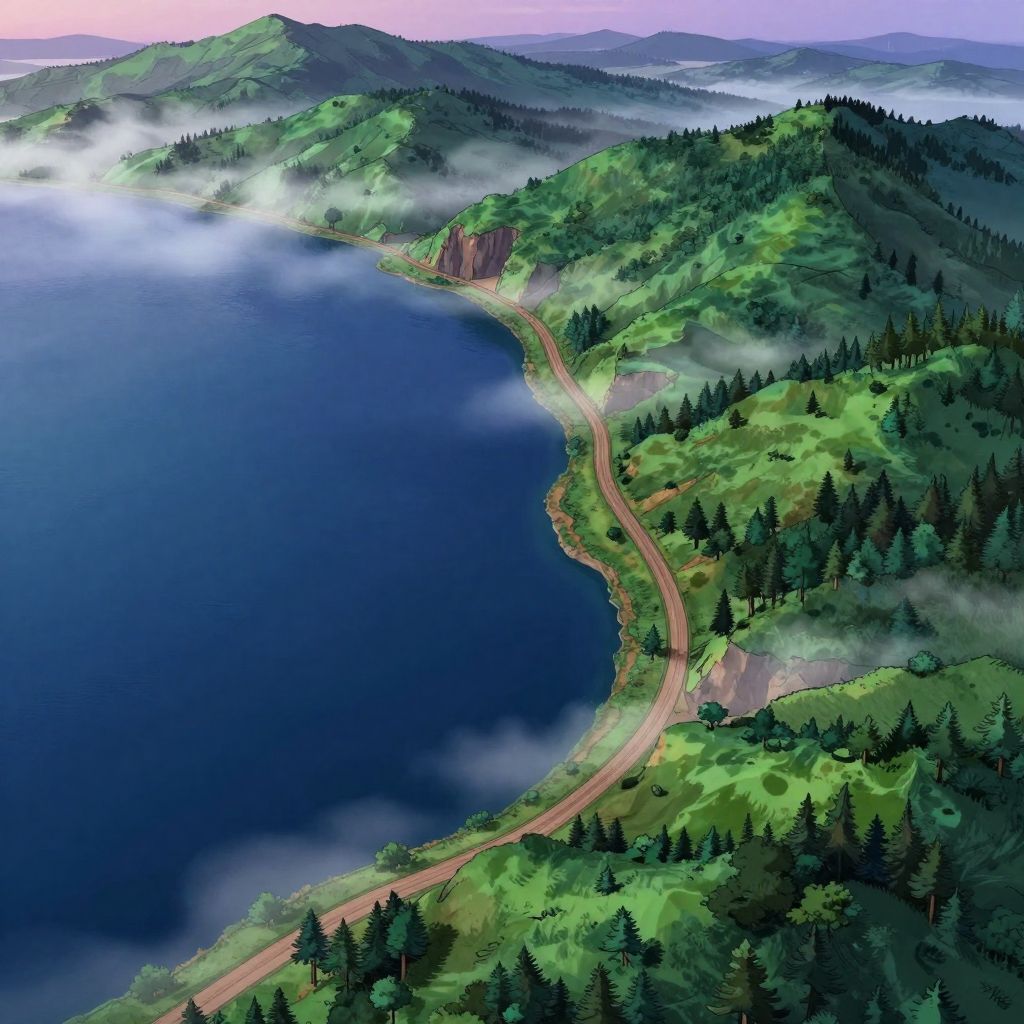
Lake Trasimene sits in a natural depression surrounded by hills and mountains. On the northern shore, a narrow road runs between the water's edge and steep, forested slopes. The road enters the valley through a narrow defile from the east, curves along the lakeshore for several miles, and exits through another gap to the west.
Hannibal recognized this terrain instantly. It was a coffin with exactly two openings.
He positioned his African and Iberian veterans in plain view at the western end of the valley, blocking the road. This was the bait — a visible enemy force that Flaminius would assume was Hannibal's rear guard. The Carthaginian cavalry sealed the eastern entrance behind the Roman column. And on the foggy hillsides above? Tens of thousands of Gallic warriors and additional infantry, hidden in the pre-dawn darkness and morning mist.
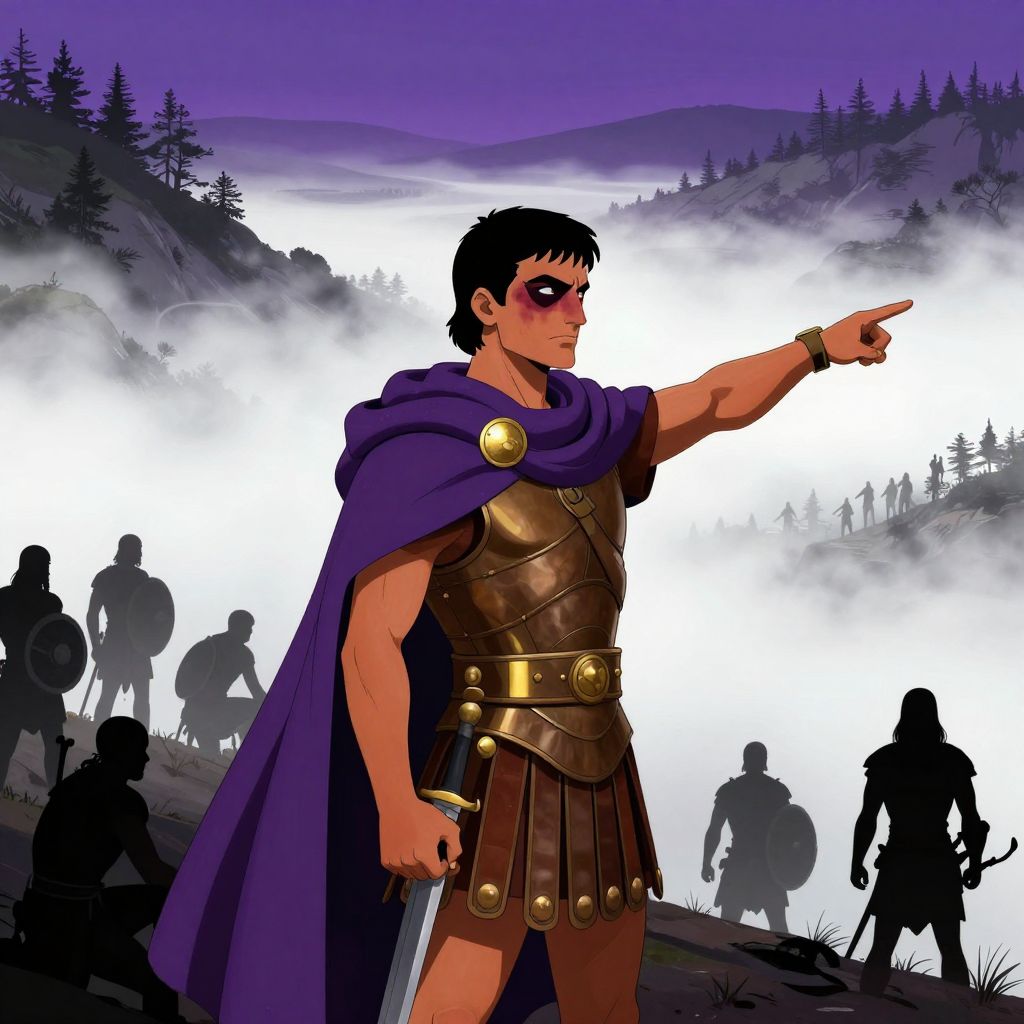
On the morning of June 21st, the fog cooperated perfectly. A thick mist rolled off the lake and filled the valley floor, reducing visibility to almost nothing. Hannibal's forces on the heights could see down into the valley, but the Romans marching below could see only a few feet in any direction.
Flaminius led his army into the defile without reconnaissance. His column stretched out along the narrow road — a fatal formation for an army that might need to turn and fight. The Romans could see what appeared to be Hannibal's rear guard ahead of them. They marched forward to engage.
They never saw the attack coming from above.
Three Hours of Slaughter
When Hannibal gave the signal, roughly 30,000 Carthaginian soldiers descended on the Roman column from three directions simultaneously. The Gauls charged down from the hillsides. The African infantry pressed from the west. The cavalry sealed the eastern exit and began cutting down anyone who tried to retreat.
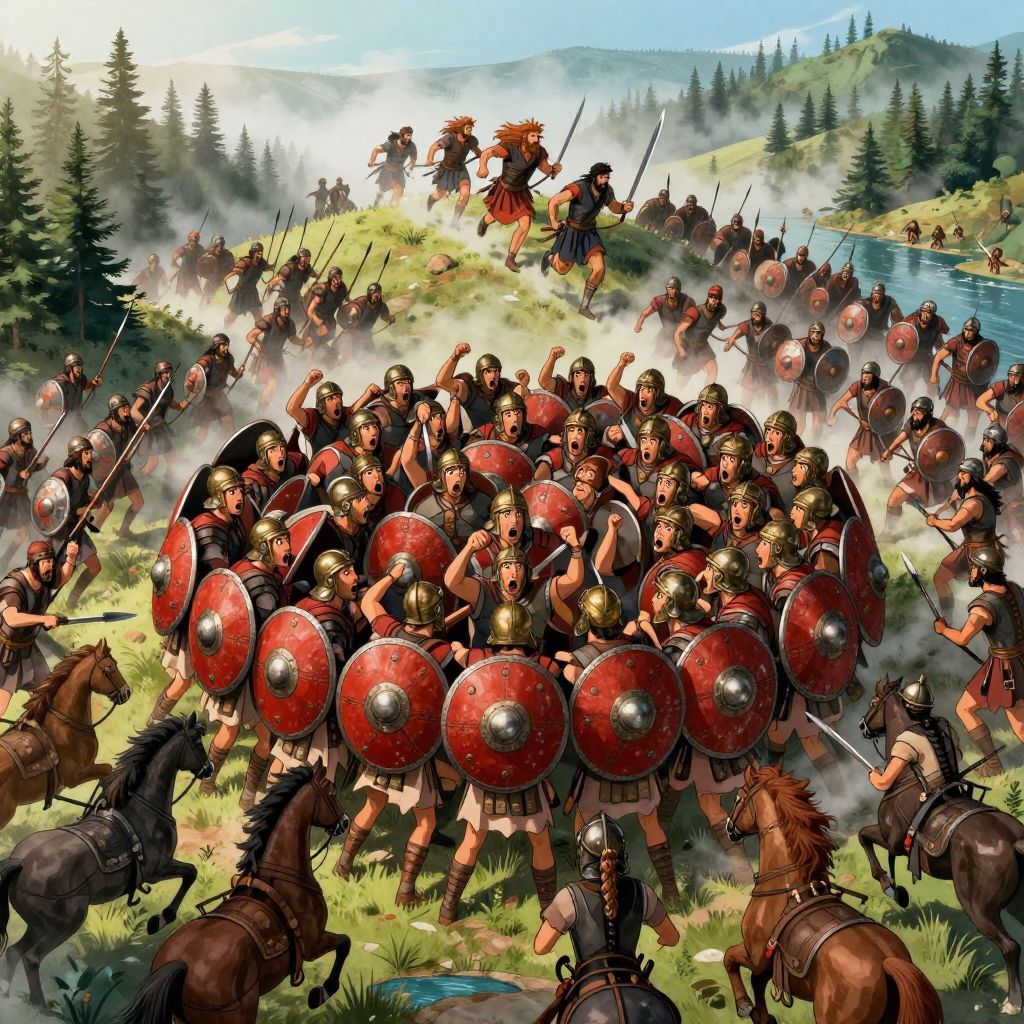
The Romans had no time to form battle lines. A Roman legion's strength lay in its discipline, its ability to present a solid wall of shields and swords against the enemy. But discipline requires space, time, and visibility. The soldiers at Trasimene had none of these. They were strung out in a marching column, unable to see their officers, unable to hear orders over the screaming, hemmed in by geography on all sides.
What followed was not a battle. It was a massacre.
According to the ancient sources, Consul Flaminius was among the first to die. Livy describes him riding along the line, trying to rally his troops and organize a defense, until a Gallic horseman named Ducarius rode him down. Other accounts suggest he was killed almost immediately when the attack began. Either way, the Roman command structure collapsed within minutes.
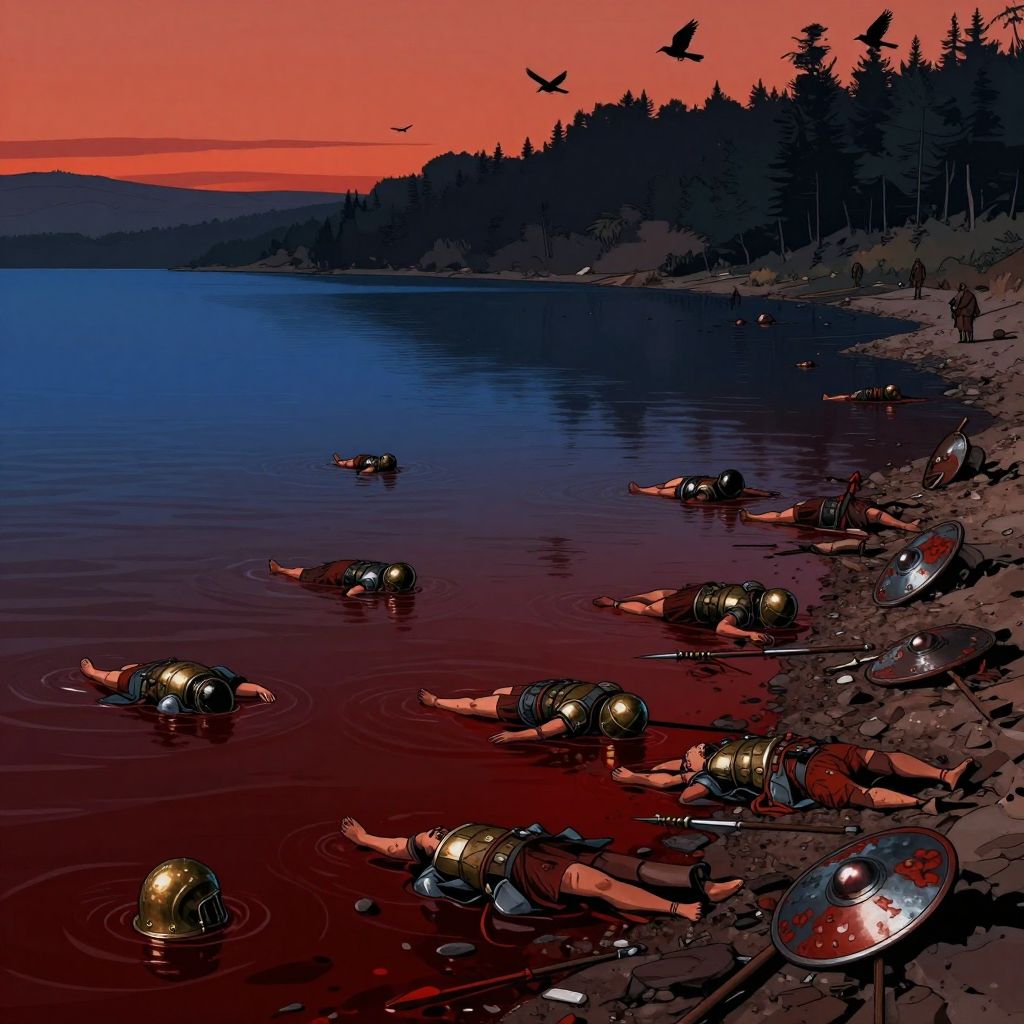
Thousands of Roman soldiers, unable to flee toward either end of the valley, made a desperate choice: they ran into the lake. Roman military equipment — chainmail armor, bronze helmet, heavy shield — weighed approximately seventy pounds. Lake Trasimene's waters were cold and deep near the shore. The men who waded in discovered too late that their armor, designed to protect them from swords, now pulled them inexorably beneath the surface.
They drowned by the hundreds.
By mid-morning, approximately 15,000 Roman soldiers were dead. The fighting had lasted perhaps three hours.
The Survivors Who Didn't Survive
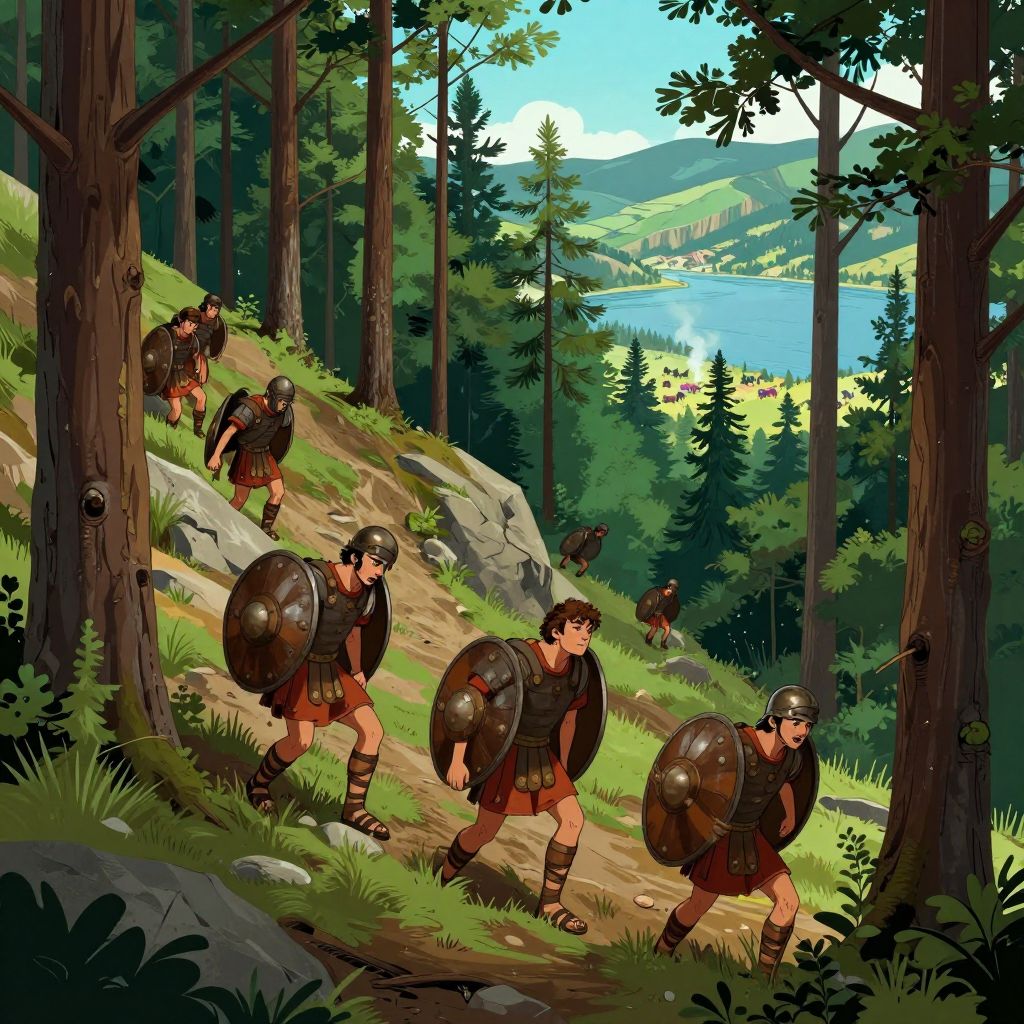
One group of Romans — approximately 6,000 men from the front of the column — managed to break through Hannibal's forward positions and escape into the hills. They believed they had survived the disaster. They climbed through the forested slopes above the lake, putting distance between themselves and the killing ground below.
Hannibal sent his Numidian cavalry after them.
The Numidians were specialists in exactly this kind of pursuit. Light horsemen from North Africa, they could navigate terrain that would stop heavier cavalry cold. They tracked the Roman survivors through the night and surrounded them the following morning.
The 6,000 Romans, exhausted and demoralized, surrendered. Hannibal released the Italian allies among them (part of his ongoing strategy to detach Rome's allies from the Republic) and kept the Roman citizens as prisoners.
Meanwhile, a second disaster struck Roman forces elsewhere. Consul Geminus, unaware of Flaminius's fate, had dispatched his entire cavalry force of 4,000 men westward to link up with his colleague. These cavalrymen rode directly into Hannibal's path a few days after Trasimene. Nearly 2,000 were killed in the initial clash; the remaining 2,000 surrendered the following day.
In the span of a week, Rome had lost approximately 25,000 soldiers killed or captured from Flaminius's army, plus 4,000 cavalrymen from Geminus's force. Two Roman armies had been destroyed in six months. Hannibal controlled central Italy. And the road to Rome itself appeared to be open.
Panic in the Senate
When news of Trasimene reached Rome, the praetor Marcus Pomponius reportedly addressed the assembled people with three words: "We have been beaten in a great battle."
The Roman system was designed to prevent panic. Two consuls shared power, each checking the other's ambitions. The Senate deliberated on major decisions. Multiple layers of magistrates distributed authority. But Trasimene — coming on the heels of the disaster at Trebia — exposed a fatal flaw in this system. Shared command meant shared blame, divided responsibility, and competing strategies.
Rome needed something it rarely used: a dictator.
The Roman dictatorship was an emergency provision, not a permanent office. A dictator held absolute authority for a maximum of six months, after which he was expected to resign and return power to the regular magistrates. Rome appointed dictators in moments of extreme crisis when the normal deliberative process was too slow to respond to existential threats.
The Senate chose Quintus Fabius Maximus Verrucosus, a senator in his early sixties with decades of military and political experience. Fabius was everything Flaminius had not been: cautious, patient, uninterested in personal glory, and deeply skeptical of the aggressive tactics that had led to two consecutive catastrophes.
Fabius understood something that his predecessors had not. Hannibal could not be beaten in a pitched battle. Not yet. Perhaps not ever. The Carthaginian general had demonstrated at Trebia and Trasimene that he could outmaneuver, out-think, and outfight any Roman commander in open combat.
Therefore, Fabius concluded, Rome should stop fighting open battles.
The Delayer
Fabius's strategy was simple in concept and nearly impossible to execute politically. He would shadow Hannibal's army with Roman forces, always staying close enough to harass foragers and cut off stragglers, but never close enough to be drawn into a decisive battle. He would order Italian farmers to burn their own crops before Hannibal could harvest them. He would destroy bridges, block mountain passes, and make every mile of Hannibal's march through Italy as costly as possible.
Most importantly, he would wait. Time was on Rome's side. Hannibal was operating thousands of miles from home, dependent on what he could seize or what Italian defectors provided. Every day that passed without a major victory made Hannibal's position weaker. Every month that Hannibal failed to break the Roman alliance made his Italian allies question whether they had backed the wrong side.
The strategy worked. It also made Fabius one of the most hated men in Rome.
Romans did not admire caution. They did not celebrate patience. Their entire culture was built on martial valor, on meeting enemies head-on, on the glory won in victorious combat. Fabius's refusal to fight looked like cowardice. His willingness to let Hannibal ravage the Italian countryside while Roman armies watched from a safe distance looked like betrayal.
They called him "Cunctator" — The Delayer. It was meant as an insult. Senators mocked him as "Hannibal's pedagogue," suggesting he was teaching the enemy rather than fighting him. When his six-month term expired, the Senate refused to extend his authority. They had found new commanders who promised to finally destroy Hannibal in battle.
Those commanders raised the largest army Rome had ever fielded: approximately 80,000 men. They marched south to a small town in Apulia called Cannae.
What happened there made Trasimene look like a minor skirmish.
The Legacy of the Fog
Lake Trasimene occupies a strange position in military history. It was one of Rome's worst defeats, yet it is overshadowed by the even greater catastrophe that followed at Cannae just over a year later. It demonstrated Hannibal's tactical genius, but that genius would ultimately fail to win the war. It prompted the appointment of Fabius Maximus, whose strategy of attrition would eventually be adopted — but only after Romans had ignored it long enough to suffer tens of thousands of additional casualties.
The battle proved several lessons that military theorists would study for millennia. Terrain matters: Hannibal chose his ground perfectly, using geography to neutralize Roman numerical advantages. Intelligence matters: Flaminius's failure to scout allowed him to march directly into an ambush. Flexibility matters: when the fog lifted and the trap was sprung, the Romans had no contingency, no alternative formation, no plan beyond the one that had already failed.
Most importantly, Trasimene demonstrated that a sufficiently skilled commander could defeat a larger, better-supplied army by refusing to fight on the enemy's terms. Hannibal never gave Rome the battle it wanted. He gave Rome the battle he wanted, on ground he had chosen, at a time when Roman commanders were too confident or too impatient to recognize the danger.
That pattern would repeat itself at Cannae, and Rome would pay an even more terrible price for the lesson.
Frequently Asked Questions
1How many Romans died at the Battle of Lake Trasimene?
Approximately 15,000 Roman soldiers were killed in the battle itself, which lasted about three hours. An additional 6,000 were captured the following day after breaking through Carthaginian lines and fleeing into the hills. Combined with the destruction of a 4,000-man cavalry force a few days later, Rome lost nearly 25,000 men in the week following Trasimene.
2How did Hannibal lose his eye?
Hannibal contracted a severe eye infection (ophthalmia) during his army's four-day march through the Arno River marshes in spring 217 BCE. Modern medical analysis suggests the infection was likely caused by waterborne pathogens such as Pseudomonas or Acanthamoeba, which thrive in stagnant swamp water. Unable to stop for treatment, Hannibal lost sight permanently in one eye.
3What was the Fabian strategy?
Named after Quintus Fabius Maximus, the Fabian strategy involved avoiding pitched battles with Hannibal while shadowing his army, harassing his foragers, and using scorched-earth tactics to deny him supplies. The goal was to let time and logistics weaken Hannibal rather than risking another catastrophic defeat. Though initially mocked as cowardice, the strategy was eventually adopted after the disaster at Cannae.
4Why didn't Hannibal march on Rome after Trasimene?
Hannibal lacked the siege equipment necessary to assault Rome's formidable walls, and his army was too small to both besiege Rome and defend against relieving forces. His strategy relied on defeating Roman armies in the field and convincing Italian allies to defect, not on capturing the city itself. He likely hoped that continued victories would eventually force Rome to negotiate.
5Who killed Consul Flaminius?
According to Livy, Flaminius was killed by a Gallic horseman named Ducarius, who reportedly charged through the Roman lines specifically targeting the consul. Other ancient sources give slightly different accounts, but all agree Flaminius died early in the battle, leaving the Roman army without effective command.
6Why is Lake Trasimene considered the largest ambush in history?
With approximately 25,000 Roman soldiers trapped and either killed or captured, Trasimene remains the largest successful ambush by number of troops involved in recorded military history. Hannibal concealed roughly 30,000 soldiers on hillsides above the Roman line of march, achieving complete tactical surprise against an enemy force of similar size.
Experience the Full Story
Hear Trasimene told by Lumo — the immortal wolf who witnessed Rome's greatest defeats. Listen to his account of Hannibal's deadliest trap.


Listen to Related Stories
The Lake of Blood
4 minHannibal was half-blind. The Romans thought they had him trapped...

Key Figures
Listen to the Full Story
Experience history through immersive audio lessons narrated by Lumo, your immortal wolf guide.