Forty Thousand Men Into the Freezing Dark
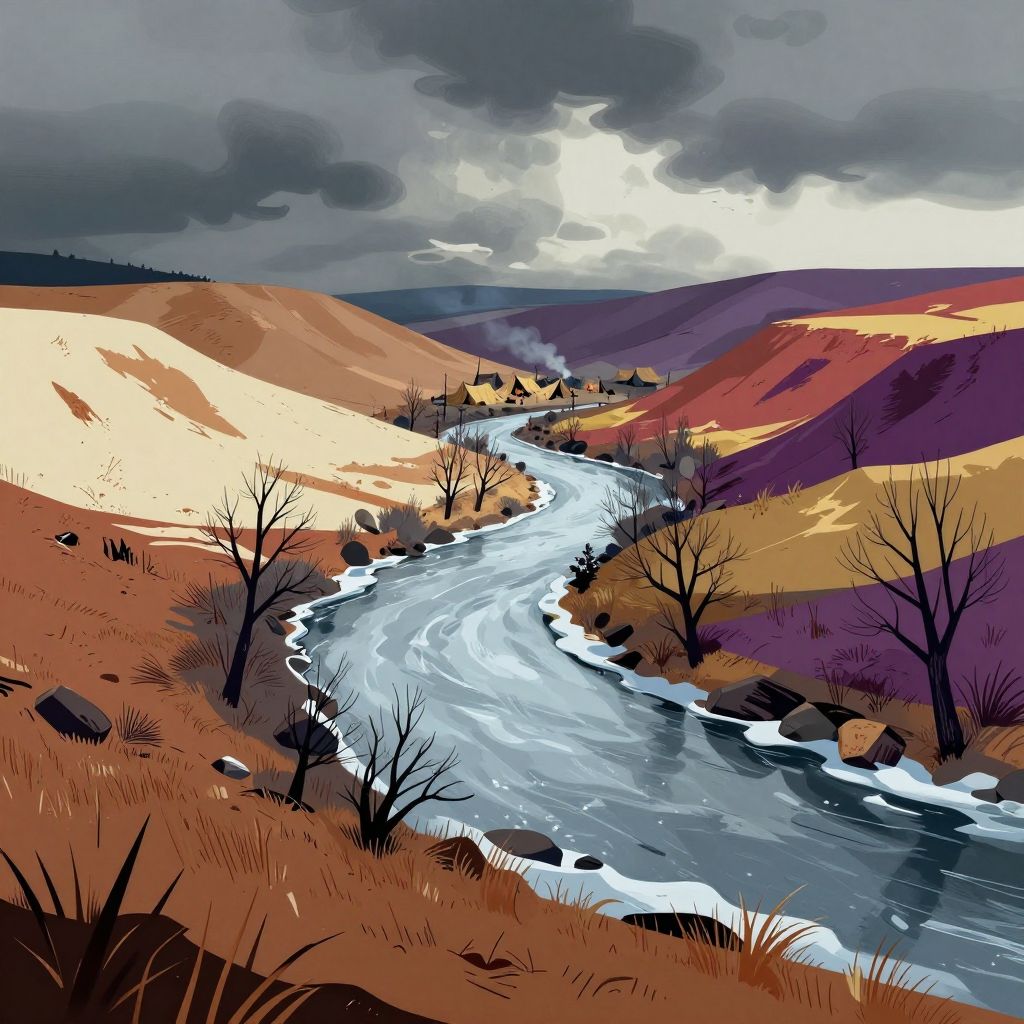
December 218 BCE. The Roman consul Tiberius Sempronius Longus stood in his command tent, staring at reports that should have been impossible. Hannibal Barca was in Italy. Not somewhere along the coast, where Roman spies had been watching. Not sailing across the Mediterranean, where Roman naval power could intercept him. He had materialized in the Po Valley, having crossed the Alps with an army and elephants — something every Roman strategist had dismissed as fantasy.
Hannibal was camped near the Trebia River, a small waterway running through the plains of northern Italy. His army was depleted from the alpine crossing — perhaps 20,000 infantry and 6,000 cavalry remained from the 50,000 men who had left Spain. Rome had assembled 40,000 soldiers to meet him. The math seemed simple.
Sempronius wanted glory. His fellow consul, Publius Cornelius Scipio, had already fought Hannibal once and lost badly at the Battle of Ticinus. Scipio had been wounded and was recovering. If Sempronius could defeat the Carthaginian invader before Scipio returned to the field, the victory — and all the political rewards that came with it — would be his alone.
What Sempronius didn't understand was that Hannibal had been planning this battle since before the Romans even knew he was in Italy. The Carthaginian general had studied Roman tactics, Roman psychology, and Roman ambition. He knew exactly what kind of man Sempronius was. He was about to use that knowledge to destroy him.
The Strategic Context
The Second Punic War had begun after Hannibal besieged and captured Saguntum in 219 BCE, a Roman ally on the Spanish coast. Rome demanded that Carthage surrender Hannibal for punishment. Carthage refused. War was declared, and both sides expected it to be fought in Spain and North Africa — the traditional theaters of Roman-Carthaginian conflict.
Hannibal had other plans. Rather than wait for Rome to bring the war to him, he would bring it to them. His march from Spain through southern Gaul and across the Alps caught Rome completely off guard. The Senate had positioned legions to defend against coastal invasions and seaborne attacks. No one had stationed troops in the Po Valley to watch for an army that couldn't possibly exist.
When Hannibal descended from the mountains, he started recruiting among the Gallic tribes of northern Italy. These Celtic peoples had been conquered by Rome only a generation earlier. Many still harbored deep resentment against their Roman overlords. Hannibal presented himself as a liberator, promising to free them from Roman domination. Thousands of Gauls joined his army, eager for revenge and plunder.
By December, Hannibal had rebuilt some of his strength. His forces included veteran Carthaginian troops — survivors of the alpine crossing who had already proven their loyalty and endurance — along with Spanish infantry, Numidian cavalry from North Africa, and newly recruited Gallic warriors. A polyglot army united by one man's vision and one shared enemy.
Rome's response had been swift but uncoordinated. Consul Scipio had rushed north with one army but had been defeated at the Ticinus River when his cavalry clashed with Hannibal's superior horsemen. Wounded and humiliated, Scipio retreated to link up with the army of his colleague Sempronius, who had been recalled from Sicily.
The combined Roman force encamped on the eastern bank of the Trebia River, directly across from Hannibal's position. Both armies waited as the weather turned bitter and snow began to fall.
The Night Before
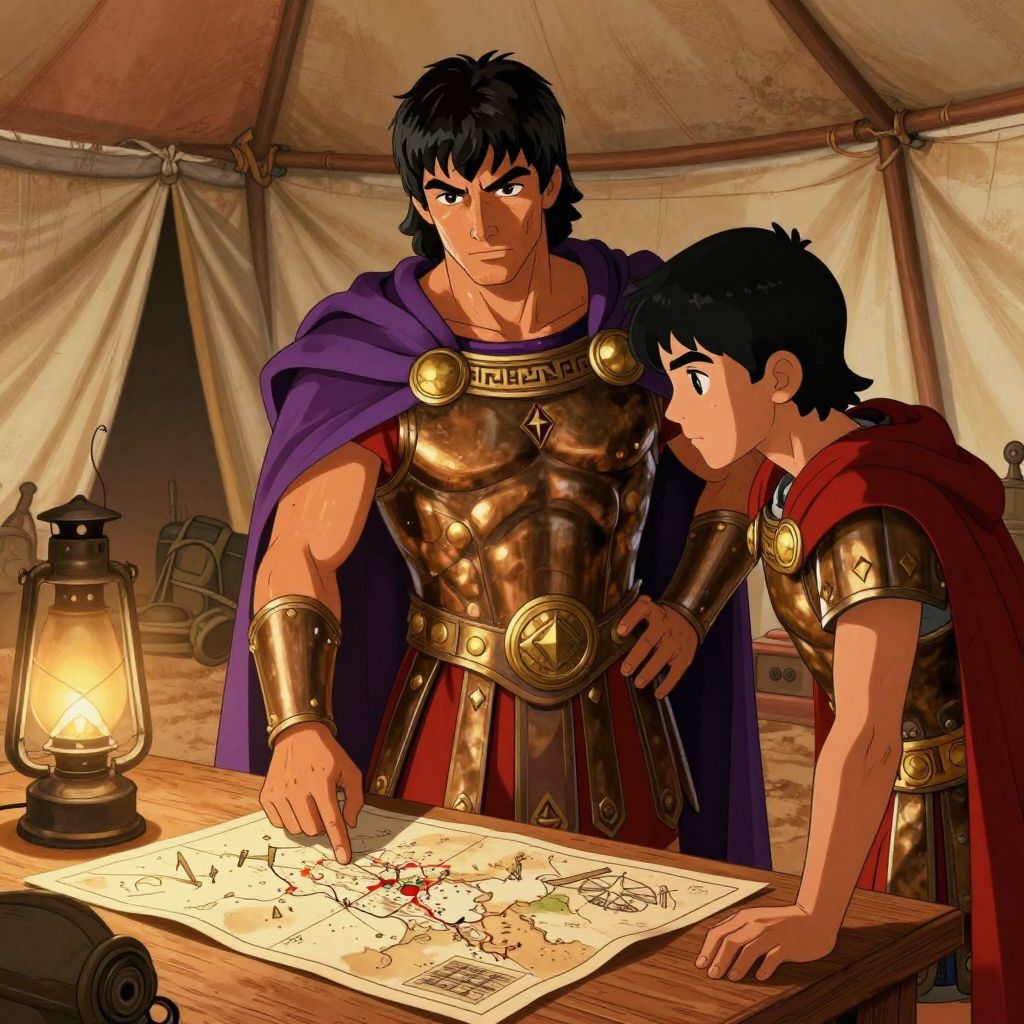
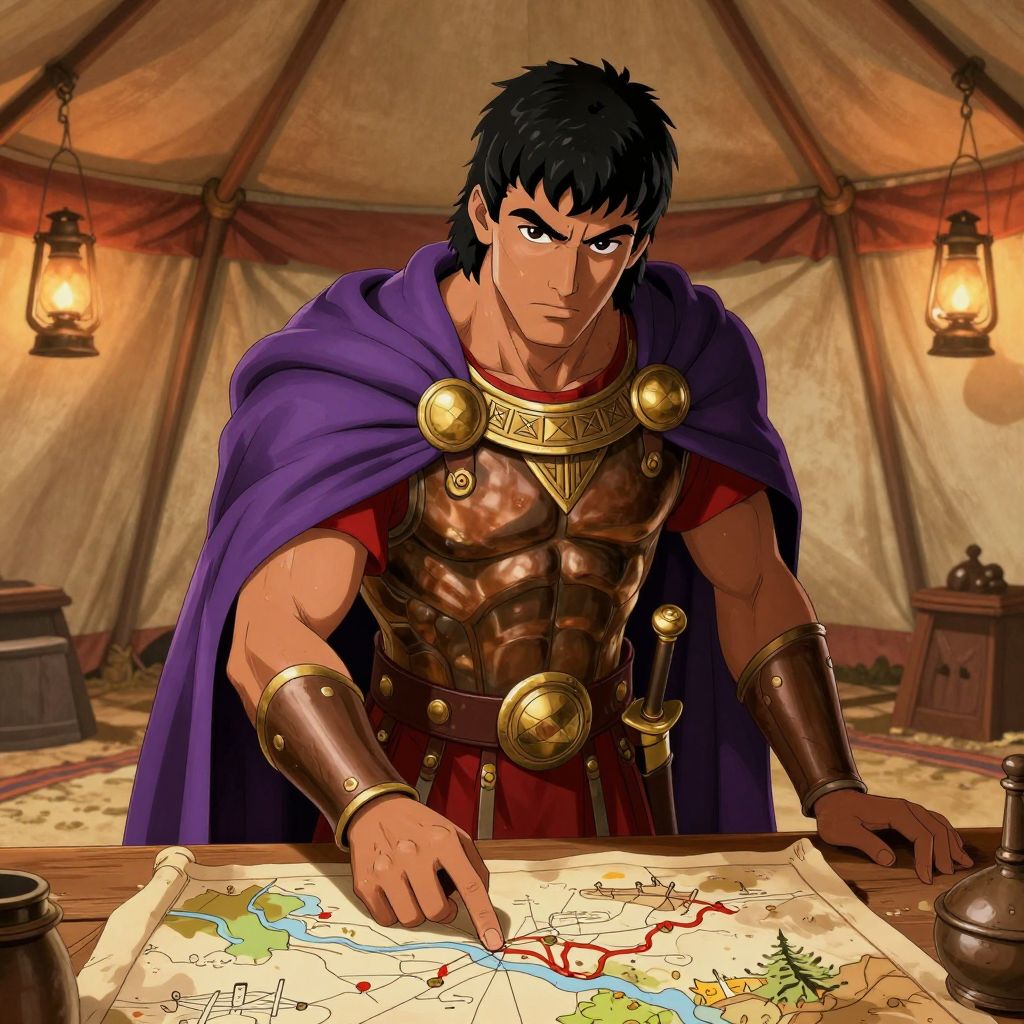
On the night before the battle, Hannibal called his younger brother Mago into his command tent. Mago was about twenty-five years old, a skilled cavalry commander who had learned warfare at his brother's side. The two men studied a rough map of the terrain around the Trebia — the river, the frozen grasslands, and most importantly, a stretch of riverbank thick with winter brush and scrub vegetation.
Hannibal pointed to the spot. His orders were precise: Mago would take 2,000 picked men — 1,000 cavalry and 1,000 infantry, the best soldiers in the army — and conceal them in that brush. They would leave before dawn, while it was still dark, and they would not move, not make a sound, until Hannibal gave the signal. No matter what they heard, no matter how the battle seemed to be going, they would wait.
Mago understood. This was not the first time his brother had used concealment and surprise to defeat a larger enemy. The Barca family had learned war in Spain, where guerrilla tactics and ambushes were essential survival skills against hostile tribes. Hannibal was applying those lessons to the conventional warfare of the Mediterranean world — and Roman generals, trained to fight in open battle on favorable ground, had no idea how to respond.
The ambush force moved out in the predawn darkness. They found their position and settled in to wait, horses muzzled, men forbidden to speak. The temperature dropped. Frost formed on their armor and cloaks. They waited.
The Bait
At first light, Hannibal sent his Numidian cavalry toward the Roman camp. The Numidians were legendary horsemen from the deserts of North Africa — light cavalry who rode small, fast horses without saddles and fought with javelins and short swords. Perfect for harassment and pursuit, capable of striking quickly and vanishing before an enemy could respond.
The Numidians approached the Roman defenses, threw javelins, shouted insults, and made as much noise as possible. Roman sentries sounded the alarm. Officers roused sleeping soldiers. Then, just as the Romans began to form up for battle, the Numidians wheeled their horses and retreated across the frozen plain toward the Trebia.
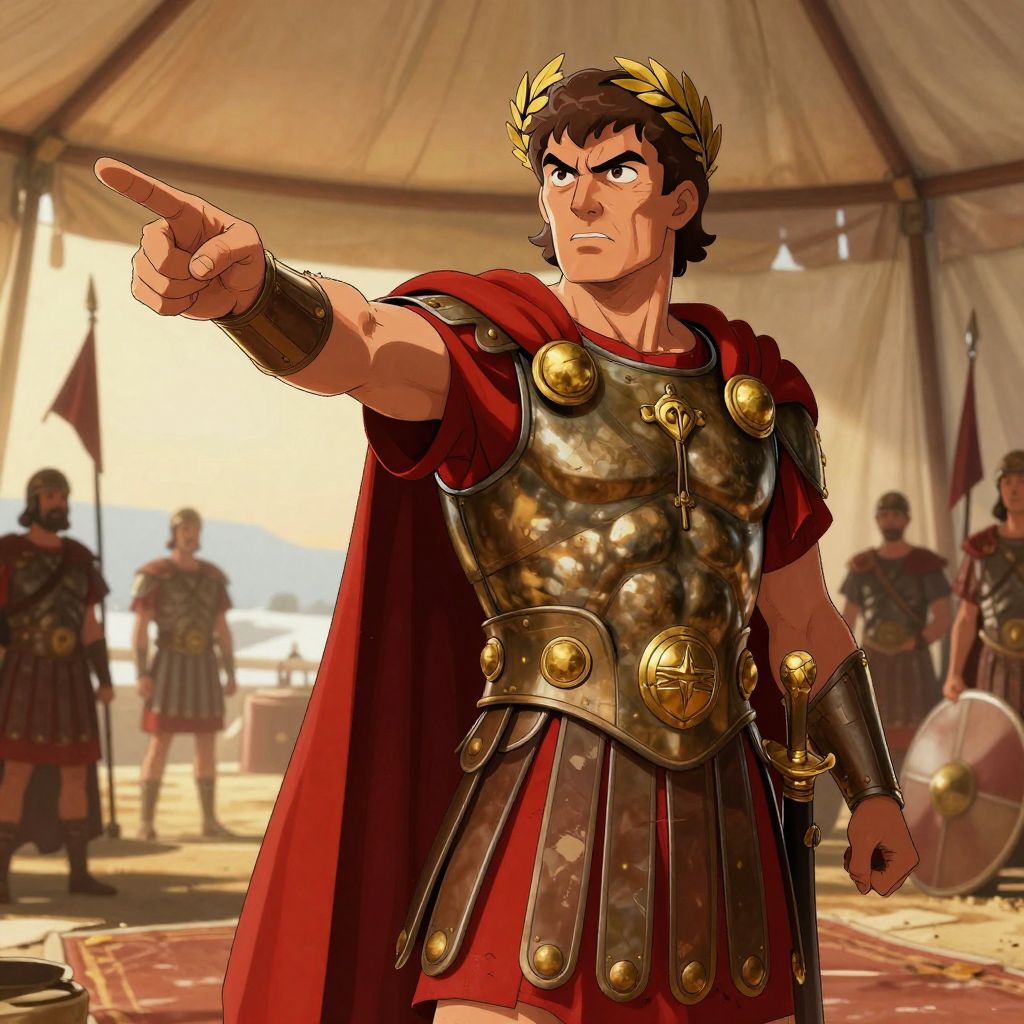
Inside the Roman camp, Consul Sempronius saw exactly what Hannibal wanted him to see: an enemy in retreat, an opportunity for decisive action. The Carthaginians were running. If he attacked now, immediately, he could catch them before they could organize a defense.
Sempronius' officers urged caution. Consul Scipio, still recovering from his wound, advised waiting. Let the men eat breakfast. Send scouts to examine the terrain. Consider the possibility of a trap.
Sempronius refused. Every hour of delay was an hour for his co-consul to recover and share command — and share credit for the victory. The Carthaginians were clearly afraid. This was the moment.
He gave the order: the entire army would cross the Trebia and destroy Hannibal's forces.
Into the Freezing Water
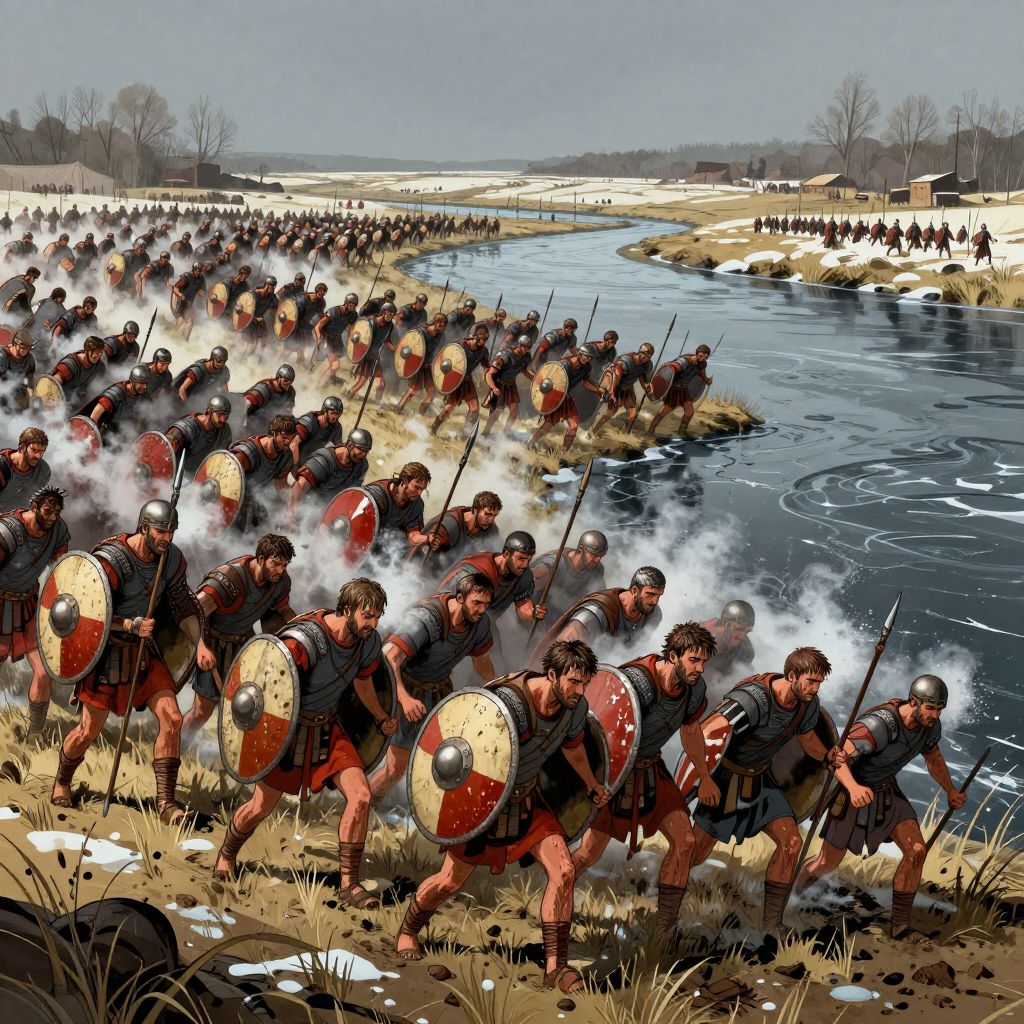
The Roman soldiers had not eaten breakfast. They had been roused from sleep by the alarm and immediately ordered to march. Now, without food in their bellies and with the winter sun barely above the horizon, they waded into the Trebia River.
The water was chest-high in places. December in northern Italy meant near-freezing temperatures, and the river had not fully frozen — it was liquid ice, cold enough to stop a man's heart if he stayed in too long. The current was swift, fed by snowmelt from the mountains.
Forty thousand Romans pushed through that water. Their chainmail armor soaked through and became heavier with every step. Their leather sandals filled with water. The cold crept into their muscles, stiffening joints and slowing reflexes. By the time the first legionaries reached the far bank, they were shaking uncontrollably, teeth chattering, hands too numb to grip their weapons properly.
And the battle hadn't even started.
On the western bank, Hannibal's army was waiting — rested, fed, and warm. His soldiers had eaten a hot breakfast and rubbed their bodies with oil to protect against the cold. His cavalry was mounted and ready. His infantry stood in formation, watching the Romans stumble out of the river like half-drowned men.
The contrast could not have been more stark. One army was prepared for battle. The other had already been defeated before the first sword was drawn.
The Trap Closes
The battle began with cavalry clashes on both flanks. Hannibal's Numidian and Spanish horsemen vastly outnumbered the Roman cavalry, and the outcome was never in doubt. Within the first hour, Roman cavalry on both wings had been driven from the field. The flanks of the Roman infantry were now exposed.
In the center, the Roman legions advanced against Hannibal's line. Here, the Carthaginian general had placed his weakest troops — newly recruited Gallic warriors and Spanish infantry. These men were brave but not professional soldiers. When the Roman legions hit them, they began to give ground.
The Romans pressed forward. Their training told them this was victory — when the enemy retreats, you advance. They pushed harder, packing tighter together as they drove into the Carthaginian center. Officers shouted encouragement. This was working. The barbarians were breaking.
They were wrong.
Hannibal's center was retreating by design. The Gallic and Spanish troops had orders to fall back slowly, drawing the Romans deeper and deeper into the Carthaginian formation. Meanwhile, Hannibal's elite African infantry — veterans in captured Roman equipment, the best soldiers in his army — waited on the flanks.
As the Romans pushed into the bulging center, the African infantry pivoted inward. The cavalry, having routed the Roman horsemen, wheeled around to attack from behind. The Roman advance, which had seemed so promising, was now surrounded on three sides.
And then came Mago's signal.
The Killing Ground
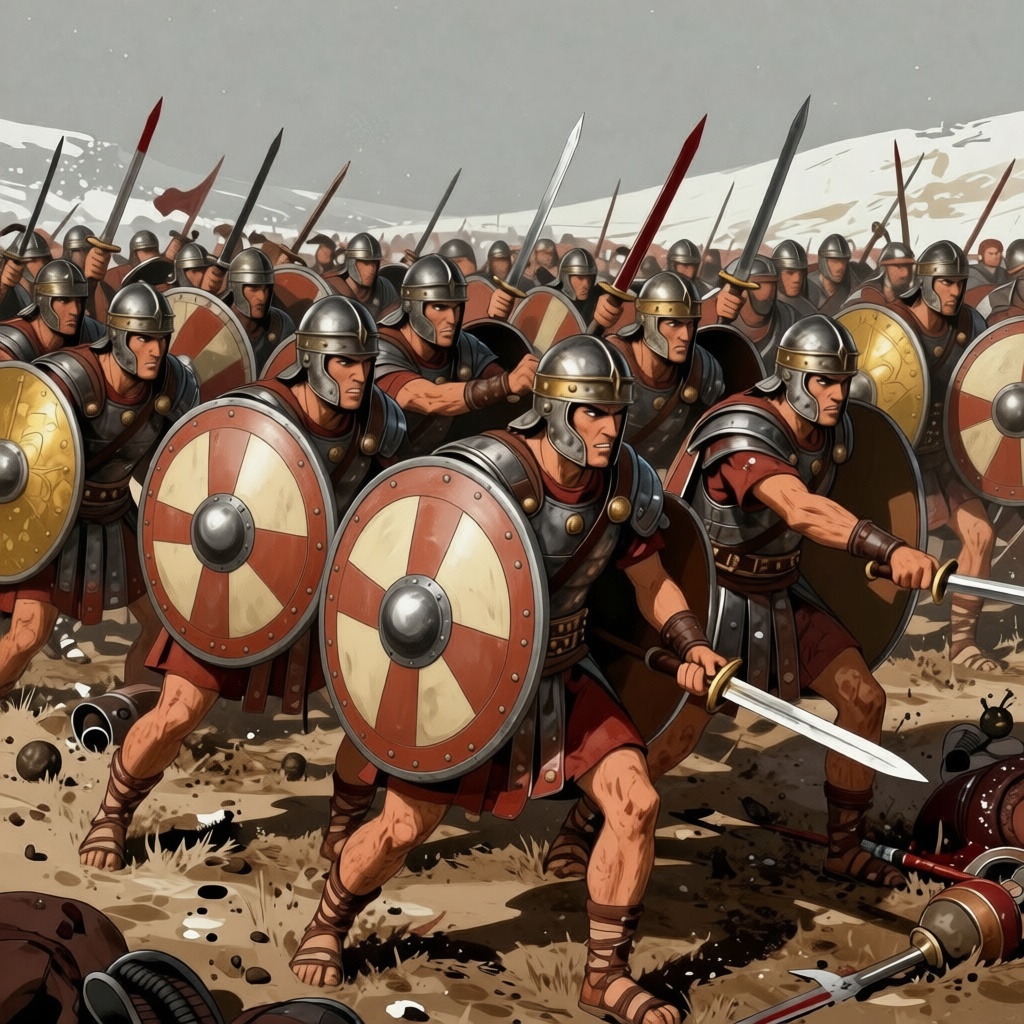
The ambush force had waited for hours in the freezing brush, silent and motionless. When Hannibal's signal reached them — the sound of trumpets, or perhaps a prearranged banner — they exploded from their hiding place.
Two thousand fresh troops — cavalry and infantry — slammed into the Roman rear. The legionaries, already surrounded on three sides, now found enemies behind them as well. Complete encirclement. The trap had closed.
What followed was not a battle but a massacre.
The Romans tried to turn and face the new threat, but they were packed too tightly to maneuver. Men at the rear couldn't see what was happening at the front. Officers lost control of their units. The disciplined Roman formations, which depended on coordinated movement and mutual support, disintegrated into chaos.
Soldiers who tried to retreat found the river behind them — the same freezing current they had crossed that morning, now cutting off any escape. Those who made it to the water were cut down by pursuing cavalry or died in the icy flow. Others tried to fight their way out but found themselves surrounded by enemies on all sides.
The killing continued for hours. By the time darkness fell, approximately 30,000 Roman soldiers were dead or captured. Only about 10,000 escaped — most of them the men who had pushed so deep into Hannibal's center that they broke through the other side entirely and simply kept running, fleeing to the nearby town of Placentia.
The Cost of Victory
Hannibal's victory was not without cost. His center had absorbed the full weight of the Roman charge, and the Gallic warriors in particular suffered terribly. These men had joined his army seeking glory and plunder; instead, they found themselves holding the line against the most disciplined infantry in the Mediterranean world.
The exact Carthaginian casualties are unknown, but ancient sources suggest they were significant — perhaps several thousand dead, mostly among the Gauls. Hannibal's professional Carthaginian and African troops had been largely protected by the tactical design of the battle, but his allied forces paid a heavy price.
Still, by any measure, the Battle of Trebia was a catastrophic defeat for Rome. A consular army of 40,000 men had been effectively destroyed. The survivors who made it to Placentia were exhausted, demoralized, and in no condition to continue the campaign. Consul Sempronius himself survived the battle and the river crossing, but his military reputation was ruined.
The wounded Scipio was evacuated south. Sempronius, faced with the wreckage of his ambitions, sent a message to Rome claiming that bad weather had robbed him of victory. The Senate was not fooled.
Rome's Response
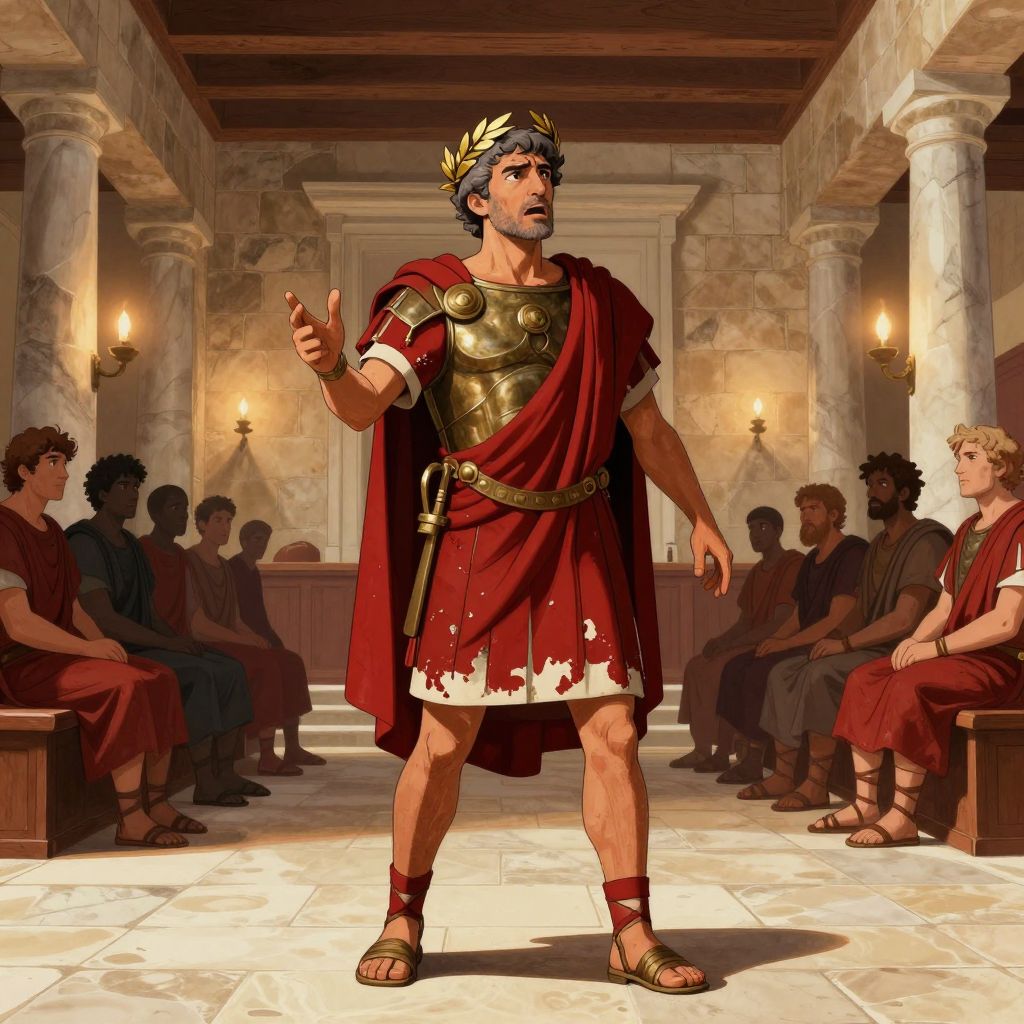
When word of the disaster reached Rome, panic gripped the city. The people remembered the Gallic sack of 390 BCE, when Celtic warriors had captured and burned Rome itself. For over a century, the possibility of northern barbarians descending on the city had been Rome's deepest fear. Now a foreign army was loose in Italy, and it had just annihilated a Roman army of 40,000 men.
Prayers were offered in every temple. Mothers clutched their children and wondered if they should flee. Merchants closed their shops. The streets filled with rumors, each more terrifying than the last. Hannibal was already at the gates. Hannibal had a million men. Hannibal was coming to enslave them all.
But the Senate did not panic. In the darkest hour of the crisis, Roman political leaders made a decision that would define their civilization: they would not surrender. They would not negotiate. They would raise new legions.
Within weeks, Rome had assembled another army. Forty thousand more men — farmers, craftsmen, young men who had never held a sword — were conscripted, equipped, and trained. Roman allies in central Italy were called upon to provide additional troops. The state treasury was emptied to pay for weapons and supplies.
This response revealed something essential about Roman character. Any other Mediterranean power — Carthage included — would have sought peace after such a devastating defeat. The accepted practice of ancient warfare was that battles decided wars; when you lost decisively, you negotiated. Rome refused to play by those rules. They would fight on, no matter the cost, until they won or were destroyed.
Hannibal had won a great victory. He had not won the war.
The Road to Cannae
The spring of 217 BCE brought new armies and new disasters. The Romans, having learned nothing from Trebia, sent another consular force north to confront Hannibal. This army, led by Consul Gaius Flaminius, was ambushed at Lake Trasimene in one of the most devastating traps in military history. Fifteen thousand Romans died in three hours, caught between Hannibal's forces and the waters of the lake.
Rome responded by appointing Quintus Fabius Maximus as dictator with emergency powers. Fabius adopted a strategy of avoiding pitched battle, shadowing Hannibal's army and attacking his foragers and supply lines without committing to a decisive engagement. This "Fabian strategy" infuriated many Romans who wanted revenge, but it prevented further catastrophic defeats.
However, Roman patience eventually ran out. In 216 BCE, the Senate assembled the largest army Rome had ever fielded — over 80,000 men — and sent it to destroy Hannibal once and for all. The two forces met at a place called Cannae, in southern Italy.
What followed was the single worst day in Roman military history. Using tactics even more devastating than those at Trebia, Hannibal achieved a double envelopment that killed between 50,000 and 70,000 Roman soldiers in a single afternoon. The Battle of Cannae became, and remains, the textbook example of tactical annihilation.
Yet even after Cannae, Rome refused to surrender. The Senate famously refused to ransom captured Roman soldiers, declaring that Rome had no need of soldiers who allowed themselves to be taken alive. New legions were raised. New generals were trained. The war continued for another thirteen years.
Hannibal's Tactical Legacy
The Battle of Trebia established patterns that would define Hannibal's Italian campaign. His combination of superior intelligence, careful preparation, and exploitation of Roman aggression proved devastatingly effective against commanders who valued courage over caution.
Several elements of the Trebia battle became Hannibal's signature tactics. The use of concealed forces to deliver a decisive blow at the critical moment appeared again at Lake Trasimene, where an entire army was hidden in fog and morning mist. The deliberate weakening of his center to draw enemy forces forward was perfected at Cannae, where the Roman advance into a retreating crescent sealed their doom.
Hannibal also demonstrated his understanding of psychological warfare. By sending cavalry to harass the Roman camp at dawn, he provoked exactly the response he wanted — an impulsive attack without proper preparation. He knew Roman commanders craved glory and feared being seen as cowards. He used their own ambitions against them.
Military historians have studied the Trebia for over two thousand years. Napoleon reportedly analyzed Hannibal's campaigns extensively. German military theorists of the nineteenth century drew on Trebia and Cannae when developing their doctrines of encirclement and annihilation. The battle remains required study at military academies worldwide.
Why Trebia Still Matters
The Battle of Trebia marked the beginning of Rome's darkest decade. It proved that Hannibal was not merely a capable general but a military genius capable of destroying Roman armies at will. It shattered the myth of Roman invincibility that had been built over two centuries of expansion. And it set the stage for the even greater disasters that followed.
Yet the battle also revealed Rome's greatest strength: an absolute refusal to accept defeat. Other peoples, faced with such losses, would have made peace. Rome raised new armies. Other states would have sought terms after Cannae. Rome kept fighting. This stubborn, almost irrational determination to continue regardless of casualties eventually wore Hannibal down. He won every battle but could not win the war.
The Trebia remains a masterclass in tactical warfare — how terrain, timing, and psychology can overcome numerical disadvantage. It also serves as a warning about the dangers of impulsive command, of letting personal ambition override professional judgment. Sempronius had victory in his grasp if only he had waited, scouted, and prepared. Instead, his impatience killed thirty thousand men.
Hannibal would spend fifteen years in Italy, winning battle after battle, yet never quite able to force Rome's surrender. The war that began at the Trebia would not end until 201 BCE, when a Roman army under Scipio Africanus — the son of the wounded consul who had advised caution that December morning — finally defeated Hannibal at the Battle of Zama in North Africa.
But that morning in December 218 BCE, as Roman soldiers dragged themselves out of the freezing Trebia into Hannibal's trap, none of that was certain. All that was certain was that Rome had met an enemy unlike any it had faced before — and for the first time, Rome was losing.
Frequently Asked Questions
1How many Romans died at the Battle of Trebia?
About 30,000 Roman soldiers were killed or captured at Trebia. The Roman army numbered around 40,000 men, and only about 10,000 escaped — mostly those who broke through Hannibal's center and fled to Placentia.
2Why did the Roman consul attack without preparation?
Consul Tiberius Sempronius Longus was driven by ambition. His co-consul Scipio had been wounded in an earlier engagement, and Sempronius wanted to defeat Hannibal before Scipio recovered and could share credit for the victory. This impatience led him to order an immediate attack without allowing his soldiers to eat breakfast or properly scout the terrain.
3What made Hannibal's tactics at Trebia so effective?
Hannibal combined multiple elements: a concealed ambush force of 2,000 men hidden in brush near the river, a deliberately weakened center that drew Romans forward, superior cavalry that swept away Roman horsemen and attacked from the flanks, and the psychological manipulation that provoked Sempronius into a hasty attack. He also ensured his own troops were rested and fed while the Romans crossed freezing water on empty stomachs.
4What happened after the Battle of Trebia?
Rome refused to surrender despite the devastating defeat. The Senate raised new legions and continued the war. The following spring, Hannibal destroyed another Roman army at Lake Trasimene, and in 216 BCE achieved his masterpiece at Cannae. Yet Rome kept fighting for another thirteen years until finally defeating Hannibal in North Africa in 202 BCE.
5How did crossing the freezing river affect the Roman soldiers?
The Trebia River was chest-high and near-freezing in December. Roman soldiers waded through the icy water on empty stomachs, their armor and equipment becoming waterlogged. By the time they reached the far bank, they were numb with cold, exhausted, and barely able to grip their weapons — while Hannibal's army waited for them fully rested and warmed by a hot breakfast.
Experience Hannibal's Campaign
From the oath of eternal hatred to the trap at Trebia, hear Hannibal's war told by an immortal witness who watched Rome's darkest days unfold.


Listen to Related Stories
The Trap at Trebia
4 minRome sent forty thousand men to crush him. They thought this would be easy.

Key Figures
Listen to the Full Story
Experience history through immersive audio lessons narrated by Lumo, your immortal wolf guide.