The Hunt That Lasted Twelve Years
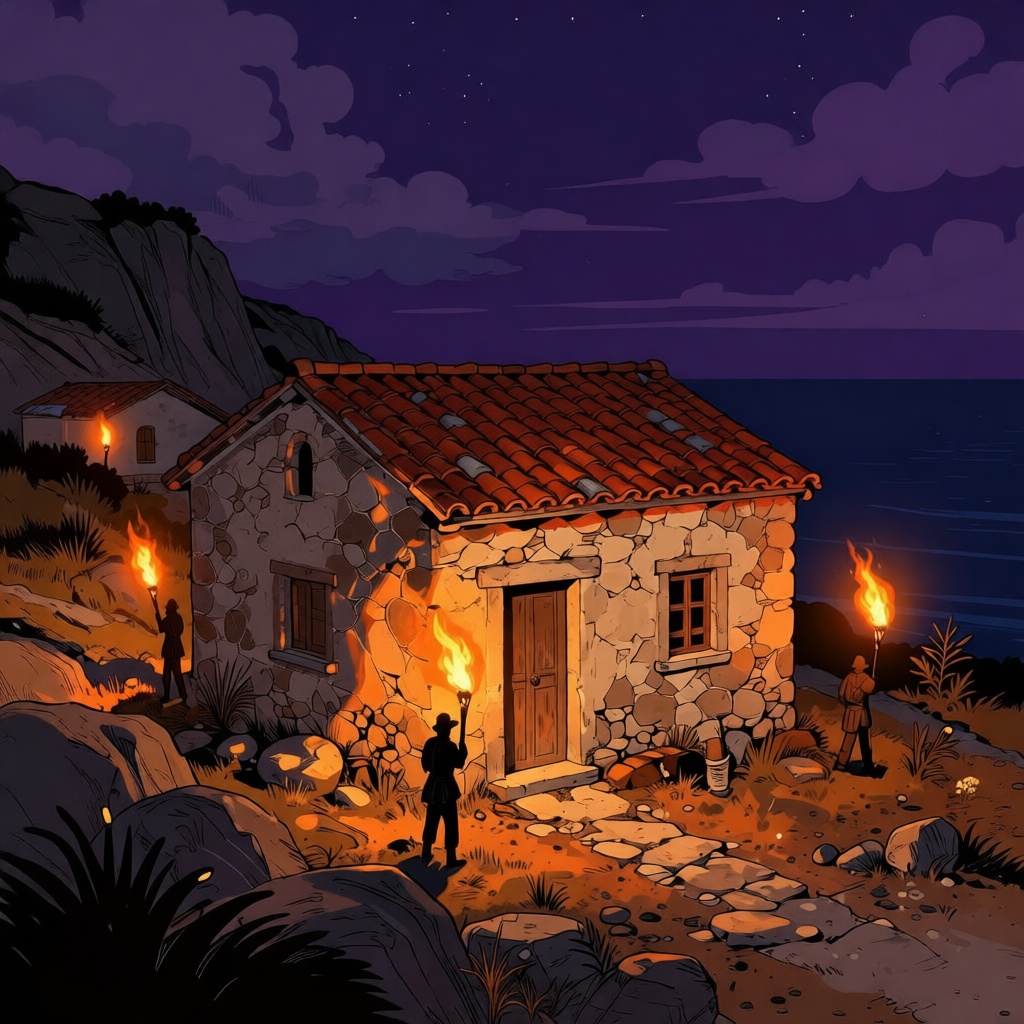
The most feared general in Roman history died in a small house on the Black Sea coast, surrounded by soldiers who arrived too late to capture him. Hannibal Barca was sixty-four years old. He had been running from Rome for twelve years, and he had finally run out of kingdoms willing to shelter him.
What made Rome pursue an old man for over a decade? The same thing that had made them fear him since he was a young general leading elephants over the Alps: Hannibal had come closer to destroying Rome than anyone in their history. He had killed tens of thousands of Roman soldiers at Trebia, Lake Trasimene, and Cannae. He had roamed Italy for fifteen years, undefeated, turning Rome's allies against them.
Even in exile, even old and alone, Rome considered him dangerous. They were probably right.
After the War: Hannibal in Politics
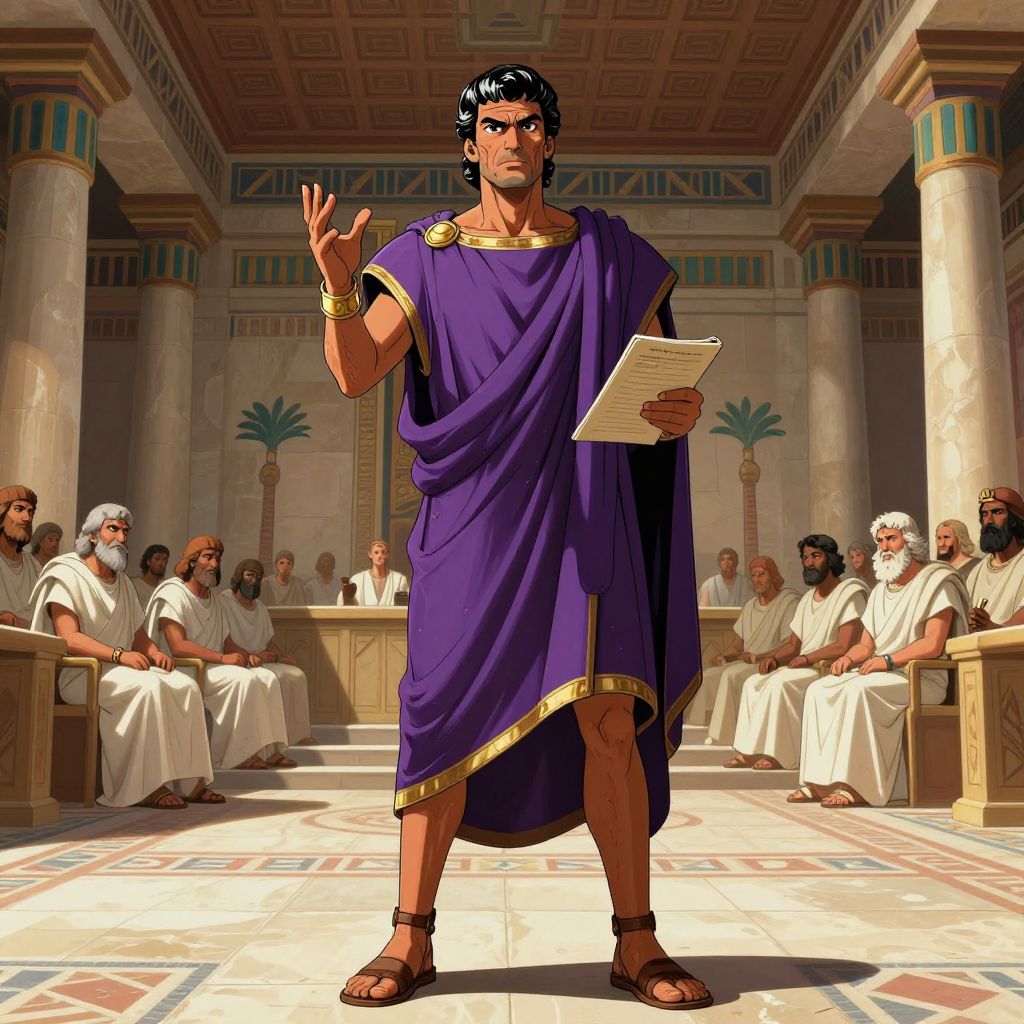
After the catastrophic defeat at Zama in 202 BCE, Hannibal returned to Carthage not as a disgraced general but as a reformer. The war was over. Carthage had surrendered. The peace terms were brutal: massive war reparations to Rome, the surrender of the Carthaginian fleet, and restrictions on Carthage's ability to wage war without Roman permission.
Hannibal threw himself into politics. In 196 BCE, he was elected suffete — the highest political office in Carthage, roughly equivalent to a Roman consul. He immediately began attacking the corruption that had plagued Carthage during the war.
The Carthaginian treasury was nearly empty, but Hannibal discovered that wealthy oligarchs had been embezzling funds meant for the war effort. The same men who had failed to send him reinforcements when he was winning in Italy, the same senators who had let him fight with depleted supplies while they enriched themselves — Hannibal exposed them all.
He reformed the tax system, cracked down on corrupt officials, and began restructuring Carthage's finances so the city could actually pay its war indemnity to Rome. Within a few years, Carthage was recovering economically. Its trade routes were reopening. The city was showing signs of becoming prosperous again.
This terrified Rome.
The Betrayal
The Carthaginian oligarchs that Hannibal had exposed weren't going to accept humiliation quietly. They couldn't defeat him in the political arena — he was too popular with the common people, and his reforms were clearly working. So they took a different approach.
In 195 BCE, Carthaginian senators sent word to Rome that Hannibal was secretly rebuilding Carthage's military power. They claimed he was in contact with Antiochus III, the Seleucid king who ruled a vast empire stretching from Syria to the borders of India. They accused him of planning another war.
Rome didn't need much convincing. The Senate dispatched an embassy to Carthage demanding Hannibal's surrender. They wanted him in Rome, where he could be tried and executed.
Hannibal didn't wait to find out if Carthage would hand him over. At fifty-two years old, the general who had spent his life fighting Rome found himself fleeing his own city, betrayed by his own countrymen. He slipped out of Carthage by night and sailed east, toward the only hope he had left: finding a king powerful enough to challenge Rome again.
The Eastern Exile
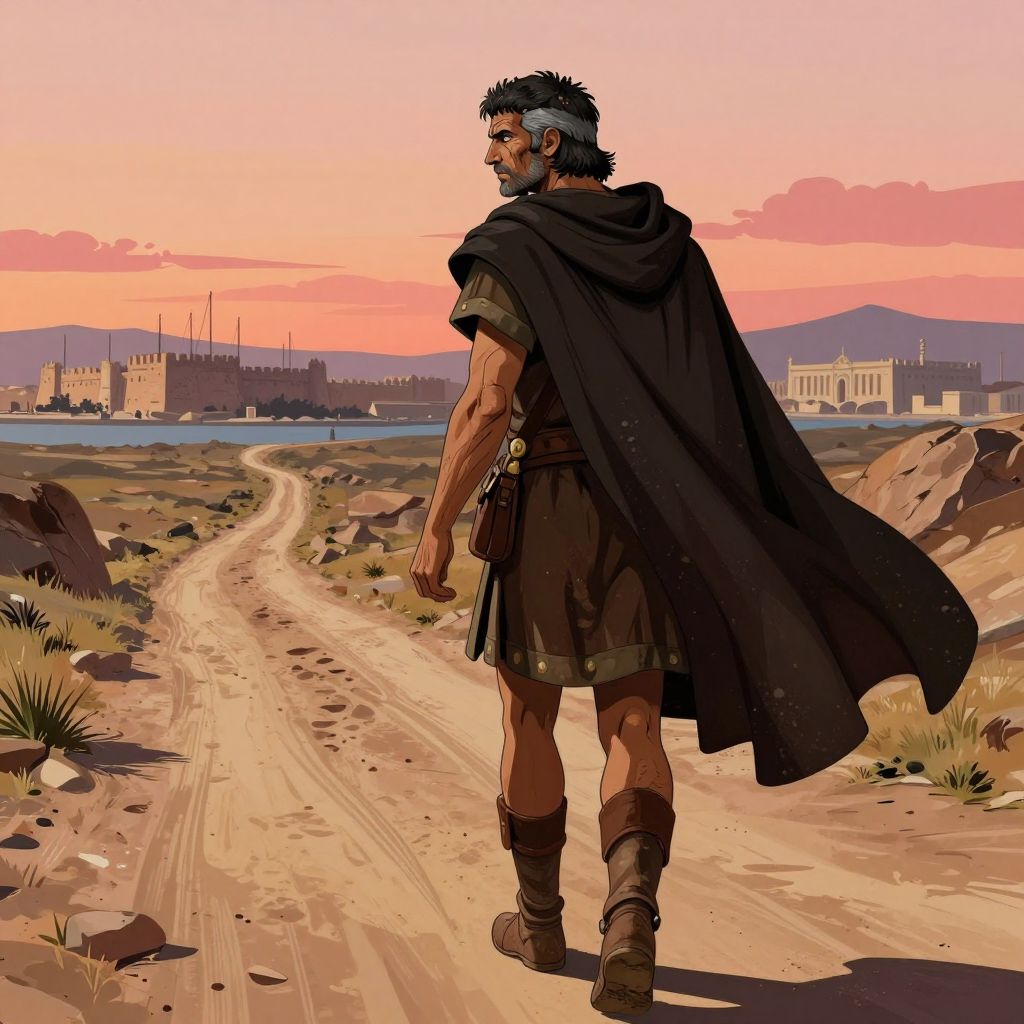
Hannibal's first destination was the court of Antiochus III, the Seleucid emperor. Antiochus ruled the largest empire in the eastern Mediterranean — the remnants of Alexander the Great's conquests, stretching from the Aegean Sea to the Hindu Kush. He had ambitions of his own regarding Roman expansion into Greek territory.
For Antiochus, having Rome's greatest enemy as a military advisor was an extraordinary propaganda coup. Hannibal arrived at the Seleucid court sometime around 195-194 BCE and began advising the king on strategy against Rome.
But Hannibal was operating in unfamiliar territory. Court politics in the Hellenistic kingdoms were treacherous, and Hannibal's blunt military manner made enemies among Antiochus's Greek advisors. They resented this Carthaginian interloper who kept pushing for war with Rome. Some historians suggest they deliberately undermined his strategic recommendations.
When war between Rome and the Seleucid Empire finally came in 192 BCE, Antiochus didn't give Hannibal command of his armies. Instead, the king led personally, with Hannibal relegated to a minor naval command in the eastern Mediterranean. It was a waste of the greatest tactical mind of the age.
The war went badly. Roman legions, led by Lucius Cornelius Scipio (brother of the Scipio who had defeated Hannibal at Zama), crushed the Seleucid army at the Battle of Magnesia in 190 BCE. The peace terms stripped Antiochus of his territories in Asia Minor and imposed massive reparations. One of Rome's specific demands: hand over Hannibal.
Once again, Hannibal fled before he could be surrendered.
Kingdom After Kingdom
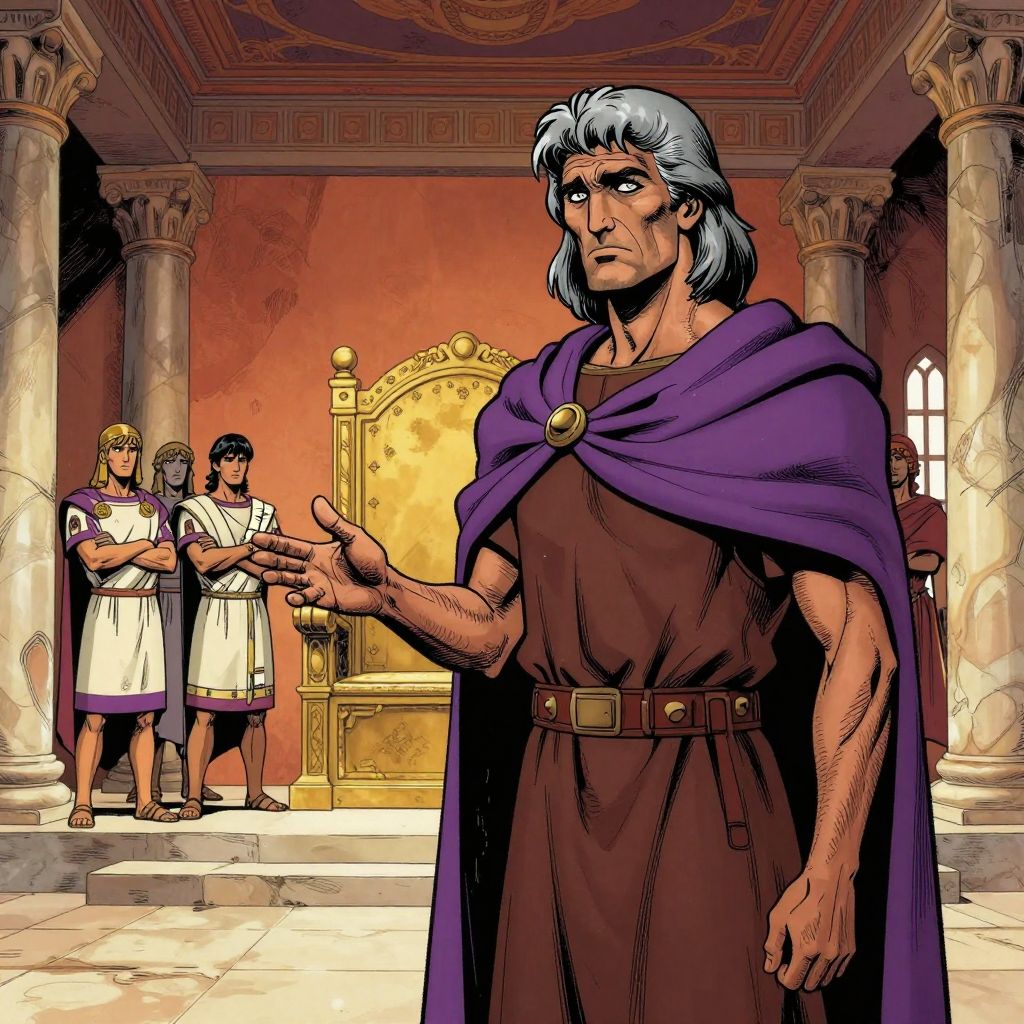
The pattern repeated itself across the eastern Mediterranean. Hannibal would arrive at a royal court, offer his services as a military advisor, and begin planning campaigns against Rome or its allies. Then Roman diplomats would appear, demanding his surrender. Each time, he had to move on before the local king decided that peaceful relations with Rome were worth more than harboring an aging exile.
From the Seleucid Empire, Hannibal fled to Armenia, where King Artaxias I gave him temporary refuge. According to some sources, Hannibal helped design and found the city of Artaxata, which would later become the Armenian capital. But Roman pressure followed him even there.
By around 188 BCE, Hannibal had moved to the small kingdom of Bithynia on the southern coast of the Black Sea. King Prusias I of Bithynia was engaged in a territorial war with neighboring Pergamon, a Roman ally. Hannibal's military expertise made him valuable, and for a few years, he served as Prusias's admiral and general.
According to Cornelius Nepos, Hannibal won a naval victory for Prusias using an innovative and somewhat bizarre tactic: he ordered his sailors to throw clay pots full of venomous snakes onto the decks of enemy ships. The Pergamene sailors, suddenly dealing with serpents underfoot, lost their discipline and the battle.
It was the last victory Hannibal would ever win.
The Romans Close In
By 183 BCE, Rome's patience with Bithynia's harboring of Hannibal had run out. The Senate dispatched Titus Quinctius Flamininus, one of Rome's most famous generals and diplomats, to Prusias's court. Flamininus was the man who had declared Greek freedom from Macedonian rule at the Isthmian Games in 196 BCE — he knew how to combine military pressure with diplomatic theater.
Flamininus made it clear to Prusias: continuing to shelter Hannibal meant making an enemy of Rome. For a small kingdom like Bithynia, that was a death sentence. Prusias was fighting just to hold his borders against Pergamon. He couldn't afford to antagonize the superpower that had just crushed the Seleucid Empire.
The king made his choice. He agreed to surrender Hannibal to Roman custody.
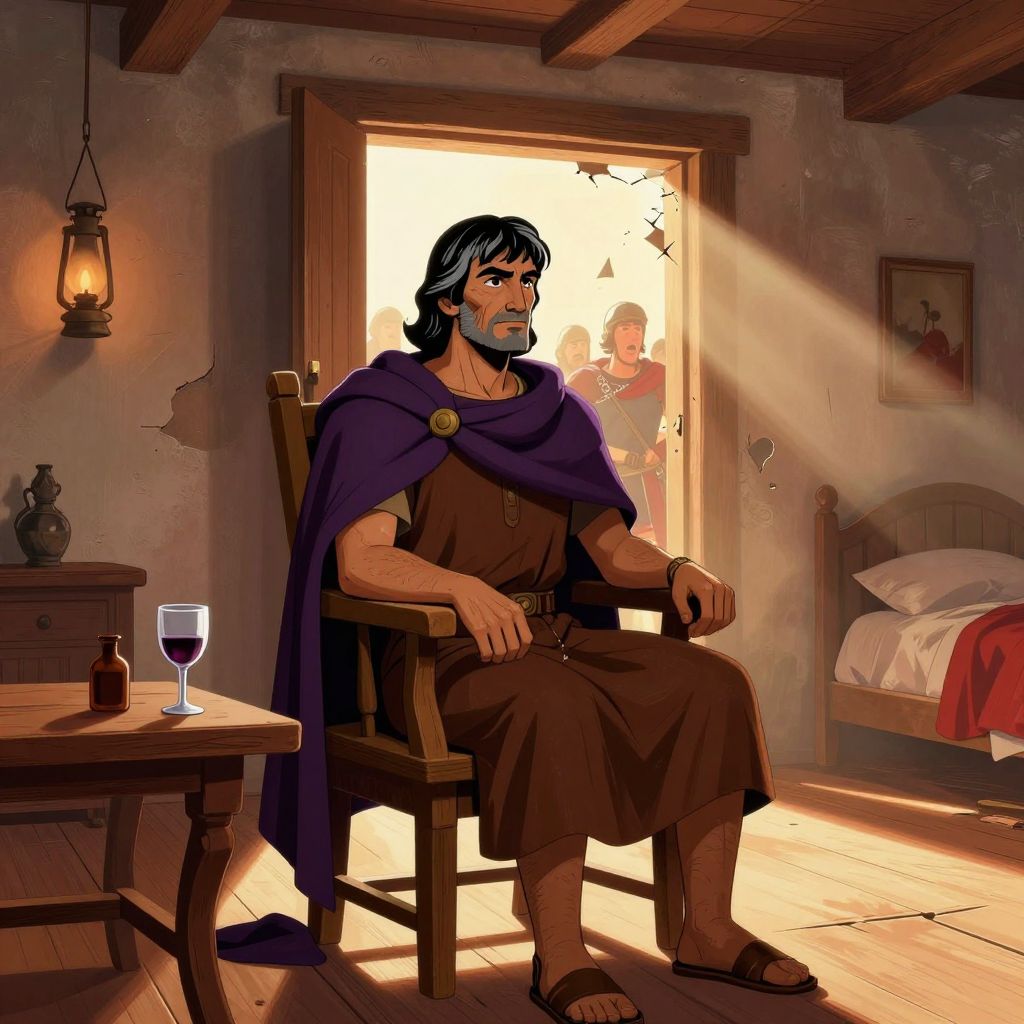
What happened next has been described by multiple ancient sources, though the details vary. Plutarch, Livy, Cornelius Nepos, and others all recorded versions of Hannibal's final night. The core elements are consistent: Hannibal learned that Bithynian soldiers were surrounding his house, that escape was impossible, and that he would be handed over to Rome.
The Last Night
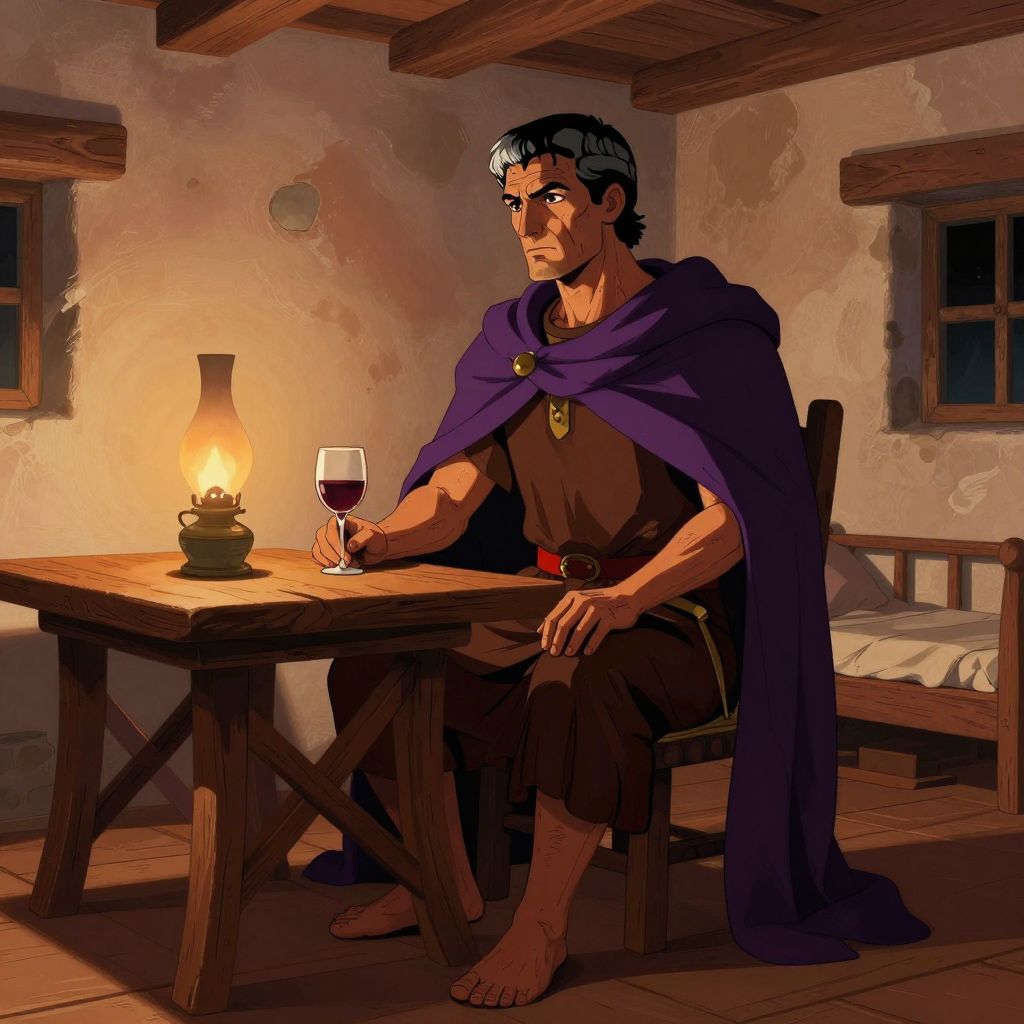
Hannibal's house in Bithynia had seven secret exits — the paranoid precaution of a man who knew he would always be hunted. But that night, Bithynian guards blocked every escape route. Roman soldiers waited with them. There was nowhere left to run.
According to the ancient sources, Hannibal didn't panic. He had carried poison with him since fleeing Carthage, perhaps even longer. Some accounts suggest he wore it in a ring, others that he kept it in a vial. Either way, he had decided long ago that he would never be taken alive. Rome would not parade him through their streets. They would not execute him for their crowds.
Cornelius Nepos records what is said to be Hannibal's final statement: "Let us now relieve the Romans of their long-standing anxiety, since they think it too tedious to wait for an old man's death."
The words drip with characteristic bitterness. Rome had feared him for fifty-five years, since he was a nine-year-old boy swearing his famous oath. Now they couldn't even wait for him to die of old age. They had to hunt him to the edge of the known world, to a small house on the Black Sea, to make sure he couldn't threaten them anymore.
He drank the poison. By the time the soldiers broke down his door, Hannibal was dead.
The Oath Fulfilled
In one sense, Hannibal kept the oath he had sworn as a child. He never became a friend to Rome. From the day his father Hamilcar made him swear eternal enmity at the altar in Carthage until the moment he drank poison in Bithynia, Hannibal never bent, never submitted, never accepted Roman dominance.
But the oath also destroyed him. It gave him purpose — the relentless focus that made him the greatest tactical commander of the ancient world. But it also trapped him. He could never make peace, never negotiate, never accept that the war was over. When Carthage surrendered, Hannibal kept fighting in the only ways left to him: through political reform, through advising foreign kings, through the mere fact of existing as Rome's greatest enemy.
The tragedy of Hannibal is that his genius was not enough. He won nearly every battle but lost the war. He terrorized Rome for fifteen years but couldn't break them. He spent twelve years searching for a king powerful enough to challenge Rome again, but no such king existed. By 183 BCE, Rome was the dominant power in the Mediterranean, and Hannibal was an old man with no options left.
His suicide was his final act of defiance. It was also an admission that he had failed. Rome would go on to destroy Carthage completely in 146 BCE, razing the city to the ground. Everything Hannibal had fought for — Carthaginian independence, Carthaginian pride, the legacy of his father and brothers — was erased from the map.
But Rome never forgot him. Two thousand years later, we still remember Hannibal as the general who made Rome afraid.
Scipio's Parallel Fate
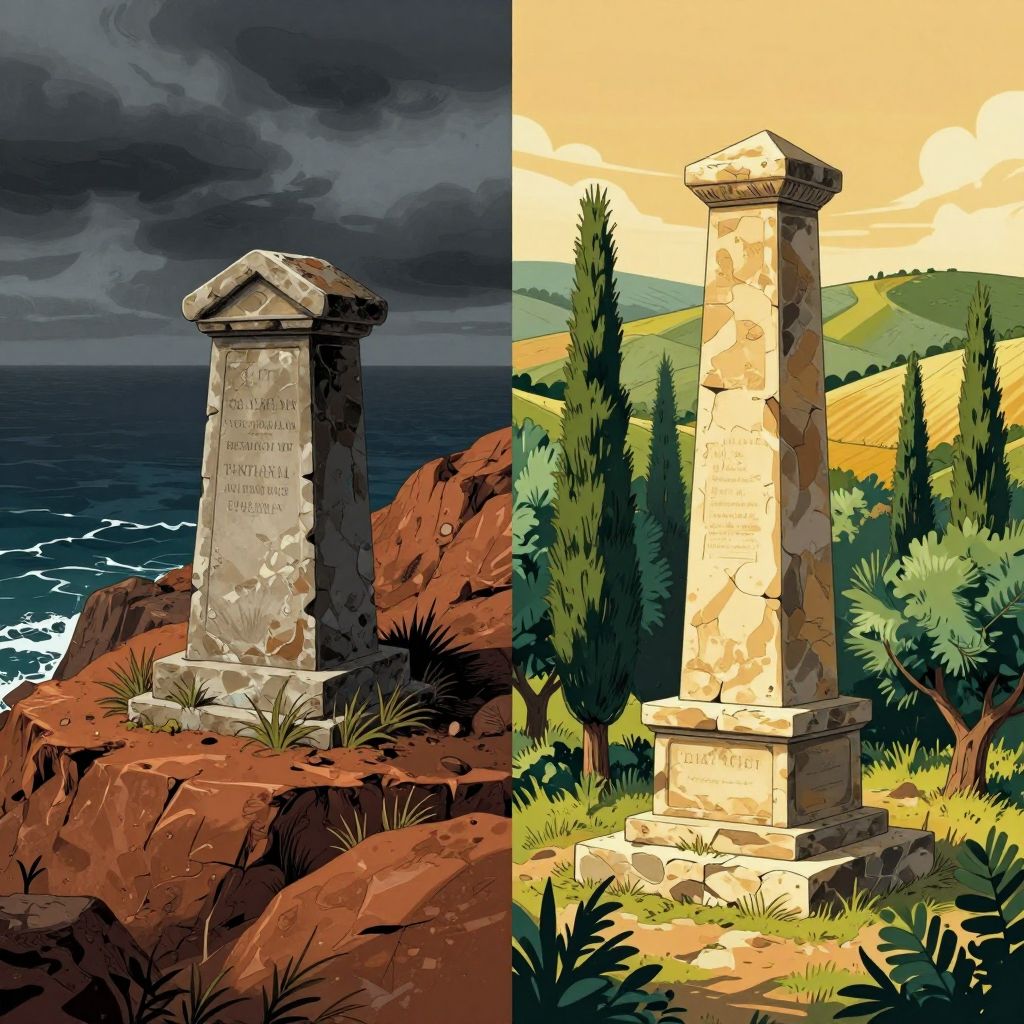
In one of history's bitter ironies, Scipio Africanus — the Roman general who had defeated Hannibal at Zama — died in the same year, 183 BCE. His end was almost as tragic as his enemy's.
After Zama, Scipio returned to Rome as the greatest hero of his age. He had saved the Republic, ended the Hannibalic War, brought Carthage to its knees. He was given the honorific "Africanus" — the first Roman general to be named for the land he conquered.
But Roman politics spared no one. In the decade after his triumph, Scipio became entangled in factional disputes. His enemies — led by the elder Cato — accused him of corruption and embezzlement. They claimed he had kept some of the war indemnity from Antiochus III for himself.
The charges were almost certainly politically motivated. Scipio was too proud to defend himself properly, too convinced that his services to Rome should speak for themselves. When summoned to trial before the Senate, he reportedly reminded them that this was the anniversary of his victory at Zama. "On this day," he said, "I conquered Hannibal and Carthage. Let those who wish follow me to the Capitol to give thanks to the gods."
The crowd followed him. The trial collapsed. But the political damage was done.
Scipio withdrew from public life, retiring to his country estate at Liternum in Campania. He refused to return to Rome. According to some sources, he ordered that his body not be buried in Rome, requesting his epitaph read: "Ungrateful fatherland, you will not even have my bones."
Two Enemies, One Fate
The parallel deaths of Hannibal and Scipio in 183 BCE have fascinated historians for centuries. Two men who had defined each other — whose careers only made sense in opposition — died the same year, both abandoned by the cities they had served.
Hannibal gave Carthage his entire life: his childhood oath, his brothers (both killed fighting Rome), his tactical genius, and ultimately his political career. Carthage rewarded him by letting corrupt senators drive him into exile.
Scipio gave Rome its greatest victory, saving the city from its most dangerous enemy. Rome rewarded him with political trials and accusations of corruption.
Both men died far from the cities they had served — Hannibal on the Black Sea coast, Scipio in Campanian countryside. Both refused to give their enemies satisfaction: Hannibal by dying before capture, Scipio by refusing to be buried in Rome.
The ancient sources love this parallel, and it's easy to see why. It suggests something universal about how republics treat their greatest servants. The men who save cities become inconvenient once the danger passes. Their accomplishments become threatening. Their pride becomes offensive. Better to exile them, prosecute them, or hound them to death than to share power with heroes.
Hannibal's Legacy
Despite his ultimate failure, Hannibal's impact on history is difficult to overstate. His tactical innovations — particularly his masterpiece at Cannae — have been studied by military commanders for over two thousand years. Napoleon reportedly studied Hannibal's campaigns. So did Patton, Schwarzkopf, and countless other generals.
The double envelopment tactic he perfected at Cannae became a template for military victory. Surround your enemy, compress them until they can't fight back, then destroy them. It's a simple concept that requires extraordinary execution. Hannibal executed it perfectly.
Beyond tactics, Hannibal demonstrated something about strategic audacity that has never been forgotten. The Alps crossing showed what a determined commander could accomplish when conventional wisdom said something was impossible. He appeared where Rome believed no army could be, and the shock alone was worth half a victory.
But perhaps Hannibal's greatest legacy was psychological. For sixteen years, he made Rome afraid. Roman mothers used his name to frighten children: "Hannibal ad portas" — Hannibal is at the gates. That fear shaped Roman policy for generations. It drove them to destroy Carthage completely in 146 BCE, to salt the earth and scatter the population, to ensure that no Hannibal could ever rise again.
The End of Carthage
Hannibal didn't live to see Carthage fall, but he probably could have predicted it. After his exile, Carthage was never the same. The political class that had betrayed him continued to rule, but without his energy or vision. The city recovered economically but remained politically subservient to Rome.
In 149 BCE, thirty-four years after Hannibal's death, Rome found a pretext for the Third Punic War. Carthage had violated the peace treaty by defending itself against Numidian raiders without Roman permission. It was a technicality, but Rome wasn't interested in justice. The elder Cato had gotten his wish.
The siege of Carthage lasted three years. When the city finally fell in 146 BCE, the Romans killed or enslaved the entire population. They demolished the buildings, pulled down the walls, and — according to legend — plowed salt into the fields so nothing would grow there again.
The place where Hannibal had sworn his childhood oath became ash and rubble. The temple where his father had made him promise eternal enmity to Rome was gone. Everything the Barca family had built, everything they had fought for, was erased.
Rome would never be seriously threatened by a Mediterranean power again. They had learned from Hannibal. They would never let another enemy survive long enough to become dangerous.
Remembering Hannibal
In the end, Hannibal achieved a strange kind of immortality. He lost the war, lost his city, lost his life. But he became eternal precisely because he had come so close to winning. He was the one who almost destroyed Rome — the nightmare that proved even the greatest empire could be vulnerable.
His story resonates because it touches on something timeless: the tragedy of genius in service to a doomed cause. Hannibal did everything right. He was braver, smarter, and more determined than his enemies. He won nearly every battle. And still, he lost.
Some failures are more memorable than any victory. Hannibal Barca's failure was spectacular enough to echo through two thousand years of history. We remember him not despite his defeat, but because of how close he came, and what it cost him.
He died alone, in exile, by his own hand. He was sixty-four years old. He had been fighting Rome, in one way or another, since he was nine.
Fifty-five years. One oath. One enemy. One ending.
Frequently Asked Questions
1How did Hannibal Barca die?
Hannibal died by suicide in 183 BCE, taking poison rather than be captured by Roman agents. He was in Bithynia (modern-day Turkey) when King Prusias I agreed to surrender him to Rome. Hannibal had carried poison since fleeing Carthage twelve years earlier, prepared for this exact situation.
2Why did Rome hunt Hannibal for so long after the war ended?
Rome considered Hannibal dangerous as long as he lived. He had nearly destroyed them during the Second Punic War, and in exile he continued advising eastern kings who might challenge Roman power. Roman senators feared that any kingdom with Hannibal as military advisor could threaten them again.
3What were Hannibal's last words?
According to Cornelius Nepos, Hannibal said: 'Let us now relieve the Romans of their long-standing anxiety, since they think it too tedious to wait for an old man's death.' This bitter statement mocked Rome's fear of a sixty-four-year-old exile.
4Why was Hannibal exiled from Carthage?
After the Second Punic War, Hannibal entered politics and exposed corruption among wealthy Carthaginian oligarchs. These same senators retaliated by reporting him to Rome as a threat, claiming he was secretly planning another war. Rather than risk being surrendered to Rome, Hannibal fled east in 195 BCE.
5Did Scipio Africanus and Hannibal really die the same year?
Yes, both generals died in 183 BCE. Scipio, who had defeated Hannibal at Zama, died in exile on his country estate after being driven from Rome by political enemies. The parallel fates of these two rivals — both abandoned by the cities they served — has fascinated historians for centuries.
Experience Hannibal's Final Chapter
From his childhood oath to his last defiant act, hear Hannibal's story told by an immortal witness who watched empires rise and fall.


Listen to Related Stories
The Old Enemy Dies
4 minRoman agents surrounded a small house on the coast. Inside, an old man poured wine and waited.

Key Figures
Listen to the Full Story
Experience history through immersive audio lessons narrated by Lumo, your immortal wolf guide.