Fresh Figs and an Old Man's Obsession
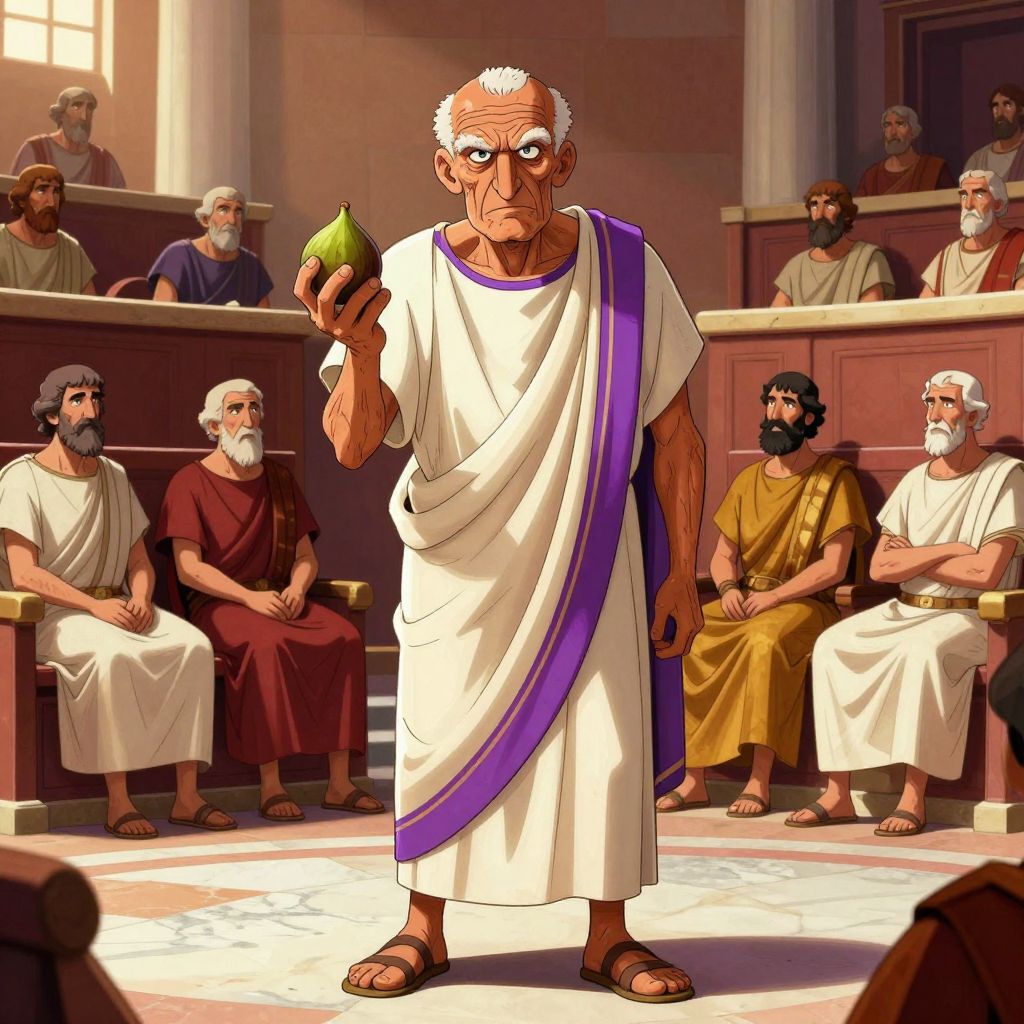
The Roman Senate fell silent. An eighty-year-old man stood at the center of the chamber, holding fresh green figs in his wrinkled hand.
"These came from Carthage," Cato the Elder announced to his fellow senators. "Three days by ship. Three days."
The figs were still fresh. The implication was unmistakable. The city Rome had defeated and humiliated fifty years earlier remained just three sailing days from the Italian coast. For Cato, this proximity was intolerable.
Carthage had been broken after the Second Punic War. The city that once sent Hannibal across the Alps with war elephants had been stripped of its fleet, its empire, and its pride. By 200 BCE, Carthage was little more than a trading city paying tribute to Rome and obeying every demand. But for Cato the Elder, no humiliation was enough. The city that had terrified Rome still existed. And as long as it existed, Cato believed Rome could never truly be safe.
What followed was one of the most sustained campaigns of political hatred in ancient history. For years, Cato ended every speech in the Senate with the same phrase, regardless of the topic being discussed.
"And furthermore, I believe Carthage must be destroyed."
Grain prices. Road construction. Tax reform. It made no difference. He would find a way to work it in. Other senators began placing bets on which sentence would contain the infamous phrase. But behind the absurdity lay a calculation. Cato understood that repetition shapes reality. Say something often enough, and it becomes inevitable.
The Trap That Made War Inevitable
Rome did not need to manufacture a crisis. It simply had to wait for one.
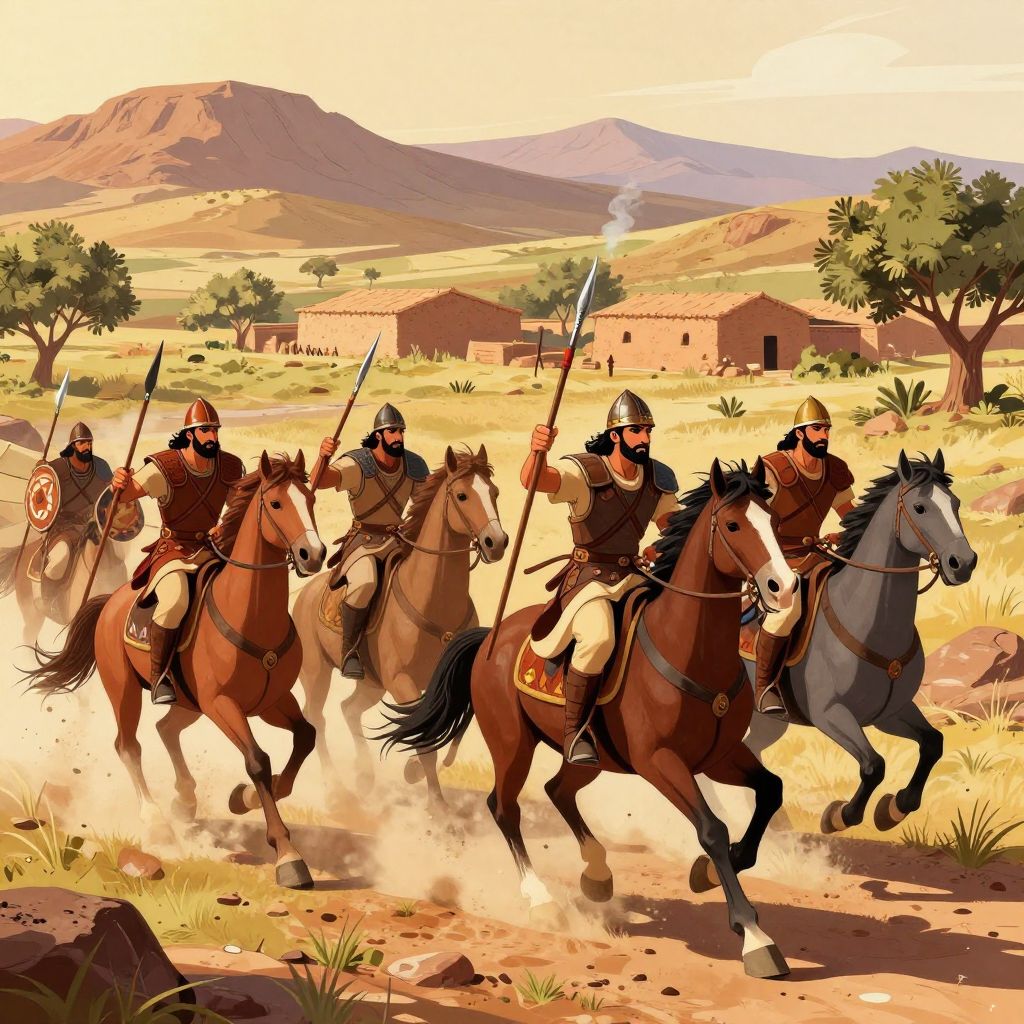
After the Second Punic War, Carthage was bound by treaty to resolve all disputes through Roman arbitration. This provision seemed reasonable on the surface. In practice, it became a weapon. Rome's ally, the Numidian kingdom under King Masinissa, spent decades nibbling at Carthaginian territory. Raid by raid, farm by farm, the Numidians pushed Carthage's borders inward. Each time Carthage appealed to Rome for justice, Rome ruled in favor of its ally.
Masinissa understood the game perfectly. Every raid was calculated to provoke without crossing into outright war. Every territorial seizure was designed to humiliate without triggering a military response. The message to Carthage was clear: defend yourself and violate the treaty, or accept slow strangulation.
For over forty years, Carthage endured. The city swallowed its pride, paid its tribute, and watched its territory shrink. Generation after generation chose survival over honor.
But in 151 BCE, something broke. The Numidians launched another raid. Carthage finally struck back.
It was exactly what Rome had been waiting for.
The Carthaginians had violated the treaty. They had taken military action without Rome's permission. In Roman eyes, this was an act of war. In reality, it was the culmination of a deliberate strategy of provocation that had been unfolding for half a century.
Cato did not live to see the destruction he had long demanded. He died in 149 BCE, just as the Roman legions were embarking for Africa. But he had lived long enough to see war declared. His obsession had become policy.
The Third Punic War Begins
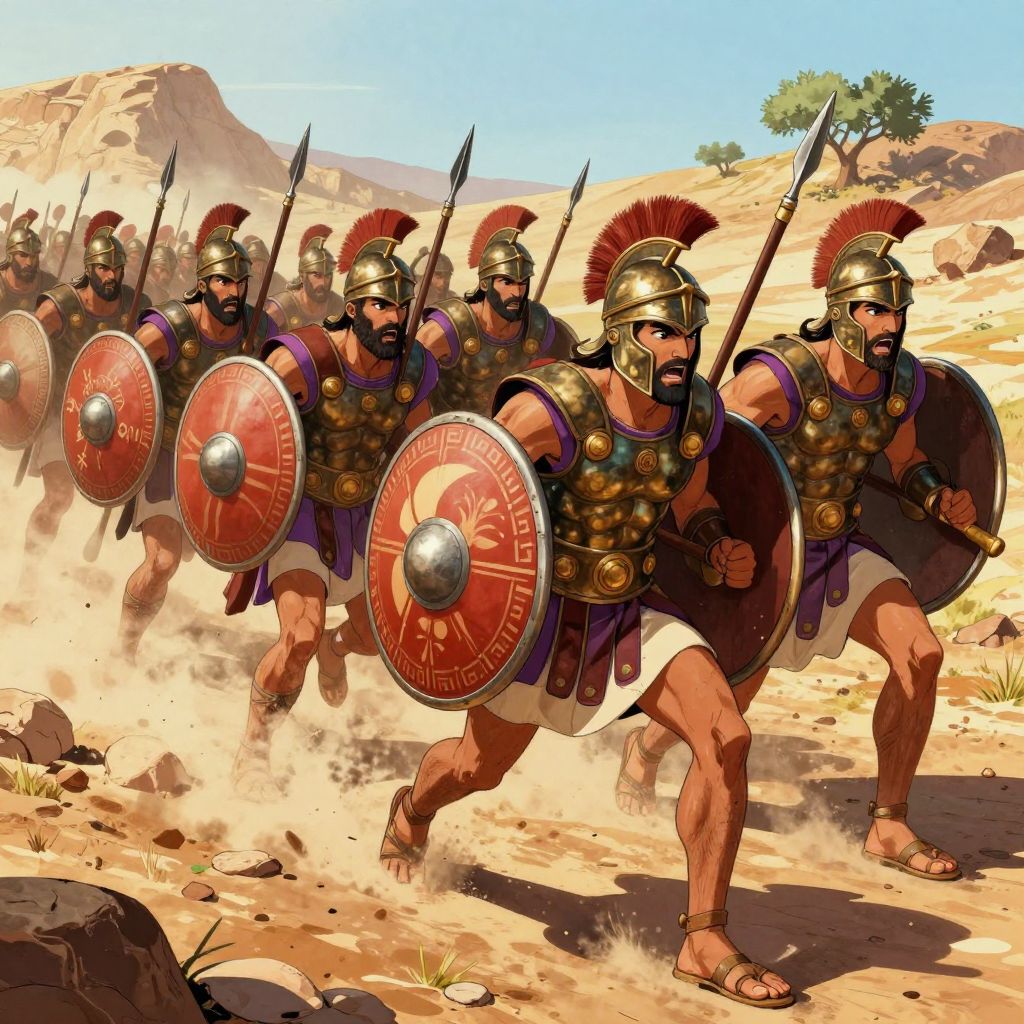
Rome's demands in 149 BCE revealed the true nature of the coming war. This would not be a conflict fought for territory or tribute. It would be a war of annihilation.
The Roman consuls initially demanded that Carthage surrender three hundred hostages from its leading families. Carthage complied. Then Rome demanded the surrender of all weapons and military equipment. Carthage complied again, handing over 200,000 sets of armor, 2,000 catapults, and countless swords and spears. The city had disarmed itself, trusting that cooperation would lead to peace.
Then came Rome's final demand: the city of Carthage must be abandoned. The population could relocate at least ten miles from the coast. But the city itself must cease to exist.
This was not a demand designed to be accepted. It was a demand designed to ensure resistance.
The Carthaginians had surrendered their hostages. They had surrendered their weapons. They had done everything Rome asked. And Rome responded by demanding they erase their own city from the earth. For a people whose identity was bound to their harbor, their temples, their ancestors' graves, this was not a negotiable condition.
Carthage chose to fight.
What followed would consume three years and cost tens of thousands of lives. But from the moment the final demand was issued, the outcome was never in doubt. Carthage had already surrendered its weapons. It had already given Rome its children as hostages. The only question remaining was how long the dying would take.
Three Years of Siege
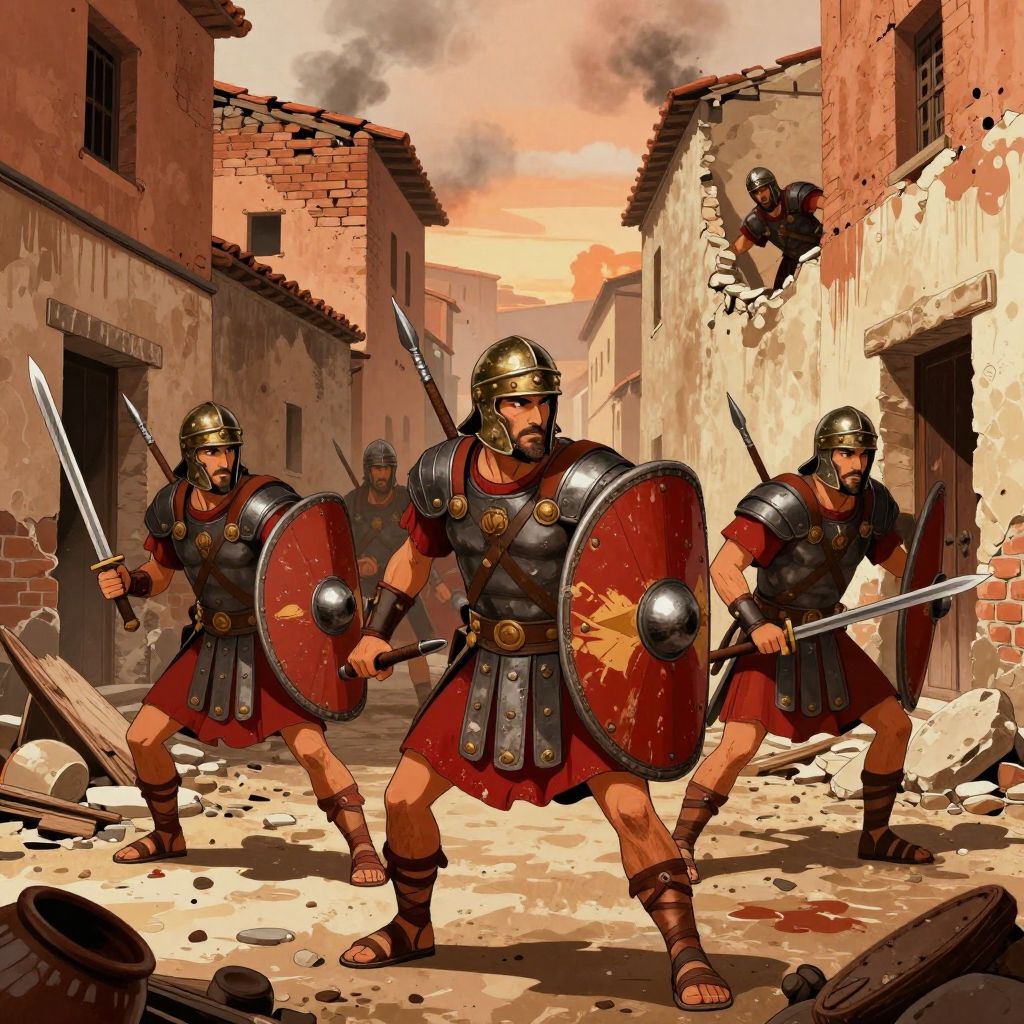
The siege of Carthage lasted from 149 to 146 BCE. It was not a clean military operation. It was a slow grinding destruction that reduced one of the ancient world's greatest cities to rubble and ash.
Initial Roman assaults failed. Despite having surrendered its weapons, Carthage managed to arm its population through desperate improvisation. Women cut their hair to make bowstrings. Metal was stripped from temples to forge new weapons. The city's formidable walls, nearly thirty feet thick in places and rising forty-five feet high, proved far more difficult to breach than Rome had anticipated.
The siege dragged on through two years of frustration. Roman commanders came and went. Progress measured in yards and lives. Disease spread through both the besieging army and the trapped population.
In 147 BCE, Rome sent a new commander: Scipio Aemilianus, the adopted grandson of Scipio Africanus, who had defeated Hannibal at the Battle of Zama half a century earlier. The family that had ended one generation of Carthaginian power would now end the line entirely.
Scipio brought military discipline and methodical brutality. He cut off the city's access to supplies by constructing a massive mole across the harbor entrance. Starvation became Rome's most effective weapon. By the war's third year, mothers inside the city were drawing lots to determine which children to keep alive.
When the final assault came in the spring of 146 BCE, it was not a battle. It was a massacre.
Roman soldiers pushed through the narrow streets in house-to-house combat. Buildings were torn down systematically. Fires spread through district after district. The fighting continued for six consecutive days without rest, as soldiers rotated in and out of the slaughter.
Contemporary accounts describe streets choked with bodies. The dead were thrown into pits or trampled underfoot as the fighting moved forward. Some Carthaginians chose suicide over capture. Others retreated into the burning temples as the flames closed in.
The Commander's Betrayal
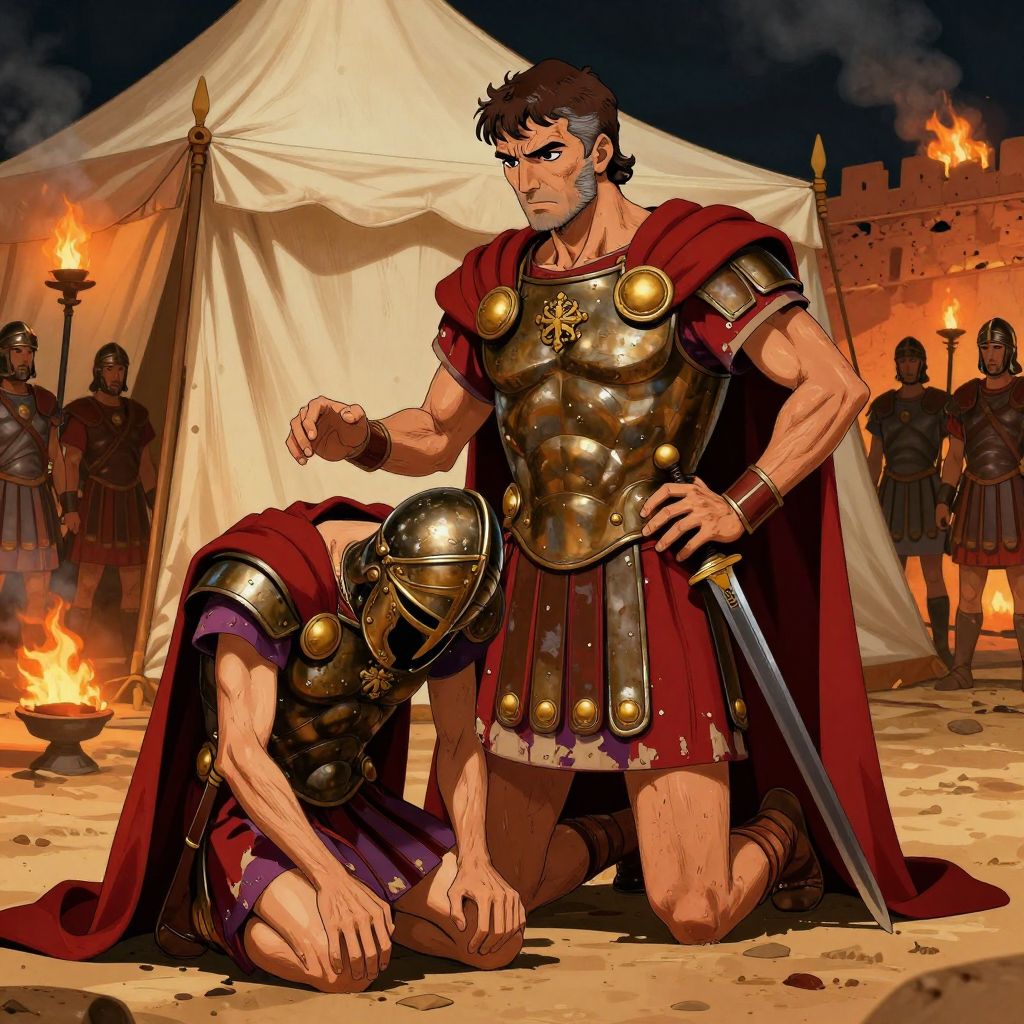
As Carthage burned, its military commander made a choice that would echo through history as an act of supreme cowardice.
Hasdrubal the Boetharch had led Carthage's defense for years. He had rallied the population, organized the resistance, and sworn to fight to the death. But when the end came, he abandoned his men in the darkness.
While Carthaginian soldiers still fought and died in the burning streets, Hasdrubal slipped away from his command. He made his way to Scipio's camp and surrendered in secret. Alone. Without telling his own troops.
His soldiers did not know he had left until they smelled the smoke from the fires consuming the city they had sworn to defend.
But Hasdrubal's wife knew.
She had retreated with their children to the Temple of Eshmun, the highest point in Carthage. From the burning temple, she watched her husband kneel at Scipio's feet. What followed was documented by the Greek historian Polybius, who witnessed the scene as part of Scipio's retinue.
The Last True Carthaginian
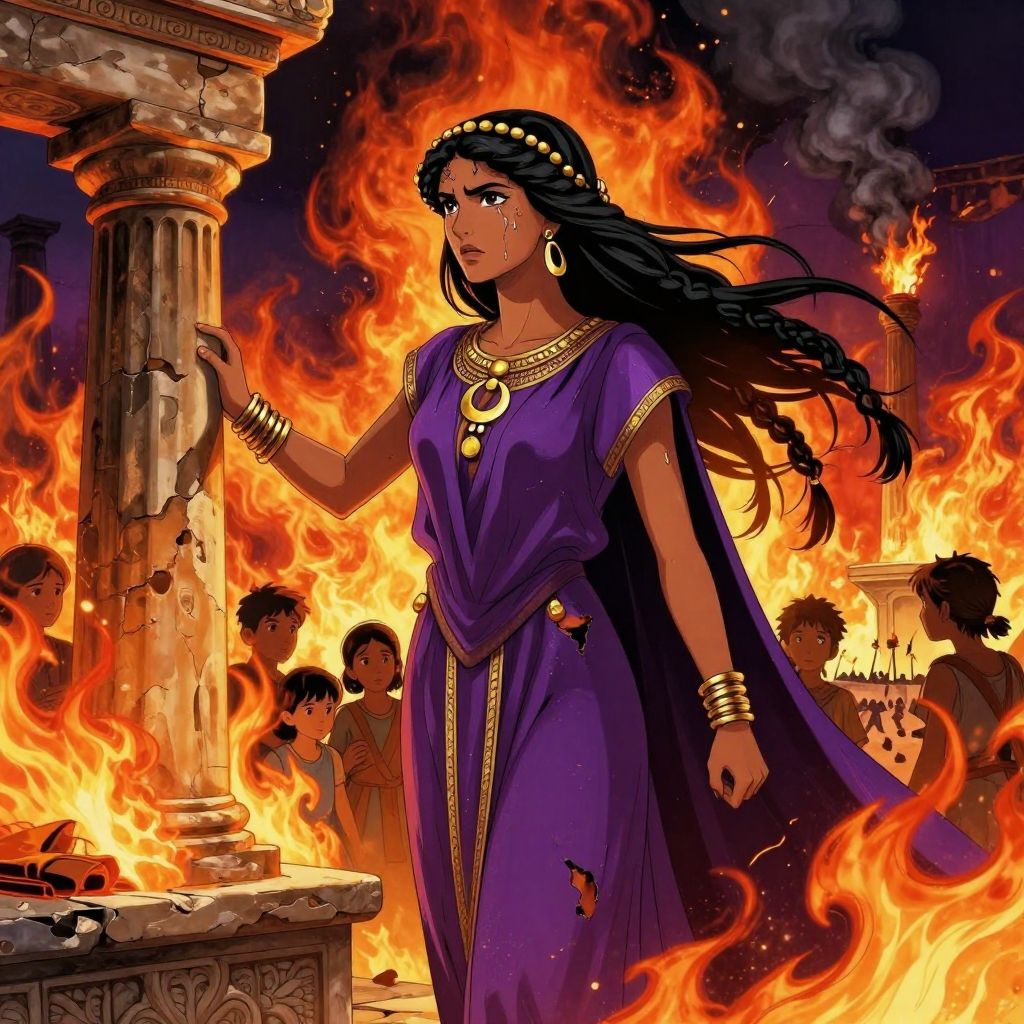
Standing at the edge of the burning temple, the commander's wife looked down at the distant figure of her husband and spoke words that Polybius recorded for posterity.
"For you, Roman, the gods have no cause of indignation. You exercise the right of war."
She was not condemning Scipio. She understood that victors do what victors do. Her rage was directed at the man kneeling at Scipio's feet — the husband who had abandoned his city, his soldiers, and his family.
"But upon this traitor — this betrayer of his country and her temples, of me and his children — may the gods of Carthage take vengeance!"
Then she killed their children with her own hands.
She threw their bodies into the flames consuming the temple. And she followed them into the fire.
Hasdrubal watched his family die. He would live on as a trophy in Scipio's triumph, paraded through Rome in chains. His wife would be remembered as the last true Carthaginian — the one who chose death over dishonor while her husband chose survival over everything he had claimed to believe.
The Conqueror's Tears

As the flames consumed Carthage, something strange happened.
Scipio Aemilianus, the general who had spent months orchestrating this destruction, began to weep.
Polybius stood beside him, watching the city that had terrified Rome for generations burn to ash. He asked Scipio why he was crying.
Scipio's response has been quoted for two thousand years: "I am thinking of Troy. Of Priam's city. I have a dread foreboding that someday the same doom will fall on my own country."
He was quoting Homer. But he was not mourning Carthage. He was mourning Rome's future.
Scipio understood something that Cato, in his obsessive hatred, never grasped. Empires are not eternal. The same power that allows a nation to destroy its enemies will eventually be turned inward. The ruthlessness required to erase a civilization does not disappear when the last enemy falls. It finds new targets.
Scipio had seen what Rome was becoming. The city that had once prided itself on its simple virtues — on its farmer-soldiers and austere senators — was transforming into something else. Wealth was flowing in from conquered territories. Slaves were flooding the markets by the hundreds of thousands. The social fabric that had held Rome together for centuries was beginning to fray.
Within a century of Carthage's destruction, Rome would tear itself apart in a series of civil wars that would kill more Romans than all the Punic Wars combined. Julius Caesar would cross the Rubicon. The Republic would fall. And eventually, Rome itself would burn, just as Carthage had burned.
Scipio saw it coming. And he wept.
The Summer of Annihilation
That same summer of 146 BCE, Rome destroyed Corinth.
The richest city in Greece, a commercial and cultural center for centuries, was razed as brutally as Carthage. Roman soldiers carried away its treasures, killed its men, and sold its women and children into slavery. The destruction was deliberate and total — a warning to the Mediterranean world about the cost of defiance.
Two ancient civilizations ended in a single season.
Carthage was not merely defeated. It was erased. The survivors — 50,000 according to some accounts — were sold into slavery. The city's walls were demolished. Its buildings were torn down. According to later legend, the earth was sown with salt to ensure nothing would grow there again.
Whether the salt story is true or not, the intent was clear. Carthage was to be forgotten.
The site remained uninhabited for over a century. When Julius Caesar eventually refounded the city as a Roman colony, it bore no connection to the Phoenician metropolis that had once challenged Rome for supremacy of the Mediterranean.
Rome's Victory and Rome's Curse
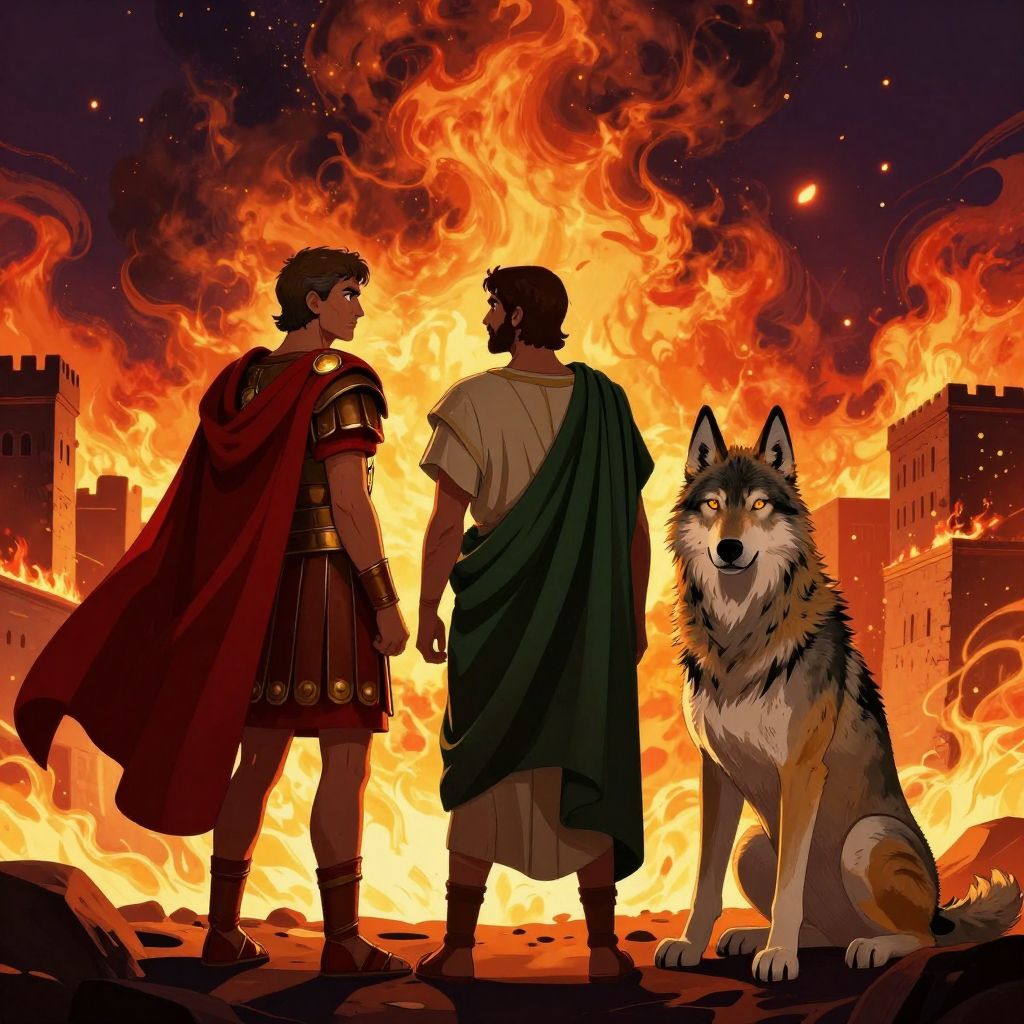
Cato got what he wanted. Carthage was destroyed.
But the destruction solved nothing. The fear that had driven Cato's obsession — the terror of a rival rising again — simply transferred to new targets. Rome had learned that total annihilation was possible. It had tasted the power to erase nations from existence.
In the decades that followed, Rome turned that power inward. The same legions that had ground Carthage to dust would soon be marching against each other. The Spartacus rebellion would demonstrate what happened when hundreds of thousands of slaves — many from conquered territories like Carthage — organized against their masters. The Gracchi brothers would die trying to reform a system breaking under its own success.
One senator had argued against destroying Carthage. Without an enemy, he warned, Rome would devour itself. His name was Scipio Nasica. Nobody listened to him.
Scipio Aemilianus understood what his colleague meant. Standing before the flames, watching his army complete the annihilation of a civilization that had threatened Rome since the time of his great-grandfather, he saw not victory but prophecy.
Every empire believes it is eternal. Every empire discovers it is not.
Carthage fell in 146 BCE. The Roman Republic followed it within a century. The empire that replaced the Republic lasted longer — but it too eventually burned, sacked by the very barbarians Rome had once dismissed as insignificant.
"Carthage must be destroyed," Cato had said. He was right. Carthage was destroyed. And Rome never recovered from the victory.
Frequently Asked Questions
1Why did Rome destroy Carthage?
Rome destroyed Carthage in 146 BCE after the Third Punic War. While the immediate cause was Carthage defending itself against Numidian raids (violating their treaty with Rome), the deeper cause was Roman fear of a Carthaginian resurgence. Senator Cato the Elder spent years advocating for Carthage's destruction, ending every speech with 'Carthage must be destroyed' (Carthago delenda est).
2What was 'Carthago delenda est'?
Carthago delenda est (Latin for 'Carthage must be destroyed') was the phrase Cato the Elder added to the end of every speech in the Roman Senate, regardless of topic. His persistent advocacy eventually swayed Roman policy toward the complete destruction of Carthage in the Third Punic War.
3Who was Scipio Aemilianus?
Scipio Aemilianus was the Roman general who commanded the final assault on Carthage in 146 BCE. He was the adopted grandson of Scipio Africanus, who had defeated Hannibal at the Battle of Zama in 202 BCE. Despite his military success, Scipio wept at Carthage's destruction, fearing Rome would suffer the same fate.
4Was Carthage really sown with salt?
The story that Rome sowed Carthage's fields with salt to prevent anything from growing is likely a later legend, not historical fact. However, the destruction was extremely thorough — the city was razed, its population enslaved, and the site remained uninhabited for over a century until Julius Caesar refounded it as a Roman colony.
5What happened to the Carthaginian survivors?
Approximately 50,000 Carthaginian survivors were sold into slavery after the city fell. The military commander Hasdrubal, who surrendered secretly while his soldiers still fought, was paraded in Scipio's triumph and lived out his days as a Roman prisoner. His wife chose a different fate — she killed their children and threw herself into the flames of the burning temple.
6Why did Scipio weep at Carthage's destruction?
According to the Greek historian Polybius, who was present, Scipio wept because he foresaw Rome's own eventual destruction. Quoting Homer about the fall of Troy, Scipio said: 'I have a dread foreboding that someday the same doom will fall on my own country.' His prophecy proved accurate — Rome would tear itself apart in civil wars within a century.
Experience the Full Story
Hear the destruction of Carthage told by Lumo, an immortal wolf who watched empires rise and fall across three thousand years.


Listen to Related Stories
Delenda Est
4 minThe Roman Senate. An old man produces fresh figs from beneath his toga...

Key Figures
Listen to the Full Story
Experience history through immersive audio lessons narrated by Lumo, your immortal wolf guide.