The Handshake That Killed a Republic
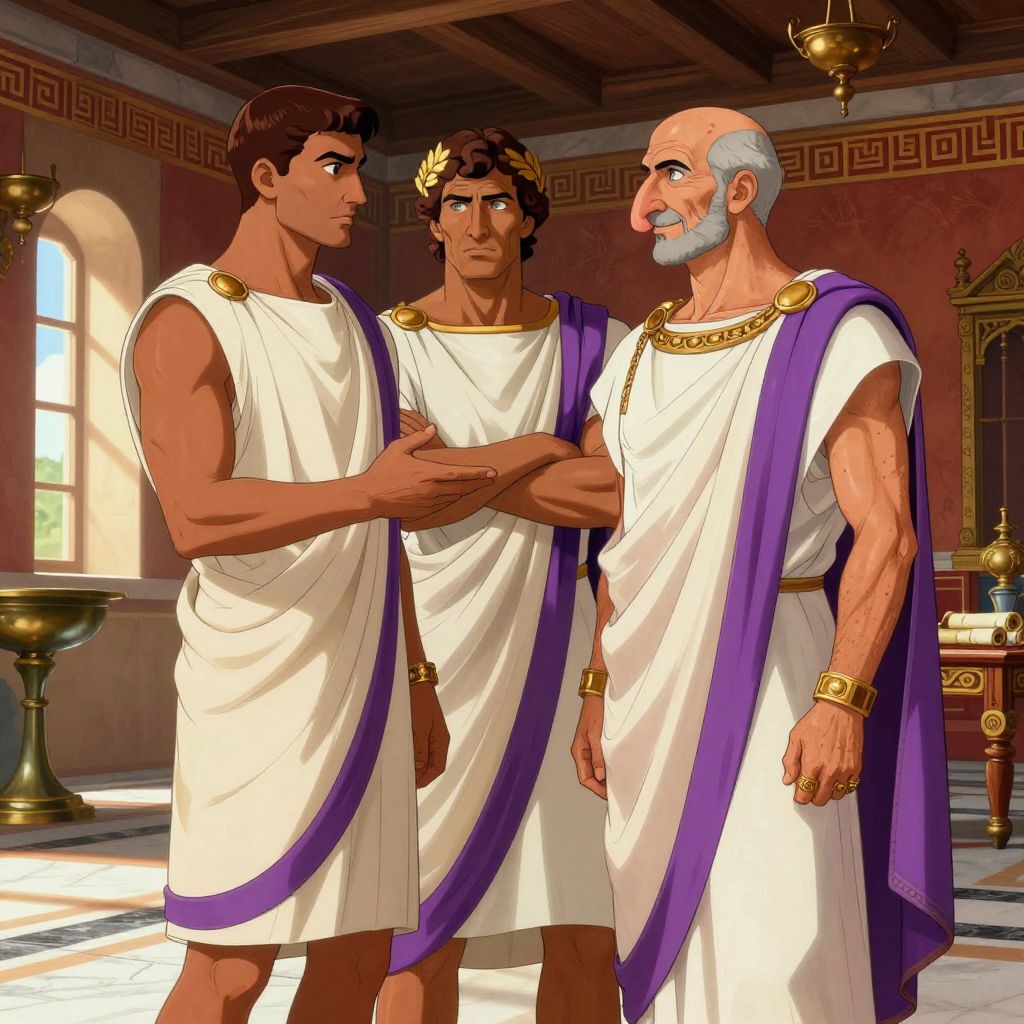
No vote was cast. No law was passed. No official record was kept.
In 60 BCE, three of the most powerful men in the Roman world gathered in a private room and agreed to divide political power among themselves. The Roman Senate, which had governed the Republic for nearly five centuries, would become a rubber stamp for their combined ambitions.
Romans at the time called it the "three-headed monster." Historians would later name it the First Triumvirate. But the men involved had no formal name for their arrangement. It was simply a deal between three ambitious politicians who realized they could achieve more together than apart. Julius Caesar wanted military command and the chance to conquer. Pompey the Great wanted his veterans rewarded and his eastern settlements ratified. Marcus Licinius Crassus wanted glory that his immense fortune could never purchase.
Each man brought something the others needed. Caesar had political skill and popular support. Pompey commanded the loyalty of tens of thousands of veterans. Crassus had more money than anyone in Roman history. Together, they could circumvent the traditional checks and balances that had preserved Roman liberty for generations.
A marriage alliance held the arrangement together. Pompey, already in his late forties, married Julia, Caesar's daughter. She was about seventeen. The marriage was political currency, but against all expectations, Pompey and Julia developed genuine affection for one another. That bond would prove more important than any written treaty.
Who Were the Triumvirs?
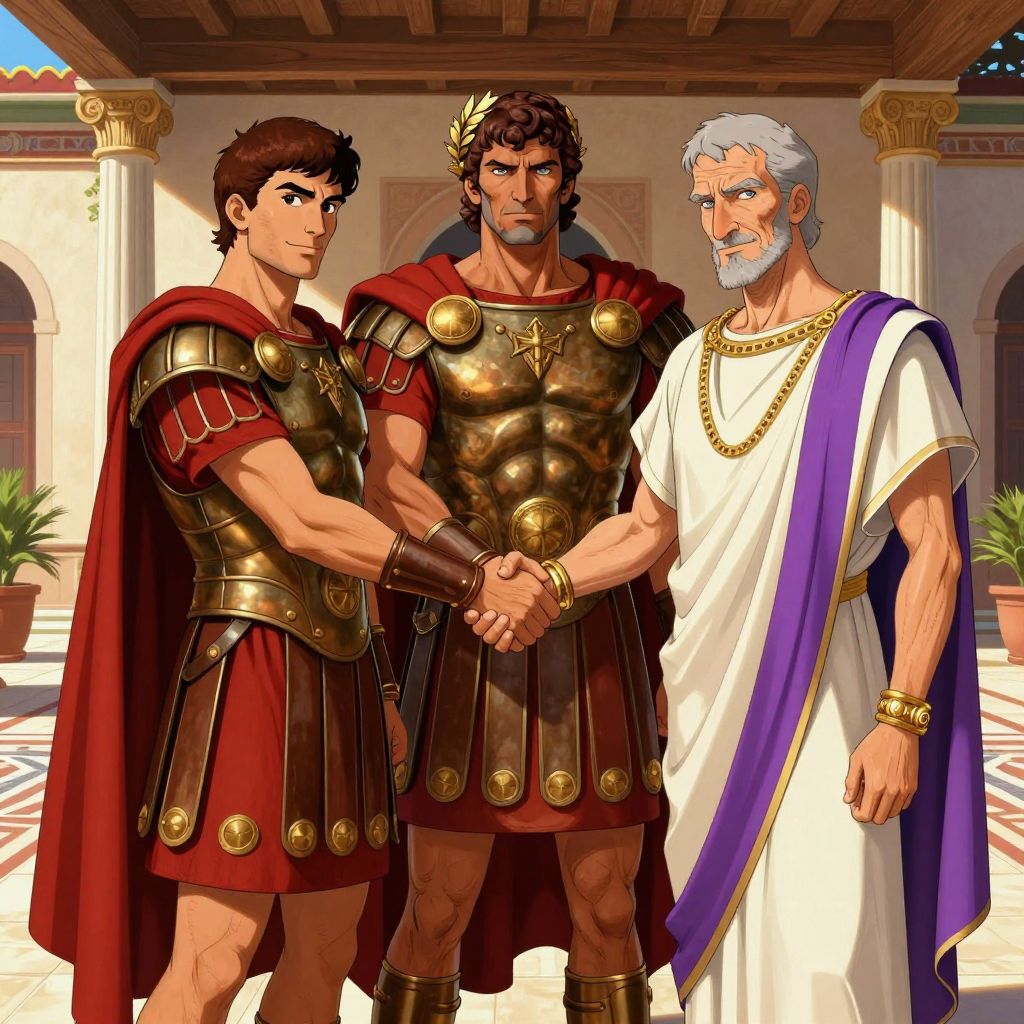
The First Triumvirate united three men who had arrived at prominence through vastly different paths. Their histories explain why the alliance was always destined to fracture.
Gnaeus Pompeius Magnus had earned the cognomen "Magnus" (the Great) while still in his twenties. He raised private armies, fought wars in Sicily, Africa, and Spain, cleared the Mediterranean of pirates in just three months, and conquered vast territories in the East. By 60 BCE, Pompey had celebrated three triumphs, the highest honor Rome could bestow. But the Senate, suspicious of his power and popularity, was blocking his attempts to reward his veterans with land and to have his eastern territorial settlements officially recognized.
Gaius Julius Caesar came from an ancient patrician family that claimed descent from Venus herself. But the Julii had fallen on hard political times. Caesar had spent the decade before the triumvirate climbing the political ladder through lavish spending, brilliant oratory, and calculated risk-taking. He accumulated staggering debts in the process. His creditors included Crassus himself. What Caesar lacked in military reputation he made up for in ambition. He wanted a major military command that would allow him to build the same kind of glory Pompey already possessed.
Marcus Licinius Crassus was, by most estimates, the wealthiest man in Roman history. He built his fortune through ruthless opportunism during the civil war between Marius and Sulla decades earlier. When Sulla's proscriptions condemned wealthy men to death and confiscated their property, Crassus bought those estates at pennies on the denarius while families still grieved. He expanded his holdings through real estate speculation, silver mining, and a notorious fire brigade that would arrive at burning buildings and negotiate purchase prices while flames consumed the property.
Crassus had also achieved military fame by crushing the slave rebellion led by Spartacus in 71 BCE. But Pompey swooped in at the final moment, mopping up survivors and claiming credit for ending the revolt. The Spartacus Rebellion earned Crassus a lesser triumph called an ovation, while Pompey received full honors. The slight burned in Crassus for the rest of his life.
The Political Crisis of 60 BCE
The triumvirate emerged from a specific political crisis that threatened all three men's interests.
Pompey had returned from his eastern campaigns in 62 BCE with enormous prestige and legitimate grievances. He conquered the Pontic kingdom of Mithridates VI, reorganized much of the Near East, created new Roman provinces, and established client kingdoms that would buffer Roman territory. His soldiers had served for years and expected the land grants that traditionally rewarded Roman veterans. But the conservative faction in the Senate, led by men like Marcus Porcius Cato, blocked every attempt to ratify his settlements or provide for his veterans.
The opposition was partly principled and partly personal. Many senators genuinely feared that Pompey might use his popularity and veteran loyalty to seize power, as Sulla had done a generation earlier. Others resented Pompey's success and sought to humiliate him politically. The result was a complete legislative impasse. Pompey's accomplishments remained in legal limbo and his veterans lacked their promised farms.
Caesar faced his own crisis. He served as propraetor in Spain in 61 BCE and won some minor military victories. He returned to Rome hoping to celebrate a triumph and then stand for the consulship of 59 BCE. But Roman law created an impossible choice: a general awaiting a triumph had to remain outside the city boundary, while a candidate for consul had to appear in person to register. Caesar asked the Senate for special dispensation to register in absentia. Cato filibustered the request by speaking until the registration deadline passed.
Caesar abandoned his triumph and entered the city to run for consul. He won the election handily. But the conservative faction, unable to prevent his victory, ensured that his co-consul would be Marcus Calpurnius Bibulus, a political enemy. They also assigned both consuls worthless provincial commands after their term: the care of Italy's roads and forests. Caesar would gain no army, no glory, and no way to pay his crushing debts.
Crassus, meanwhile, was pursuing a major financial interest. A consortium of Roman tax collectors called the publicani had overbid on the contract to collect taxes from the wealthy province of Asia. They were losing money and wanted the Senate to reduce their contractual obligations. Crassus, who had invested heavily in the publicani companies, backed their request. The Senate refused.
The Deal Is Struck
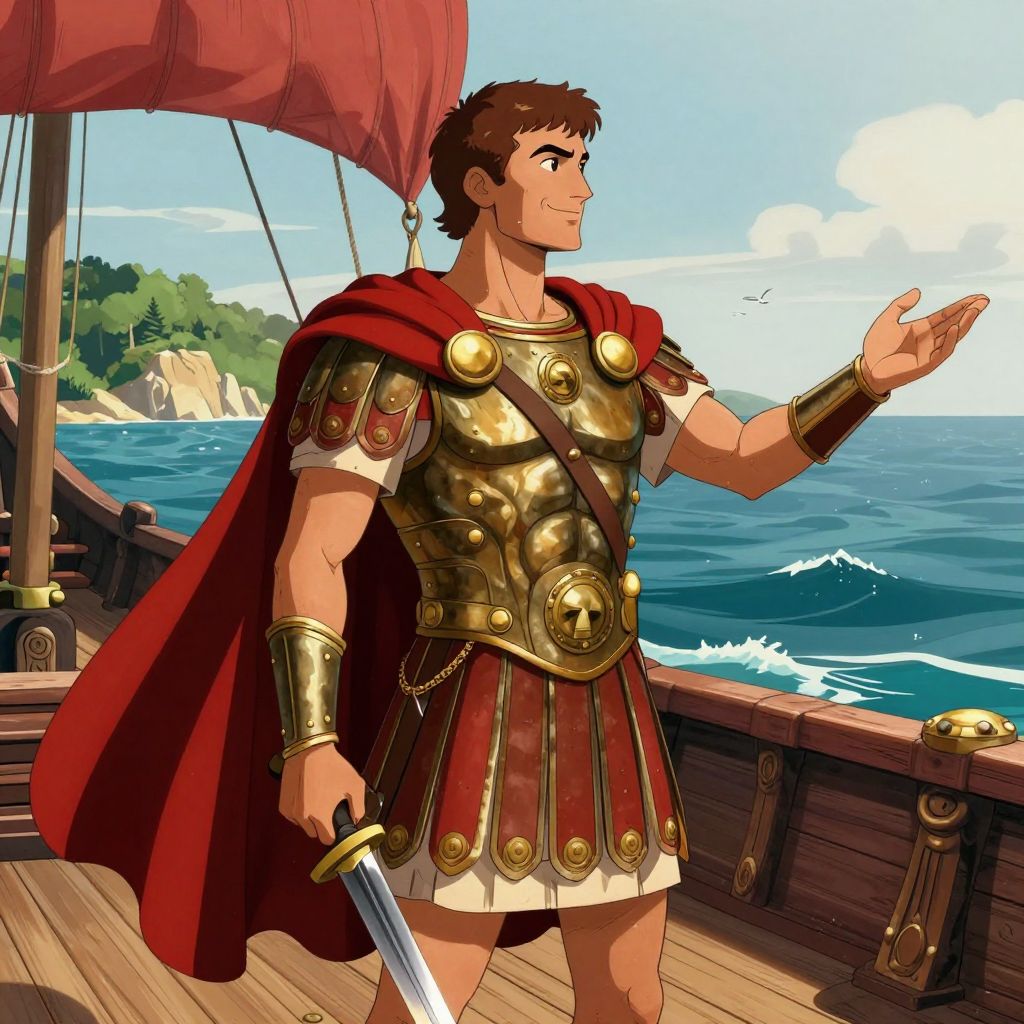
The three men recognized that their combined political resources could overcome any Senate opposition. Pompey had the loyalty of veterans and the eastern provinces. Crassus had money to fund political campaigns and buy votes. Caesar had the consulship and the political skills to force legislation through despite opposition.
They agreed to support each other's objectives. Pompey would get his eastern settlements ratified and his veterans would receive land grants. Crassus would get the publicani contract renegotiated. Caesar would get a major provincial command with legions attached, allowing him to pursue military glory and escape his creditors.
The marriage of Pompey to Julia cemented the alliance. Though the union was purely political in origin, both parties found happiness in it. Ancient sources describe Pompey as genuinely devoted to his young wife, and Julia apparently returned his affection. Their relationship became the emotional glue holding the triumvirate together.
During his consulship in 59 BCE, Caesar rammed through legislation benefiting all three triumvirs. He used the popular assemblies to bypass Senate opposition, sometimes employing violence and intimidation when procedural tricks failed. His co-consul Bibulus attempted to block legislation by declaring unfavorable omens, but Caesar ignored him. Bibulus eventually retreated to his house and issued ineffective proclamations. Romans joked that the consuls of the year were not Caesar and Bibulus but Julius and Caesar.
The most significant legislation secured Caesar's provincial command. Rather than the insulting assignment of Italian roads and forests, Caesar received Cisalpine Gaul (northern Italy) and Illyricum for five years, with three legions. When the governor of Transalpine Gaul (southern France) died unexpectedly, the Senate added that province and another legion to Caesar's command.
Caesar in Gaul: A Decade of Conquest
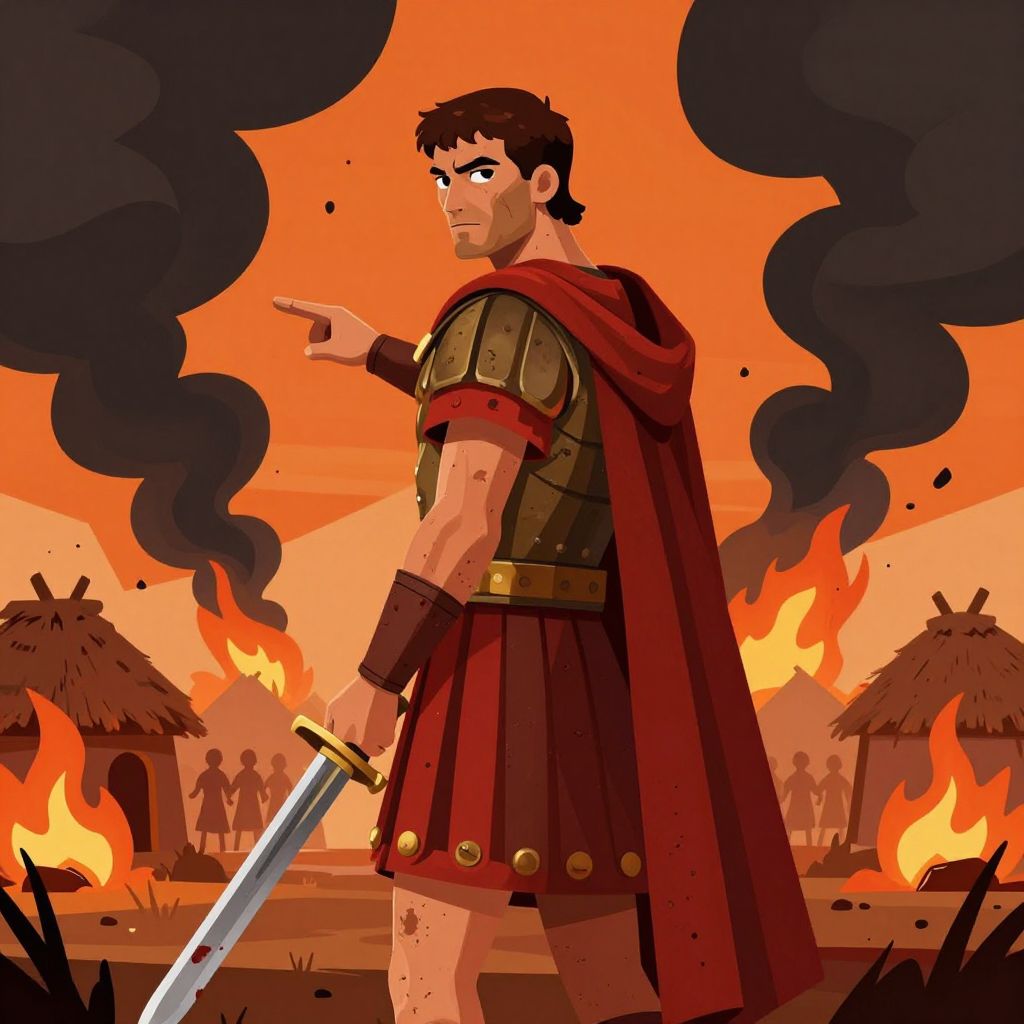
From 58 to 50 BCE, Caesar waged war across Gaul, conquering territories that today comprise France, Belgium, parts of Germany, Switzerland, and the Netherlands. His campaigns were brilliant, brutal, and transformative for both Caesar and Rome.
The ancient sources, including Caesar's own war commentaries, record staggering casualty figures. Caesar claimed to have killed over a million Gauls and enslaved another million. Modern historians debate whether these numbers are accurate or exaggerated for propaganda purposes, but no one disputes that the Gallic Wars caused death and suffering on a massive scale. Entire peoples were displaced or annihilated. The Helvetii migration that sparked the war resulted in hundreds of thousands of casualties. The Veneti tribe was virtually exterminated, their leaders executed and survivors sold into slavery.
Caesar's military genius was undeniable. He defeated larger forces through speed, deception, and the superior discipline of Roman legions. He crossed the Rhine twice on bridges his engineers built in days. He invaded Britain twice, becoming the first Roman commander to lead legions across the Channel. When the Gallic chieftain Vercingetorix united the tribes against Rome in 52 BCE, Caesar besieged him at Alesia and simultaneously fought off a massive relief force, defeating both in one of military history's most impressive operations.
Throughout the campaign, Caesar sent back written dispatches describing his victories. These commentaries, which survive today as "De Bello Gallico," were masterpieces of political propaganda. Written in elegant, restrained Latin, they portrayed Caesar as the defender of Roman interests and civilizer of barbarian lands. Romans who had never seen their general learned to admire him through his words. By the time Caesar's command ended, he was the most famous man in the Roman world.
The profits of conquest were immense. Caesar used Gallic gold to pay his debts, bribe Roman politicians, and build political networks. His soldiers became rich and fanatically loyal. The military power Caesar accumulated during these years would make him virtually untouchable. But he would need to find a way to return to Rome without losing his legions or facing prosecution.
The Death of Crassus
While Caesar conquered Gaul, Crassus burned with jealousy. The richest man in Rome had no great military achievements to match Pompey's eastern conquests or Caesar's Gallic victories. The Spartacus Rebellion remained his only significant command, and Pompey had stolen much of that glory.
In 56 BCE, the triumvirs met at Luca in northern Italy to renew their agreement. Caesar's command was extended for another five years. Pompey and Crassus would serve as consuls in 55 BCE and then receive provincial commands. Pompey took Spain, which he would govern through legates while remaining near Rome. Crassus received Syria, with the understanding that he would launch a major war against the Parthian Empire.
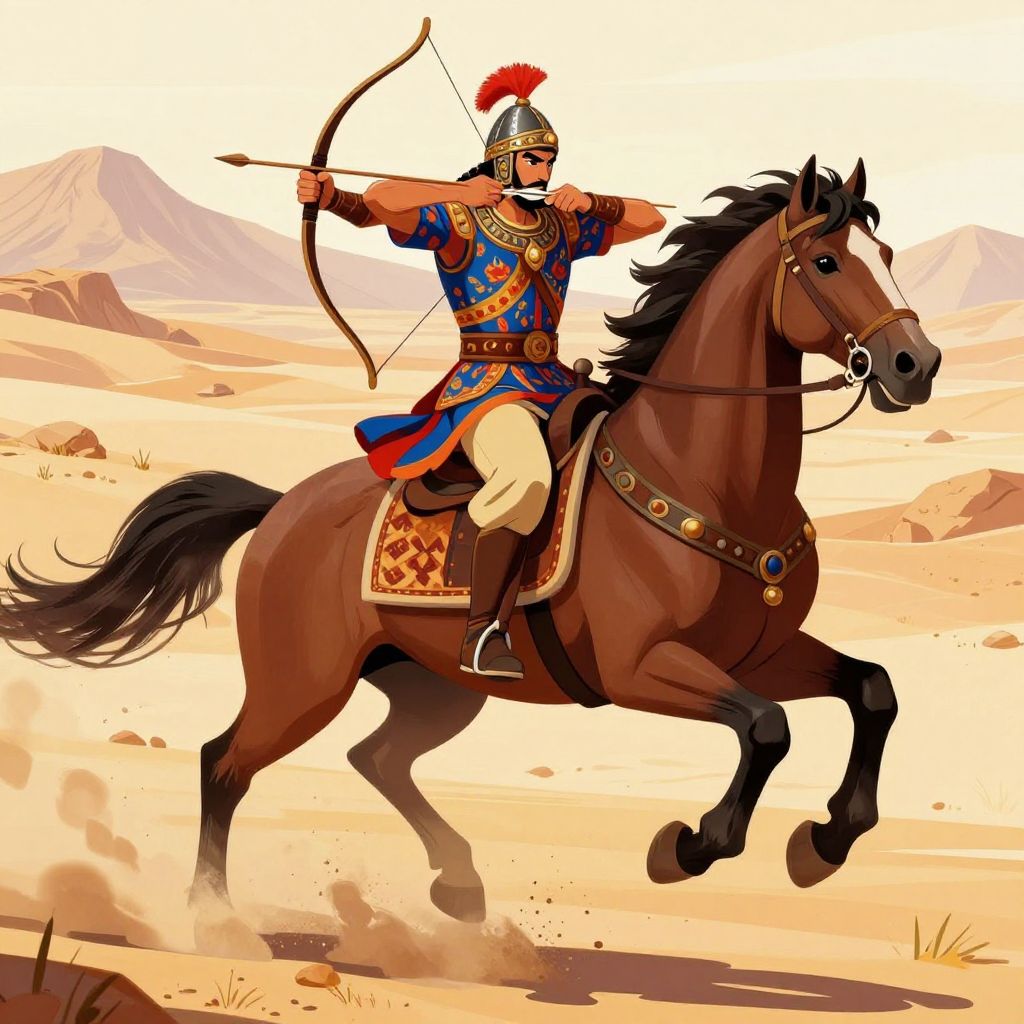
Parthia controlled a vast territory stretching from the Euphrates River to the borders of India. No Roman commander had ever defeated them in a major engagement. Their mounted archers were legendary, capable of firing arrows with deadly accuracy while riding at full gallop, even shooting behind them in the famous "Parthian shot." A victory over Parthia would eclipse anything Pompey or Caesar had achieved.
Crassus departed for Syria in 55 BCE, despite ill omens and public protests. He was over sixty years old, had not commanded an army in over fifteen years, and was marching against an enemy whose tactics were completely unlike anything Roman legions had faced. He brought seven legions, about 35,000 infantry, plus cavalry and auxiliaries.
The campaign was a disaster. Crassus ignored advice from the king of Armenia, who offered an alternate route through friendly territory. Instead, he marched directly into the Mesopotamian desert, following a guide who led him into a trap.
At Carrhae in 53 BCE, Crassus's army met the Parthian forces under the command of Surena. The battle was unlike any Roman engagement before or after. Parthian horse archers circled the Roman formations, pouring arrows into the infantry from all directions. When the Romans formed the testudo (tortoise) formation with interlocking shields, the Parthians simply waited. When the Romans advanced, the archers retreated and continued firing. A camel train kept the Parthians supplied with fresh arrows.
Crassus's son Publius led the Roman cavalry in a desperate charge to break the encirclement. The Parthians feigned retreat, leading Publius away from the main army. When he was isolated, they surrounded and killed him along with his cavalry. They carried his head on a spear back to taunt his father.
The battle became a massacre. Roman soldiers died by the thousands, unable to close with an enemy that refused to engage in hand-to-hand combat. By the end of the day, perhaps 20,000 Romans were dead and another 10,000 captured.
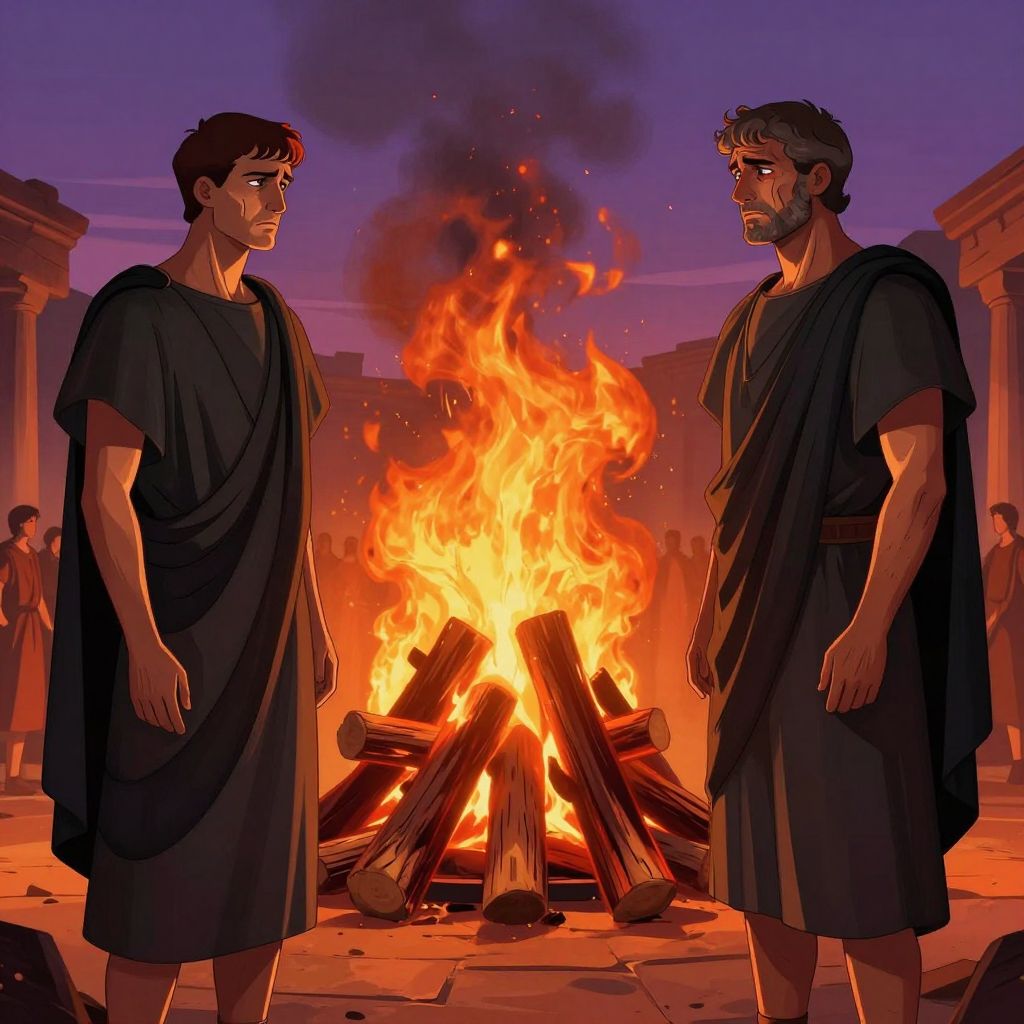
Crassus survived the battle but died during negotiations shortly after. Ancient sources claim the Parthians poured molten gold down his throat, mocking the greed that had driven him east. His head was sent to the Parthian king, where according to legend it became a prop in a performance of Euripides' "Bacchae."
The richest man in Rome died seeking the one thing his wealth could never purchase. His death left the triumvirate reduced to two rivals who now had no mediator and no reason to cooperate.
The Bond Breaks
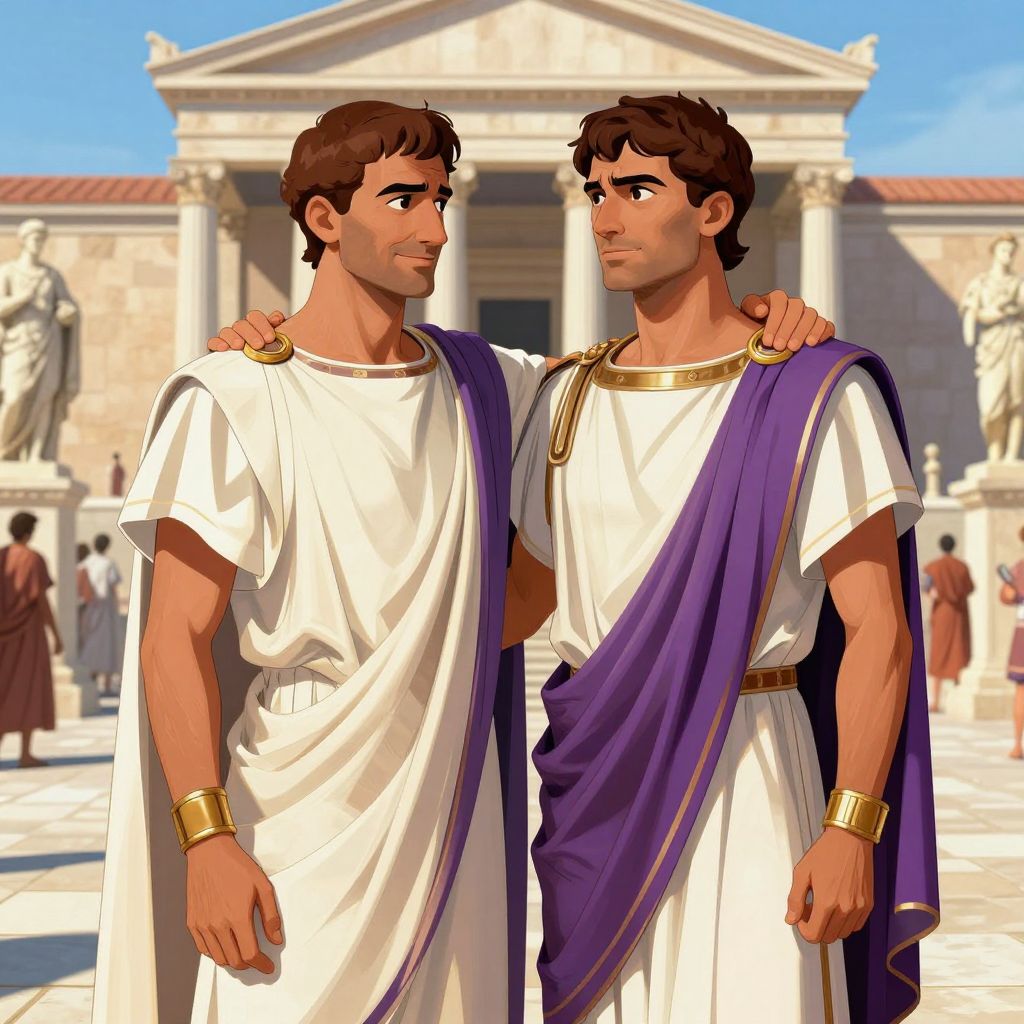
Even before Crassus died at Carrhae, the other bond holding the triumvirate together had already snapped. In 54 BCE, Julia died in childbirth. Her infant died as well. The marriage that had made Pompey and Caesar family ended, and with it the emotional connection that had softened their rivalry.
Pompey was reportedly devastated by Julia's death. Caesar, who was in Gaul at the time, also felt the loss keenly. The Roman people, who had genuinely loved Julia for her kindness and her role in uniting two great men, mourned publicly. But personal grief could not replace political calculation. Without Julia, Pompey and Caesar were merely two powerful men who had once found cooperation useful.
Caesar proposed new marriage alliances, offering his grand-niece Octavia to Pompey while requesting to marry Pompey's daughter. Pompey refused. Instead, he married Cornelia, daughter of Quintus Caecilius Metellus Pius Scipio, a leading member of the conservative faction that had always opposed Caesar. The remarriage signaled a decisive shift in Pompey's allegiances.
Over the next several years, the relationship deteriorated steadily. Pompey remained in Italy, growing closer to the Senate conservatives who feared Caesar's power. Caesar continued his conquests in Gaul, his army growing ever more loyal to their general. Each man watched the other with increasing suspicion.
The conservatives in the Senate, particularly Cato, worked to drive a wedge between the former allies. They cultivated Pompey's vanity, reminding him that he had been Rome's greatest general before Caesar's victories in Gaul. They pointed out that Caesar's veterans owed loyalty to Caesar alone, not to the Republic. They warned that Caesar planned to use his army to seize dictatorial power.
In 50 BCE, the Senate ordered Caesar to disband his legions and return to Rome as a private citizen. If he obeyed, he would lose the legal immunity his provincial command provided and face prosecution for the alleged illegalities of his consulship. His enemies had prepared charges that would destroy him politically and financially.
Caesar offered compromises. He would give up most of his provinces and legions if allowed to keep just two legions and one province until he could stand for a second consulship, which would renew his legal immunity. The Senate refused. Conservative senators, with Pompey's tacit approval, passed the senatus consultum ultimum, the emergency decree that authorized magistrates to take any action necessary to defend the Republic. In practical terms, it declared Caesar a public enemy.
The Rubicon
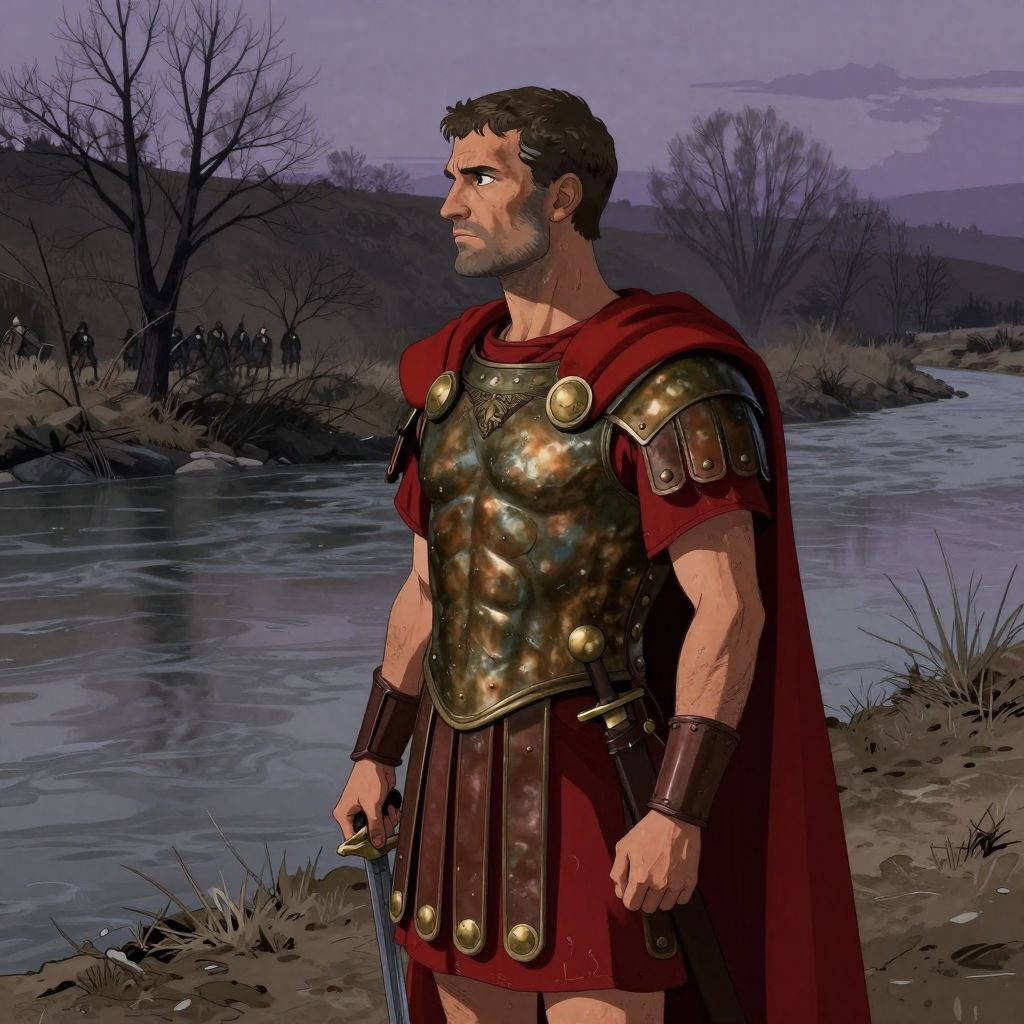
In January of 49 BCE, Caesar stood on the northern bank of a small river called the Rubicon. It was not an impressive waterway. Shallow enough to wade across. But Roman law made it the most significant boundary in the Republic. The Rubicon marked the edge of Caesar's legal authority. Any Roman commander who crossed it with his army was, by definition, waging war against Rome.
Ancient sources describe Caesar hesitating through the night, weighing his options. Everything he had built in his fifty years led to this moment. If he crossed, there was no going back. He would either become master of the Roman world or die as a traitor.
According to tradition, Caesar finally said "alea iacta est" (the die is cast) and led his single legion across the river. Within weeks, he had swept through Italy almost without resistance. Pompey and the Senate conservatives fled to Greece, where they hoped to raise an army capable of stopping Caesar's veterans. The civil war that would destroy the Roman Republic had begun.
Crossing the Rubicon gave the world an idiom that survives two thousand years later. But on that January morning, it represented something more concrete: the moment when the First Triumvirate's corruption of Roman politics finally erupted into open warfare.
The alliance of 60 BCE had always contained the seeds of its own destruction. Three ambitious men agreed to circumvent constitutional norms for personal gain. When two of them were left competing for supremacy, only force could settle the question. The Republic that had survived Hannibal, endured civil wars, and conquered the Mediterranean would not survive the ambitions it had cultivated in its own leaders.
What the Triumvirate Destroyed
The First Triumvirate demonstrated that the Roman Republic's constitution could not withstand determined opposition from men with sufficient power and resources. The checks and balances that had limited individual ambition for centuries proved useless against a coalition willing to use popular assemblies, veteran armies, and vast wealth to override senatorial opposition.
The alliance established patterns that would recur in Roman politics. The Second Triumvirate of Octavian, Antony, and Lepidus in 43 BCE was a more formal arrangement, but it followed the same model of mutual support among powerful faction leaders. The principle that personal loyalty to military commanders trumped loyalty to constitutional institutions would persist until the Republic gave way to the Empire.
For Caesar, the triumvirate provided the platform from which he launched his career of conquest. Without the provincial command he received in 59 BCE, there would have been no Gallic Wars, no crossing of the Rubicon, and no dictatorship. His assassination on the Ides of March in 44 BCE came as direct consequence of powers he first gained through the triumvirate.
For Pompey, the alliance proved to be a catastrophic miscalculation. He had been Rome's greatest general before Caesar rose to prominence. By lending his prestige to Caesar's early career, he created the rival who would ultimately destroy him. Pompey died in Egypt in 48 BCE, murdered on the orders of advisors who hoped to curry favor with the victorious Caesar.
For Crassus, the triumvirate offered a path to the military glory he craved, but led him instead to disaster in the eastern deserts. His death at Carrhae was the greatest Roman defeat since Cannae, and it left Roman prestige in the East damaged for decades. The legionary standards lost at Carrhae were not recovered until Augustus negotiated their return over thirty years later, in 20 BCE.
The Roman Republic died in stages over the century following the triumvirate's formation. But the private deal struck in 60 BCE marked a turning point. Three men had proven that personal ambition could override constitutional government. Once that lesson was learned, it could not be forgotten.
Frequently Asked Questions
1What was the First Triumvirate?
The First Triumvirate was an informal political alliance formed in 60 BCE between Julius Caesar, Pompey the Great, and Marcus Licinius Crassus. Unlike later triumvirates, it had no legal standing. It was simply a private agreement among three powerful men to support each other's political objectives.
2Why did Caesar, Pompey, and Crassus form the First Triumvirate?
Each man faced obstacles that the others could help overcome. Pompey needed his eastern settlements ratified and his veterans rewarded with land. Caesar needed a major military command to escape his debts and build his reputation. Crassus needed political support for his business interests. Together, they could bypass Senate opposition to achieve all their goals.
3How did Crassus die?
Crassus died in 53 BCE at or shortly after the Battle of Carrhae, a catastrophic Roman defeat against the Parthian Empire in modern-day Turkey. Ancient sources claim the Parthians poured molten gold down his throat to mock his legendary greed, though the historical accuracy of this detail is uncertain.
4What ended the First Triumvirate?
The triumvirate ended with two deaths: Julia (Caesar's daughter and Pompey's wife) in 54 BCE, and Crassus at Carrhae in 53 BCE. These losses removed both the third member of the alliance and the family bond connecting the two survivors, leaving Caesar and Pompey as rivals rather than allies.
5What was the Rubicon and why did it matter?
The Rubicon was a small river in northern Italy that marked the boundary of Caesar's legal military authority. Roman law forbade any general from crossing it with armed forces. When Caesar crossed the Rubicon in January 49 BCE, he was legally declaring war on Rome, triggering the civil war that would end the Republic.
6How did the First Triumvirate contribute to the fall of the Roman Republic?
The triumvirate demonstrated that ambitious men with sufficient military power and wealth could circumvent republican institutions. It set precedents for using popular assemblies to bypass the Senate, rewarding soldiers with land to ensure their personal loyalty, and treating political alliances as tools for personal advancement rather than public service.
Experience the Full Story
Follow Caesar, Pompey, and Crassus through the power struggles that destroyed the Roman Republic.


Listen to Related Stories
Three Wolves
4 minThree men walked into a room and carved up the Republic...

Key Figures
Listen to the Full Story
Experience history through immersive audio lessons narrated by Lumo, your immortal wolf guide.