The Trojan Horse Story in Brief
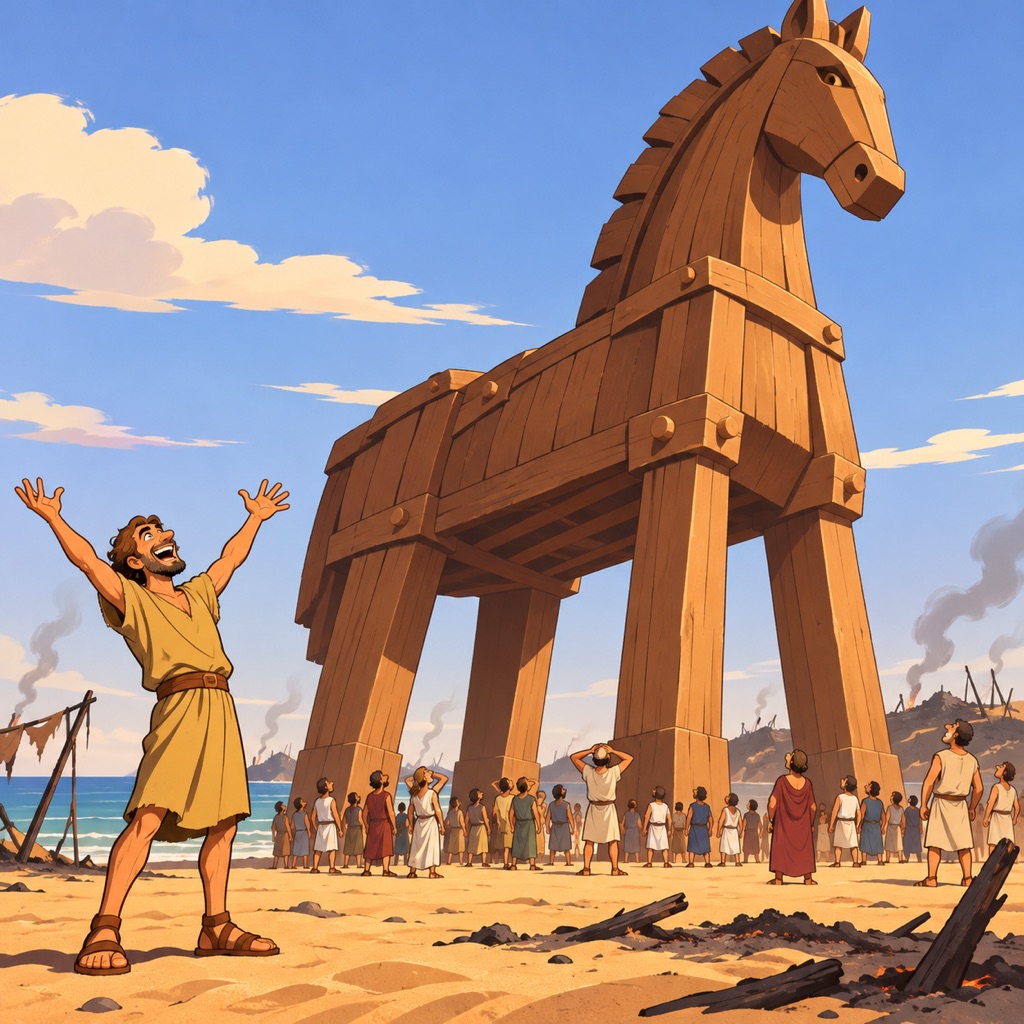
The Trojan Horse real story, as far as anyone can tell it, is a story told by Greek poets. In the legend, the Greeks ended ten years of war at Troy by building a giant wooden horse, hiding their best fighters inside it, and pretending to sail home. The Trojans dragged the horse into their city. That night the men climbed out, opened the gates to the returning army, and Troy burned.
There is no archaeological trace of a wooden horse, and historians treat it as legend. But the story is older and stranger than the version most people know. The famous details of Laocoön hurling his spear at the horse, and of a Greek named Sinon talking the Trojans into accepting it with a long lying speech, come from the Roman poet Virgil, writing more than seven centuries after Homer. The Greek sources tell it differently. They have Athena guiding the builder, Cassandra screaming the truth, sea serpents at a feast, and Helen walking around the horse in the dark, calling to the men inside in the voices of their wives.
This page tells the Greek version first, source by source, then looks at Virgil's additions, the theories about what the horse "really" was, and how the phrase entered modern language.
Where the Story Comes From
The Iliad ends before Troy falls, with the funeral of Hector. It never mentions the horse. Our oldest surviving accounts are in the Odyssey, composed around 700 BCE, which refers to the horse three times as a story everyone already knows.
The full narrative was told in two lost epics of the Trojan cycle: the Little Iliad and the Sack of Troy (Iliou Persis). Both survive mainly in short prose summaries made by a scholar named Proclus, probably in the 2nd century CE, plus scattered quotations. The mythographer Apollodorus, whose Epitome was compiled around the 1st or 2nd century CE, tells the story in more detail and often follows the old epics. The Athenian tragedians, especially Euripides in The Trojan Women (415 BCE), describe the horse and the night of the sack.
Where these sources agree, we can be fairly sure we have the shape of the early Greek story. Where they differ, this page says so.
Who Built the Trojan Horse?
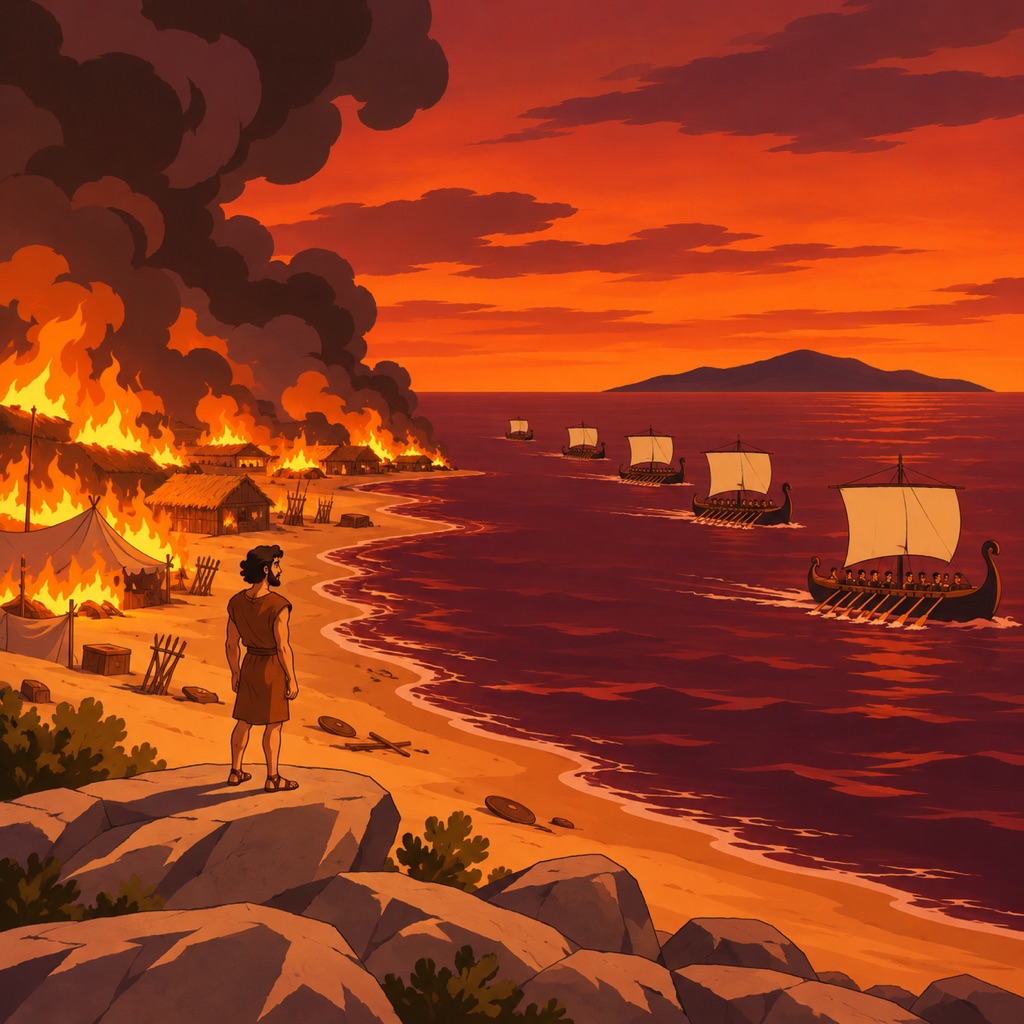
By the tenth year, the legend's Greek army had lost Achilles and was no closer to taking the city. The idea of the horse belongs to Odysseus. Apollodorus (Epitome 5.14) says plainly that Odysseus devised it and proposed it to Epeius, a craftsman.
Epeius is a minor figure in the Iliad, where he wins the boxing match at the funeral games of Patroclus and admits he is no great warrior. In the Odyssey, the bard Demodocus sings of "the horse of wood, which Epeius made with Athena's help" (Odyssey 8.492–493). The Little Iliad, in Proclus's summary, also says Epeius built it at Athena's prompting. Athena, who had hated Troy since the Judgment of Paris, is the divine engineer of the city's fall.
Apollodorus adds that Epeius felled timber on Mount Ida and that the Greeks carved an inscription on the horse: "For their return home, the Greeks dedicate this thank-offering to Athena." That was the bait. A gift to the goddess could not easily be destroyed.
How many men hid inside? The sources disagree wildly. Apollodorus says fifty, and notes that the author of the Little Iliad said three thousand, which no wooden horse could hold. Later writers give lists of around thirty names. In the Odyssey, the men inside include Odysseus, Menelaus, Diomedes and Achilles' young son Neoptolemus. In Odyssey 11, Odysseus tells the ghost of Achilles that while the other Greek leaders wiped away tears and shook in the dark, Neoptolemus never went pale and kept gripping his sword, eager to get out.
The rest of the army burned its huts and sailed to the island of Tenedos, just offshore, out of sight. One man stayed behind to signal the fleet back. In the Sack of Troy, as Proclus summarizes it, that man is Sinon, "who had earlier entered the city by a pretence", and who raised the fire signal. Apollodorus says the same, and places the beacon on the tomb of Achilles.
The Argument on the Citadel and Cassandra's Warning
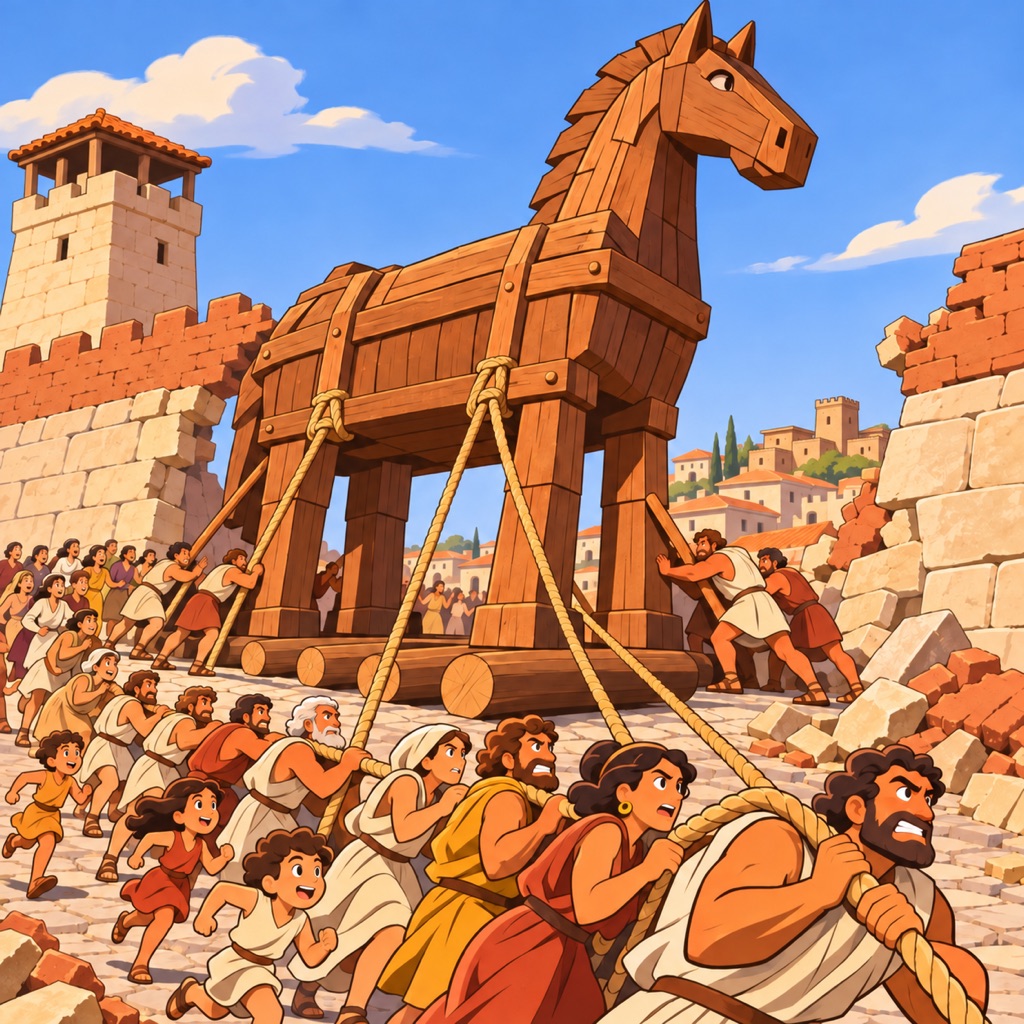
When the Trojans came down to the empty beach, they found the camp burned and the horse standing on the sand. According to the Little Iliad, they pulled down part of their own wall to get it into the city and hauled it up to the citadel. Later poets made a point of this: the walls built by the gods, which no enemy had breached in ten years, were broken by the Trojans themselves.
Then they argued. The Odyssey (8.505–510) gives three options the Trojans weighed as they sat around the horse: cut open the hollow wood with bronze, drag it to the edge of the heights and throw it onto the rocks, or leave it as a great offering to win the gods' favor. The Sack of Troy gives a similar list: throw it from the cliff, burn it, or dedicate it to Athena. The vote went to dedication, and the Trojans gave themselves over to feasting.
One voice had the truth. Apollodorus says that Cassandra, Priam's daughter, declared there was an armed force inside the horse, and that the seer Laocoön backed her. Cassandra's curse is part of the story: Apollo had given her the gift of prophecy, and when she refused him, he made sure no one would ever believe her (Apollodorus 3.12.5; Aeschylus, Agamemnon 1202–1212). The Trojans ignored her.
The Serpents and Laocoön
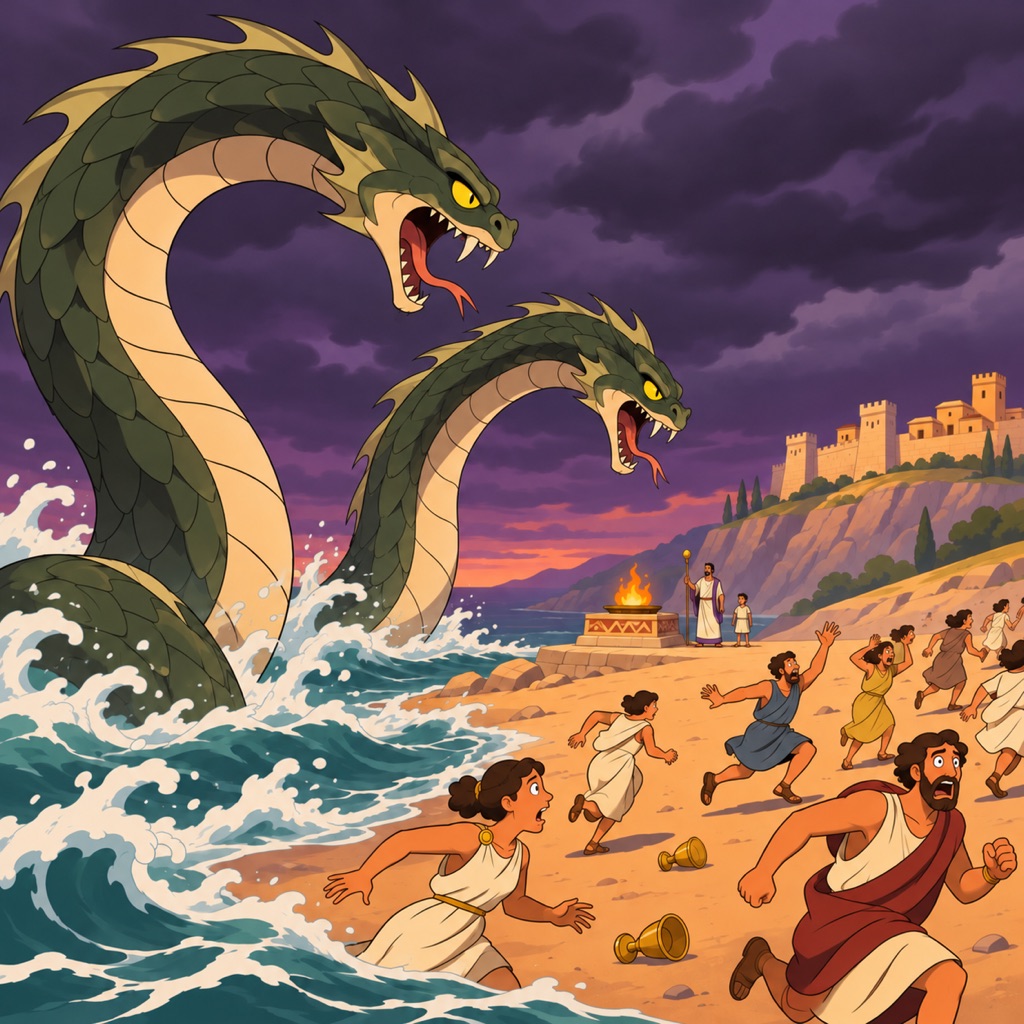
During the celebrations, a portent struck. In the Sack of Troy, as Proclus summarizes it, two serpents appeared and killed Laocoön and one of his two sons. Apollodorus says the serpents swam across the sea from nearby islands and devoured Laocoön's sons. The Trojans could have read this as a warning. Instead the sign drove some of them away: Proclus says that Aeneas and his followers, alarmed by the portent, slipped out of the city to Mount Ida. Everyone else kept feasting.
Why the serpents came, the early sources do not fully say. Later Greek writers gave Laocoön an older offense against Apollo. The famous version, in which the serpents punish Laocoön for attacking the horse, is Virgil's.
Helen's Voices: The Scene Most People Never Hear
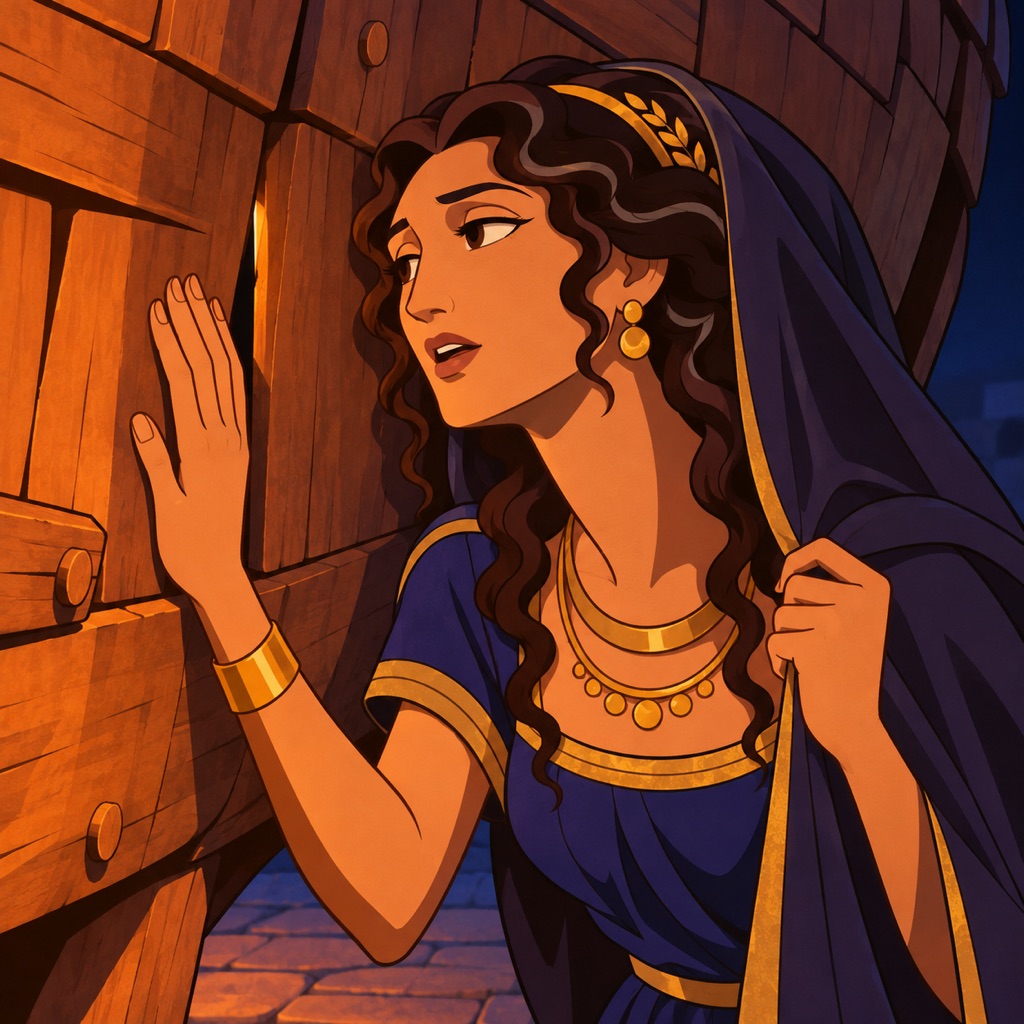
The strangest scene in the whole story comes from the Odyssey, and almost no retelling includes it.
In Odyssey 4 (lines 271–289), Menelaus, back home in Sparta years after the war, tells a dinner guest about the night in the horse. Helen, by then living in Troy as the wife of Paris's brother Deiphobus, came to the horse with Deiphobus following her. She walked around it three times, touching the hollow ambush, and called out to the Greek leaders by name, imitating the voice of each man's wife.
Menelaus, Diomedes and Odysseus were sitting in the middle. Diomedes and Menelaus wanted to jump out or answer. Odysseus held them back. One man, Anticlus, was about to reply, and Odysseus clamped his hands over the man's mouth and held them there until Athena led Helen away. Apollodorus (Epitome 5.19) tells the same scene.
What was Helen doing? Menelaus suggests a god who favored Troy must have driven her to it. Yet just before this, in the same book, Helen tells her own story of meeting Odysseus in disguise inside Troy and keeping his secret, because by then her heart longed to go home. Homer leaves both stories side by side, and leaves Helen's loyalties an open question.
The Night Troy Fell
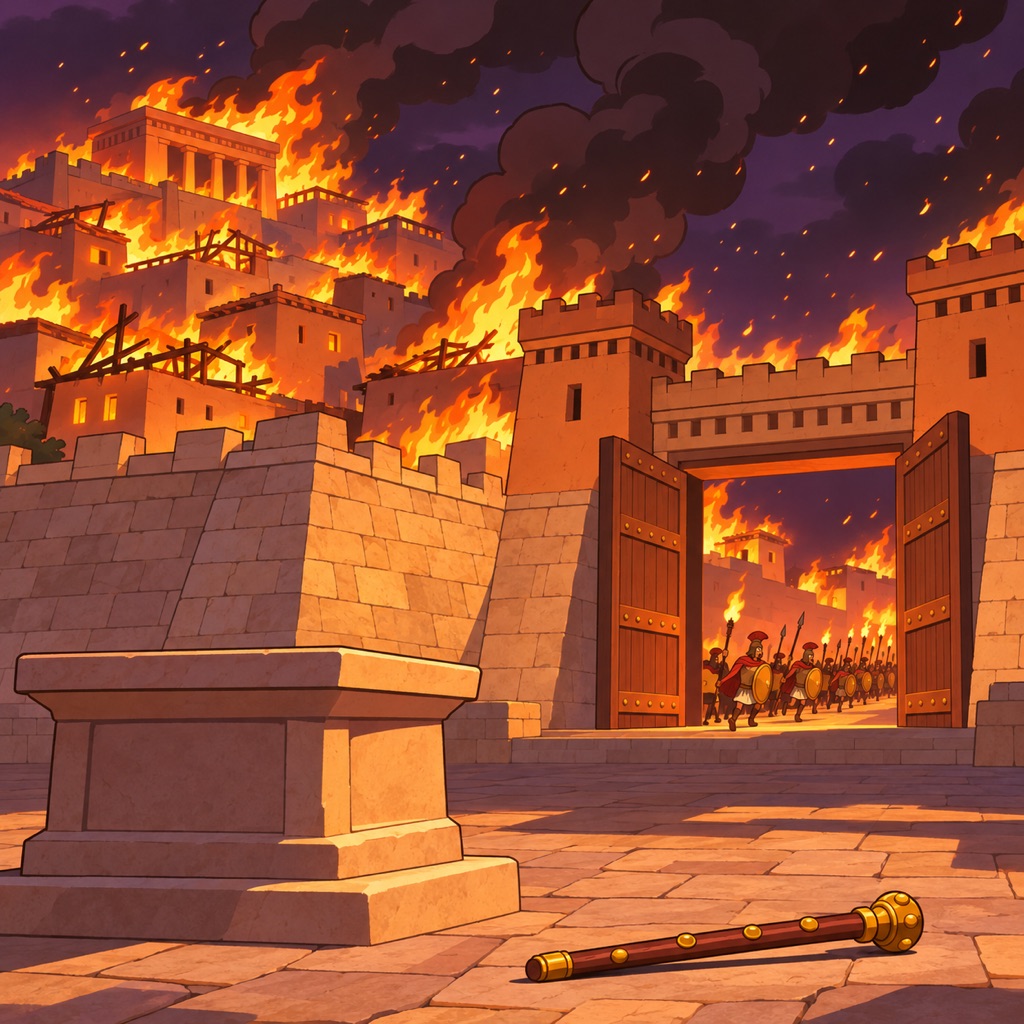
Late that night, the signal fire was lit. The fleet sailed back from Tenedos, the men climbed down from the horse, killed the guards, and opened the gates.
The sack, as the old poems and the tragedians tell it, is one of the darkest episodes in Greek myth. In the Sack of Troy, Neoptolemus kills King Priam at the altar of Zeus in his own courtyard, where the old king had fled for protection. A lesser hero named Ajax, son of Oileus, drags Cassandra away from the statue of Athena she was clinging to, an act of sacrilege that the goddess later punished on the Greek fleet. Cassandra is given to Agamemnon as a prize. Hector's infant son Astyanax is thrown from the walls; in the Sack of Troy Odysseus kills him, and in Euripides' Trojan Women the Greeks decide on it after Odysseus argues for it in their council.
Menelaus finds Helen. The Little Iliad and later poets say he went to kill her, but when he saw her, he dropped his sword. Euripides' Andromache (lines 627–631) has a character sneer at exactly this: Menelaus saw her breast, threw away his sword, and kissed the traitor. He took her home to Sparta, where she is found in Odyssey 4, calmly serving wine.
Virgil's Version: Sinon's Lie and Laocoön's Spear
The best-known telling of the Trojan Horse story is the Roman one, in Book 2 of Virgil's Aeneid, written in the 20s BCE. Virgil kept the Greek outline but rebuilt the drama around it, and many of the details people remember are his:
- Laocoön's spear. In Virgil, the priest Laocoön runs down from the citadel, warns the Trojans with the line "I fear the Greeks, even bearing gifts" (timeo Danaos et dona ferentes), and hurls a spear into the horse's side, which rings hollow. This scene is Virgil's.
- Sinon's long lie. In the Greek sources Sinon is the man who lights the signal fire, and Proclus says he got into the city "by a pretence". Virgil turns this into a full scene: Sinon lets himself be captured, claims the Greeks tried to sacrifice him, and spins a story that the horse is an offering to Athena, built huge so the Trojans could not bring it into the city and gain the goddess's protection. The Trojans believe him. That elaborate speech is Virgil's (the late Greek poet Quintus of Smyrna tells a similar version, also centuries after Homer).
- The serpents' timing. Virgil's serpents kill Laocoön and both his sons right after the spear, so the Trojans read it as punishment for striking a sacred gift. In the earlier Sack of Troy, the serpents come during the feast, after the horse is already inside.
Virgil's version became the standard one in Europe, and the Hellenistic sculpture of Laocoön and his sons wrestling the serpents, rediscovered in Rome in 1506 and now in the Vatican, fixed that image for artists for five centuries.
Was the Trojan Horse Real?
No physical evidence of a wooden horse has ever been found, and it would be astonishing if it had. Historians treat the horse as a part of the legend. Still, people have looked for a real event behind it since antiquity.
A siege engine. The Greek travel writer Pausanias, in the 2nd century CE, was blunt: anyone who does not think the Trojans utter fools knows that the work of Epeius was an engine for breaking walls (Description of Greece 1.23.8). Later commentators pointed out that Assyrian battering rams were sometimes covered in wet hides, and suggested that a ram covered in horsehide, or given a horse's name, became a horse in the telling. There is no direct evidence for this, and battering rams are not well attested in Bronze Age Aegean warfare.
An earthquake. Poseidon was the god of earthquakes, and also the god of horses. Some writers have proposed that "the horse" is a poetic way of saying Poseidon brought down Troy's walls. The archaeologist Carl Blegen concluded that the city level called Troy VI was wrecked by an earthquake around 1300 BCE. But the city most often linked to the legend, Troy VIIa, ended in fire around 1180 BCE, not in an earthquake, so the idea fits the wrong layer. For the archaeology, see Was Troy Real?.
A ship. In 2016 and 2017, the Italian naval archaeologist Francesco Tiboni argued that the horse was really a ship, pointing to a type of Phoenician vessel called a hippos ("horse") with a horse-head prow. Critics answered that the earliest Greek sources clearly describe a horse that is dragged into the city, not a boat, and that the theory explains nothing a horse does not.
A story, pure and simple. Many classicists think the horse needs no hidden origin. Horses were sacred to Poseidon and associated with Athena, who in some cults was called Hippia. A wooden image dedicated to a god is a believable offering. A ruse that turns an enemy's piety against them is a classic folk-tale move. The horse may be exactly what it looks like: a brilliant story.
The Trojan Horse in Modern Use
"Trojan horse" now means anything that looks harmless but carries an attack inside, from a political ally who works for the other side to a piece of malicious software disguised as a useful program. The computing sense dates to the early 1970s; a U.S. Air Force computer security report from 1972 credits the term to Daniel Edwards of the National Security Agency. Virgil's "beware of Greeks bearing gifts" became a proverb in the same spirit.
For the rest of the war, see our Trojan War summary and the Iliad summary, or browse all of Ancient Greece.
Frequently Asked Questions
1What is the real story of the Trojan Horse?
In the Greek sources, Odysseus thought of it and the craftsman Epeius built it with Athena's help. The best Greek fighters hid inside, the army sailed to the nearby island of Tenedos, and the Trojans hauled the horse into the city. Cassandra warned them; they ignored her. That night the men climbed out, a signal fire brought the fleet back, and Troy was sacked. No physical evidence of a horse exists, so historians treat it as legend.
2Was the Trojan Horse real?
There is no evidence that it was. The city of Troy was real and burned around 1180 BCE, but nothing found there points to a wooden horse. Ancient and modern writers have suggested it was a siege engine, a ship, or a poetic image for an earthquake. None of these theories has evidence behind it.
3Who was inside the Trojan Horse?
In the Odyssey, the men inside included Odysseus, Menelaus, Diomedes, Anticlus and Achilles' son Neoptolemus. Apollodorus says there were fifty men and notes that the Little Iliad claimed three thousand. Later writers give lists of around thirty names.
4Who built the Trojan Horse?
Epeius, a Greek craftsman, built it with the help of the goddess Athena, according to Homer's Odyssey (8.492-493) and the lost Little Iliad. Apollodorus says Odysseus came up with the idea and Epeius cut the timber on Mount Ida.
5Did Laocoön throw a spear at the Trojan Horse?
Only in Virgil's Aeneid, a Roman poem of the 20s BCE. In the earlier Greek Sack of Troy, Laocoön and one of his sons are killed by two serpents from the sea during the Trojan feast, but there is no spear.
6Who was Sinon?
In the Greek sources, Sinon is the Greek who stayed behind and lit the signal fire to bring the fleet back from Tenedos, having entered Troy by a pretence. Virgil's Aeneid expands this into a long lying speech that persuades the Trojans to take in the horse.
Hear the Night Troy Fell
The Walls of Troy tells the end of the war the Greek way, with Cassandra's warning, the serpents, and Helen's voices in the dark.


Listen to Related Stories
Voices in the Horse
5 minIn the dark, a man heard his wife's voice calling his name, and Odysseus clamped a hand over his mouth.

Key Figures

Listen to the Full Story
Experience history through immersive audio lessons narrated by Lumo, your immortal wolf guide.