Iliad Summary in Three Sentences
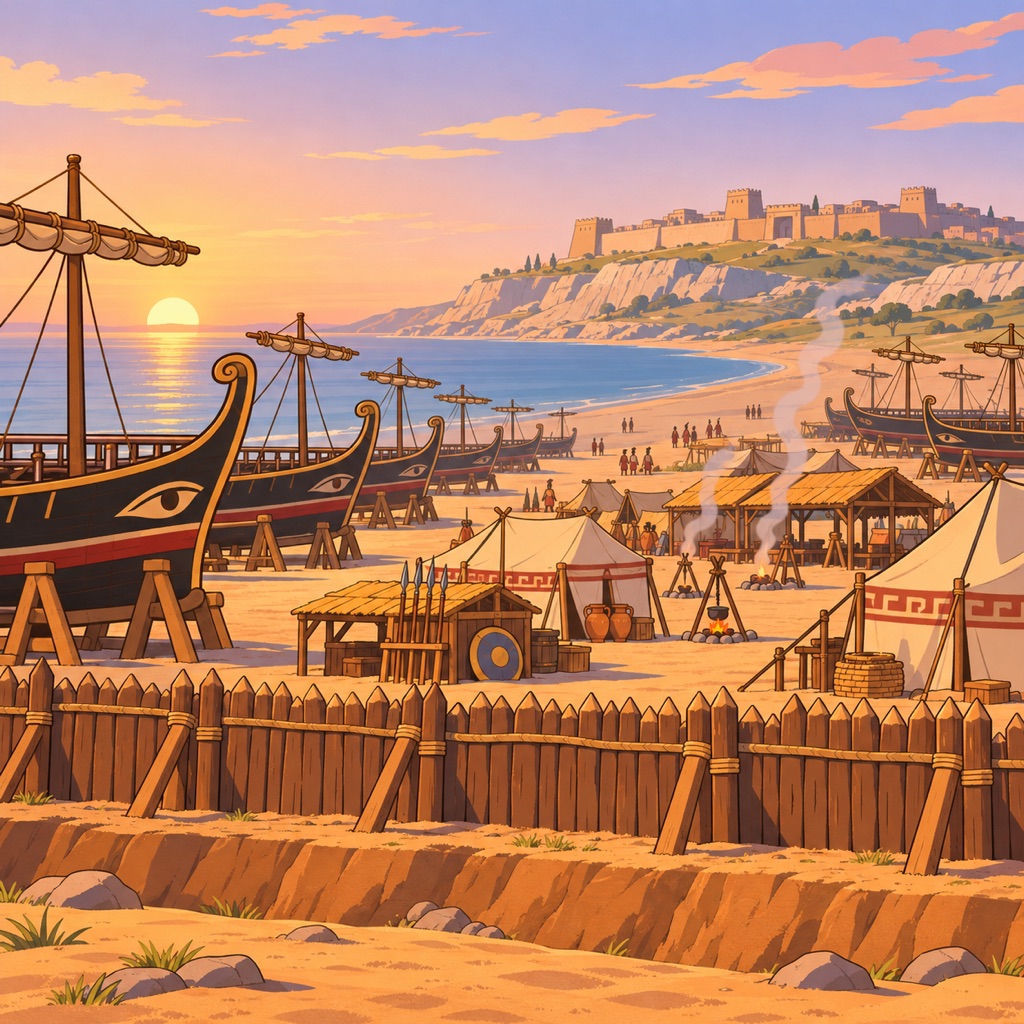
Here is the Iliad summary in three sentences. In the tenth year of the Trojan War, Achilles, the best fighter of the Greeks, quarrels with the high king Agamemnon and refuses to fight, and the Greeks are driven back to their ships. His closest friend Patroclus goes into battle in Achilles' armour and is killed by Hector, the champion of Troy. Achilles returns, kills Hector, abuses his body for days, and finally gives it back to Hector's old father Priam, and the poem ends with Hector's funeral.
That is the whole plot. It covers about fifty days, not ten years. The Trojan War has already started before the first line and is not over at the last one. There is no wooden horse in the Iliad, no judgment of Paris told in full, and no death of Achilles. Homer chose a few weeks and one man's anger, and built 15,693 lines of verse on them.
The poem's first word in Greek is menin, "rage". Homer asks the goddess of song to sing "the rage of Achilles, son of Peleus", the rage that sent many brave souls down to the house of the dead and left their bodies to the dogs and birds. Everything that follows is the cost of that anger: first to the Greeks, then to Achilles himself.
The Iliad is legend, not history. It was composed around 700 BCE, about five hundred years after the war it describes, by a poet the Greeks called Homer. Whether a real war stands behind it is a separate question, covered in Was Troy Real? This page summarizes the poem as the Greeks knew it, in six parts.
Book 1: The Quarrel
The poem opens with a plague. Agamemnon has taken Chryseis, the daughter of a priest of Apollo, as his war prize. The priest comes to the camp with a ransom and begs for her back. Agamemnon insults him and sends him away. The priest prays, and Apollo comes down from Olympus "like the night" and shoots plague arrows into the camp for nine days, first the mules and dogs, then the men.
On the tenth day Achilles calls an assembly. The army's prophet, Calchas, says what everyone fears: the girl must go home. Agamemnon agrees, but demands a replacement prize, and takes Briseis, the woman Achilles was given after a raid.
Achilles reaches for his sword. Athena, sent by Hera, catches him by his golden hair from behind. Only he can see her. She tells him to fight with words, not bronze, and he obeys. The words are bad enough: he calls Agamemnon a drunk with "the eyes of a dog and the heart of a deer", and swears that the day will come when the Greeks need him and he will not come.
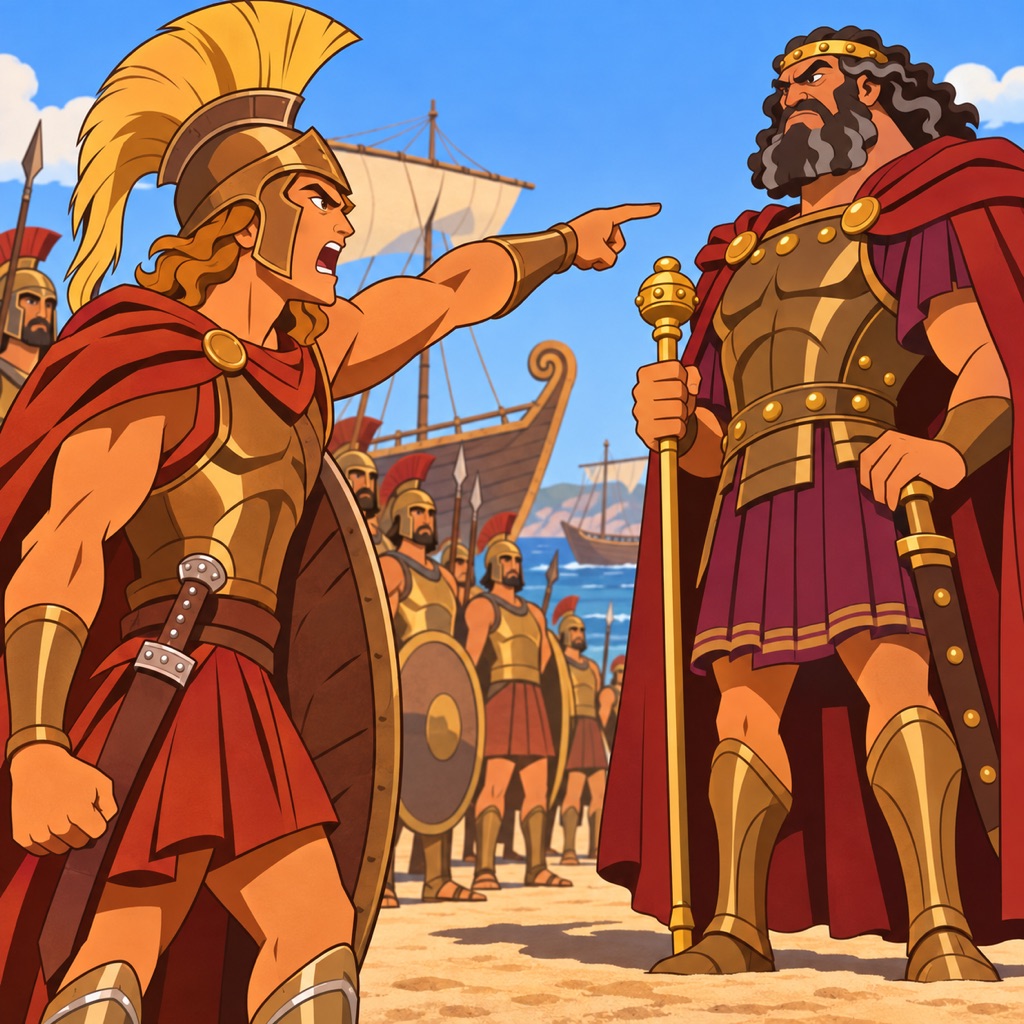
He withdraws to his tent with his men, the Myrmidons. Patroclus leads Briseis out to Agamemnon's heralds. Then Achilles goes down to the shore and calls his mother, the sea goddess Thetis. She climbs Olympus, takes Zeus by the knees, and asks him to give the Trojans victory until the Greeks honour her son. Zeus nods. The book ends with the gods feasting and Hera furious.
Books 2 to 7: The War Without Achilles
Zeus sends Agamemnon a false dream promising that Troy will fall today. Agamemnon tests the army by suggesting they all sail home, and the men stampede for the ships. Odysseus stops them, beating the loud-mouthed Thersites with the royal sceptre. Book 2 then pauses for the Catalogue of Ships, a long list of every Greek contingent and its leaders, followed by a shorter list of the Trojans and their allies.
Book 3 brings the man who started it all. Paris offers to settle the war by single combat with Menelaus, the husband he wronged. On the walls, Helen points out the Greek leaders to old King Priam. Menelaus is winning when Aphrodite snatches Paris out of the fight in a mist and sets him down in his bedroom. In Book 4 a Trojan archer, Pandarus, breaks the truce with an arrow at Menelaus, egged on by Athena, and the full battle starts again.
Book 5 belongs to the Greek hero Diomedes, who with Athena's help wounds two gods: Aphrodite in the hand, and Ares, the god of war himself. In Book 6 Diomedes meets the Lycian Glaucus on the field, finds that their grandfathers were guest-friends, and the two men swap armour instead of fighting. Glaucus gives gold for bronze, "a hundred oxen's worth for nine", and Homer says Zeus took his wits away.
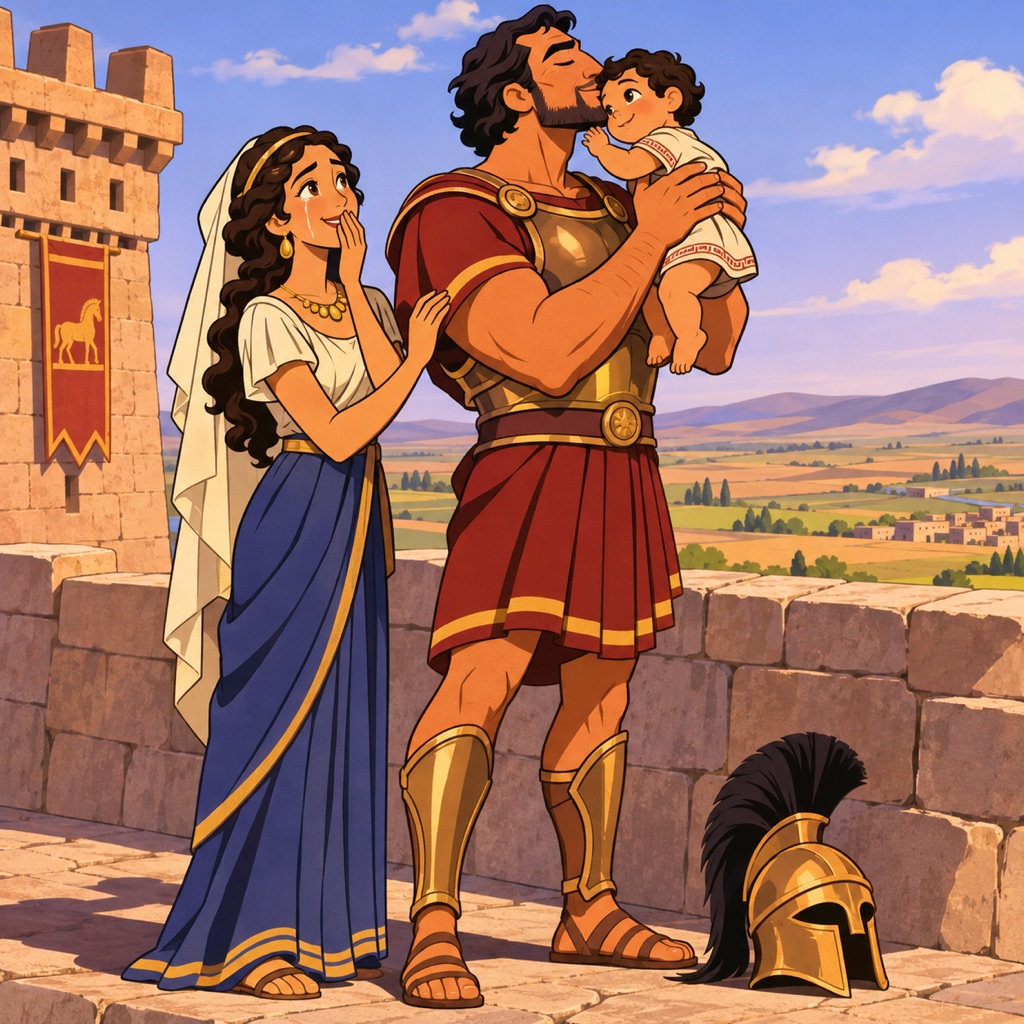
The same book holds the most famous family scene in Greek poetry. Hector goes back into Troy to ask the women to pray to Athena. On the wall near the Scaean Gate he meets his wife Andromache and their baby son. She begs him to stay inside the walls. He says he cannot: he would be ashamed before the Trojans. He admits that he believes Troy will fall, and that what hurts him most is the thought of her being led away as a slave. Then he reaches for his son, and the baby screams at the horsehair crest on his helmet. Hector and Andromache laugh. He takes the helmet off, kisses the boy, and prays that one day people will say he was a better man than his father.
Book 7 ends the first day of battle with a duel between Hector and the giant Greek Ajax. Night falls before either wins, and the two exchange gifts: Hector gives a sword, Ajax a belt. The Greeks use the truce to bury their dead and build a wall and a ditch around their ships.
Books 8 to 15: The Greeks Driven to the Ships
Now Zeus keeps his promise to Thetis. He forbids the other gods to interfere, and the Trojans push the Greeks back. For the first time the Trojans camp out on the plain, their watch-fires burning "like stars around a bright moon".
In Book 9 Agamemnon gives in. He sends Odysseus, Ajax and Achilles' old tutor Phoenix to Achilles with a vast offer: Briseis returned untouched, gold, horses, seven cities, and one of his daughters in marriage. Achilles refuses all of it. In the speech that defines him, he says his mother told him of two fates. If he stays and fights at Troy, he loses his homecoming but his glory never dies. If he goes home, he gets a long life and no fame. He says he will sail home in the morning. He doesn't.
Book 10 is a night raid. Odysseus and Diomedes catch a Trojan spy, Dolon, get the information they need from him, kill him, and steal the famous horses of the Thracian king Rhesus. Many scholars think this book was added later, and ancient critics already suspected it.
Books 11 to 15 are a long, bloody seesaw. Agamemnon, Diomedes and Odysseus are wounded one after another. The Trojans storm the Greek wall, and in Book 12 Hector smashes one of the gates with a boulder. In Book 14 Hera borrows Aphrodite's love charm and seduces Zeus, so that he falls asleep and Poseidon can help the Greeks. When Zeus wakes up, he is angry. Apollo revives the wounded Hector, and in Book 15 the Trojans reach the ships. Ajax stands alone on the decks fighting off men with torches. Meanwhile, old Nestor has planted an idea with Patroclus: if Achilles will not fight, let Patroclus wear his armour, and the Trojans may think Achilles is back.
Book 16: Patroclus
The first Greek ship catches fire. Patroclus comes to Achilles in tears, and Achilles lets him go, in his own armour, with a warning: drive the Trojans from the ships, and then come back. Do not go near the city.
Patroclus takes everything but Achilles' great ash spear, which no one else can wield. The trick works. The Trojans break and run. Patroclus kills Sarpedon, a son of Zeus, and Zeus, who could save his son, lets him die and sends a rain of blood to the ground in grief.
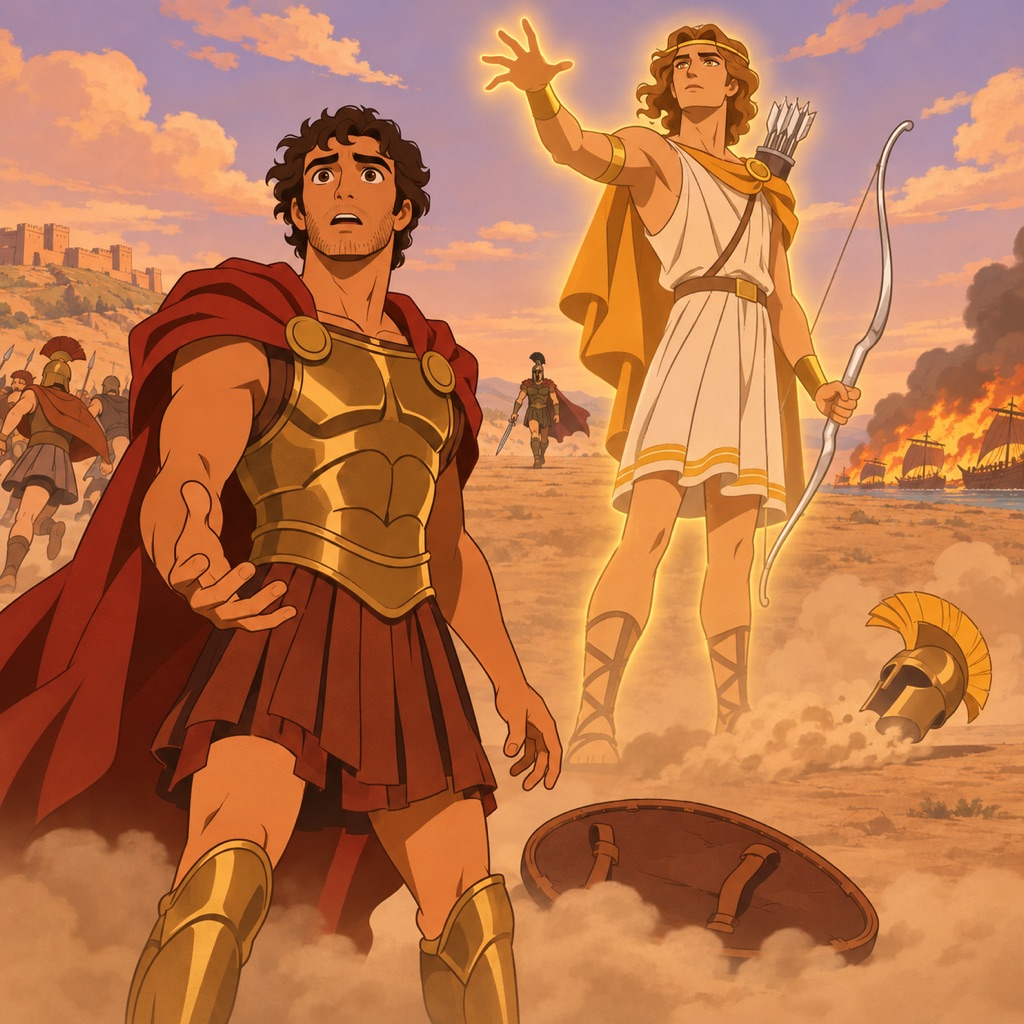
Then Patroclus forgets the warning. He chases the Trojans to the walls of Troy and tries to climb them three times. Each time Apollo throws him back. In the next charge Apollo comes up behind him in a mist, strikes him on the back, and knocks Achilles' helmet off his head. A young Trojan, Euphorbus, spears him in the back. Hector finishes him with a spear in the belly. With his last breath Patroclus tells Hector that he too will die soon, at Achilles' hands.
Books 17 to 22: Achilles Returns and Hector Dies
Book 17 is the fight over the body. Hector strips Achilles' armour from Patroclus and puts it on. Zeus watches him do it and pities him, because he knows Hector will not live to bring it home. Menelaus and the two Ajaxes carry the body back toward the ships.
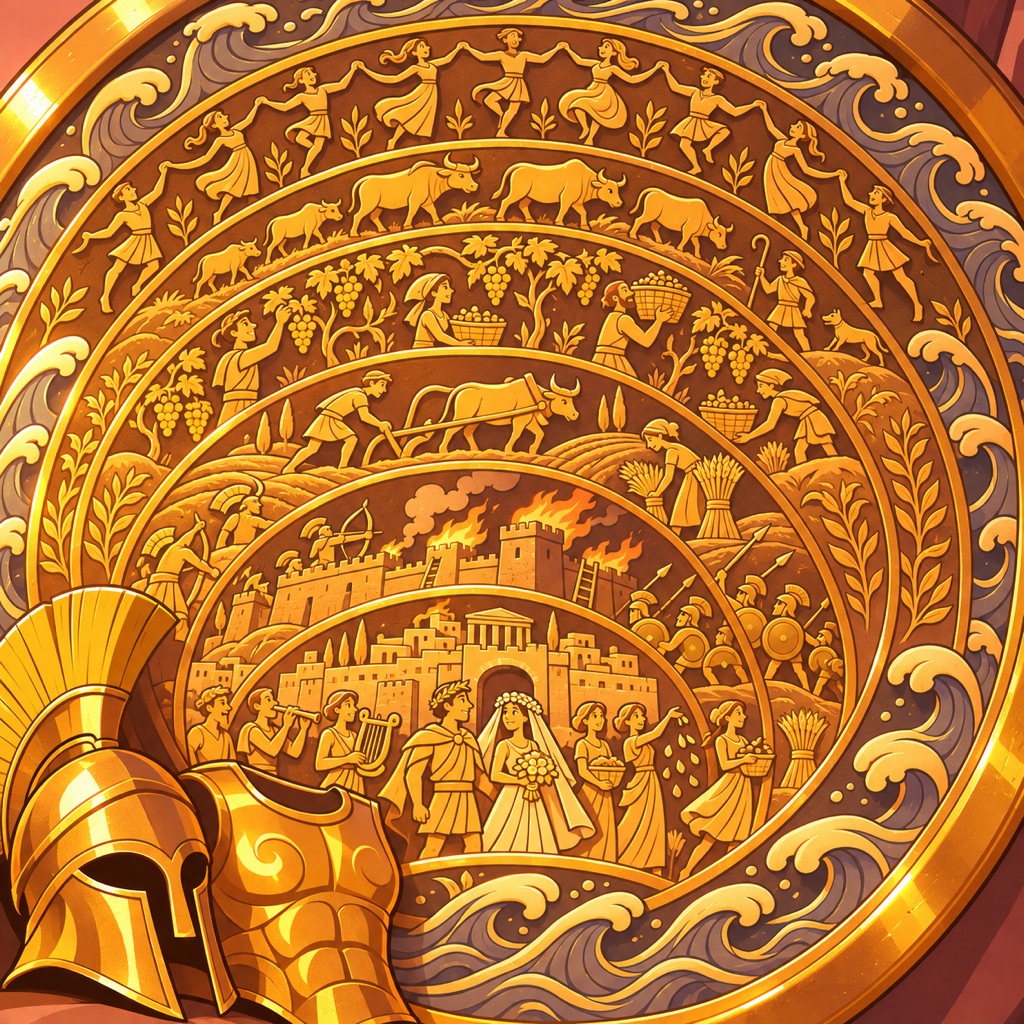
In Book 18 the news reaches Achilles. He pours dust over his head and lies in it, and his scream brings his mother up from the sea. Thetis tells him that if he kills Hector, his own death will come soon after. He answers that he wants to die at once, since he could not save his friend. Achilles goes to the trench unarmed and shouts three times, and the Trojans panic. That night, the smith god Hephaestus forges him new armour, with a shield showing the whole world: cities at peace and at war, a wedding, a lawsuit, ploughing, a harvest, a vineyard, dancers, and the river Ocean around the rim.
In Book 19 Achilles and Agamemnon make peace. Briseis is returned, and she weeps over Patroclus, who had always been kind to her. Achilles refuses to eat. When he mounts his chariot, his horse Xanthus is given a voice for a moment and tells him that his death is near.
Books 20 and 21 are a slaughter. The gods join the battle on both sides. Achilles kills so many Trojans that the river Scamander, choked with bodies, rises up to drown him, and Hephaestus has to burn the river back with fire.
Book 22 is the death of Hector. Every Trojan runs inside the walls except Hector, who stands at the Scaean Gate while his father and mother beg him from the wall to come in. He stays because he is ashamed: he ignored advice to pull back the night before, and his men died for it. Then Achilles comes, and Hector runs. They go three times around the walls of Troy. Zeus weighs their deaths on golden scales and Hector's sinks. Athena takes the form of Hector's brother Deiphobus and promises to fight beside him. Hector turns, throws, misses, and turns to his brother for another spear. There is nobody there. Achilles spears him through the throat, refuses his last request for burial, and drags his body behind his chariot to the ships while Andromache watches from the walls. The full story is told on the Hector page.
Books 23 and 24: Two Funerals
Book 23 is Patroclus's funeral. His ghost comes to Achilles in a dream and asks that their bones lie together in one urn. Achilles builds a huge pyre and puts horses, two of his own dogs and twelve Trojan prisoners on it. Then he holds funeral games: a chariot race, boxing, wrestling, a foot race, and archery. It is the calmest book in the poem, and Achilles behaves well in it, settling quarrels and giving prizes generously.
But every dawn he still drags Hector's body around Patroclus's grave. Apollo and Aphrodite keep it from harm. In Book 24 the gods finally intervene. Zeus sends Thetis to tell her son to accept a ransom, and sends Hermes to guide old Priam through the Greek camp at night.
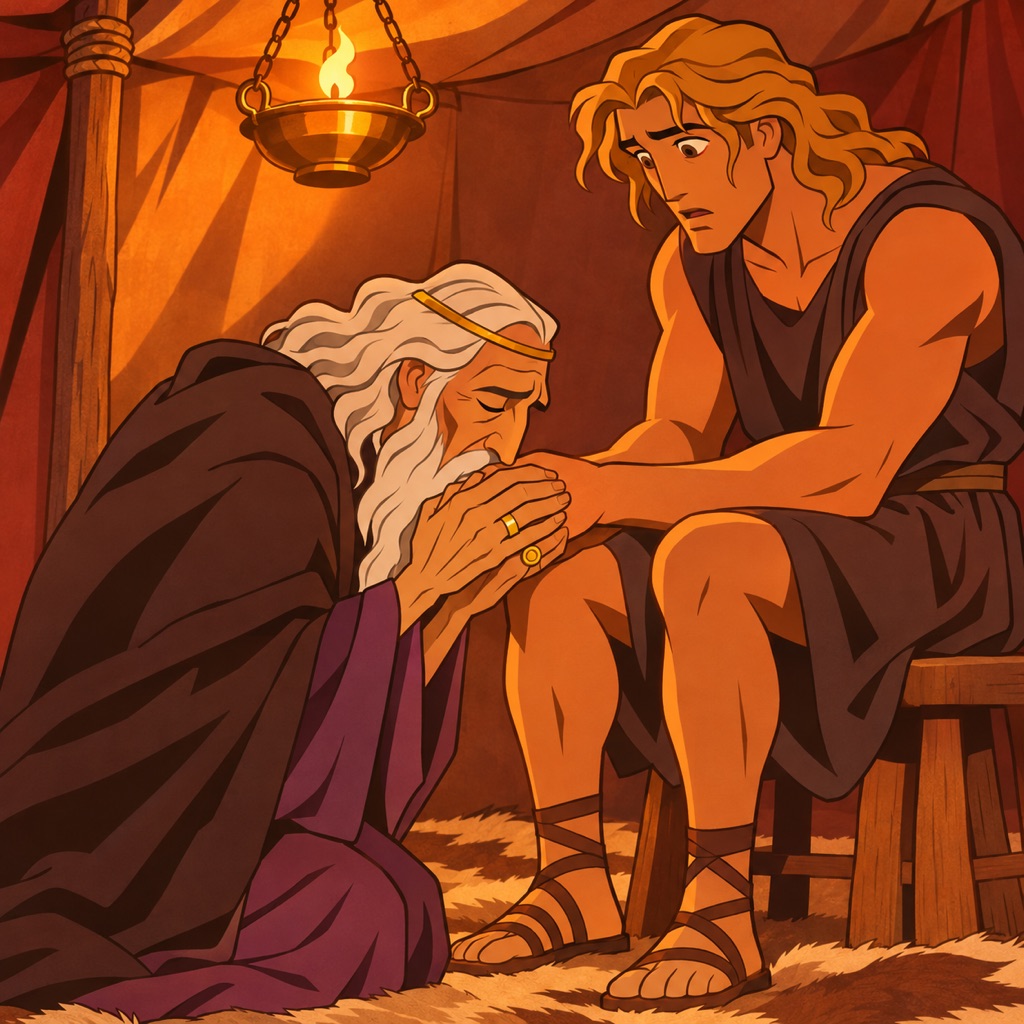
Priam walks into Achilles' tent, kneels, and kisses his hands. He asks Achilles to remember his own father, Peleus, old and far away. Achilles weeps for his father and for Patroclus. Priam weeps for Hector. Then Achilles lifts the old man up, has the body washed and wrapped, and makes Priam eat with him, telling him the story of Niobe, who ate even after losing all twelve of her children. He grants eleven days of truce for the funeral.
In Troy, three women lead the mourning: Andromache, Hecuba, and Helen, who says Hector was the only man in Troy who never spoke one harsh word to her. The Trojans build the pyre for nine days, burn the body on the tenth, and raise a mound over the bones. The last line of the Iliad is: "So they held the funeral of Hector, tamer of horses."
The Main Characters of the Iliad
The Greeks (Homer calls them Achaeans, Danaans or Argives):
- Achilles, son of the sea goddess Thetis and the mortal king Peleus, the greatest fighter on either side.
- Agamemnon, king of Mycenae and commander of the army, proud and greedy.
- Menelaus, his brother, king of Sparta and Helen's husband.
- Patroclus, Achilles' closest friend, older than him and known for his kindness.
- Odysseus, king of Ithaca, the cleverest speaker in the army and the hero of Homer's other poem.
- Ajax, son of Telamon, the giant who defends the ships.
- Diomedes, the young fighter who wounds two gods.
- Nestor, the old king of Pylos, who gives long advice and tells stories of his youth.
The Trojans:
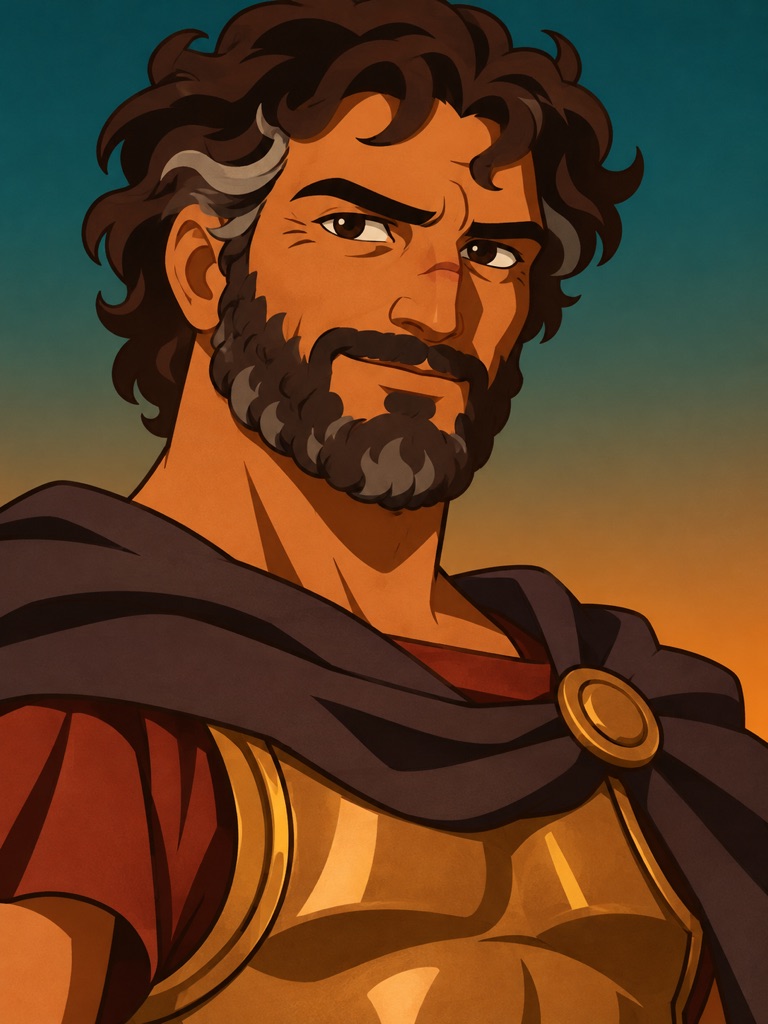
- Hector, Priam's eldest son and the defender of the city.
- Priam, the old king of Troy, father of fifty sons.
- Hecuba, his queen.
- Andromache, Hector's wife, whose whole family Achilles has already killed.
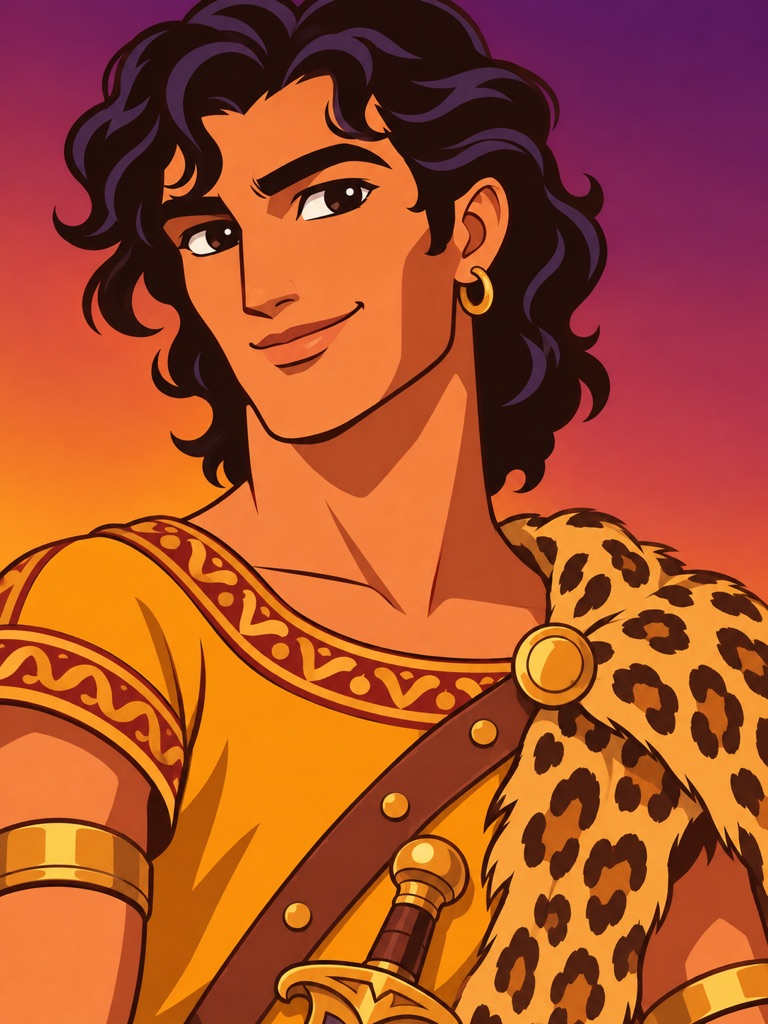
- Paris, also called Alexandros, the prince who took Helen.
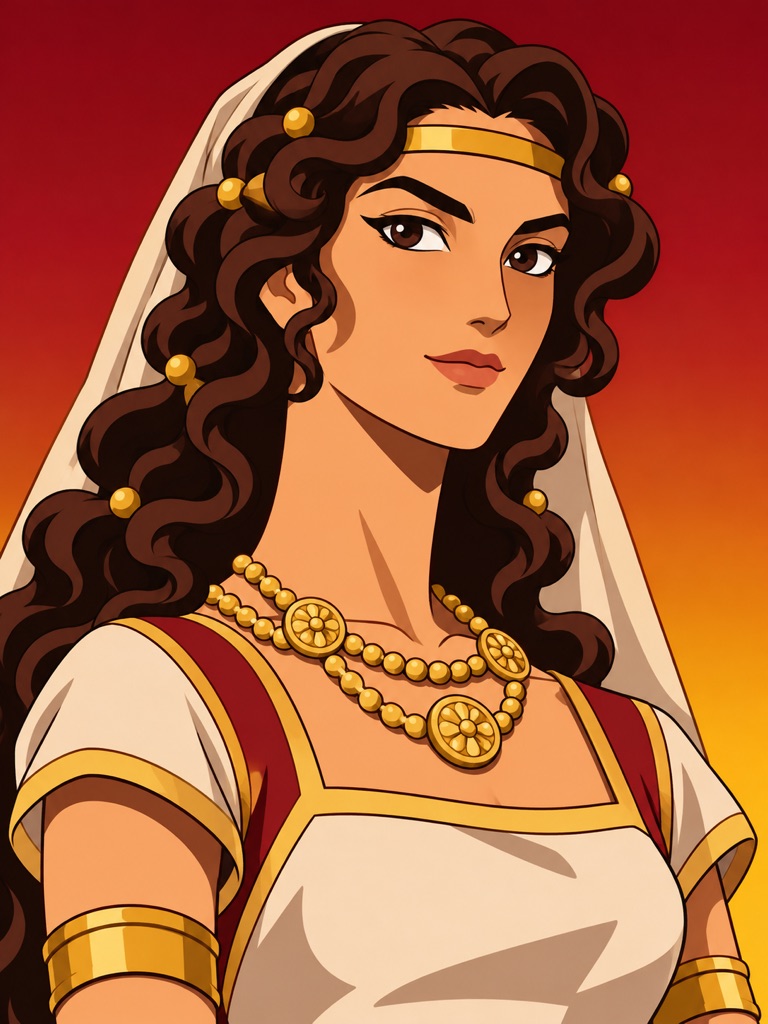
- Helen, who blames herself more bitterly than anyone else does.
- Aeneas, a Trojan prince saved by the gods because he is fated to survive.
The gods: Hera, Athena and Poseidon favour the Greeks. Apollo, Aphrodite and Ares favour Troy. Zeus holds the scales and mostly keeps his promise to Thetis. Cassandra, the prophet nobody believes, appears only briefly in the Iliad: she is the first to see her father bringing Hector's body home.
The Themes: Rage, Glory, Fate and Grief
Rage. The poem is built on two angers. The first, at Agamemnon, makes Achilles abandon his friends. The second, at Hector, makes him abandon the rules every Greek and Trojan lived by, including the rule that the dead are given back for burial. Neither anger gives him what he wants.
Glory. The Greek word is kleos, and it means "what is heard about you". A warrior in the Iliad fights so that his name will be sung after his death. Achilles is the only one who is told the price in advance, and he pays it. In Book 12 the Lycian prince Sarpedon explains the logic: if we could live forever, I would not fight; but since death comes for everyone anyway, let us go and win glory.
Fate. Hector's death is decided before the chase, Achilles' death is foretold again and again (by his mother, by his horse, by the dying Hector), and the fall of Troy is certain even though the poem never shows it. Zeus can weigh a man's fate on his scales. He seems unwilling, or unable, to change it. When he considers saving his son Sarpedon, Hera warns him that the other gods would not approve, and he gives way.
Grief. The Iliad is a war poem that ends with mourning, not victory. Its most moving scenes are about the people the war costs: Andromache on the wall, Briseis over Patroclus, Priam on his knees. Homer gives almost every minor warrior who dies a small biography, a father, a home town, a wife who will not see him again. The poem does not end with Achilles' triumph but with an enemy's funeral.
Iliad vs Odyssey: What Is the Difference?
People often ask about the Iliad and the Odyssey together, and with Christopher Nolan's film The Odyssey in 2026 the question comes up more than ever. Both poems are credited to Homer and both are about the Trojan War, but they are very different works.
- Subject. The Iliad covers a few weeks in the tenth year of the war at Troy. The Odyssey covers Odysseus's ten-year voyage home after the war, and what he finds there.
- Hero. Achilles in the Iliad. Odysseus in the Odyssey.
- Length. Both have 24 books. The Iliad has 15,693 lines, the Odyssey 12,110.
- Setting. The Iliad stays on one plain between one city and one beach. The Odyssey crosses the sea, visits many islands and the land of the dead, and ends on Ithaca.
- Mood. The Iliad is a tragedy of war, anger and death. The Odyssey is an adventure and a homecoming, with a bloody ending.
- Ending. The Iliad ends with a funeral. The Odyssey ends with a husband and wife reunited and a peace imposed by Athena.
- The hero's gift. Achilles has strength and speed. Odysseus has cunning, patience and a talent for lying.
The Iliad is about what a man gives up for glory. The Odyssey is about what a man gives up to get home. Odysseus is offered immortality by the goddess Calypso and turns it down so he can go back to an aging wife on a rocky island. Achilles chose a short life and lasting fame; in the Odyssey, his ghost tells Odysseus he regrets it.
The famous Trojan War episodes that people expect from the Iliad, like the Trojan Horse, the death of Achilles and the fall of Troy, are in neither poem as main events. The Odyssey mentions the horse in flashbacks: a singer at a feast tells the story, and Menelaus remembers Helen walking round it. Most of these episodes come from other early epics, now lost, which survive only in later summaries.
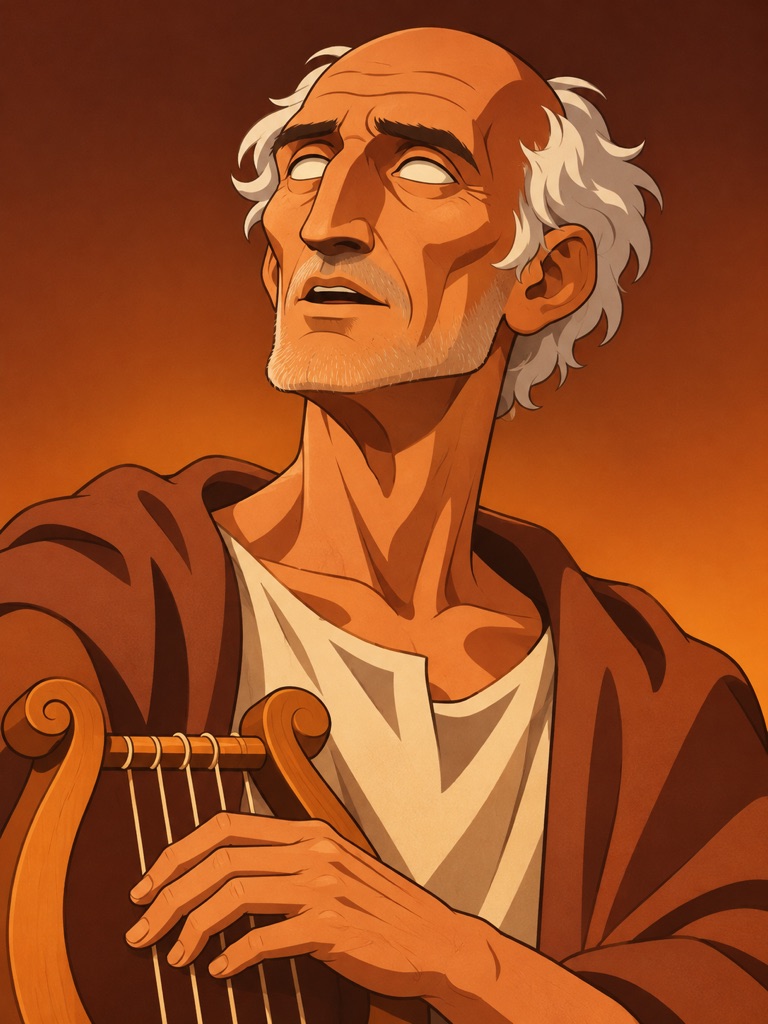
Most scholars think the Iliad is the older poem, composed in the late 8th or early 7th century BCE, with the Odyssey a little later. An ancient critic known as Longinus explained the difference with an image: the Iliad was Homer at the height of his powers, the Odyssey was Homer in old age, like the setting sun, still great but less intense. Whether one poet composed both is still debated.
Which should you read first? The Iliad comes first in the story and is the more intense poem. The Odyssey is easier to enjoy without background, because it is a quest story with monsters, disguises and a revenge plot. Many readers start with the Odyssey, then go back to the Iliad.
For the background of the whole war, see the Trojan War summary and the Ancient Greece overview.
Frequently Asked Questions
1What is the Iliad about in short?
The Iliad is about the rage of Achilles in the tenth year of the Trojan War. Achilles quarrels with Agamemnon and stops fighting, his friend Patroclus is killed by Hector, and Achilles returns to kill Hector. The poem ends when Achilles gives Hector's body back to his father Priam for burial.
2Does the Iliad include the Trojan Horse?
No. The Iliad ends with Hector's funeral, before the death of Achilles and before the fall of Troy. The Trojan Horse is mentioned in the Odyssey, and the full story came from lost epics like the Little Iliad and the Sack of Troy, and later from the Roman poet Virgil.
3What is the difference between the Iliad and the Odyssey?
The Iliad covers about fifty days of the war at Troy and is a tragedy about Achilles' anger and Hector's death. The Odyssey follows Odysseus on his ten-year journey home after the war and his revenge on the suitors in his house. Both are credited to Homer.
4How long does the Iliad take place?
Roughly fifty days in the tenth and final year of the Trojan War. Most of the fighting happens over just four days of battle. The rest is the plague, truces and the twelve days of Hector's body being dragged.
5How does the Iliad end?
It ends with the funeral of Hector. Priam ransoms his son's body from Achilles, the Trojans mourn him for nine days, burn the body on the tenth, and raise a burial mound. The last line is: So they held the funeral of Hector, tamer of horses.
6Who wins the Trojan War in the Iliad?
The Iliad does not show the end of the war. It makes clear that Troy will fall, and the later legend says the Greeks took the city with the Trojan Horse, but inside the poem the war is still going on at the last line.
Hear the Iliad as a Story
Achilles' rage, Hector's run around the walls and Priam's night in the enemy camp, told in short audio episodes in the Ancient Greece chapters of Histolumo.


Listen to Related Stories
The Singer Who Killed Me
6 minA blind singer, a hall full of drunks, and twenty-eight thousand lines carried in one man's memory.

The Eyes of a Dog
4 minA plague from Apollo's bow, a stolen prize, and a goddess grabbing the best of the Greeks by the hair.
Three Times Around the Walls
3 minThe bravest man in Troy ran, and the gods weighed his death on golden scales.
The Hands He Kissed
4 minAn old king crossed the plain at night to kiss the hands that killed his son.
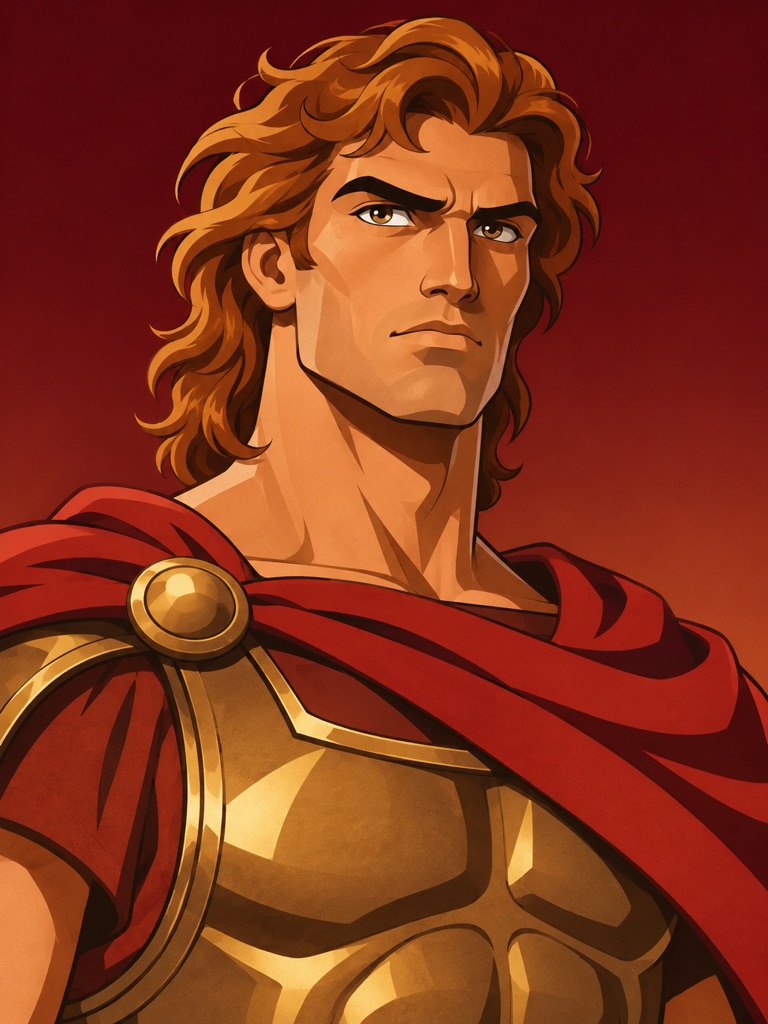
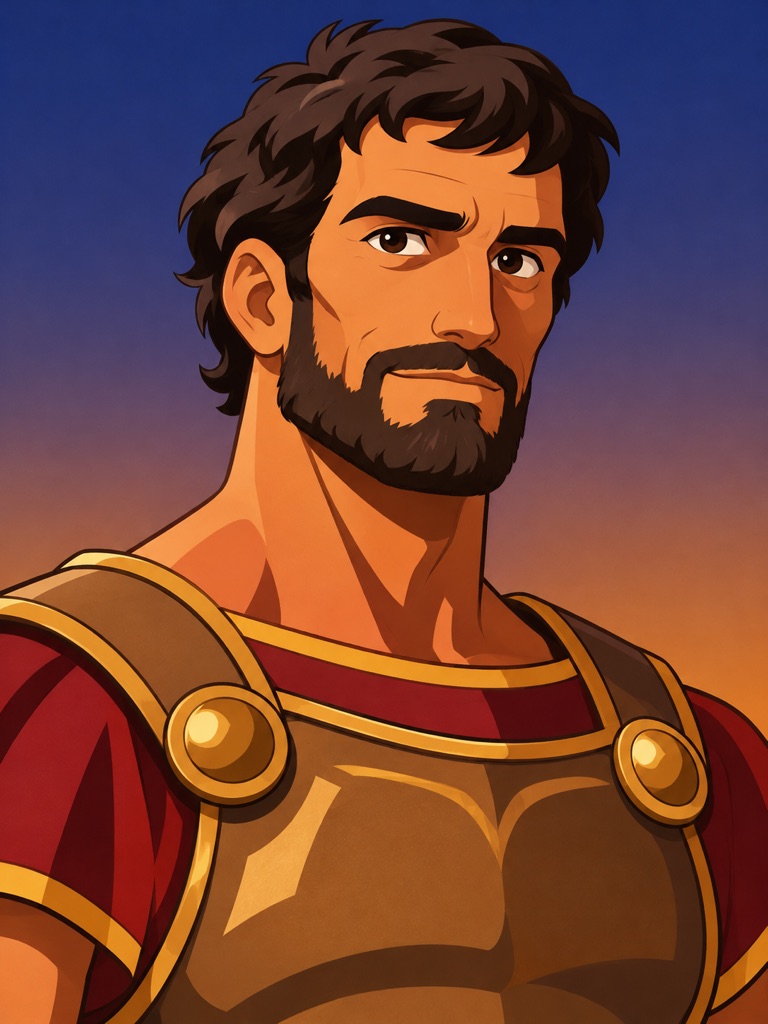
Key Figures
Listen to the Full Story
Experience history through immersive audio lessons narrated by Lumo, your immortal wolf guide.