Who Was Homer?
Who was Homer? He is the ancient Greek poet credited with the Iliad and the Odyssey, the two oldest and most famous works of Western literature. Most scholars date the poems to the late 8th or early 7th century BCE, in the Greek cities of Ionia on the coast of what is now Turkey. Beyond that, almost nothing about the man is certain: not where he was born, not whether he could write, and not even whether one person composed both poems.
The Greeks themselves did not know. They told stories about him that were written down centuries after his death: that he was blind, that he was born beside a river near Smyrna, that he lived on the island of Chios, that seven cities fought over the honour of being his birthplace. Modern scholars treat these stories as legend.
What we do have is the poetry. The Iliad runs to about 15,693 lines and tells a few weeks in the tenth year of the Trojan War, built around the rage of Achilles. The Odyssey, about 12,110 lines, follows Odysseus on his ten-year voyage home and his return to his wife Penelope. Together they shaped Greek education, religion, art and politics for a thousand years. This page covers what the ancient sources say about Homer, what modern scholarship has worked out, and why the question "who wrote the Iliad and the Odyssey?" is still open. For the stories themselves, see the Iliad summary and our page on Odysseus.
Who Was Homer the Poet, According to the Greeks?

Several ancient biographies survive, known as the Lives of Homer. The longest claims to be by the historian Herodotus but was written much later, probably in the Roman period. Another, the Contest of Homer and Hesiod, stages a poetry match between the two great early poets. None of them is reliable history. They are what later Greeks believed, or wanted to believe.
The pseudo-Herodotean Life says Homer's real name was Melesigenes, "born by the river Meles", near Smyrna. It explains the name Homer as a word for "blind man" in the dialect of Cyme. Other writers derived it from homeros, "hostage". Both explanations are guesses. The Lives say he wandered from city to city, sang for his supper, taught for a while on Chios, and died on the small island of Ios after failing to solve a riddle put to him by some fisher boys.
The blindness tradition is older than these biographies. The Homeric Hymn to Apollo, an early hymn the Greeks also credited to Homer, ends with the singer describing himself to an audience of girls at Delos: "a blind man, and he dwells in rocky Chios" (line 172). The historian Thucydides (3.104) quotes this passage in the 5th century BCE and assumes it is Homer speaking about himself. On Chios there was also a guild or clan of reciters called the Homeridae, "sons of Homer", mentioned by Pindar and Plato.
The poems themselves give a hint at why the image stuck. In the Odyssey, the singer Demodocus at the court of the Phaeacians is blind: the Muse "took away his eyes, but gave him sweet song" (8.63–64). Readers have long seen a self-portrait in that line. It may be one, or it may simply reflect that blind men often earned their living as singers.
As for when he lived, Herodotus (2.53) thought Homer and Hesiod lived about four hundred years before his own time, which would put them around 850 BCE. Other ancient writers placed him much earlier, close to the Trojan War itself. Several cities, including Smyrna, Chios, Colophon, Ios, Argos and Athens, claimed him. An old epigram listed seven of them.
The Homeric Question
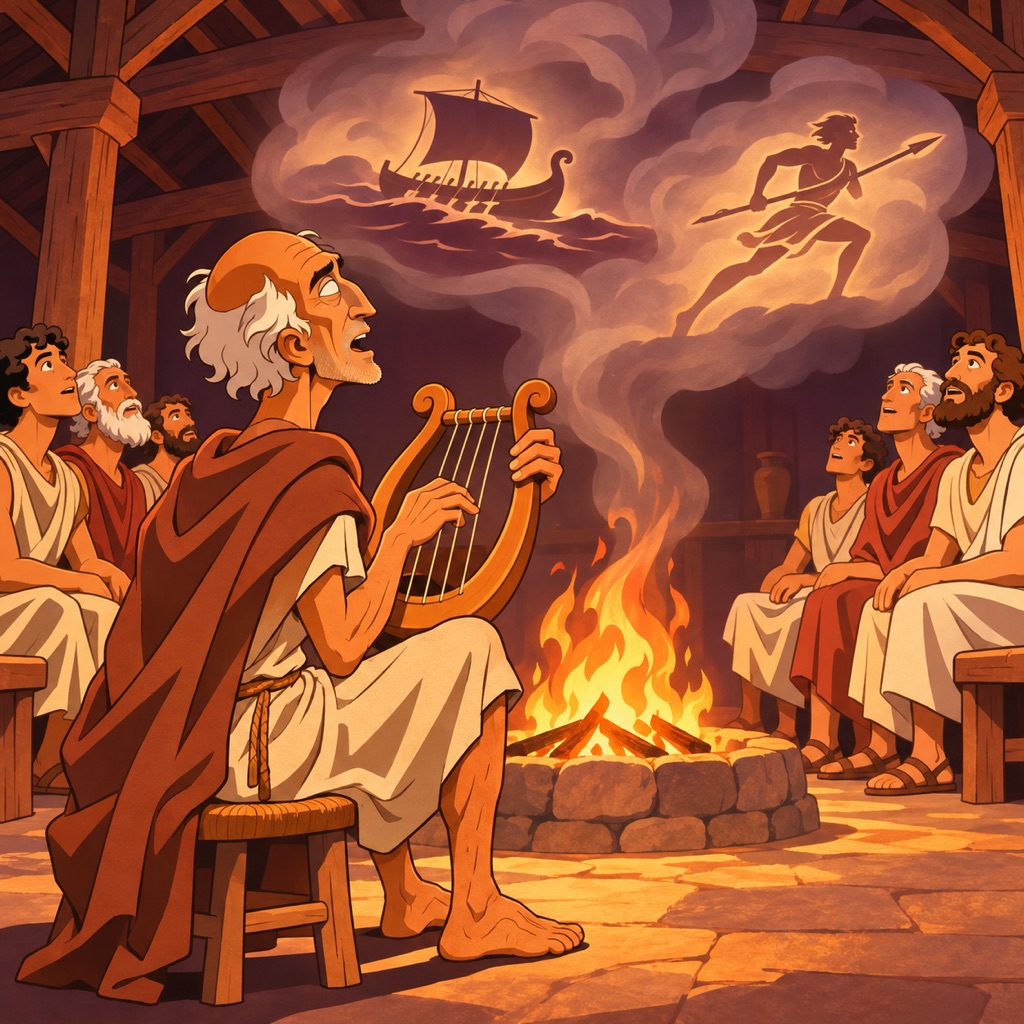
The "Homeric Question" is the long debate about who composed the Iliad and the Odyssey, how, and when. It started in antiquity. A small group of Alexandrian scholars, the chorizontes or "separators", argued that the two poems had different authors. The critic known as Longinus (On the Sublime 9.13) kept one Homer but explained the difference poetically: the Iliad was the work of his prime, full of action, and the Odyssey was the work of his old age, "like the setting sun".
The modern debate began in 1795, when the German scholar Friedrich August Wolf published his Prolegomena ad Homerum. Wolf argued that writing was not in use in Greece when the poems were composed, so no single poet could have produced works this long. In his view they were assembled later from shorter songs. For more than a century scholars split into "analysts", who tried to separate the poems into older and newer layers, and "unitarians", who defended one master poet. In 1897 the English writer Samuel Butler even argued that the Odyssey was written by a young woman in Sicily. Few people agreed, but the book is still read.
The question changed completely in the 20th century. An American scholar, Milman Parry, studied the repeated phrases in Homer. Every reader notices them: "rosy-fingered dawn", "the wine-dark sea", "swift-footed Achilles", "grey-eyed Athena". Parry showed in his doctoral work at Paris (1928) that these noun-and-epithet phrases form a system. For each hero or god, in each grammatical case, there is usually one phrase that fits each position in the line of hexameter verse. "Swift-footed" is not there because Achilles is running. It is there because it fills a slot in the rhythm.
That kind of system, Parry argued, is the product of a tradition of oral poets who composed as they performed. A skilled singer did not memorize a fixed text. He built each line from a stock of ready-made phrases and each episode from familiar patterns: the arming of a hero, a feast, a sacrifice, an assembly.
Milman Parry, Albert Lord and the Singers of Yugoslavia
To test the idea, Parry and his student Albert Lord travelled to Yugoslavia in 1933–1935, where illiterate singers called guslari still performed long heroic songs to a one-string instrument, the gusle. They recorded hundreds of performances on aluminium discs. The singers worked exactly as Parry predicted. They used stock phrases and scenes, and no two performances of "the same" song were word-for-word identical. One singer, Avdo Međedović, performed a song of more than 12,000 lines over several days, close to the length of the Odyssey.
Parry died in 1935, at the age of 33. Lord continued the work and published the results in The Singer of Tales (1960), which remains the classic statement of the oral-formulaic theory. Today almost all scholars accept that the Iliad and the Odyssey grew out of a long oral tradition of sung poetry.
That does not settle who Homer was. It changes the question. Was Homer the last and greatest singer of the tradition, a single genius who shaped these two poems? Was "Homer" a name the Greeks gave to a whole tradition? Did one poet compose the Iliad and a different one, a generation later, the Odyssey? Many specialists still see one powerful mind behind the structure of each poem. Many think the two poems had different authors. There is no consensus, and probably never will be.
When Were the Iliad and the Odyssey Composed and Written Down?
Most scholars place the composition of the Iliad in the second half of the 8th century BCE, around 750–700 BCE, and the Odyssey a little later, around 725–675 BCE. Some date them later still, into the 7th century. The general view is "8th–7th century BCE", about four or five hundred years after the war they describe.
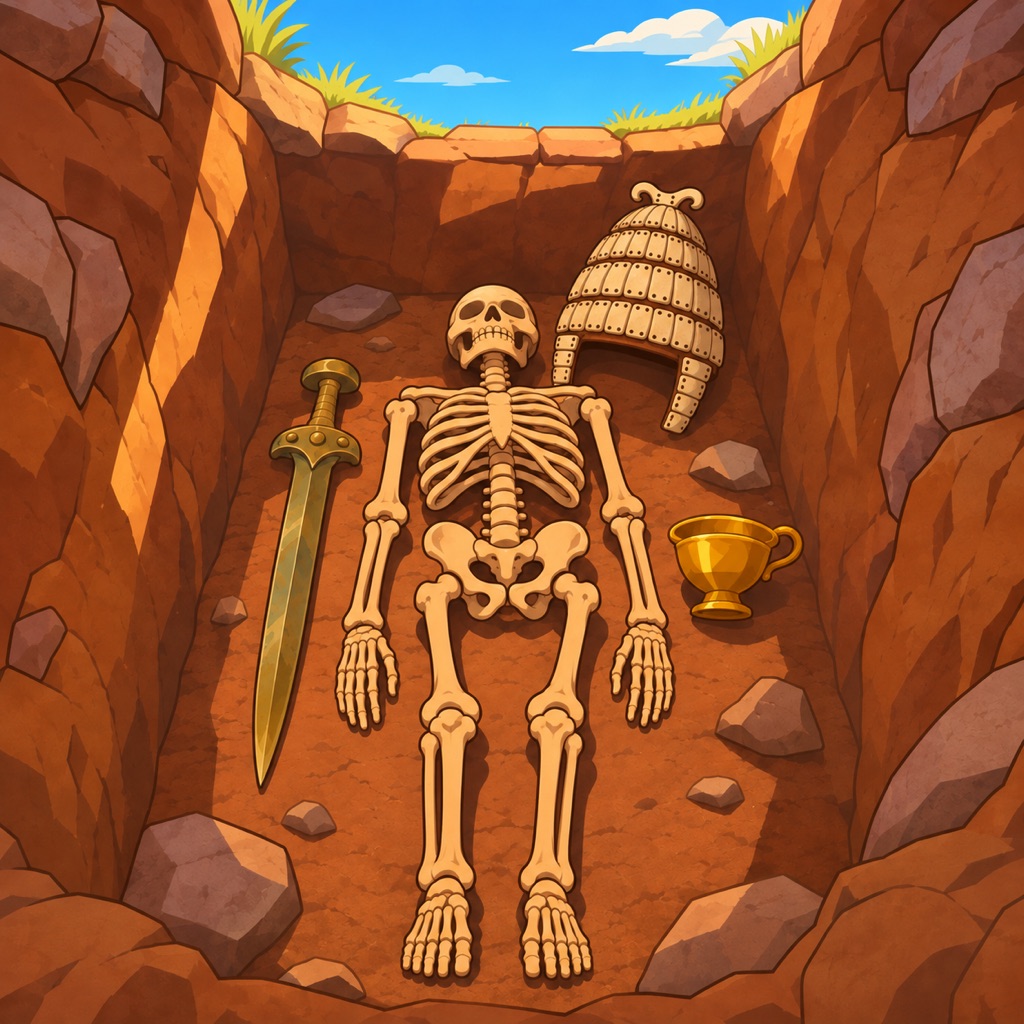
The poems mix periods, which is what you would expect from a tradition passed down for centuries. The heroes fight with bronze weapons, as in the Bronze Age, but iron appears in similes and as a valuable metal. The Iliad describes a helmet covered in plates of boar's tusk (10.261–265). That is a real Mycenaean helmet type, out of use for centuries by Homer's time, and archaeologists have found examples in Greek graves. The Bronze Age palaces kept records in a script called Linear B, which Michael Ventris deciphered in 1952. It records sheep, grain and jars of oil, never a poem. After the palaces fell around 1200 BCE, writing vanished from Greece for about four hundred years. The songs had to survive by voice alone.
Writing came back when the Greeks adapted the Phoenician alphabet, probably in the 8th century BCE. Some of the earliest Greek inscriptions are verses. A clay cup found on the island of Ischia, in Italy, dated about 740–720 BCE, carries a short inscription that jokes about "the cup of Nestor", the same old king whose great cup appears in the Iliad (11.632–637). Whether this shows that the Iliad already existed is debated, but it shows that stories about Nestor were known.
How did a poem of 15,000 lines become a fixed text? There are three main theories. Some scholars think the poet himself used the new alphabet, or dictated to a scribe. Others think the poems were written down later, in 6th-century Athens. The Roman orator Cicero (De Oratore 3.137) says the Athenian ruler Peisistratus arranged the books of Homer. A dialogue attributed to Plato, the Hipparchus, says Peisistratus' son brought the poems to Athens and made the reciters at the Panathenaic festival perform them in order. Still others think the text stayed fluid for longer. Scholars at the Library of Alexandria, above all Aristarchus in the 2nd century BCE, edited the text, and the division of each poem into 24 books is usually credited to them.
Homer, the Teacher of Greece
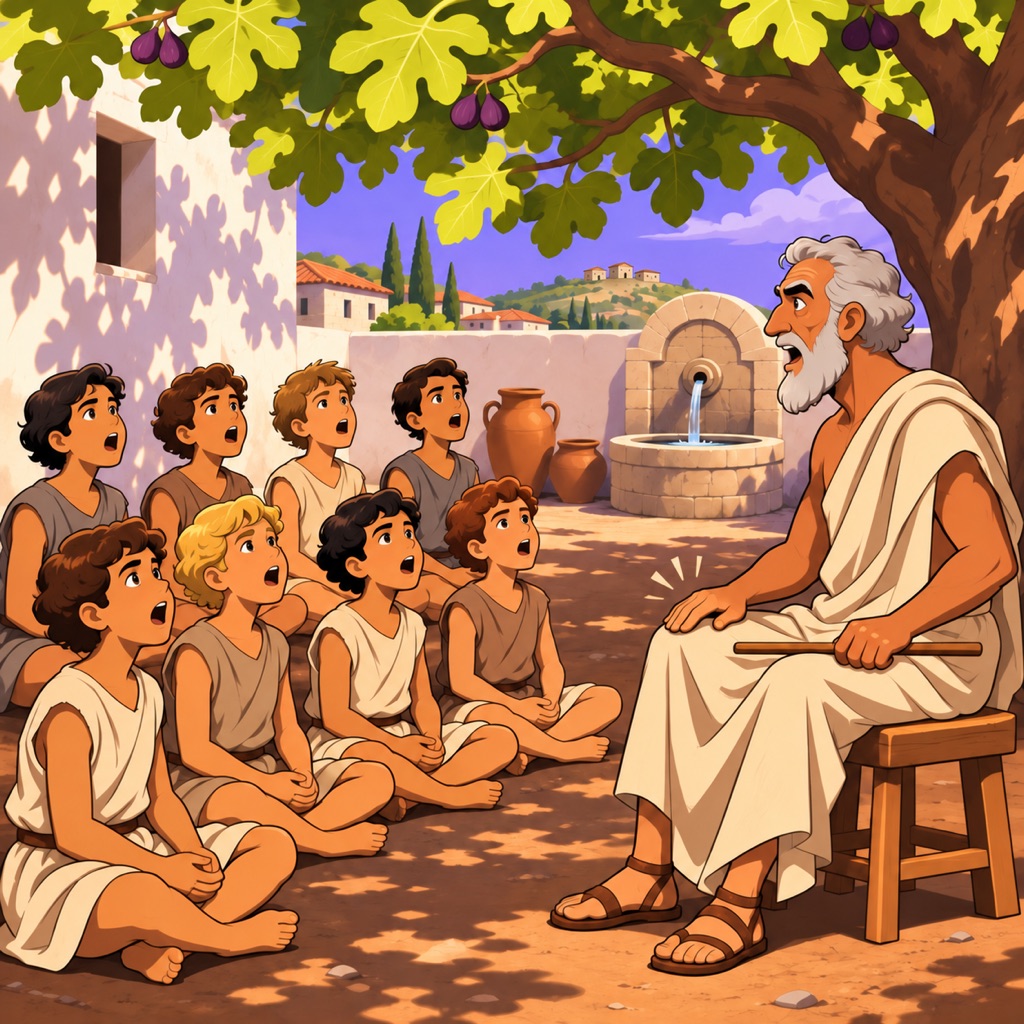
Ancient Greece was not a country. It was hundreds of independent cities and islands with one language, one family of gods and constant wars against each other. Homer was one of the few things they all shared. Boys learned the poems by heart at school. Professional reciters called rhapsodes performed them at festivals. Painters put the Trojan War on thousands of vases. When Alexander the Great marched into Asia, Plutarch says, he slept with a copy of the Iliad under his pillow next to his dagger (Alexander 8).
Homer also had harsh critics. The philosopher Xenophanes complained that Homer and Hesiod gave the gods every human disgrace: theft, adultery and lying. Heraclitus said Homer deserved to be thrown out of the poetry contests and beaten. The most famous critic was Plato. In the Republic, Plato's Socrates bans most poetry, including Homer, from his ideal city, because it shows gods and heroes behaving badly and stirs up emotions that should be kept under control.
Yet Plato's own words show how great Homer was. In Republic 606e, Socrates speaks of "the praisers of Homer who say that this poet educated Greece", and he concedes that Homer is "the most poetic of the poets and the first of the tragedians" (607a). He still bans him. Even the philosopher who wanted Homer gone admitted that the Greeks treated him as their schoolteacher.
The Salamis Line: Forging Homer to Win an Island
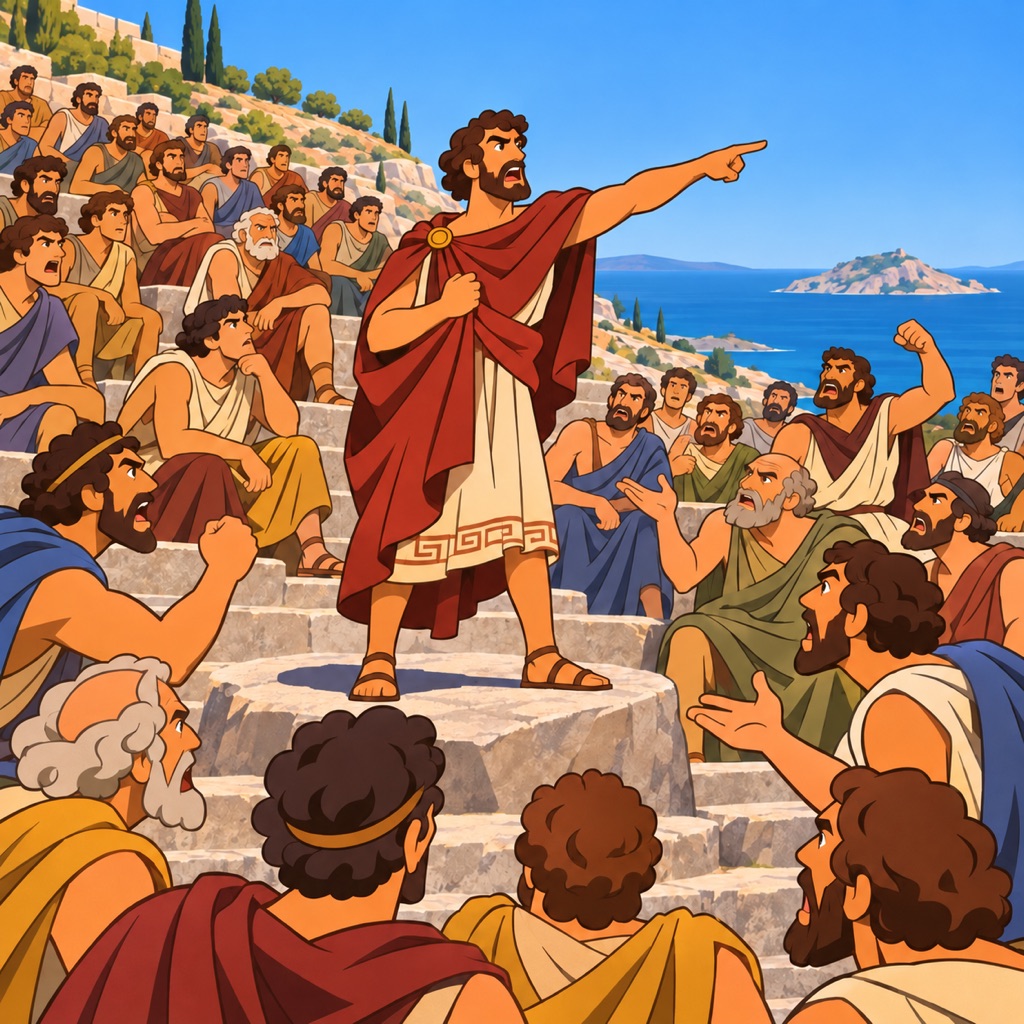
One story shows what a line of Homer was worth in politics. In the 6th century BCE Athens and its neighbour Megara fought over the island of Salamis, which lies just off the coast between them. According to Plutarch (Solon 10), when the dispute went to arbitration, the Athenian statesman Solon pointed to the Catalogue of Ships in Iliad Book 2. There, after the twelve ships of Ajax of Salamis, comes the line: "and he brought them and stationed them where the battalions of the Athenians stood" (2.558).
If Ajax's men camped beside the Athenians at Troy, the argument went, Salamis had always belonged with Athens. The Megarians replied that Solon had forged the line and slipped it into the poem. Plutarch reports both claims and does not decide. Aristotle (Rhetoric 1.15, 1375b) also mentions that the Athenians used Homer as a witness about Salamis. Modern editors still debate whether line 2.558 is genuine.
Either way, the story makes the point. A verse of Homer could be presented as evidence in an international land dispute, and a forged verse was worth the risk.
What Homer Left Behind
The Greeks credited Homer with far more than two poems. They also gave him the Homeric Hymns, a comic poem called the Margites, and sometimes the lost epics of the Trojan cycle, such as the Cypria and the Little Iliad. Herodotus (2.117) already doubted that the Cypria was by Homer, because it contradicts the Iliad. Today scholars accept none of these as Homer's.
The two poems that remain were copied by hand for nearly two thousand years. The most important medieval manuscript of the Iliad, the Venetus A, was made in the 10th century CE and carries notes from the Alexandrian scholars in its margins. The first printed edition appeared in Florence in 1488.
Much of what people believe about the Trojan War does not come from Homer at all. The golden apple, the wooden horse in detail, the death of Achilles and the fall of Troy came from the lost epics, the tragedians and later writers. The Judgment of Paris gets a single mention in the Iliad. The Trojan Horse appears only in flashbacks in the Odyssey. To sort out legend from archaeology, see Was Troy Real? and the overview of the Trojan War. For the wider world that produced the poems, start at Ancient Greece.
The heroes Homer sang about live on through him. Achilles chose a short life and lasting fame. Hector took off his helmet so his baby son would stop crying. Helen blamed herself, and Paris never seemed to. The poet who sang them is the one figure in the story we know least about.
Frequently Asked Questions
1Who was Homer?
Homer is the ancient Greek poet credited with the Iliad and the Odyssey. Most scholars place the poems in the late 8th or early 7th century BCE in Ionia, on the coast of modern Turkey. The ancient stories that he was blind and came from Chios or Smyrna were written down centuries later and are treated as legend.
2Who wrote the Iliad and the Odyssey?
The Greeks said Homer did. Modern scholars agree the poems grew out of a long tradition of oral poetry, as Milman Parry and Albert Lord showed in the 20th century. Whether one poet named Homer composed both poems, or whether different poets composed them, is still debated.
3Was Homer a real person?
Nobody knows. There may have been a single great poet behind each poem, or 'Homer' may be a name the Greeks gave to a tradition of singers. No reliable biography survives.
4Was Homer really blind?
The tradition is old. The Homeric Hymn to Apollo describes its singer as 'a blind man who dwells in rocky Chios', and Thucydides took that as Homer describing himself. The blind singer Demodocus in the Odyssey may have reinforced the image. There is no way to confirm it.
5When did Homer live?
Most scholars date the Iliad to about 750–700 BCE and the Odyssey a little later, so Homer is placed in the 8th or early 7th century BCE. Herodotus thought Homer lived about 400 years before his own time, around 850 BCE.
6Why is Homer called the teacher of Greece?
Greek boys learned his poems by heart, and Greeks of every city quoted him on the gods, war, and how to behave. In Plato's Republic (606e), Socrates refers to people who praise Homer as the poet who 'educated Greece', even while arguing for banning him from the ideal city.
Hear the Songs Homer Sang
Start in a hall full of listeners around 700 BCE, then follow the story from the golden apple to the fall of Troy in Histolumo's first Ancient Greece chapters.


Hear Their Story
The Singer Who Killed Me
6 minA hall full of drunk men goes silent as an old blind singer reaches the part about the dog.

Related Articles
Iliad Summary: Achilles' Rage, Book by Book
Iliad summary, book by book: the quarrel, Patroclus, the death of Hector and Priam's ransom. Plus the main characters, the themes, and Iliad vs Odyssey.
Was Troy Real? What Archaeologists Found
Was Troy real? Yes: a Bronze Age city at Hisarlik in Turkey burned around 1180 BCE. Whether a Greek army burned it is still one of archaeology's big debates.
Experience Homer's Story
Go beyond the biography. Hear Homer's story told by Lumo, your immortal wolf guide who witnessed these events firsthand.